





 Portuguese
  English
  Spanish
  5 min of reading
  1 comment


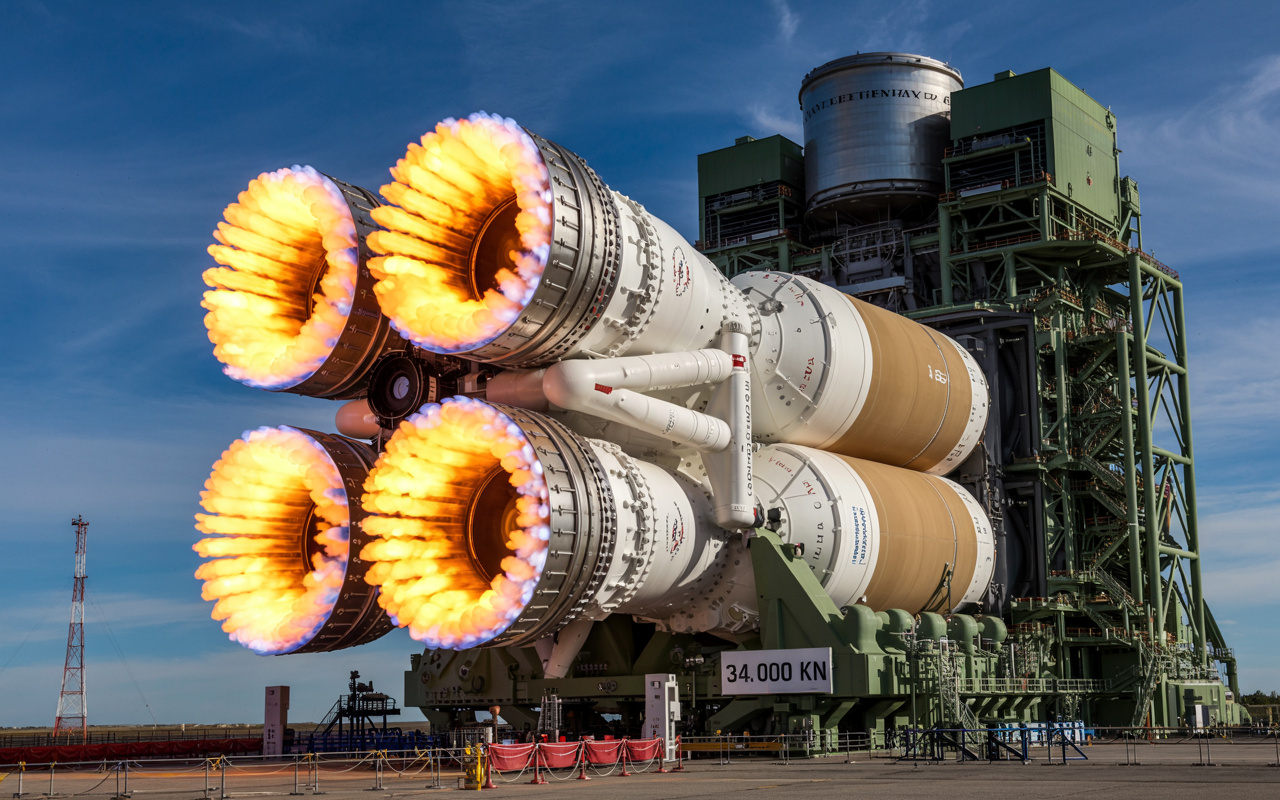


Understand How the Legendary F-1 Engine of the Saturn V Rocket Became a Reference in Power and Engineering While Pushing the Apollo Missions, Consuming Millions of Liters of Fuel in Seconds
With a thrust of 34,000 kN and the ability to burn over 3 million liters of fuel in just two minutes, the F-1 engine of the Saturn V rocket remains the most powerful engine ever built by mankind. Used in the Apollo missions that took humans to the Moon, this engine is a historical and technological milestone in aerospace engineering. In this article, we explore the characteristics, operation, and legacy of the engine that changed the history of space exploration.
F-1 Engine of the Saturn V Rocket: Cutting-Edge Engineering for the Space Age
The F-1 engine was developed in the United States by Rocketdyne during the 1950s. It was the main propulsion system of the first stage (S-IC) of the Saturn V, the largest rocket ever successfully launched by NASA.
Each Saturn V used five F-1 engines operating simultaneously, generating a combined thrust of about 7.5 million pounds-force, or approximately 34,000 kN.
-
He started running at 66 years old, broke records at 82, and is now a subject of study for having a metabolic age comparable to that of a 20-year-old, in a case that is intriguing scientists and inspiring the world.

-
Oldest tree on the planet reappears after 130 years of searches: Wattieza, 385 million years old, was 10 meters tall and had no leaves or seeds; Gilboa fossils in New York solved the mystery in 2007.

-
A 48-square-meter house assembled in hours with 4,000 bricks made of recycled plastic that does not absorb moisture, has natural thermal insulation, and costs less than 90,000 reais in a complete kit.

-
Luciano Hang revealed that Havan’s air fleet has already accumulated more than 20,000 landings, 10,000 flight hours, and 6 million kilometers traveled, and he says that without the planes, the company would never have grown so quickly.


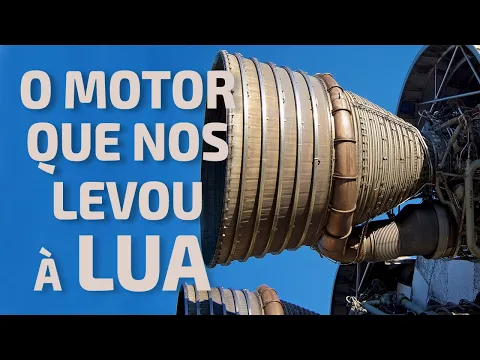

Standing 5.8 meters tall and 3.7 meters in diameter, the engine used RP-1 kerosene and liquid oxygen as propellants.
Each Saturn V burned 12 tons of fuel per second, totaling over 2,720 tons during the two and a half minutes of operation of the first stage.
This impressive propulsion capability allowed the rocket to quickly overcome the Earth’s atmosphere, reaching speeds exceeding 9,900 km/h in just a few minutes.
Most Powerful Engine Ever Built by Humans Surpasses the Limits of Physics
Designing the most powerful engine ever built by humans was an achievement that required enormous technical advancements. The challenges included dealing with extremely high pressures, extreme heat, efficient combustion, and operational stability. One of the main components was the turbopump, which produced 55,000 horsepower to pump fuels at high speed to the combustion chamber.
Combustion instability was a constant threat. Small variations in fuel flow could generate destructive vibrations, known as acoustic oscillations, in milliseconds.
To solve this problem, years of testing and adjustments were necessary for the fuel injector, including experiments with various injection patterns until a stable and safe distribution of the propellant mixture was achieved.
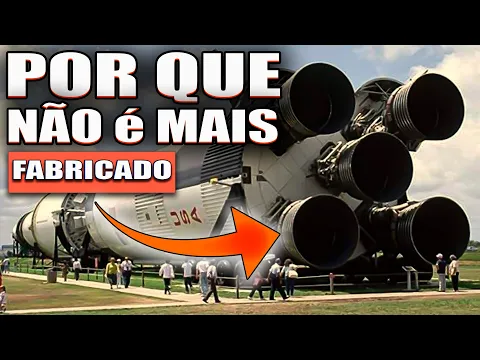
In addition, the design of the exhaust nozzle had to be carefully calculated to handle the immense energy generated. The converging-diverging nozzle allowed gases to be accelerated to supersonic speeds, optimizing thrust and ensuring efficiency during liftoff.
The Engine That Burned Over 3 Million Liters of Fuel in 2 Minutes
During the approximately 150 seconds of operation of the Saturn V’s first stage, the five F-1 engines consumed over 3.2 million liters of propellant. This is equivalent to about 770,000 gallons of RP-1 and liquid oxygen.
Each turbopump was responsible for delivering more than 10,000 liters per second directly to the combustion chamber.
The thermal energy generated by the burning fuels was so intense that the engine structure required a regenerative cooling system. Part of the RP-1 circulated through channels around the combustion chamber before being injected, helping to absorb heat and prevent melting of the metal alloys used. Without this system, the engine would enter thermal collapse within seconds.
The result was colossal thrust capable of lifting a structure weighing more than 2,800 tons and 110 meters tall. The thrust generated per second was comparable to that of a low-intensity nuclear explosion, but fully channeled for propulsion.
Performance and Reliability of the F-1 Engine in Flight
Between 1967 and 1973, the F-1 engine was successfully used in 13 launches, including all crewed Apollo missions and the sending of the Skylab orbital laboratory.
In all cases, performance was exemplary. None of the engines experienced critical failures in flight, demonstrating the level of excellence achieved by American engineering at the time.
These positive results were made possible thanks to extensive testing conducted at the Mississippi Test Facility (now Stennis Space Center).
Each engine was rigorously tested individually on test stands that simulated real launch conditions. After assembly on the rocket, integrated testing ensured that all systems were functioning in sync.
Besides technical robustness, the F-1 was also designed for ease of inspection and maintenance. Engineering teams had access to key components and could replace specific parts without the need to dismantle the entire engine.
Technology and Legacy of the F-1 Engine of the Saturn V Rocket
Despite its size and power, the F-1 engine was designed with functional simplicity. It operated in an open cycle, which meant that the gases used to drive the pump turbine were expelled without reuse. This decreased energy efficiency but increased reliability, making the engine less susceptible to mechanical failures.
This approach proved advantageous for the objectives of the time: safely transporting humans into space and ensuring the success of lunar missions. Over time, the aerospace industry began using more sophisticated closed cycles, such as the RS-25 engines of the space shuttle and the modern Raptors from SpaceX, which aim for maximum efficiency.
Nevertheless, the legacy of the F-1 remains relevant. In 2013, NASA, in partnership with companies like Dynetics and SpaceX, recovered original F-1 engine parts submerged since the 1970s. These components were restored and studied in detail, aiming to inspire the creation of new generations of powerful, reliable, and cost-effective engines.
Why the F-1 is Still the Most Powerful Engine Ever Used in Flight?
Despite notable advancements in space propulsion, no rocket engine ever launched has surpassed the individual thrust of the F-1. Some models, like Russia’s RD-170, come close with around 7,500 kN of thrust, but use multiple combustion chambers. The F-1, with a single chamber, remains unique in its performance and simplicity.
Other modern engines, such as the BE-4 from Blue Origin or the Raptor from SpaceX, are optimized for reuse and cost-effectiveness, not necessarily for generating the highest possible thrust in a single unit. Thus, the F-1 remains the largest liquid-fueled engine ever successfully used in flight.
A Milestone in Engineering and Inspiration for the Future
The F-1 engine of the Saturn V rocket represents the pinnacle of classic aerospace engineering. It is more than just the most powerful engine ever built by humans: it is a symbol of what ingenuity and scientific collaboration can achieve.
Its ability to burn over 3 million liters of fuel in 2 minutes and generate enough force to launch a mission to the Moon makes it a permanent icon of the space race.
Its legacy remains relevant, especially in times of new lunar missions and plans to reach Mars. Understanding how the F-1 was conceived, tested, and operated helps guide new propulsion designs and keep alive the ambition to explore the cosmos. It reminds us that great feats require courage, investment, and boldness, and that innovation often arises from the challenge of achieving the impossible.









A única pergunta é: por que algo tão grandioso e eficaz foi possível há quase 60 anos e, agora, não é mais possível? Retrocedemos? Involuímos?