





 Portuguese
  English
  Spanish
  3 min of reading
  0 comments


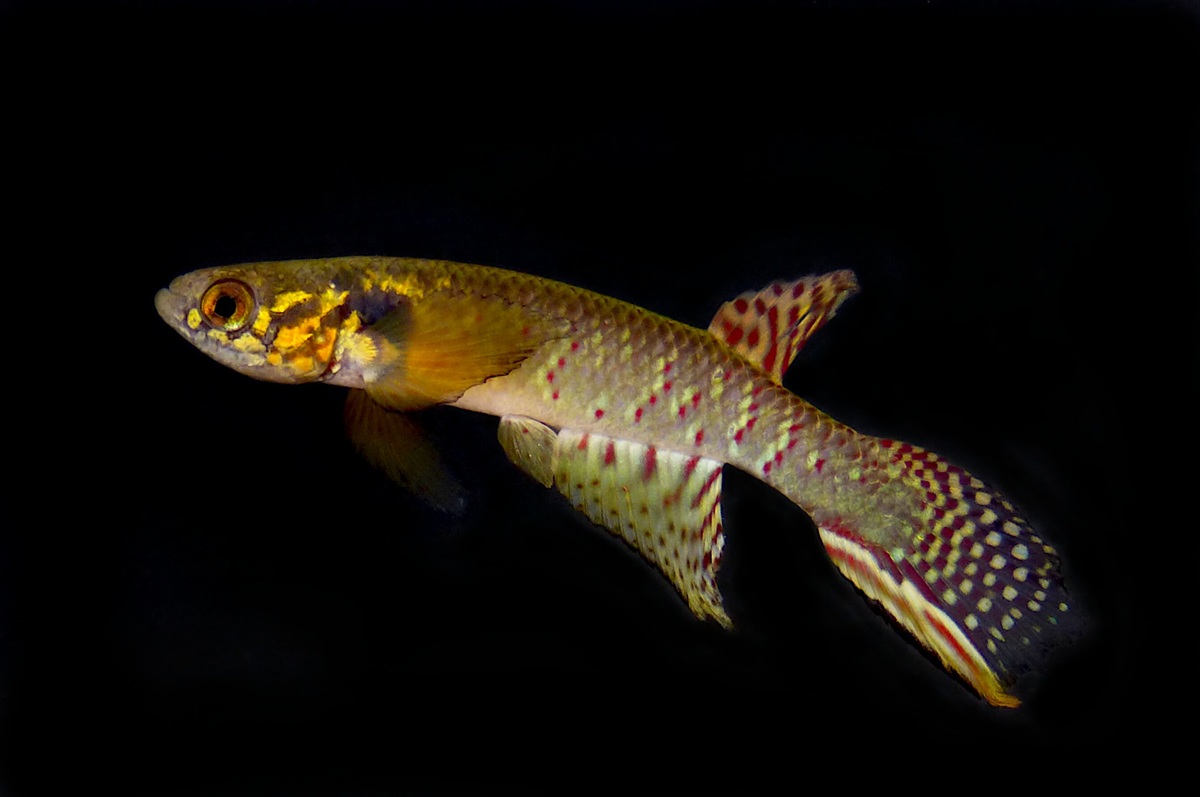
The Rediscovery Of Moema Claudiae In A Small Temporary Lake In Bolivia Surprised Researchers And Reignited The Alert To Protect The Last Remnants Of Wetlands Threatened By Agricultural Expansion In The Country
Researchers announced the rediscovery of Moema claudiae, a seasonal kingfish from Bolivia that many had considered possibly extinct. The confirmation of this remaining population reignites conservation hopes for the species and highlights the urgency to protect the wetland habitats of the region.
A Species Considered Lost For More Than 20 Years
Moema claudiae had not been seen for more than two decades in its original habitat, which is now destroyed and converted into agricultural land. Extensive surveys had found no living individuals, and the species was classified as Critically Endangered by IUCN criteria, being considered possibly extinct.
Nevertheless, a recent expedition changed the scenario. Researchers Heinz Arno Drawert and Thomas Otto Litz located a surviving population in a small temporary lake, preserved within a fragment of forest surrounded by farms.
-
After decades of failed attempts, Brazil is once again looking to space with an orbital rocket measuring 12 meters, weighing 12 tons, costing R$ 189 million, and scheduled for launch in 2026, in a new race to finally achieve autonomous access to orbit.

-
The Earth will plunge into a few minutes of darkness in broad daylight in August 2026, when a total solar eclipse transforms the sky into one of the most impressive astronomical phenomena in recent years.

-
How the terraforming of Mars can transform the planet: artificial aerosols can increase the temperature by up to 35°C in 15 years, creating conditions for liquid water.

-
Scientists drilled nearly 8,000 meters into the ocean floor above the fault that caused the 2011 tsunami in Japan and discovered that a layer of clay 130 million years old was responsible for making the wave much worse than any model had predicted.


First Record In Decades Allows New Observations
The finding, published in the journal Nature Conservation, represents the first record of the species in over 20 years. The discovery allowed for the first photographs of the living animal, observation of its behavior, and investigation of still unknown aspects of its natural history.
Thomas Litz highlighted the importance of the moment: “For me, it is something special to have rediscovered Moema claudiae. This shows that we now have the opportunity to preserve this species in the wild.” He also expressed gratitude to Prof. Wilson Costa, who named the species in honor of his wife, Claudia.
Region Houses Unique Diversity But Faces Strong Pressure
The location where the species was rediscovered is also home to six other species of seasonal kingfish, forming the most genetically diverse set of this group ever documented in the world. This diversity reflects the unique ecology of the region, situated at the confluence of the Amazon rainforest and the savanna of the Llanos de Moxos.
However, the rapid advance of deforestation and agriculture puts these environments under threat. Over the last 25 years, Bolivia has lost almost 10 million hectares of forest, including vital wetland areas.
Scientists Call For Urgent Action To Prevent Irreversible Loss
With the rediscovery, researchers emphasize the immediate need to protect the area, now the only known location with a wild population of Moema claudiae. Co-author Heinz Drawert warns of the risk of losing essential ecosystems if agricultural expansion continues unchecked.
“We cannot expect to achieve true social and economic well-being unless we also maintain the functionality of the ecosystems that sustain it,” he stated.








Seja o primeiro a reagir!