





 Portuguese
  English
  Spanish
  4 min of reading
  0 comments


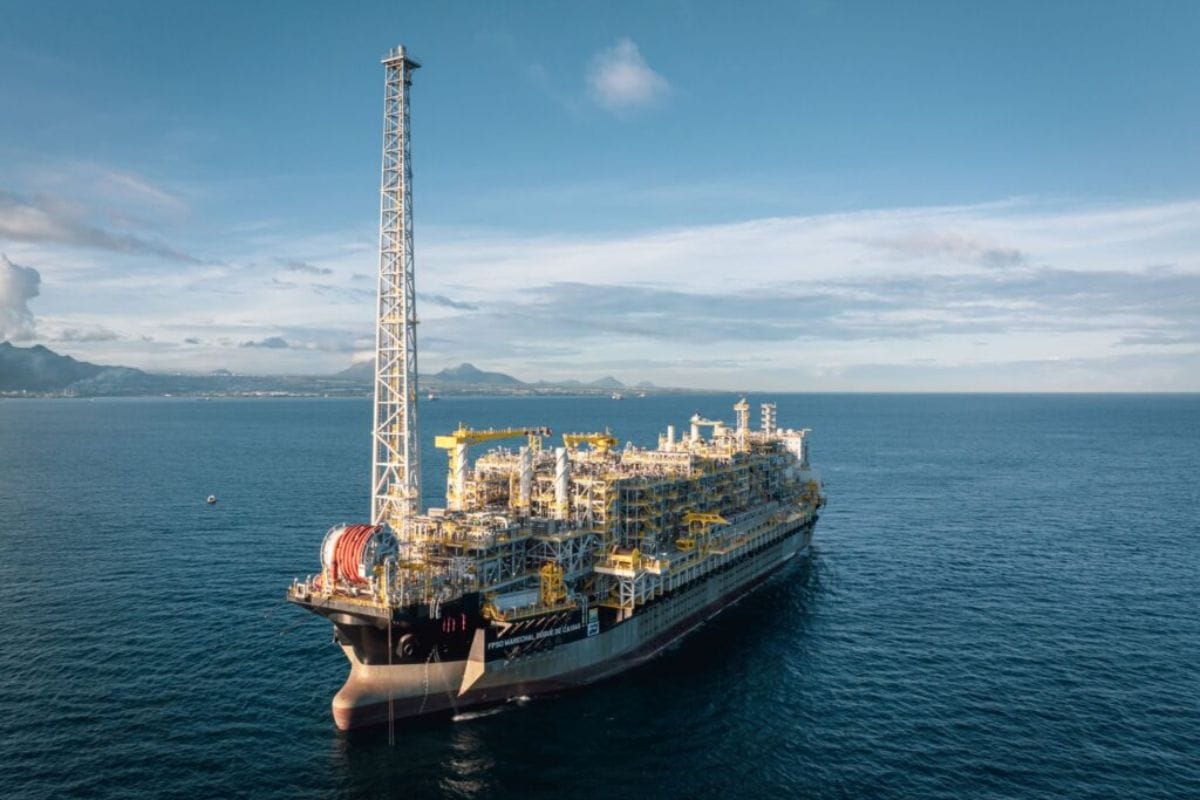
The FPSO Marechal Duque de Caxias Achieved Its Maximum Capacity of 180,000 Barrels/Day in the Mero Field, Highlighting the Efficiency of Petrobras and Technological Advances Such as the Future HISEP.
The FPSO Marechal Duque de Caxias (MDC), a Floating Production, Storage and Offloading unit, reached its nominal production capacity of 180,000 barrels of oil per day (bpd) in the Mero field, Santos Basin. This milestone, achieved on May 19, 2025, reinforces the productive capacity of Brazilian pre-salt and the operational efficiency of Petrobras and its partners.
Notably, the peak was achieved in just 201 days since the first oil on October 30, 2024, setting a new benchmark for ultra-deepwater projects. The unit boosts Mero’s capacity to over 590,000 bpd and is set to implement pioneering HISEP technology in 2028, aiming for more sustainable operations.
The Feat of the FPSO Marechal Duque de Caxias: Record Production in Record Time
The FPSO Marechal Duque de Caxias reached its maximum capacity of 180,000 bpd on May 19, 2025, just 201 days after starting production on October 30, 2024. This rapid ramp-up, approximately 6.7 months, surpasses that of other similar units in Mero, such as the FPSOs Guanabara and Sepetiba, which took about eight months. The operating license was granted by Ibama on September 9, 2024.
-
Offshore industrial demand in Macaé skyrockets with the recovery of oil and gas and could grow by up to 396% by 2026 in the Campos Basin.
-
Offshore industrial demand in Macaé surges with the recovery of oil and gas and could grow by up to 396% by 2026 in the Campos Basin.
-
Brazilian giant expands borders in the Southeast: Petrobras confirms new oil discovery in ultra-deep waters in the pre-salt of the Campos Basin.

-
Alert in the global energy market: Severe tropical cyclone hits the coast and disrupts gas production at major plants in Australia, threatening global supply.


This efficiency in production acceleration suggests optimization in the commissioning processes and well interconnection, reflecting Petrobras’ learning curve. The FPSO Marechal Duque de Caxias, chartered from MISC, also processes up to 12 million cubic meters of natural gas per day, anchored 180 km off the coast of Rio de Janeiro, in a water depth of 2,000 meters, and interconnected to 15 wells (8 oil producers and 7 WAG injectors).
Diving into Mero
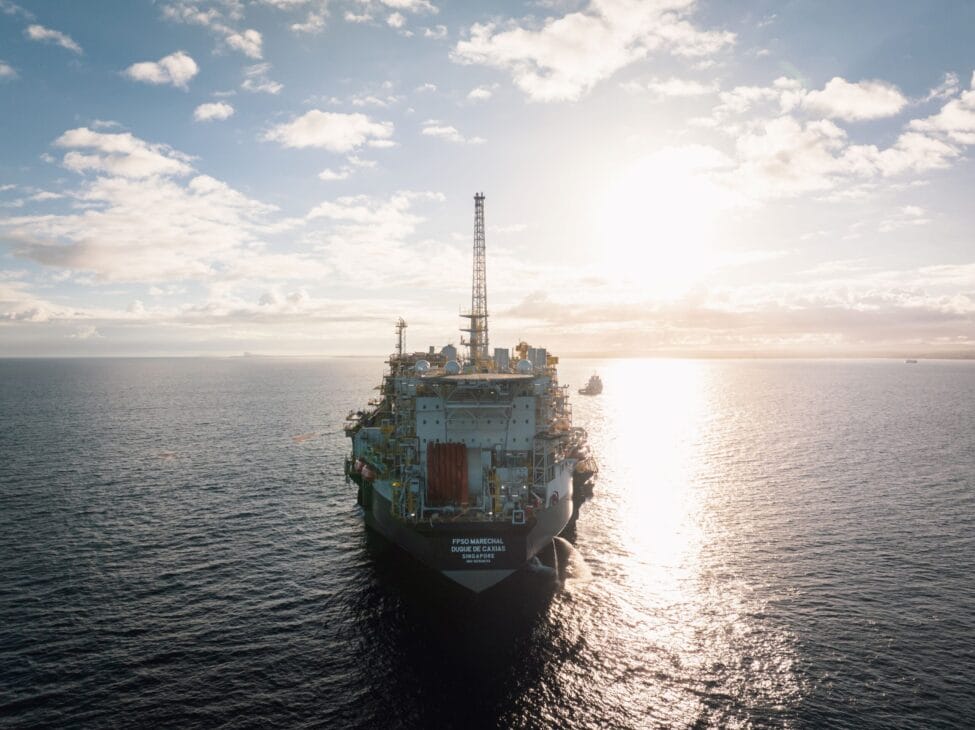
The Mero field, discovered in 2010 in the Libra block, is a strategic asset in Brazilian pre-salt. Located in water depths of 1,800 to 2,100 meters, it has carbonate reservoirs with oil of 29° API and a challenging high CO2 content (40-45%) in the associated gas. In-place volume estimates (as of December 31, 2021) are 10.27 billion barrels of oil and 375 billion cubic meters of gas.
The FPSO Marechal Duque de Caxias is the fourth definitive production system in Mero, raising its installed capacity to 590,000 bpd. The next, FPSO Alexandre de Gusmão, scheduled for 2025, will add another 180,000 bpd. Mero is Brazil’s third largest field, operated by Petrobras (38.6%) in consortium with Shell Brasil (19.3%), TotalEnergies (19.3%), CNOOC (9.65%), CNPC (9.65%), and PPSA (3.5%).
Cutting-Edge Technology
The FPSO Marechal Duque de Caxias will be the first in the world to use HISEP (High Pressure Separation) technology, patented by Petrobras, on a large scale starting in 2028. The HISEP allows for the separation of CO2-rich gas and oil directly on the seafloor, with the gas being reinjected into the reservoir from the seabed. This innovation can reduce the need for processing equipment on the surface, optimize flow, and enable projects in fields with high gas and CO2 content.
In addition to HISEP, Petrobras leads in CCUS (Carbon Capture, Utilization, and Storage), having reinjected 11 million tons of CO2 in 2022. All 23 pre-salt platforms possess emission reduction technologies. The company is also advancing with “All Electric” FPSOs, which can reduce GHG emissions by up to 20%, and aims to eliminate routine flaring by 2030.
The Performance of the FPSO Marechal Duque de Caxias and the Goals of Petrobras
The rapid ramp-up of the FPSO Marechal Duque de Caxias (6.7 months) is an improvement over the 8 months of FPSOs Guanabara and Sepetiba in Mero. This efficiency positively impacts the Net Present Value (NPV) of the projects, anticipating cash flows and demonstrating Petrobras’ ability to optimize complex developments in deep waters.
The unit is critical to Petrobras’ goal of reaching 2.8 million barrels of oil equivalent per day (boed) in 2025, and 3.2 million boed in 2029, with the pre-salt accounting for about 80%. The phased development of Mero, with multiple large FPSOs, supports a high production level and contributes to the company’s “dual resilience” (economic and environmental) of the portfolio.
The Future of the Pre-Salt
The success of the FPSO Marechal Duque de Caxias fits into Petrobras’ long-term strategy for Mero and the pre-salt. The next FPSO in Mero, Alexandre de Gusmão, will commence in 2025, raising capacity to 770,000 bpd, and the “Mero 5” project is under study. PPSA projects that the total oil production under sharing will peak at approximately 2.2 million bpd in 2030.
Petrobras’ E&P strategy (2025-2029) focuses on maximizing the value of profitable assets, replenishing reserves, and promoting decarbonization, with a CAPEX of US$ 77 billion. Ten new FPSOs are planned by 2029, including units with a 30% reduction in emissions intensity. The success of the FPSO Marechal Duque de Caxias is a firm step in this journey of innovation and sustainable production.







Seja o primeiro a reagir!