





 Portuguese
  English
  Spanish
  4 min of reading
  4 comments


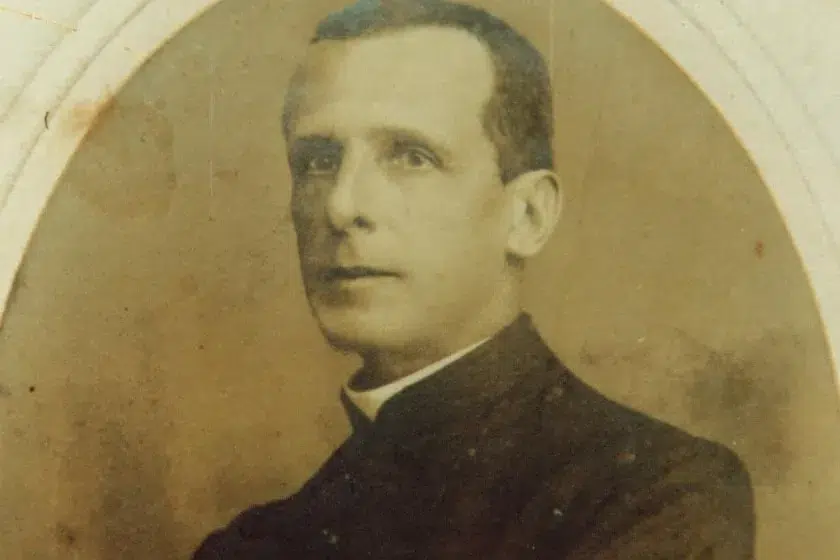


The Story Of The Brazilian Priest Who Developed The Radio Before Other Famous Inventors, But Ended Up Being Persecuted, Falling Into Oblivion For Decades.
Roberto Landell de Moura is a name that, although little known to most, was decisive in the development of telecommunications. Born in Porto Alegre on January 21, 1861, the gaucho priest was not only contemporary with figures such as Nikola Tesla, Graham Bell, and Heinrich Hertz, but also one of the first to transmit voice through radio waves.
Despite his innovations, the lack of local support and his own limitation in ambitions resulted in a legacy relegated to oblivion.
The Formation Of A Genius
The story of Landell de Moura begins early, when he was still a teenager.
-
How the terraforming of Mars can transform the planet: artificial aerosols can increase the temperature by up to 35°C in 15 years, creating conditions for liquid water.

-
Scientists drilled nearly 8,000 meters into the ocean floor above the fault that caused the 2011 tsunami in Japan and discovered that a layer of clay 130 million years old was responsible for making the wave much worse than any model had predicted.

-
Thousands of years after causing the largest eruption of the Holocene, one of the world’s largest supervolcanoes is rebuilding itself beneath the sea south of Japan, receiving new magma and alarming scientists with its transformation.

-
China has activated a magnet 700,000 times more powerful than the Earth’s magnetic field that operates for over 200 consecutive hours while consuming little energy, and now the world wants to know what Beijing plans to do with this technology in 2026.


At 16, he wrote in his manuscripts that he had invented a telephone device similar to the one created by Graham Bell. However, Landell de Moura’s path was marked by indecision.
In 1876, he moved from Porto Alegre to Rio de Janeiro to study at the Polytechnic School, but he was convinced by his brother to pursue a religious vocation, moving to Rome, where between 1878 and 1886, he completed his ecclesiastical studies.
Although his formal education was focused on religion, it was during this period that Landell de Moura began to develop his interest in science, especially in physics, a field that would open doors for his revolutionary discoveries.
The First Radio
The great feat of Landell de Moura, which marks him as a pioneer of telecommunications, was the realization of a voice transmission via radio waves, something unprecedented for the time.
In 1890, he made the first public demonstration of this feat in São Paulo, marking history as the first wireless voice transmission, a milestone for communication technology.
The following year, Landell de Moura patented his equipment in Brazil, demonstrating his belief in the potential of the invention. However, without support from Brazilian authorities, the inventor tried to succeed in the United States, where he managed to register additional patents.
Upon returning to Brazil, his invention again faced resistance.
The Brazilian government did not provide the necessary support for the wireless telephone to be improved or developed, resulting in a stagnation of his research.
The Legacy Of Landell De Moura
Despite the difficulties, Landell de Moura left an important legacy for the field of telecommunications. However, his inventions were limited.
More recent reproductions of his wireless telephone showed that the device worked, but with a very distorted sound quality. But the lack of recognition and investment from Brazil did not diminish his achievements.
The invention of the wireless telephone, although not very effective, was a significant step for cable-free communication.
Another significant contribution from Landell de Moura was his discovery that high-frequency short waves were more effective for long-distance transmissions, an idea that would only be validated by the scientific community in the 1920s, many years after his proposal.
Television And The Teleforama
Among the innovations attributed to Landell de Moura, the invention of a device for image transmission stands out, which would be a precursor to television.
In 1904, the inventor designed a device called Teleforama. However, there are no concrete records that the equipment was assembled or tested, and the details of the project are quite vague.
Nevertheless, Landell de Moura’s proposal somewhat anticipates the concept of image transmission via electromagnetic waves, being a quite advanced idea for his time.
Between Religion And Science
The life of Landell de Moura was not marked only by scientific discoveries. His commitment to the Catholic faith was as strong as his love for science.
In fact, his research in electromagnetism eventually led him to controversial topics such as parapsychology. He believed that it would be possible to establish contact with the dead through electromagnetic waves, which generated friction with more conservative sectors of the Catholic Church.
In one instance, his laboratory was vandalized by devotees who did not accept his approach.
Despite these controversies, Landell de Moura was never discredited by the Church.
When he died in 1928, at the age of 67, from tuberculosis, he received the last rites directly from the metropolitan archbishop of Porto Alegre, demonstrating the respect that still existed for him, both as a religious figure and a scientist.
His death, however, marked the end of a trajectory marked by inconsistency, lack of support, and, above all, a lack of recognition for his inventions.
Brazilian Ignorance And The International Success Of Marconi
Despite his patents and remarkable innovations, Landell de Moura did not receive the same recognition as other inventors of his time, such as the Italian Guglielmo Marconi, who is widely regarded as the creator of the radio and won the Nobel Prize in Physics in 1909.
Marconi, unlike Landell de Moura, had the support of the Italian government, which allowed the development of his inventions and consolidated his place in history.
This lack of recognition by Brazilian authorities was one of the biggest obstacles to the success of the gaucho priest. Even so, he continues to be remembered for his advanced vision and contributions to the evolution of telecommunications.
The Precursor Of Radio And Television
Roberto Landell de Moura, although ignored by many during his life, deserves to be recognized as one of the great pioneers of telecommunications.
His invention of the wireless telephone, his discoveries about high-frequency waves, and his attempts to develop television are important milestones in the history of science.
However, his story is also a reflection of how institutional support can be crucial for the development of great innovations. No matter how much Brazil failed to recognize his genius, Landell de Moura remains an example of perseverance and innovation.










Concordo com todos vocês, quem tentar ser algo ou alguma, mesmo em benefício do próximo ou de muitos, já mais contará história nesse país, mas maior AINDA é Deus, pois não há bem que nunca acabe e nem mal que dure para sempre!!!
Excelente artigo! Fiquei muito satisfeito.
Este país sempre fez tudo para atrasar seus pagadores de impostos…sabe-se lá o porquê.