





 Portuguese
  English
  Spanish
  4 min of reading
  0 comments


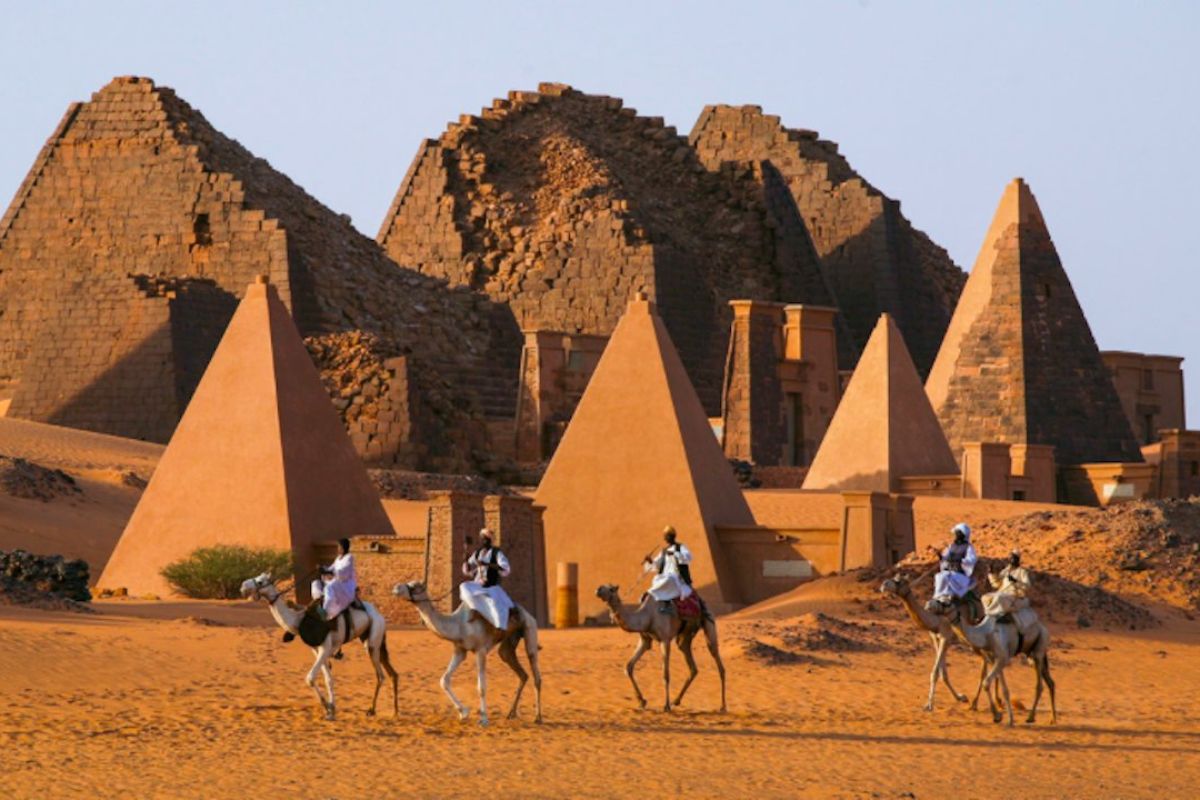
Many Associate Pyramids Exclusively With Egypt, But Sudan Houses An Even Greater Number of These Ancient Structures. Discover the Legacy of the Kingdom of Kush, the True Country With the Most Pyramids in the World.
The image of pyramids rising from the desert sands is a global icon, almost always linked to Egypt. However, a lesser-known archaeological truth is that the country with the most pyramids in the world is, in fact, Sudan, its southern neighbor, with approximately 255 structures compared to about 138 Egyptian ones.
Contrary to popular belief, Sudan has a greater number of pyramids compared to Egypt, with estimates varying between 200 and 255 structures. This finding, surprising to many, invites a re-evaluation of our knowledge about ancient civilizations of the Nile Valley. These pyramids are the legacy of the Kingdom of Kush, a civilization often “forgotten” by mainstream history.
The Rise of Kush: The Nubian Pharaohs and Their Pyramid-Building Dynasties
The Kingdom of Kush, located in ancient Nubia (present-day northern Sudan), flourished approximately between 800 BC and 350 AD. A crucial moment of its power was during the 25th Dynasty, when the Kushite kings, known as the “Black Pharaohs,” ruled over Egypt itself (c. 750-664 BC). It was during this period that the tradition of building pyramids was revived and adapted by them, continuing for centuries during the Napatan and Meroitic periods, primarily as funerary monuments for royalty and elites.
-
China is building a city in Brazil: a complex with an investment of R$ 5.5 billion comes to light, but allegations involving workers draw attention.

-
While Argentina buys old war equipment, Brazil is keeping an eye open and joins the select group of nations with advanced military technology by investing $5.2 billion, producing 36 Gripen fighters in the country, and reducing operational costs.

-
Brazil on alert? Why invading Brazil is a NIGHTMARE for the USA: 8.5 million km², 213 million inhabitants, Amazon covering 60% of the territory, trillion-dollar war, and resistance that even 13,000 aircraft could not control.

-
How to build a floating island from scratch with reeds, giant blocks, and stakes in the lake in a process that needs to be repeated almost every day.

The Nubian Pyramids in Comparison to the Egyptian Pyramids

Despite Egyptian inspiration, the Nubian pyramids developed distinctive characteristics. They are generally smaller than the Egyptian ones, with heights ranging between 6 and 30 meters, although the pyramid of King Taharqa in Nuri is a larger exception.
Their shape is notably different, with much steeper sides, inclined at about 70 degrees, and narrower bases, giving them a slender and pointed appearance. Built primarily with sandstone blocks, the burial chambers of the Kushites were located below the pyramidal structure, rather than inside it, as in Egypt.
A Journey Through Ancient Nubia: Exploring the Main Pyramidal Fields of Sudan, the Country With the Most Pyramids in the World
The main archaeological sites with pyramids in Sudan offer a glimpse into Kushite grandeur:
- Meroë: Late capital of Kush, it is the largest pyramidal site in the world, with approximately 200 structures of distinct Meroitic style. It is a UNESCO World Heritage site.
- Nuri: Contains over 20 Napatan royal pyramids, including Taharqa’s, the largest in Nubia. Recent excavations revealed submerged royal tombs due to rising groundwater levels.
- El-Kurru: Site of the first Kushite royal pyramids, built around 750 BC by kings of the 25th Dynasty.
- Jebel Barkal: A sacred mountain and religious center of Napata, with around 25 pyramids in its vicinity, along with significant temples. Also a UNESCO World Heritage site.
- Sedeinga: A field with over 80 smaller pyramids recently discovered, some only 75 cm tall, indicating a possible spread of this practice beyond royalty.
The Archaeological Importance and Threats to the Pyramids of the Country With the Most Pyramids in the World
The pyramids of Sudan are primary sources about society, religion, art, and the Meroitic script of the Kingdom of Kush, challenging Eurocentric historical narratives. However, this heritage faces severe threats. Natural erosion and rising groundwater levels are constant dangers. Historical looting, such as that by the Italian Giuseppe Ferlini in Meroë in the 19th century, caused irreparable damage.
The most devastating impact, however, comes from recent conflicts in Sudan (post-April 2023). Reports indicate widespread looting and destruction of museums, such as the National Museum of Sudan in Khartoum (where it is estimated that 70% of artifacts have been lost), and archaeological sites, representing a deliberate cultural erasure. The National Corporation for Antiquities and Museums (NCAM) of Sudan, with support from organizations like UNESCO, is fighting to protect what remains, but the challenges are immense due to a lack of funding and security.
Sudan as the True Country With the Most Pyramids in the World


Sudan indeed holds the title of country with the most pyramids in the world, an impressive testament to the greatness and sophistication of the African civilization of Kush. This legacy is a vital part of Africa’s cultural heritage and the world’s.
In light of current threats, especially the destruction caused by conflicts, the need for global awareness, ongoing research, and robust conservation and recovery efforts is more urgent than ever. Protecting the pyramids of Sudan is preserving an irreplaceable part of human history.








Seja o primeiro a reagir!