





 Portuguese
  English
  Spanish
  4 min of reading
  1 comment


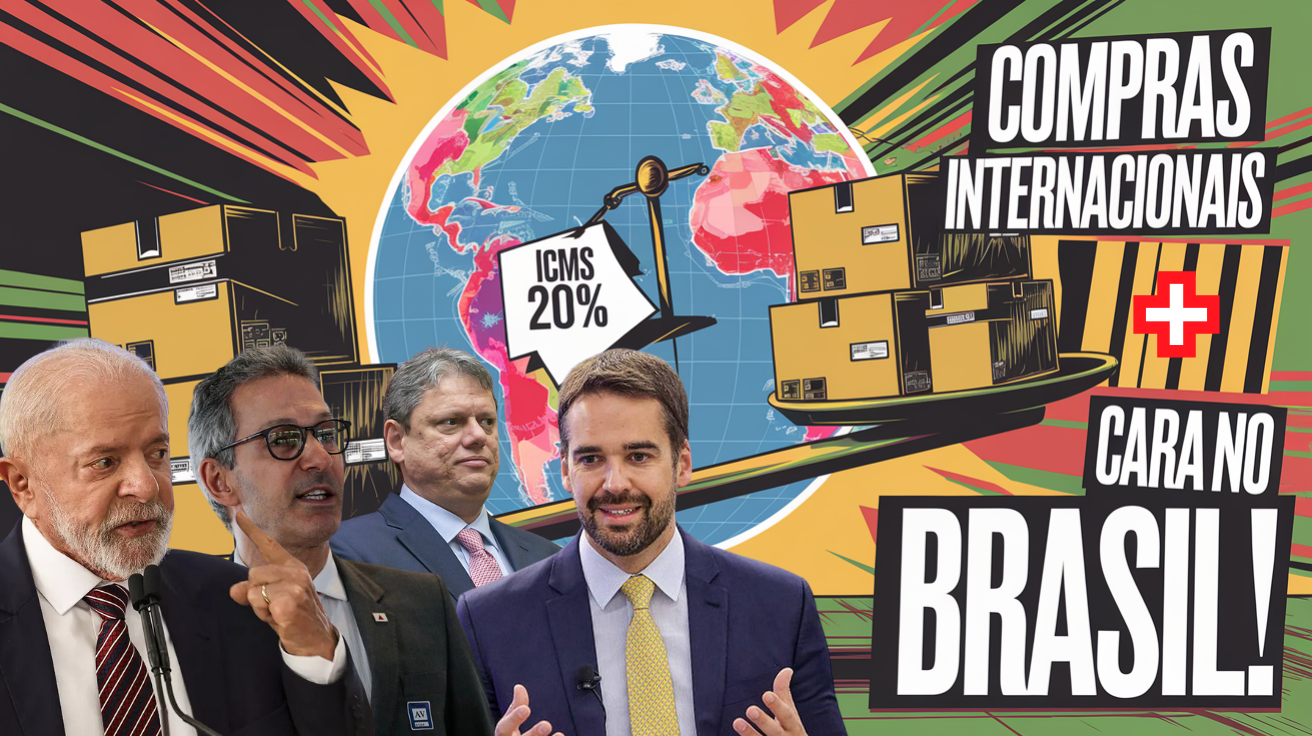


As of April 2025, international online purchases will be more expensive in Brazil. States decided to increase the ICMS from 17% to 20%, impacting consumers directly. The measure seeks to protect the internal market, but generates controversy among consumers and experts. Check out all the details of this change and how it will affect your wallet!
A significant change in the taxation of international purchases made online is set to take effect in Brazil.
As of April 2025, the Tax on Circulation of Goods and Services (ICMS) will be increased from 17% to 20% on imports from abroad.
The decision, announced by the states on Friday (6), is part of an effort to align taxation between domestic and imported products, according to the National Committee of Secretaries of Finance, Revenue, or Taxation of the States and the Federal District (Comsefaz).
-
IPTU exemption for seniors in 2026: see how to secure the benefit.

-
The institute that trained the greatest aerospace engineers in Brazil has just opened its first campus outside São Paulo after 75 years: ITA Ceará will have R$ 445 million, new courses in energy and systems, and classes are expected to start in 2027.

-
Luciano Hang, owner of Havan, goes to Juiz de Fora after the tragedy in February, brings R$ 1 million, hands out R$ 2,000 cards, and donates up to R$ 15,000 to victims in the region.

-
The Brazilian passport allows legal residence in dozens of countries without the need for a prior visa, and most Brazilians are unaware that they can apply for residency directly upon arriving in nations in South America, Africa, and even Europe.


The measure was discussed and approved during the 47th Ordinary Meeting of Comsefaz, held in Foz do Iguaçu (PR).
According to the Committee, the main objective is to promote more balanced conditions for the internal market, strengthening the competitiveness of Brazilian products in the face of the growing popularity of international e-commerce.
How Will the ICMS Increase Be Implemented?
The new percentage of 20% will be applied to all international orders, but its implementation will depend on state legislation.
According to Comsefaz, in states where the standard ICMS rate is below 20%, it will be necessary for the Legislative Assemblies to approve the change.
As a result, the application of the tax may vary according to the region of the country.
This is not the first time that an increase in the rate has been discussed.
In April 2024, the states considered raising the ICMS to 25%, but the proposal was postponed after considerations about the impact on the market and revenue.
Now, with the definition of 20%, the focus is on balancing revenue without causing a sudden increase in costs for consumers.
Other Taxes Already Applied to International Purchases
In addition to the ICMS, international purchases of up to US$ 50 are also subject to a 20% import tax, which came into effect in August 2024.
Thus, the total cost for consumers using foreign e-commerce platforms may increase significantly.
Comsefaz defended that the new ICMS rate seeks to align the tax treatment of imported products with that applied to goods sold in the domestic market.
This strategy, according to the Committee, aims to encourage national production and stimulate the consumption of items manufactured in Brazil.
Impact on the Economy and Consumption
The increase in the ICMS has been justified as a way to ensure “competitive equality” between domestic and imported products.
The goal, according to the states, is to strengthen the Brazilian productive sector, which faces direct competition from international e-commerce platforms.
This measure also aims to broaden job creation in the country and increase state revenues during a time of fiscal constraints.
On the other hand, e-commerce experts believe that the impact may mainly be felt by consumers.
The increase in the prices of international purchases may reduce access to products that, in many cases, are not available in the Brazilian market or are sold at less competitive prices.
Small entrepreneurs may also be affected. Many of them depend on imports to stock their shelves or produce goods locally.
With limited profit margins, the increase in the tax burden may pose an additional challenge for these businesses.
What Do States Say About the Change?
In an official statement, Comsefaz stated that the increase in the ICMS reflects the states’ commitment to the development of national trade and industry.
“This change reinforces the states’ commitment to fair taxation and contributes to the protection of the internal market against the challenges of a globalized scenario,” highlighted the Committee.
According to the agency, the decision took into account the rates already practiced by the states.
In cases where the current rate is below 20%, implementation will depend on the approval of the respective Legislative Assemblies.
The increase in the ICMS was presented as part of a broader effort to ensure greater balance in taxation between imported and domestic goods.
Despite this, the measure generated varied reactions from both consumers and representatives of the business sector.
How to Prepare for the Changes?
With the ICMS increase set to take effect only in April 2025, consumers and merchants still have time to adapt.
Experts recommend financial planning for international purchases and, whenever possible, seeking alternatives in the national market.
In the case of states that do not yet practice the 20% rate, it is important to monitor the proceedings in the Legislative Assemblies, as changes may vary regionally.
Meanwhile, marketplaces and foreign e-commerce platforms will need to adjust their systems to reflect the new tax rates in final prices.
This adjustment will be essential to ensure that consumers have clarity about the total costs of purchases, including import tax and ICMS.
The increase in the tax on international purchases represents an attempt to balance conditions between imported and domestic products but also brings challenges for consumers and entrepreneurs.
As the effective date of the new rate approaches, it will be essential to evaluate the impacts of this measure on the market and consumer behavior.
And you, how do you evaluate this change? Can the increase in the ICMS benefit the Brazilian economy, or does it hinder access to products and services?









O Brasil continua sendo o país mais caro do mundo para empreender, o mais controlador para gerar empregos e o mais ingrato para quem ousa investir.
A carga tributária que incide sobre a circulação de bens e consumo é um obstáculo monumental ao desenvolvimento econômico. Aqui, tributa-se o que se ganha, o que se tem, o que se compra, o que se vende e até o que se doa.
Na ausência de incentivos que tornem a indústria nacional competitiva, os empreendedores hesitam em investir no Brasil. Isso não apenas enfraquece o setor produtivo local, mas também força o país a depender de bens e tecnologias fabricados no exterior. Sem políticas que fomentem inovação e eficiência, a importação torna-se uma escolha inevitável, agravando o déficit comercial e expondo ainda mais a economia brasileira às oscilações do mercado global.
O “Custo Brasil” não é fruto do acaso, mas da manutenção de uma máquina estatal inchada, cara e ineficiente, criada para sustentar uma elite política que vive em condições luxuosas, muito acima de seus eleitores. Políticos brasileiros não governam como representantes do povo, mas como príncipes, xeiques, rajás ou marajás de uma neo monarquia disfarçada de democracia.
O aumento do ICMS de 17% para 20% sobre produtos importados é mais um exemplo de um sistema tributário predatório, que prioriza a arrecadação sem considerar os impactos econômicos e sociais. Ao invés de incentivar a competitividade e a modernização da economia, o governo onera o consumo e encarece os insumos produtivos, sufocando empresas e penalizando o consumidor final. O impacto sentido em toda a estrutura produtiva, agrava as desigualdades e perpetua a ineficiência do modelo econômico.
Além disso, o Pacto Federativo, que deveria garantir uma distribuição justa dos recursos arrecadados, age como uma readaptação do feudalismo, onde as unidades federativas são meros arrecadadores para sustentar o governo central. O retorno desses recursos à população é pífio, com serviços públicos decadentes, com mais nomeados e apadrinhados que consursados, o que raramente justificam a carga tributária abusiva.
As distorções no sistema de distribuição de renda são gritantes em todos os sentidos. As desigualdades no Brasil podem ser comparadas às amplitudes térmicas de Marte: congelam os mais pobres em uma miséria paralisante e confortam os mais ricos em um luxo desproporcional. Enquanto isso, o aumento de impostos perpetua a concentração de riqueza, favorecendo as elites detentoras do poder político e econômico em detrimento da maioria da população.
O Brasil precisa urgentemente de uma reforma tributária que simplifique, racionalize e distribua a carga de forma mais justa, ao invés de seguir ampliando um sistema que já é amplamente reconhecido como um dos mais complexos e injustos do mundo.
Seria possível esperar que a sociedade brasileira exercesse vigilância e pressão suficiente para impedir que a reforma tributária apenas perpetue o modelo que alimenta a desigualdade?
Infelizmente, a realidade aponta para o contrário. Assim como os servos e camponeses do sistema feudal aceitavam passivamente as imposições dos senhores feudais, o brasileiro, em sua maioria, parece resignar-se diante das decisões da elite política e econômica, conformando-se com um sistema que o oprime e perpetua suas condições de submissão.
Assim, o Brasil continuará sendo o país mais caro do mundo para empreender, o mais controlador para gerar empregos e o mais ingrato para quem ousadamente insistir em investir.