





 Portuguese
  English
  Spanish
  4 min of reading
  0 comments


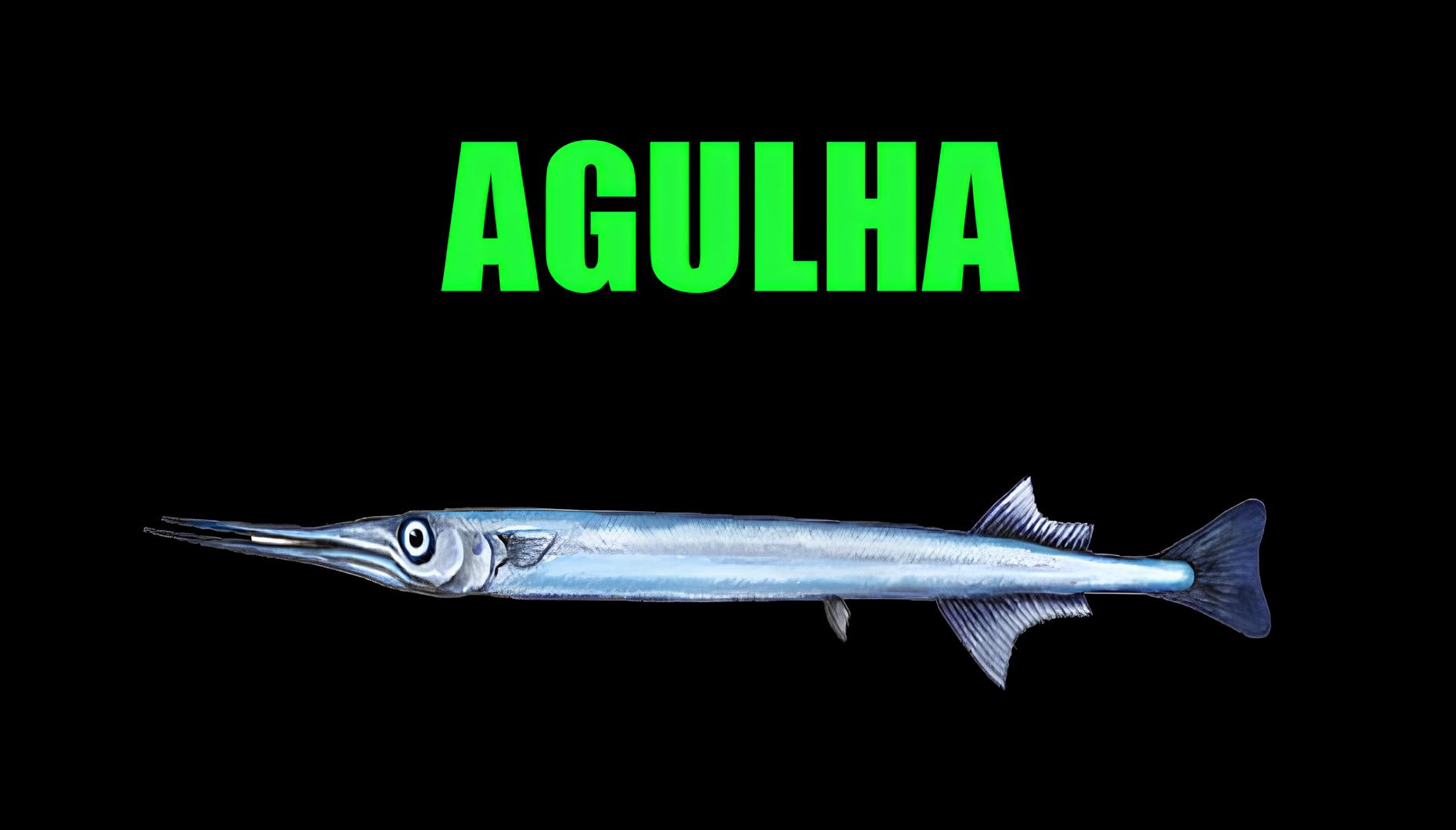
Needlefish Jumps Up to 60 Km/H, Pierces Organs With Sharp Bill and Has Already Caused Deaths in Southeast Asia, Alerting Surfers and Swimmers.
Those who see a slim, silvery, and seemingly harmless fish slicing through the water’s surface cannot imagine that, at certain moments, it can behave like a living spear. We are talking about the needlefish, a group of species from the genus Tylosurus and Strongylura, known internationally as needlefish, found in tropical areas of the Pacific and Indian Oceans — exactly where surfers, divers, and swimmers share space with it daily.
The peculiarity that turns this animal into a real risk lies in two combined factors: the absurd speed of its jumps, which can reach 60 km/h, and the long, rigid, and sharp bill like a spear, capable of inflicting deep lacerations, piercing muscles, and, in extreme cases, reaching vital organs. Reports and scientific studies published in journals such as the Journal of Marine Science, along with records from the Woods Hole Oceanographic Institution (WHOI), confirm documented attacks, including fatal cases in Southeast Asia.
The Profile of the “Spear Fish”: Anatomy Designed to Cut Water and Flesh
The body of the needlefish is long, slender, and hydrodynamic. The bill is made up of thin, pointed teeth and functions as a bony extension designed to reduce resistance in water and strike small prey at speed.
-
Imagine walking into a dealership to buy a humanoid robot instead of a car: this is exactly the future that BYD is designing, leveraging the same batteries, motors, and artificial intelligence from their vehicles to create autonomous machines, although there is no release date yet.

-
Scientists found hidden within the plants a DNA archive that survived intact for more than four hundred million years.

-
NASA astronauts have captured from the International Space Station rare lightning that shoots upwards instead of falling to Earth, like the giant jet photographed in 2025 by astronaut Nichole Ayers, high-altitude electrical phenomena almost impossible to see from the ground.
-
Amid fears of a Chinese invasion, Taiwan unveiled war robot dogs in three versions: one for reconnaissance, one for surveillance, and an armed one for fire support. The military has already shown interest, although no formal purchase has been made so far.



Under normal conditions, this anatomical design has a single purpose: to hunt smaller fish. But in shallow waters, with artificial light, boats, or human activity, the behavior changes.
Researchers studying the genus highlight three concerning characteristics:
- natural aerodynamics, allowing long, straight jumps over the surface,
- visual orientation by contrast, attracted by lights and reflections,
- explosive speed, which reduces the victim’s reaction time.
Result: when the fish gets scared or chases prey, it can leap out of the water at dozens of kilometers per hour, transforming into a true biological spear.
The Attacks: How and When They Happen
The cases recorded in medical literature and by maritime agencies usually follow a pattern:
- Nighttime environments or with artificial light, mainly on boats, docks, and piers.
- Shallow water, increasing encounters with swimmers or surfers.
- Panic or escape, which causes the fish to jump unpredictably.
In many reports, the victims didn’t even see the fish coming. They only felt the impact and the piercing. The most common injuries include:
- deep cuts on arms and legs,
- chest and abdominal punctures,
- extensive muscle damage,
- organ perforation (rare, but documented),
- rib fractures associated with the impact.
The most emblematic case was recorded in the Southeast Asia, when a teenager died after a puncture in the neck, in an accident involving needlefish during a nighttime water event — a reference cited in medical reports and international articles.
Why Does the Needlefish Jump Toward People?
According to oceanographers from WHOI, the needlefish does not “attack” humans deliberately. What exists is collision due to biological unpredictability. Three hypotheses are considered consistent:
- visual confusion with artificial lights, common on boats and at ports,
- frantic escape from predators, causing the fish to seek the surface,
- linear trajectory with no ability to deviate once the dash has begun.
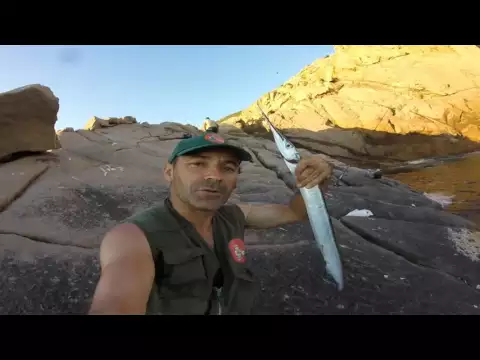

In practice, if a needlefish decides to jump, it cannot change course. If there is a surfer, a swimmer, or a fisherman in the way, the impact occurs with sufficient force to pierce flesh, tissue, and even reach the bone.
Risk to Surfers, Fishermen, and Night Divers
The categories with the highest likelihood of collision are:
- surfers, especially in clear, shallow waters,
- night fishermen, who use flashlights,
- divers in recreational activities, with artificial lighting,
- crews of small boats, with no protection on the edges.
The speed of 60 km/h means that the impact occurs before the human eye can track the trajectory, making any avoidance practically impossible.
Where Needlefish Lives and Why It Is Present in Tourist Areas
This fish occurs mainly in:
- Indonesia
- Philippines
- Malaysia
- Thailand
- Papua New Guinea
- Northern Australia
- Red Sea
- Polynesia
- Pacific Islands
This is exactly the same map that concentrates surfing, diving, and maritime ecotourism destinations, creating an unlikely conflict between humans and a small predator that has become an accidental risk.
A Biological Alert, Not a Fear Campaign
The needlefish is not a monster. It is a fish adapted to speed and the open ocean. The problem arises when:
- humans invade their habitats,
- artificial lights confuse their vision,
- the coast becomes filled with boats and nighttime attractions.
For researchers, the needlefish should not be vilified: it should be studied and respected just like jellyfish, rays, hammerhead sharks, and other marine organisms that occasionally come into contact with people.







-

1 person reacted to this.