





 Portuguese
  English
  Spanish
  4 min of reading
  0 comments


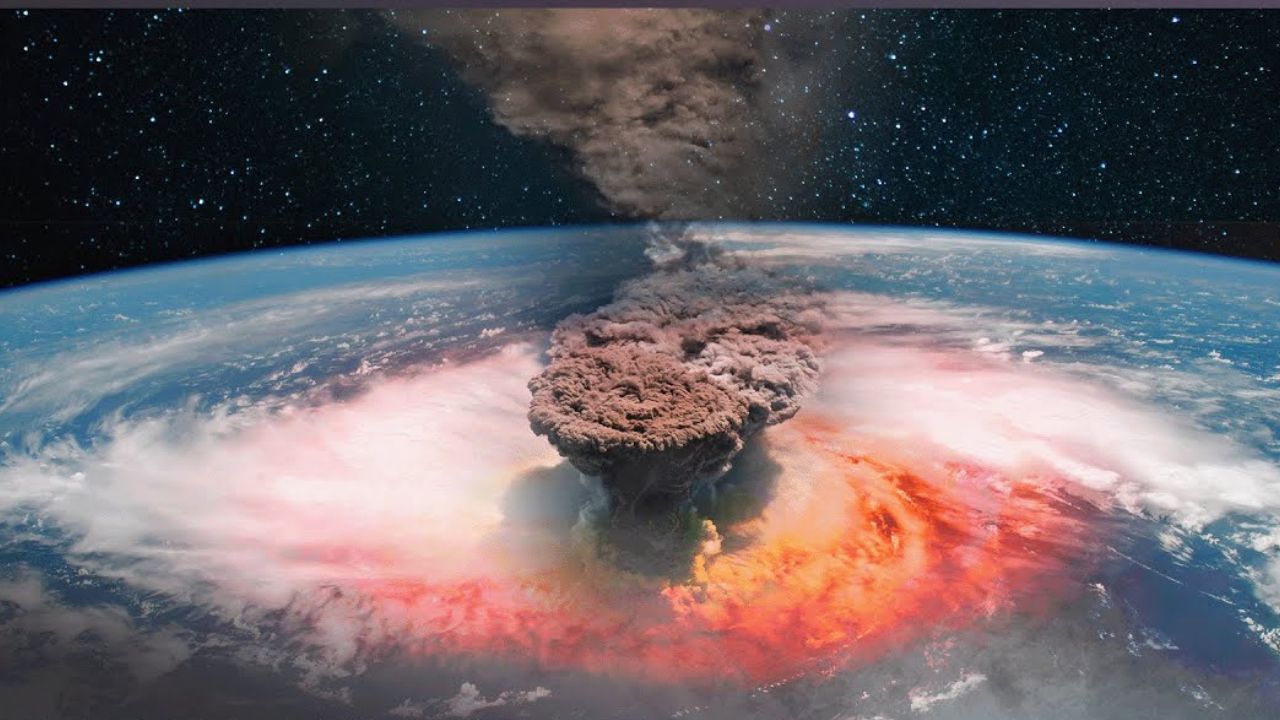
In The Year 536, A Mysterious Darkness Covered The Earth, The Sun Shone Less Than The Moon, Temperatures Plummeted, Crops Died And The First Great Epidemic Of The Black Plague Devastated Populations. This Was The Worst Year In History And The Beginning Of An Era Of Chaos And Destruction.
You know that cloudy, weird day when it seems like the Sun doesn’t want to show up? Now, imagine that lasting not just one day, but fifteen years. And worse: with no rain in the right amount, no crops, not enough food, and diseases devastating entire cities. That is exactly what happened in the year 536, one of the darkest moments humanity ever lived – so much that many people call this period the worst year in history.
The Sun, which had always been there, shining brightly, simply lost its intensity. It was so weak that it seemed like the light of the Moon. And thus began a forced winter, which transformed people’s lives into a true nightmare.
The Beginning Of The Little Ice Age: The Worst Year In History
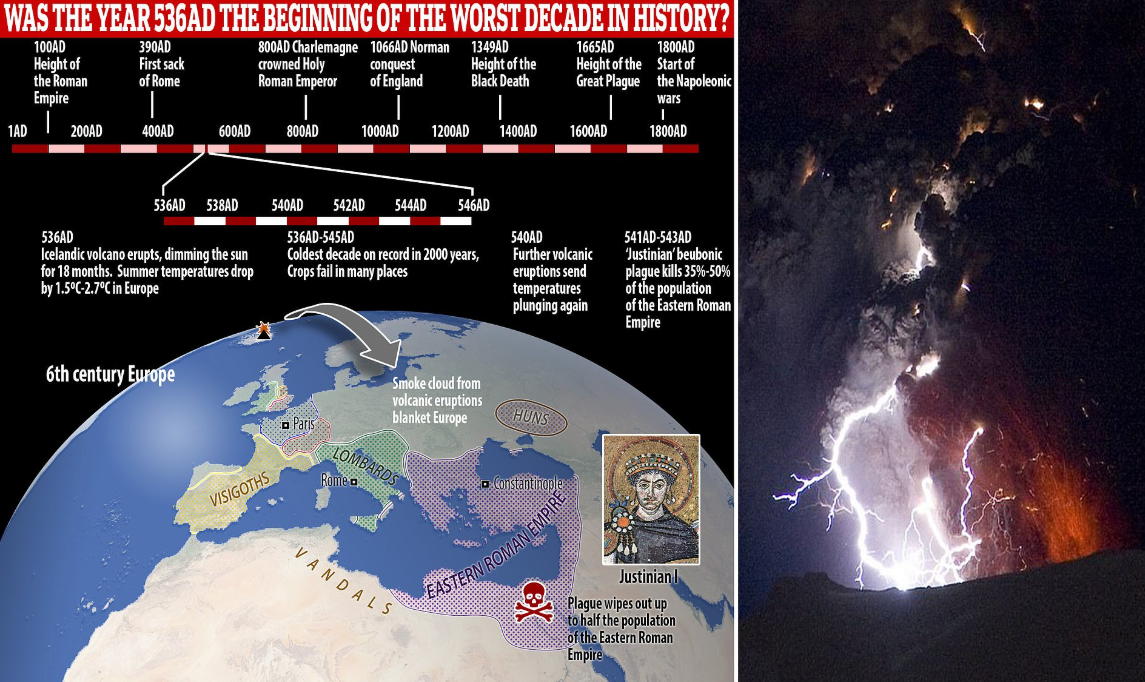
The question that won’t go away: what the hell happened in 536 for the world to fall apart this way?
-
In a flooded well, archaeologists found a 1,700-year-old Roman egg that still contains clear and yolk intact inside the very thin shell.

-
Something is happening around the Earth: Inside the huge explosion of fireballs in 2026

-
A hot air bubble coming from Argentina expands over Brazil, causing thermometers to exceed 38 degrees with a thermal sensation of 40 degrees in late March, affecting 6 states at once.

-
The radish leaf that almost everyone throws away has more polyphenols, flavonoids, and fiber than the consumed root, and a 2025 study showed that the leaf contains compounds that protect the intestine, combat inflammation, and may inhibit the growth of cancer cells.


Historical records show that this was the beginning of a period of intense cold, which lasted until around 550. The days were dark, the weather became unpredictable, and crops began to fail one after another. And it wasn’t just one bad season – it was as if winter decided to stay indefinitely.
Historians of the time described a Sun so weak that it barely stood out in the sky. The situation was so bizarre that it snowed in summer in some regions. The result? A global food crisis, famine, and, of course, the collapse of various civilizations.
What Caused The Little Ice Age?
Okay, but what was the reason for all this chaos? Well, scientists spent years trying to figure out who or what was the main culprit. There are three main suspects:
Colossal volcanic eruptions that threw so much dust and ash into the atmosphere that they blocked the sunlight.
The dust from a comet, which may have left the Earth surrounded by particles that darkened the sky.
An unknown underwater volcanic eruption that supposedly launched not only gases but also water vapor and marine sediments into the air.
The strongest theory so far comes from the analysis of tree rings. As trees grow according to climatic conditions, scientists can “read” what happened in the past. And guess what: the records from this period show that tree growth simply stalled, indicating years of intense cold and little sunlight.
The Volcanic Activity Hypothesis
The most accepted explanation so far is as follows: a volcano erupted in 536 and threw so much debris into the atmosphere that it blocked the sunlight. But it didn’t stop there – after that, there were two more major eruptions, one in 540 and another in 547.
And these weren’t just small eruptions. These eruptions were gigantic, the kind that can change the global climate for years. The problem is that nobody knows exactly which volcanoes were responsible, as direct evidence is scarce.
And if you think that one eruption is bad, imagine three in a row. It was a domino effect: the atmosphere became loaded with particles, the temperature dropped, crops failed, and famine spread.
The Underwater Eruption Theory
But what if the disaster of 536 didn’t come just from the surface of the Earth? Well, a new theory suggests that the main culprit might have been an underwater volcano, and that changes everything.
Two researchers, Dallas Abbott and John Barron, studied ice samples from Greenland and found something curious: marine microorganisms from tropical waters mixed in with the ice. But how did these little creatures end up there?
The answer may lie in an underwater volcanic eruption, which would have thrown tons of sediments and water vapor into the atmosphere. This vapor spread across the planet and may have further aggravated the darkness and cold.







-

-

5 pessoas reagiram a isso.