





 Portuguese
  English
  Spanish
 9 min of reading


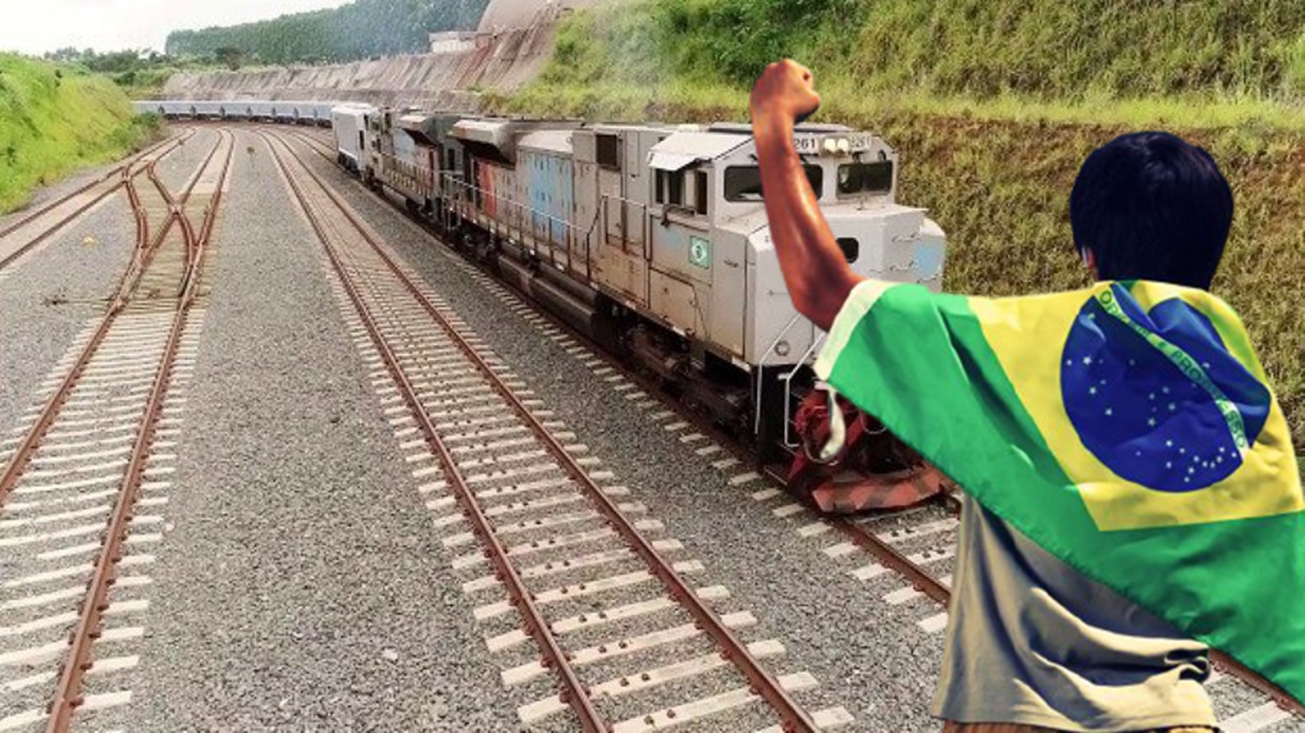
The Railway PL Is Also Known as the Railway Framework. This Week It Was Approved by the Chamber of Deputies and Should Now Be Sanctioned by the Presidency of the Republic.
A lot has been discussed about the Railway PL in recent days. Not without reason. The proposal, long before being approved, was already considered the most important logistics project in contemporary Brazilian history.
- Private Railways: After More Than 100 Years, Government Authorizes the Insertion and Construction of New Projects, with Over R$ 50 Billion in Investments
- Multimodality Through Railways Is the Way: Federal Government Signs First Contracts and Private Initiative Can Now Develop Projects for the Brazilian Railway Network
- Infrastructure Ministry Signs Agreement with Six Companies to Start Construction of Nine Railways by Private Initiative in the Country
The reasons for its importance are numerous. Essentially, it should modernize the Brazilian railway system, boosting the economy with improved logistics for the distribution of products, especially from agribusiness.
Another key aspect of this improvement is that the private sector will have more freedom to invest in the construction of new railways and the renovation of those that are currently in disuse due to lack of investment or finishing.
-
São Paulo surprises the world with a colossal railway network project that promises over 1,000 km of tracks, R$ 194 billion in investments, and 40 projects connecting the capital to the interior with fast and sustainable trains.
-
The world’s largest escalator, measuring 905 meters in China, reduces urban travel time from 1 hour to about 20 minutes and transforms mobility in mountainous regions with an engineering solution adapted to the terrain.
-
A R$ 300 million logistics giant is taking shape in Serra with over 100,000 m² and raises a question: how can this transform e-commerce and distribution in the state?
-
Could Uber Rides Lose Minimum Fare? Understand What’s Happening!


To give an idea, more than half of Brazil’s railways date back to the 19th century. That is to say, from the times when Brazil was governed by Dom Pedro II.
In other words, this is Brazil’s opportunity to redesign its railway system. A renaissance of the country’s railways, whose project required collaboration between private initiatives, the Executive Branch, and the National Congress.
In addition to modernizing the logistics system, the Railway PL will make the transportation matrix jump from the current 20% to 40% within 15 years, boosting the economy, creating jobs, increasing GDP, relieving highways, and possibly increasing the potential for passenger transport.
Concession vs Authorization: Understand the Main Changes in the New Railway Framework
Essentially, the Railway PL brings a change in the private sector investment system. It is a more liberal system on the part of the Union and is celebrated by companies.
Railway actions will shift from concessions to permissions. In other words, the State allows companies to invest in projects without state pre-determination.
The investor will assume the operational risk but will engage in projects they deem to be of interest. An expectation of investments of around R$ 80 to 100 billion.
The legal framework for Railways also standardizes and clarifies legal issues related to the sector. The text of the PL also provides that the Union, states, or municipalities can execute railway transport directly.
The authorization for the exploration of railways must be formalized through a contract for a determined period, which should last between 25 to 99 years.
What Happens If There Is Abandonment of the Railways?
Despite the liberal system, the PL, which had already been approved by the Senate in October 2021, strongly addresses issues regarding the abandonment of railways now permitted by the Union for exploration.
In practice, the company that takes over the administration of the railway may lose the right to explore railway activities in the event of negligence, incompetence, or abandonment, due to irregular transfer of authorization, and for repeated failure to meet commitments.
The idea is to reduce underutilization of the Brazilian railway network. According to the Ministry of Infrastructure, only 25% of railway lines are in full operation. And 46% have low traffic. Meanwhile, 29% are not in any commercial operation.
Authorization Requests Are Already Processing in the Federal Government
As explained above, the new legal framework for railways brings investment opportunities for the private sector if companies see potential returns.
In total, there are already 48 authorization requests filed with the Ministry of Infrastructure for construction and renovation of certain sections of railways. See the Tweet from Infrastructure Minister Tarcísio Gomes de Freitas:
Initially, 14 Brazilian states will be reached. For each region, the expectation is the direct generation of jobs and facilitation in the distribution of products.
According to the Ministry of Infrastructure, the project creates competitiveness. And this could reduce rail freight costs for companies by up to 40%.
“With more railway supply, Brazil will become an extremely competitive country. We will be able to transport cargo, for example, to Asia at lower prices than American producers, without a doubt.”
Tarcísio Freitas – Minister of Infrastructure
According to the rapporteur of the Railway PL in the Chamber, federal deputy Zé Vitor (PL – Minas Gerais), the investments would not be possible solely by the public sector.
“Today, the average cost to construct a plan for railways is close to 10 million reais. So it is not a simple investment. There must be a significant demand”.
Zé Vitor – Federal Deputy (PL – MG)
The Railway PL Was the Result of Collaboration Between Companies and Public Authorities
The proposal for the new legal railway framework reached the National Congress in 2018. In other words, it took three years until the end of the processing and approval.
The approval was not subjected to major discussions and large-scale controversies. The Workers’ Party even submitted a request to withdraw the bill from the agenda. But there were 241 votes against the PT’s request, 16 in favor, and one abstention.
Deputy Pedro Uczai (SC) had requested more time to debate the bill, which was reported in the Senate by a member of the same party, Jean Paul Prates (RN).
After the approval, the rapporteur in the Chamber praised how the proposal was considered.
“The report was well-prepared, the negotiations well executed. Party leaders convinced that this is an important project for the country and above any party divergence”.
Zé Vitor – Federal Deputy (PL – MG)
Current Situation of the Brazilian Railway Network and Expectations for Passenger Transport
Currently, Brazil has around 30,000 kilometers of installed railway network. Of these, about 10,000 kilometers are idle or completely inoperative. Most railways were built more than 100 years ago.
The networks that no longer make sense today, considered idle, may now, with the renewal of railway concession contracts, be repurposed. One possible new application is passenger railway transport and tourist trains.
The Federal Government envisions that the tracks crossing many municipalities, with urban areas and security issues, could be allocated to municipalities to become avenues, bike paths, parks, squares, and other purposes in partnership with municipalities, states, and the National Executive.
Agribusiness Sectors Are the Biggest Enthusiasts of Railway Expansion
The sectors that most advocate for railway construction projects are those related to agribusiness. The new railway framework intends to reduce freight costs and increase efficiency with the model.
The auction for Ferrogrão is scheduled for the year 2022, which should connect the grain-producing region of the Midwest to Pará, ending at the Port of Miritituba.
The investment amount is R$ 25.2 billion. A concession for 69 years. In this example, the agribusiness sector estimates a reduction of up to 40% in freight prices.
According to data from the Agro-Industrial Logistics Research and Extension Group (Esalq-Log), the sector moves more than 1 billion tons of cargo per year, including food, inputs, machinery, and biofuels.
Considering that railway transport has the capacity to handle large volumes with lower fuel consumption, this should enhance the competitiveness of the agribusiness sector and bring gains in efficiency.
While the production and export of products such as sugar, soybean meal, corn, and soybeans grow, railway movement has been advancing slowly for these products.
In other words, private railways should be essential to make logistics more dynamic and efficient, as well as unlocking investments that generate more business.
The Railway PL Is a Revolution in Brazilian Transport
In the video below, Geography and Current Affairs professor Ricardo Marcílio discusses the new railway framework. The project is already considered a revolution in Brazil’s history.


The Railway PL and the New Story of Brazilian Transport Being Written
Modernization of the Brazilian Railway Network and Relationship with Export
The Ministry of Infrastructure believes that with more railway availability cutting across Brazilian lands, the country will become extremely competitive on a global level.
According to data from the Ministry of Infrastructure, the total estimated investment is R$ 113.87 billion, with 7,780 kilometers of railway expansion, based on the 42 projects already presented. Most proposals are still in the early processing phases.
The New Railway Framework Should Encourage Cabotage Incentives?
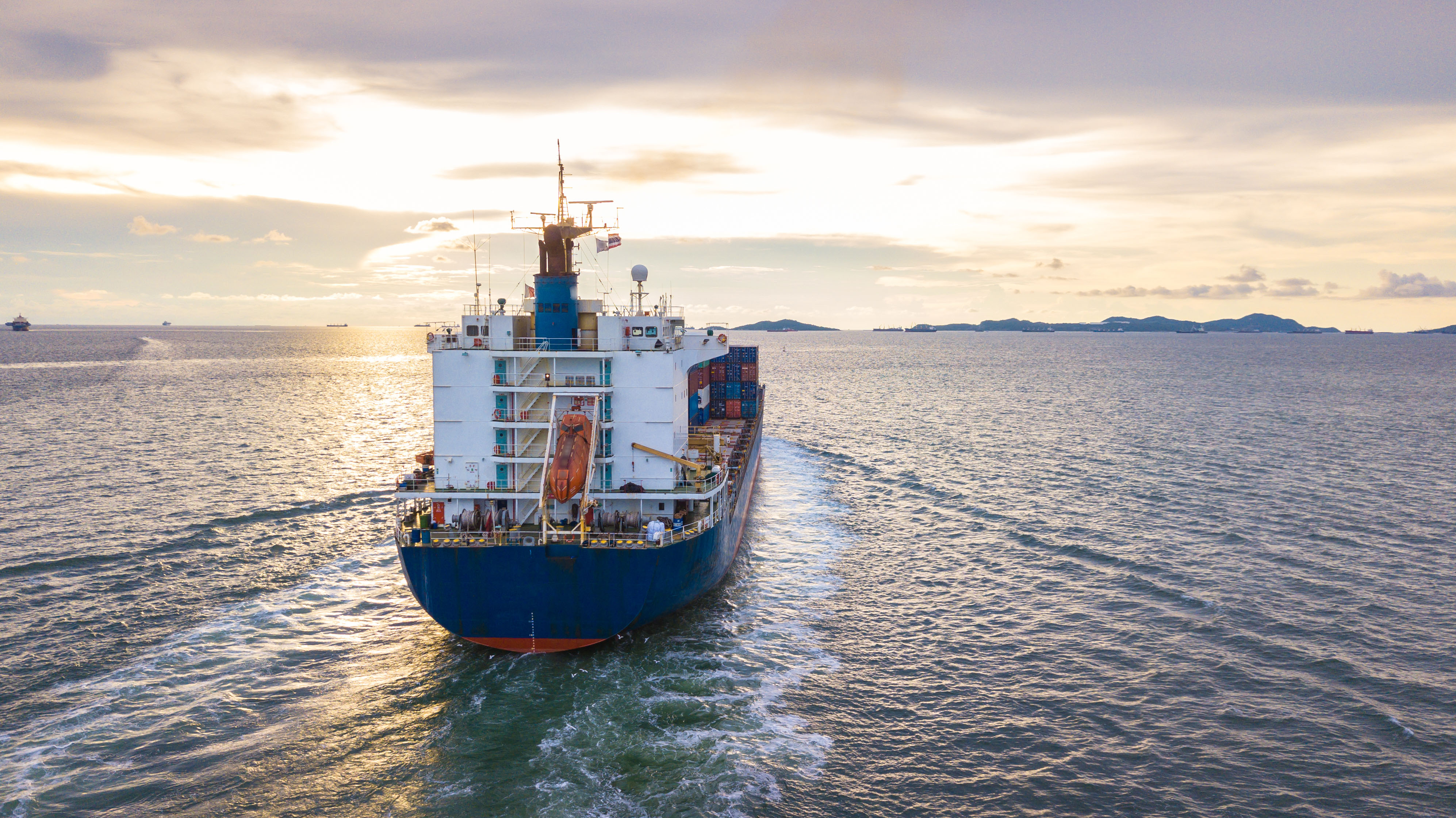
At the same time that the expansion of the railway system is a dream for various sectors of the Brazilian economy, the increase in the cabotage system also sails in the same enthusiasm for many and could become a reality through the BR DO MAR.
Cabotage is maritime transport between Brazilian ports. Products are packaged in containers with regular stops and fixed days of the week.
An alternative considered sustainable for freight transport. Additionally, cabotage can relieve ground traffic and assist in distribution logistics.
In the same week that the new railway framework was approved, federal deputies in the Chamber also approved the BR do Mar (PL 4.199/2020).
Transport by boats between ports represents only 11% of the Brazilian logistics matrix. With the BR do Mar, the expectation is that it will grow to 30%.
Furthermore, according to the Ministry of Infrastructure, it should increase the volume of containers transported annually, from 1.2 million TEUs (twenty-foot equivalent unit) in 2019, to 2 million TEUs in 2022, and increase the capacity of the maritime fleet dedicated to cabotage by 40% over the next three years.
Like the Railway PL, the cabotage legislative measure aims to increase supply, encourage competition, create new routes, and reduce costs.
Could the Proposed New Railway System Be Better Improved?
As seen above, private sectors and public authorities have worked hand in hand with common opinions on the importance of the new railway framework. But is the favorable appraisal of the entire text really unanimous?
For businessman Wilson Antunes, a specialist in metro-rail automation, there are issues that should be better assessed in the Railway PL.
According to Wilson, the Railway Framework does not provide for a national network, a real plan that unifies railways in favor of communication of transport throughout the country, from North to South, from East to West, from Oiapoque to Chuí, as it is commonly said.
“With this flaw, we run the risk of having a large number of small railways that do not communicate, which is very bad for the future and for demands that, for now, we cannot even imagine may arise”.
Wilson Antunes Comments.
Another point, according to the businessman, is the strict control in the construction of these railways to minimize environmental risks, encroachments on indigenous lands, and any type of degradation of the biomes through which the railways will pass.
“The project is also flawed regarding the possibility of a counterpart for each request. For example, the viability of railway transport for passengers, not just cargo, on desired stretches would be an extremely beneficial counterpart, contributing to reducing car traffic, decreasing the use of fossil fuels, and the sustainable development of the country”.
Wilson Antunes Points Out.
“Even so, with important adjustments to be made, the Railway Framework is a significant advancement. Brazil is aligning itself to open its railways for a more competitive, economic, and sustainable future”.
Wilson Antunes Concludes.
The officialization of the new railway framework occurs after the sanction of President Jair Bolsonaro. Then the proposal becomes law upon being registered in the Official Gazette of the Union.









Seja o primeiro a reagir!