





 Portuguese
  English
  Spanish
  4 min of reading
  0 comments


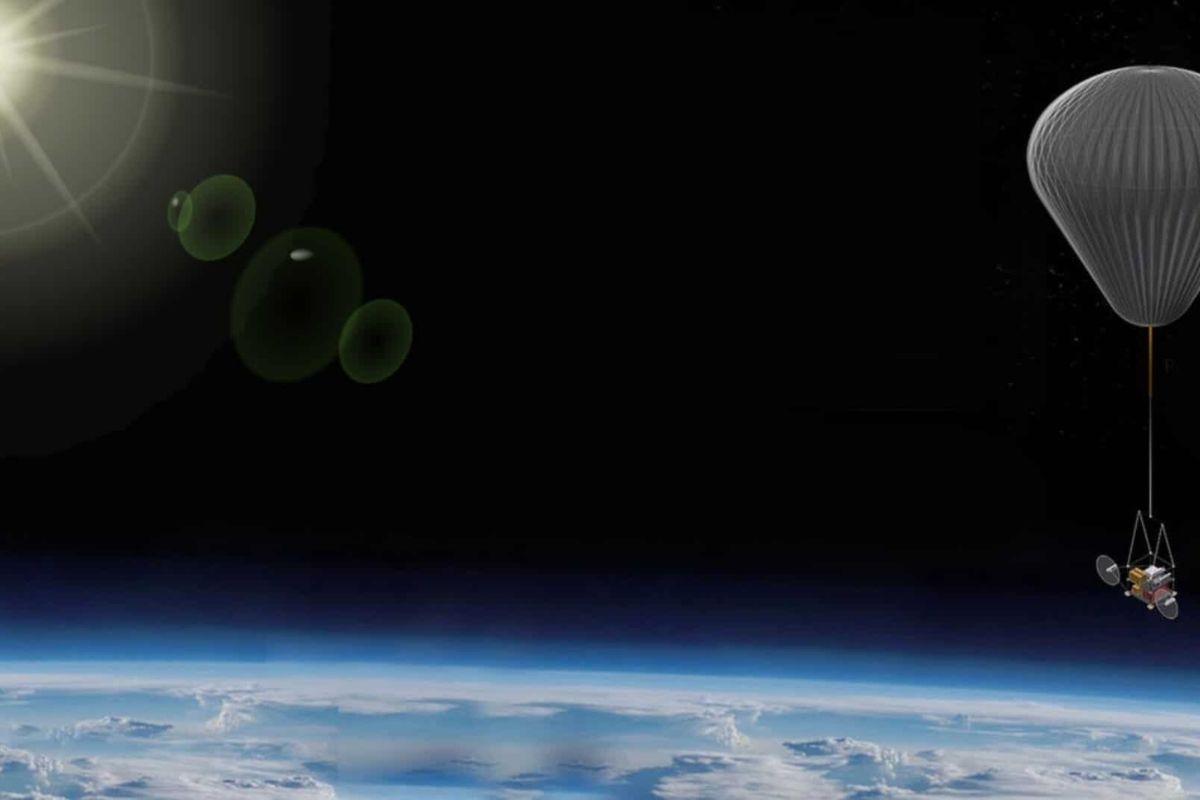
Led By Harvard University, The Controversial SCoPEx Geoengineering Project Studied Launching Particles Into The Atmosphere To Reflect Solar Light And Combat Global Warming, But Was Canceled Before It Even Started.
As the world seeks solutions to the climate crisis, scientists from Harvard University proposed a plan that seemed straight out of science fiction: dimming the Sun. This idea, at the center of a field of study known as solar geoengineering, was the basis for the Stratospheric Controlled Perturbation Experiment (SCoPEx), a geoengineering project led by Harvard University.
The premise was to test whether launching particles into the upper atmosphere could reflect sunlight back into space, mimicking the cooling effect of large volcanic eruptions. However, the project faced fierce opposition from indigenous groups, environmentalists, and scientists, and was officially canceled in March 2024, becoming a case study on the limits of science and ethics on a planet in crisis.
What Was The SCoPEx Project And Its Idea To Replicate A Volcano To Cool The Earth
The SCoPEx was not designed to be a geoengineering implementation but a small-scale scientific experiment. The primary goal of the Harvard researchers, such as Frank Keutsch and David Keith, was to collect real-world data to improve climate models, which, they believed, could be making geoengineering seem “too good”.
-
Heineken’s factory in Brazil produces 300 million beer cans in just 4 months, reaches 1 million hectoliters, received R$ 2.5 billion, and is already projecting an annual capacity of 5 million with sustainable technology.

-
Inside an active volcano in Africa, residents use volcanic rocks to build houses in an impressive setting.
-
After 14 years of waiting, a rammed earth mansion built in 1702 in the North Zone of São Paulo will become a park with leisure facilities and green areas, with a million-dollar investment.
-
With 2 unfinished nuclear reactors, up to 25 billion in costs, and proven fraud, the Nukegate case has left 800,000 consumers still paying today for energy that will never be produced.


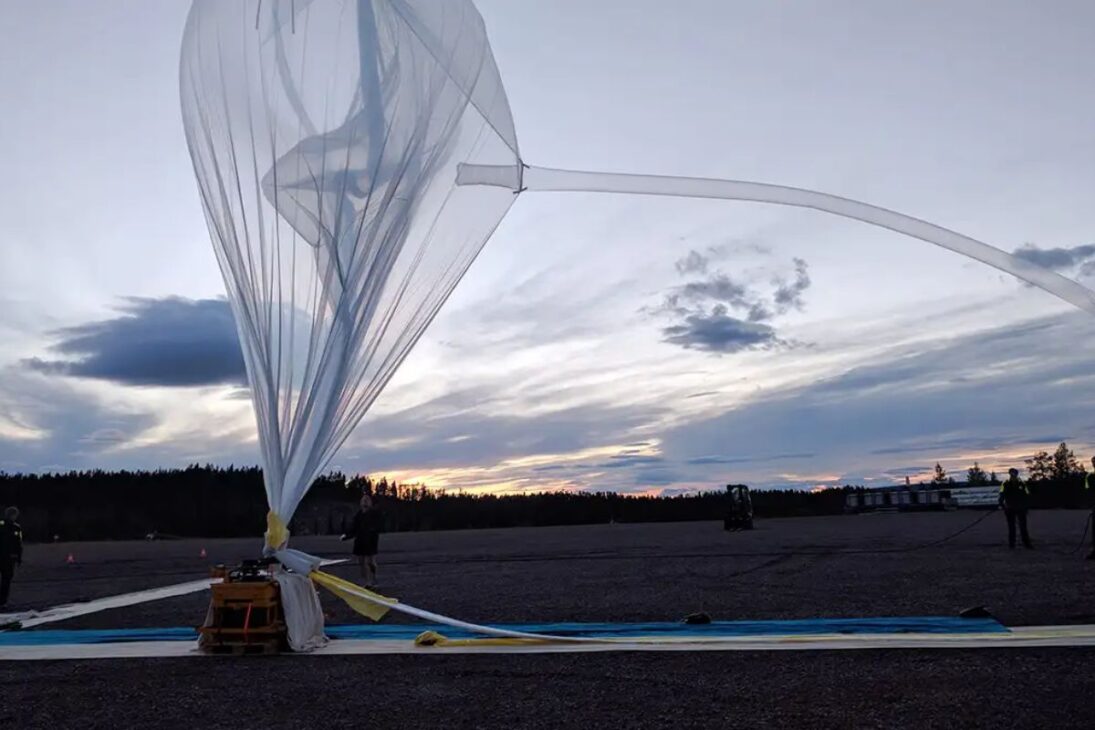
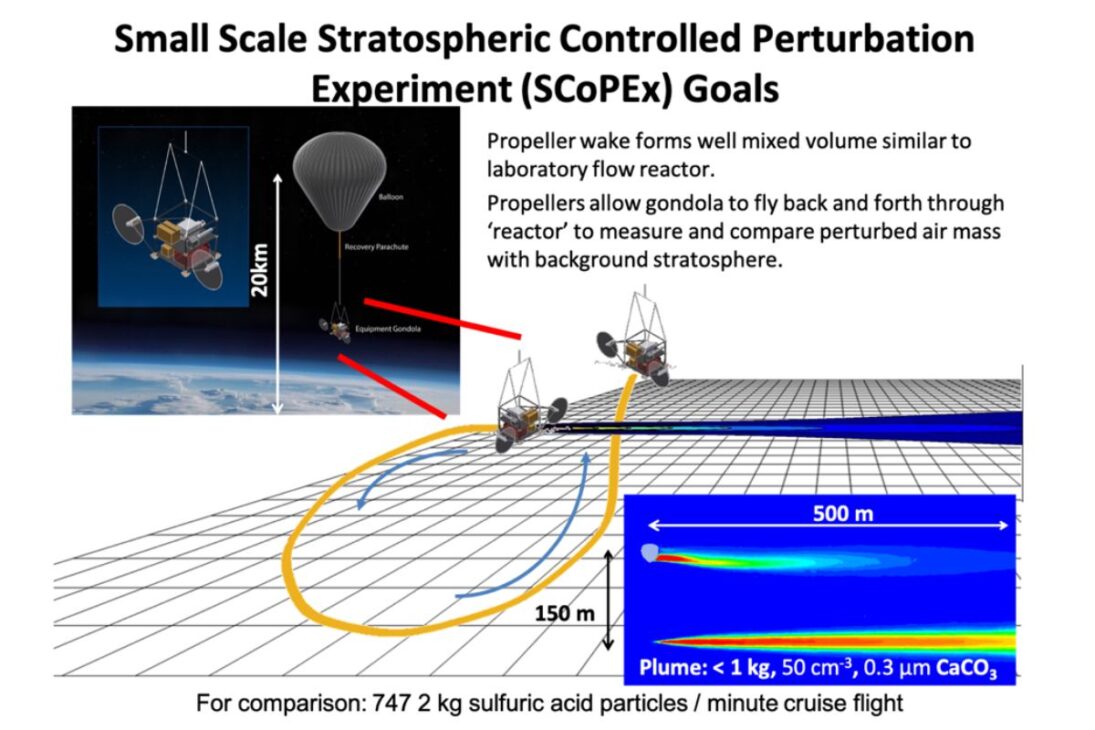
Despite the grand idea, the practical plan was modest. The proposal was to use a balloon to carry a package of instruments to 20 km in the stratosphere and release a small amount of material (from 100 grams to 2 kg), creating an air plume about a kilometer long. Sensors would then measure the effects of this ‘perturbation’, replicating in a ‘bottle’ what a volcano does on a planetary scale.
The Plan To Launch Particles Into The Atmosphere To Reflect Solar Light
The main material that the geoengineering project SCoPEx planned to test was calcium carbonate (CaCO₃), a common and non-toxic substance found in limestone. The theory was that calcium carbonate could effectively reflect sunlight and, crucially, with fewer chemical reactions that could damage the ozone layer, a major concern with sulfur aerosols naturally ejected by volcanoes.
The proponents of the project always emphasized the minute scale of the experiment to contextualize its risk. The amount of material to be released was compared to less than a minute of flight of a common commercial airplane. However, the idea of deliberately intervening in the stratosphere was what ignited the controversy.
Why Indigenous Groups And Environmentalists Were Against The Geoengineering Project?
The end of SCoPEx was not due to a technical failure, but the strong opposition it generated. The turning point was the attempt to conduct a test flight (without particle release) in Kiruna, Sweden, in 2021. The location is within the ancestral territory of the Sámi indigenous people.
Indigenous Opposition: The Sámi Council led the resistance, arguing that the project violated their right to Free, Prior and Informed Consent. For them, geoengineering represented the same extractive and colonial mindset that caused the climate crisis, an attempt to “fix” the planet with more technology instead of respecting its limits.
The “Moral Hazard”: The concept of ‘moral hazard’ was central to the opposition. Critics argued that the mere existence of a quick technological ‘solution’ would act as a dangerous painkiller: it could alleviate the symptom (the temperature), but would encourage governments and polluters to ignore the real disease (carbon emissions), with fatal long-term consequences.
Unknown Risks: Critics pointed to the immense and unpredictable risks of large-scale implementation, such as disruption of rainfall patterns (affecting monsoons and causing droughts) and the “termination shock” — an abrupt and catastrophic global warming if the system were suddenly turned off.
The Cancellation In March 2024: The End Of The Experiment That Never Happened
The strong opposition in Sweden led to the cancellation of the 2021 test flight, and the project entered a state of suspension. Ongoing pressure from activists and media coverage, which often portrayed the project sensationally as ‘Bill Gates’ plan to erase the Sun’, increased public distrust.
In 2023, one of the project leaders, David Keith, left Harvard, weakening internal momentum. Finally, on March 18, 2024, SCoPEx was officially canceled. Harvard University announced that the equipment developed would be repurposed for atmospheric research unrelated to geoengineering.
The Legacy Of SCoPEx
SCoPEx did not fail because of its science, which was never tested. It failed because its proponents underestimated the strength of social, ethical, and political objections. The legacy of Harvard’s geoengineering project is a clear lesson: for technologies with planetary impact, the social license to operate is not an obstacle to be overcome but the starting point of the entire journey. Without it, science, no matter how brilliant, has nowhere to go.
The saga of SCoPEx has become a case study on the governance of controversial technologies. As the debate over solar geoengineering continues, the project served as a warning that, in the face of a climate crisis, the search for solutions cannot ignore the principles of consent, justice, and the risks of playing God with the only planet we have.







Seja o primeiro a reagir!