





 Portuguese
  English
  Spanish
  5 min of reading
  0 comments


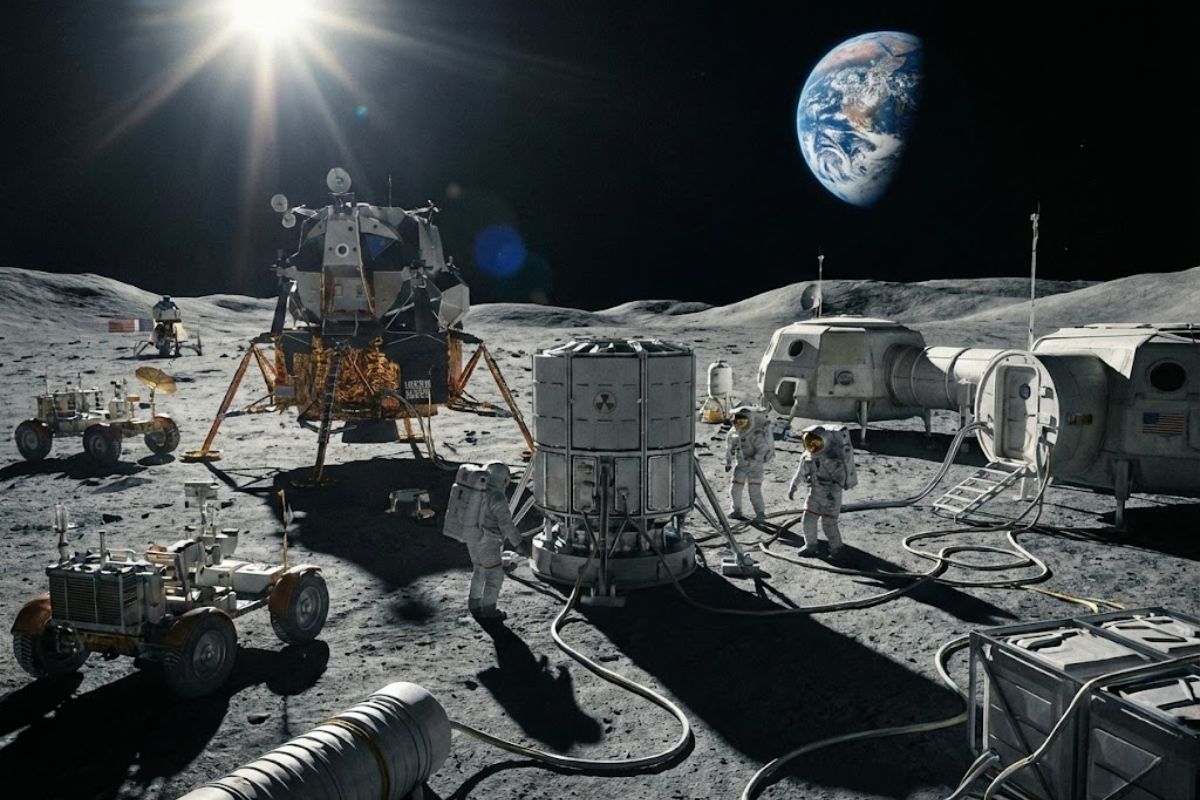
NASA And The U.S. Department Of Energy Sign Memorandum And Resume, In February 2026, The Fission Project For The Moon: An Autonomous, Lightweight, Safe Micro-Reactor With Years Of Operation Without Refueling, Capable Of Delivering At Least 40 kW And Supporting Artemis Program Bases On The Lunar Night.
The Moon is being treated again as infrastructure, not just as a destination, after NASA and the U.S. Department of Energy put on the schedule the idea of bringing fission nuclear energy to the lunar surface before 2030. What seemed like science fiction has entered the official calendar, with a compact and autonomous reactor.
The promise is straightforward: continuous energy to cross the long lunar night, when sunlight disappears for about two weeks, and to create a technological base capable of sustaining permanence, science, and logistics. At the center of the debate, the Moon becomes a real test for a system that also targets Mars and weighs heavily in the strategic race with China and Russia.
Why The Moon Turns Energy Into A Survival Issue

The Moon does not just “turn off” the landscape; it turns off the energy routine. When the lunar night arrives, the exclusive reliance on solar panels is limited, because generation drops precisely during the longest and harshest period to maintain continuous operations.
-
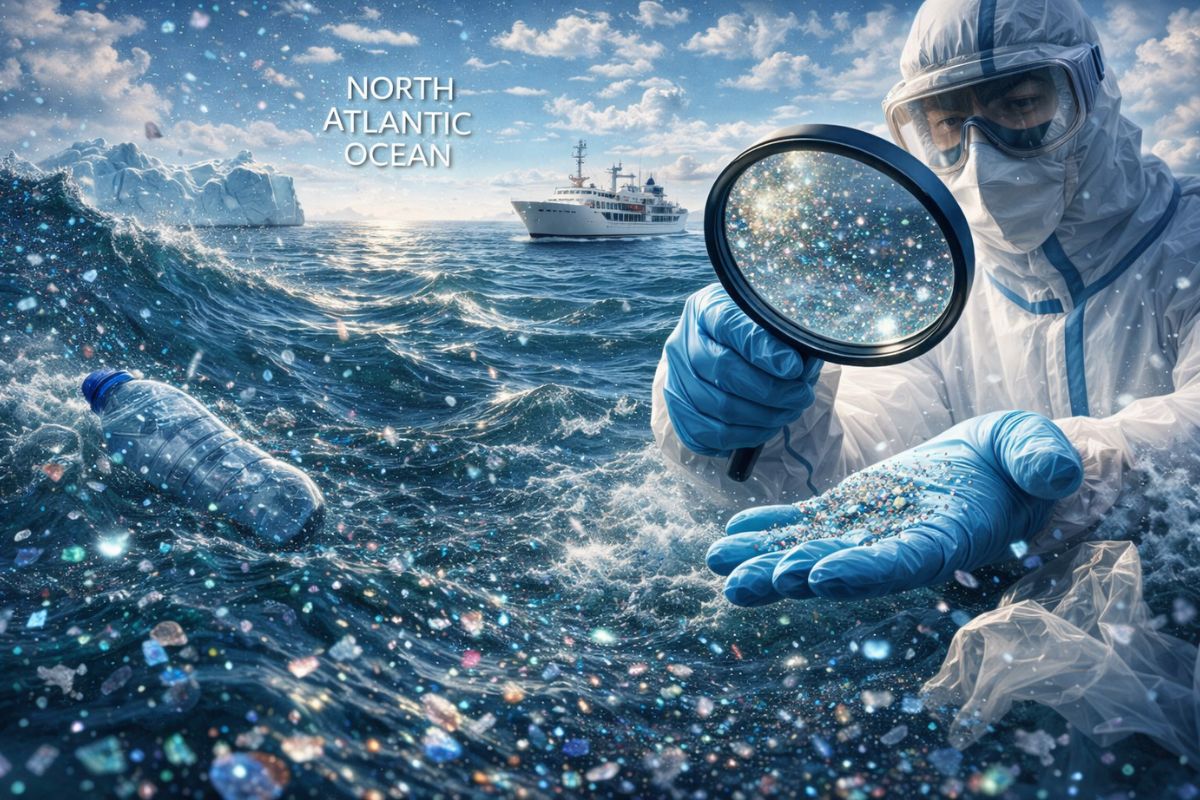
Scientists have finally discovered where the plastic that disappeared from the oceans went, and the answer is frightening: it fragmented into such tiny particles that they became invisible and now there are 27 million tons of nanoplastic just in the North Atlantic.
-
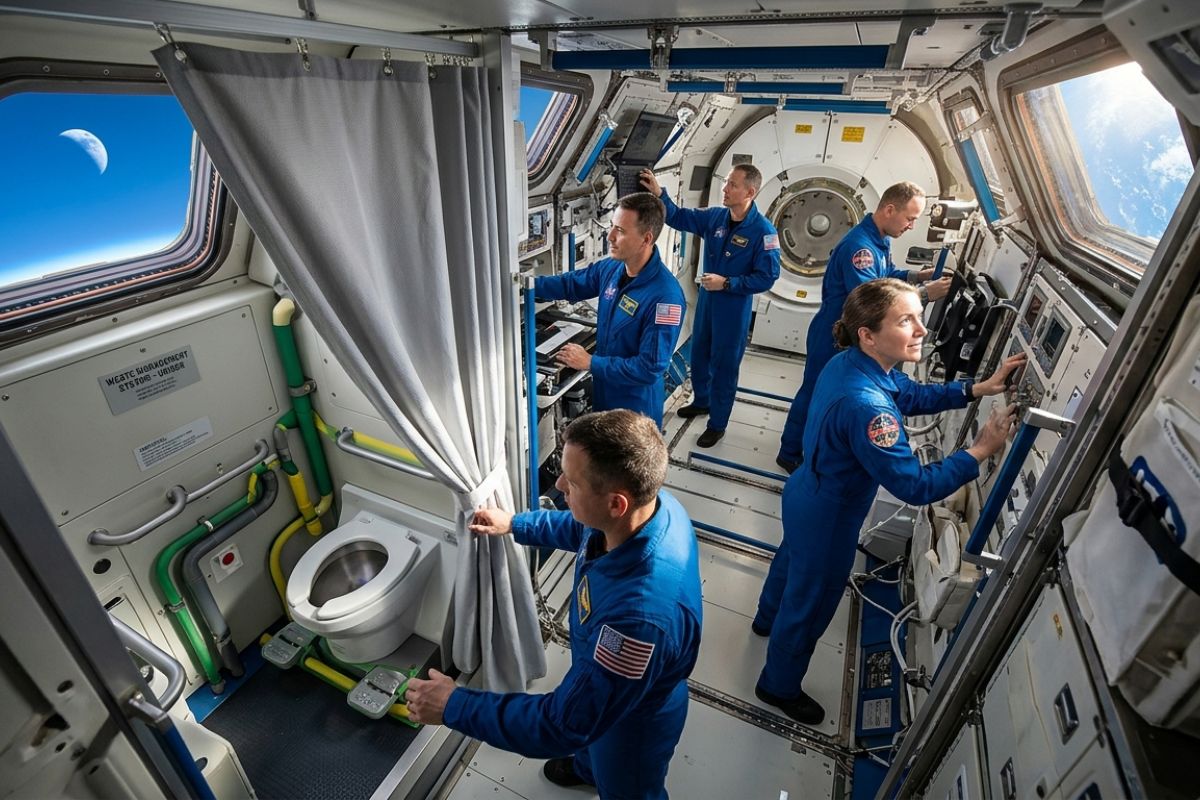
The Artemis II mission will take the Orion capsule back to the vicinity of the Moon with four astronauts, a private bathroom with a curtain, a system adapted for men and women, and a level of comfort that highlights how the Apollo era operated at the rawest limits of space exploration.
-
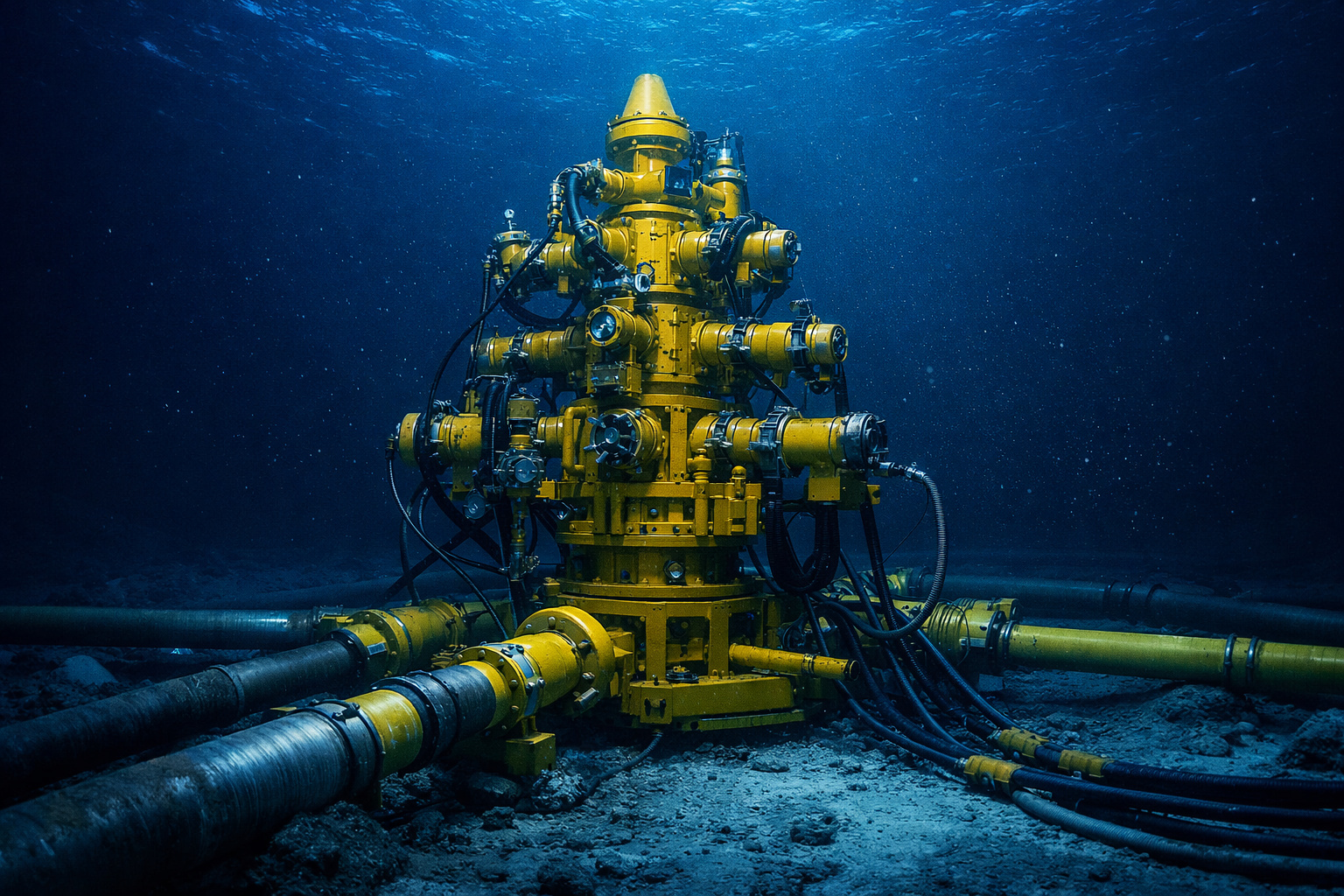
Giant structures on the seabed precisely control oil and reveal how high-tech underwater valves work.
-
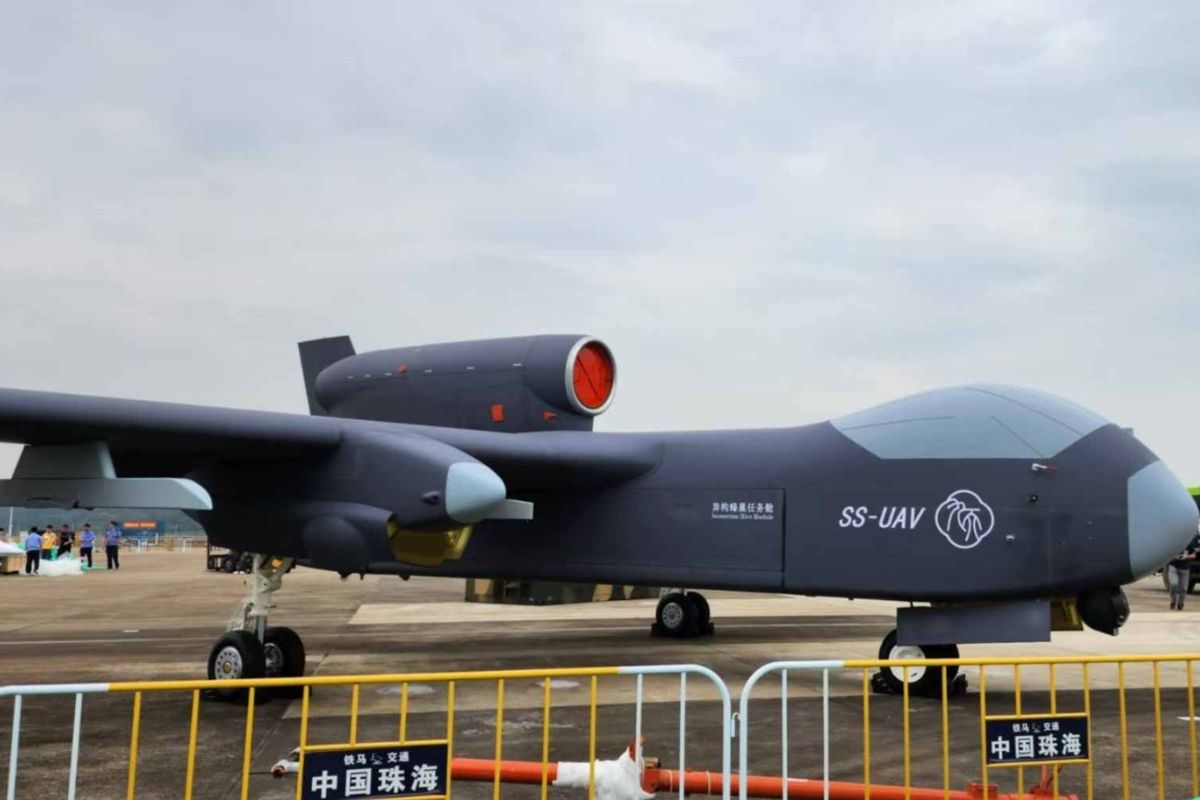
China has just tested a giant drone the size of a fighter jet with a wingspan of 25 meters that carries 6 tons, flies for 12 hours, and the most frightening part: it can launch entire swarms of smaller drones directly from the air.

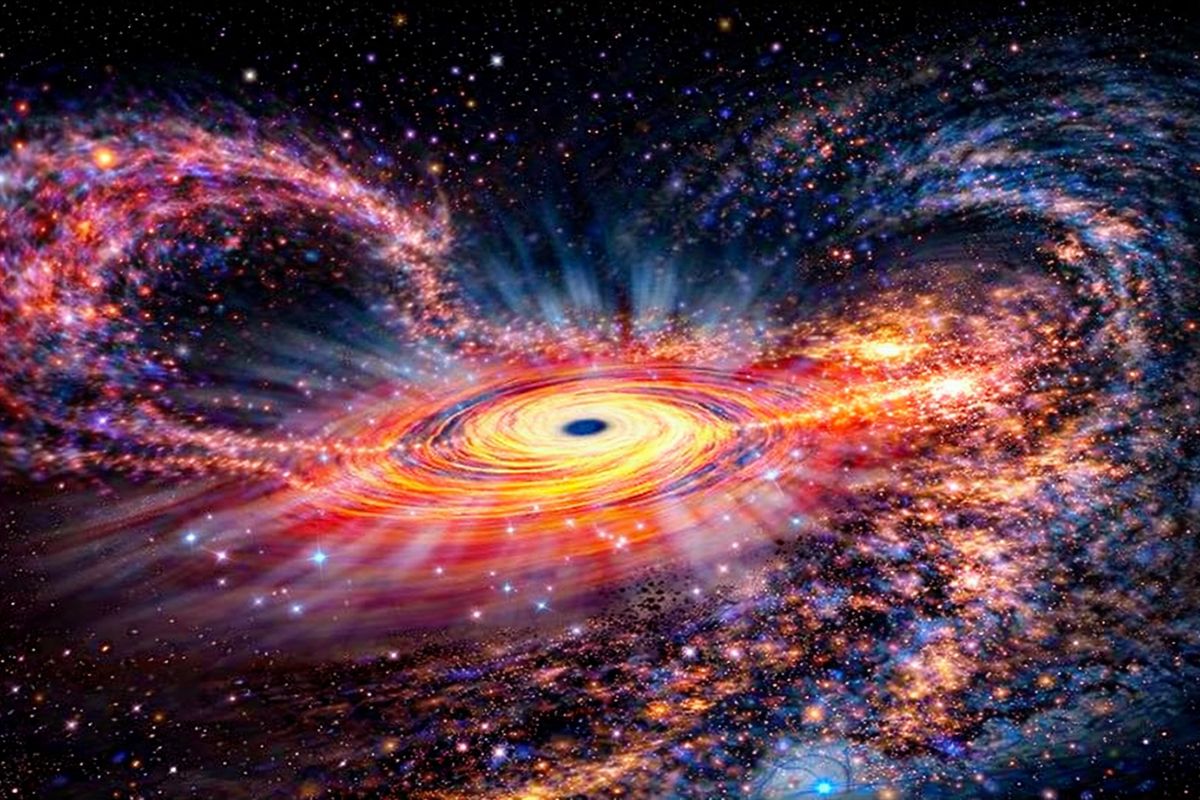
Two weeks of darkness is not a detail; it is a bottleneck in planning for bases, instruments, and life support.
This is where fission comes in as a proposal for stability. NASA describes nuclear energy as a way to sustain activities even in shaded areas, where solar energy is not viable, keeping communications, equipment, and experiments functioning for long periods.
In practice, the Moon stops being just a backdrop and becomes an environment that demands redundancy: if energy runs out, everything fails.
What Became A Schedule: Micro-Reactor On The Moon With A 2030 Goal
The renewed plan in February 2026 is based on a memorandum of understanding that reinforces NASA–DOE collaboration and pushes the goal of having a lunar surface reactor operational by 2030. The concept prioritizes small, lightweight, and safe micro-reactors, with a mass of less than 3,500 kg, designed to operate autonomously.
The stated expectation is that the system generates at least 40 kW of continuous energy, enough to maintain lighting, life support, and operation of equipment for an Artemis program infrastructure during the lunar night.
Besides the “how much,” the “for how long” is part of the argument: the proposal anticipates operation for years without refueling, which changes the type of missions possible on the Moon, with fewer interruptions and more permanence.
How Fission Works At The Core, And Why It Matters On The Moon
In terms of principle, the reactor follows the known logic: fission of uranium atoms releases heat, and that heat is converted into electricity.
The difference is not the “what,” but the “where”: doing this on the Moon means designing each component for an atmosphere-less environment, with abrasive dust and thermal variations that require extremely conservative engineering.
From an operational standpoint, fission offers something that solar energy cannot promise alone at the same level: continuous predictability, regardless of lighting and temperature.
This creates space for the Moon to support resource utilization systems on-site, stable communications, and scientific instruments that cannot stop with every cycle change, especially in permanently shaded areas.
Total Autonomy And Lunar Environment: The Challenges That Decide The “If” Of The Project
Even with the timeline pointing to 2030, the path is filled with difficult and non-trivial problems. One of them is heat dissipation in a vacuum: on the Moon, without air to help transfer heat, the design must anticipate how to efficiently and safely remove heat from the system.
The reactor needs not only to generate energy; it needs to “survive” thermally for long periods.
Another obstacle is lunar dust, which can interfere with moving parts, surfaces, and connections, in addition to the need for navigation and installation on unforgiving terrain. And there’s the most demanding component of all: autonomy.
Operating “alone” on the Moon means redundancies, fault tolerance, and very strict safety routines, because immediate assistance does not exist. On the Moon, any mistake costs weeks, not minutes.
Who Does What: NASA Integrates, DOE Licenses, Supplies And Ensures Safety
The division of responsibilities appears as the central piece of the plan. The DOE brings experience in nuclear fuel, reactor design, safety, and authorization processes, tasked with ensuring that the system meets performance requirements and regulatory demands.
This includes not only the reactor’s design but also what involves fueling, authorization, and preparation for launch.
Meanwhile, NASA handles the integration: fitting the energy system into the lunar architecture, connecting landing modules, surface systems, and possible commercial partners that provide additional infrastructure. The reactor is not an “isolated object”; it needs to interact with the entire base.
Without integration, energy becomes a resource without practical utility, and Artemis’s goal of sustaining a presence on the Moon and in orbit loses coherence.
Artemis, Mars, And The Strategic Advantage: Why The Moon Became A Geopolitical Argument
The official discourse does not only address science. The agreement is presented as part of a vision for American space leadership, connecting return to the Moon, building infrastructure to stay there, and investments to enable the next leap towards Mars.
NASA Administrator Jared Isaacman attributes this movement to the government’s space policy, focusing on remaining on the Moon as a step to go further.
From the DOE’s side, Secretary Chris Wright frames the project as a continuation of a legacy of American science and innovation and speaks of one of the greatest technical achievements in the history of nuclear energy and space exploration.
Behind the phrases lies the calculation: if the Moon becomes a “forward outpost” with continuous energy, it also becomes a platform for capability and influence.
The Moon stops being a symbol and becomes strategic infrastructure, especially when the text mentions the competition with China and Russia as a race to be the first to solidify presence and technology.
If the timeline is met, the Moon could gain a continuous energy source that changes the logic of human and scientific presence beyond Earth, reducing reliance on illumination windows and opening up space for more ambitious and longer operations.
At the same time, the project carries technical complexity, safety demands, and a political weight that makes the discussion go far beyond “how to generate electricity”.
Considering all this, what weighs more for you: the need for constant energy on the Moon to support bases and missions, or the risks and symbolism of bringing nuclear fission outside of Earth? And if the Moon really becomes the first “energy outpost,” do you think this accelerates real international cooperation or increases rivalry with China and Russia?






-

4 pessoas reagiram a isso.