





 Portuguese
  English
  Spanish
  4 min of reading
  0 comments


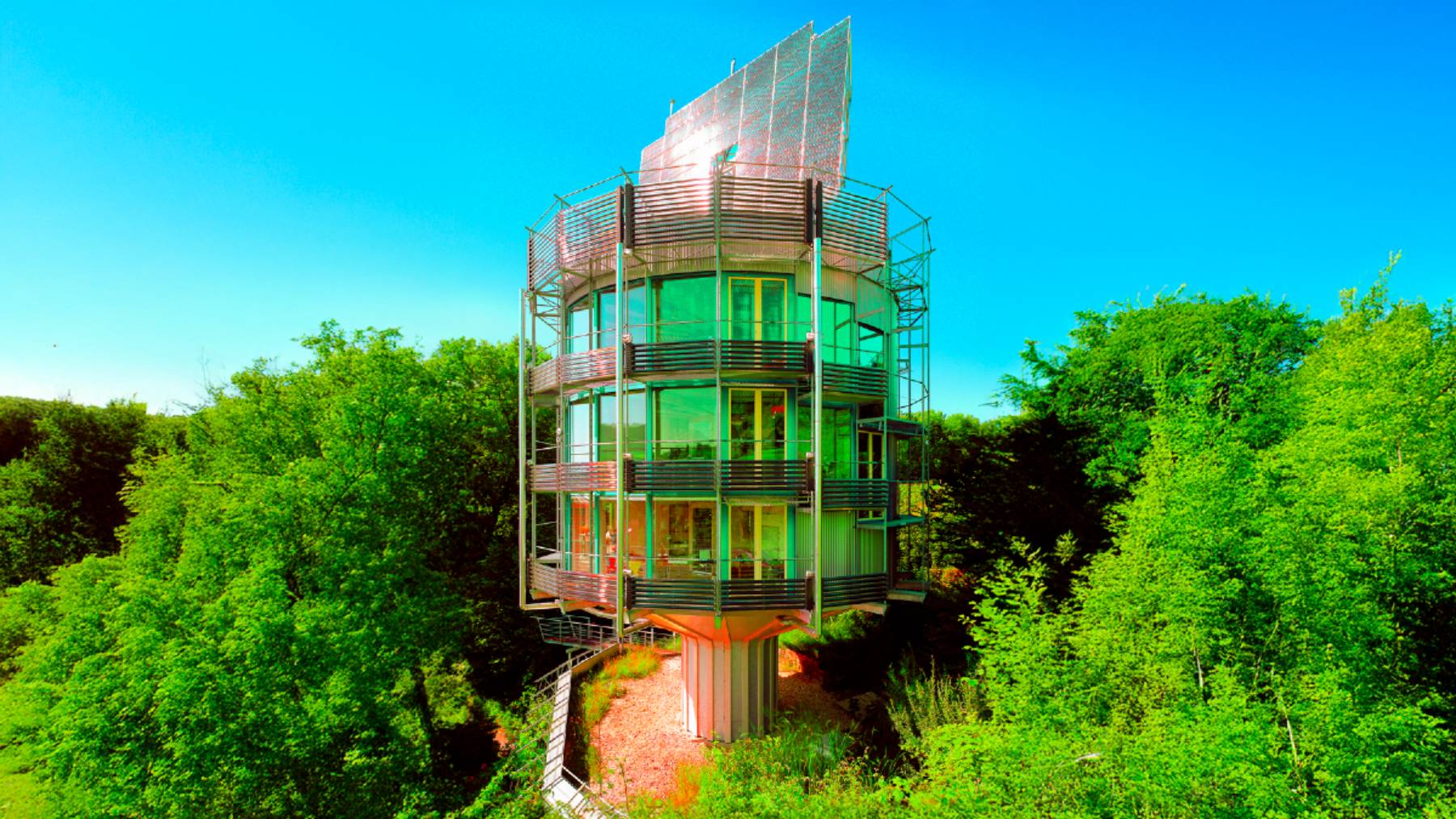
In Freiburg, Germany, A Building Turns 180° To Follow The Sun, Uses Solar Panels All Over Its Structure, And Generates More Energy Than It Consumes.
In the city of Freiburg, in southwestern Germany, there is a building that challenges everything people understand as a “building.” It slowly turns throughout the day, changes its orientation according to the position of the sun, is entirely covered with solar panels, and still achieves a rare feat: producing more energy than it consumes. This is the Heliotrope, one of the most famous solar buildings on the planet.
At first glance, many people believe it is some sort of setup or a temporary experiment. But the Heliotrope is real, has been in continuous operation since the early 2000s, and has become a global reference in sustainable architecture and clean energy generation.
Heliotrope: A Building That Truly Turns 180° To Follow The Sun
The main differentiator of the Heliotrope lies in its movement. The entire building is installed on a motorized rotating platform, allowing it to turn up to 180° throughout the day. This movement is not a marketing trick. It exists to fulfill two practical objectives:
-
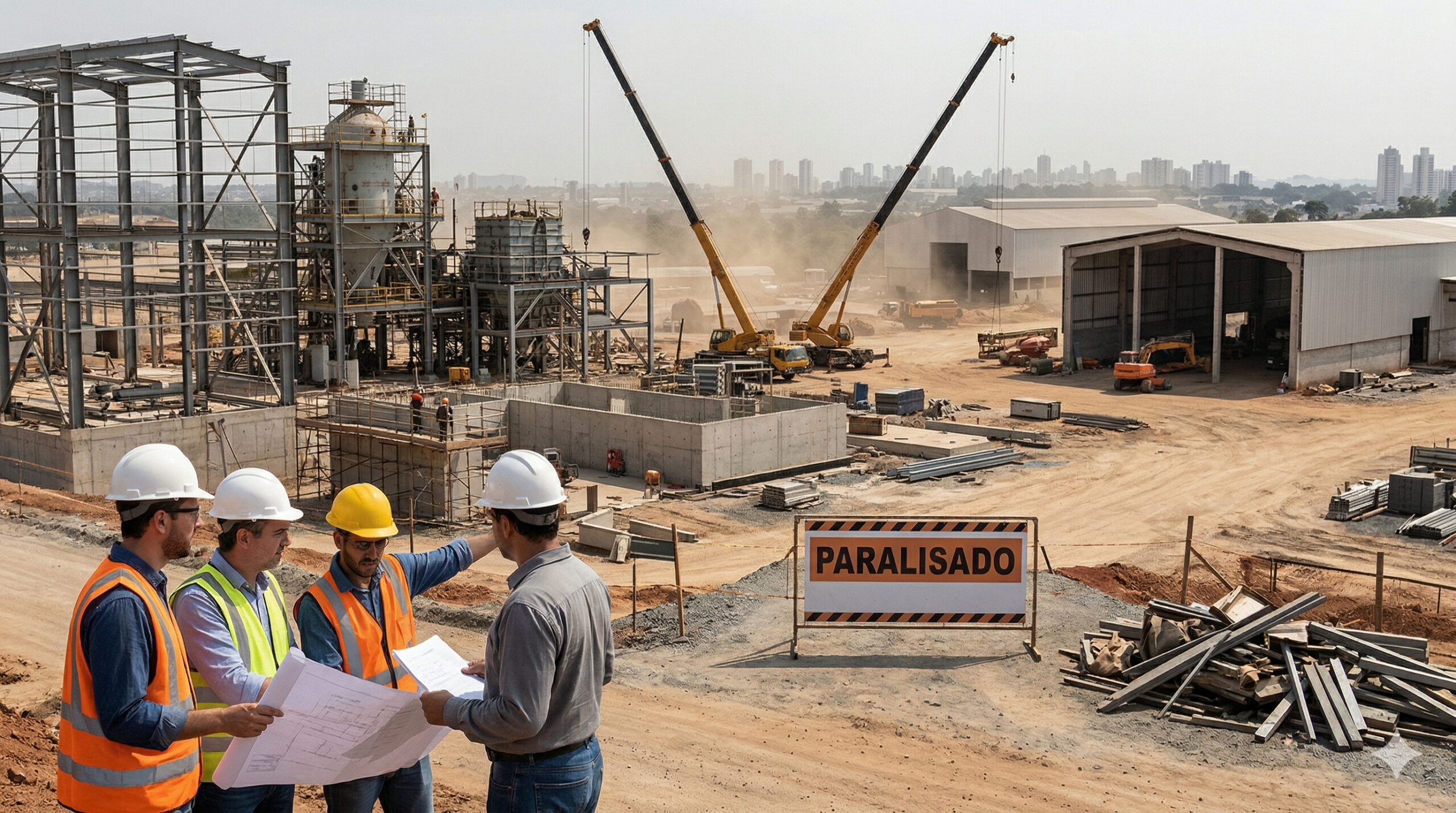
The lack of welders, electricians, and operators becomes a structural threat in 2025, with the construction industry and manufacturing already suffering from delays, cost pressures, and labor shortages in Brazil.
-
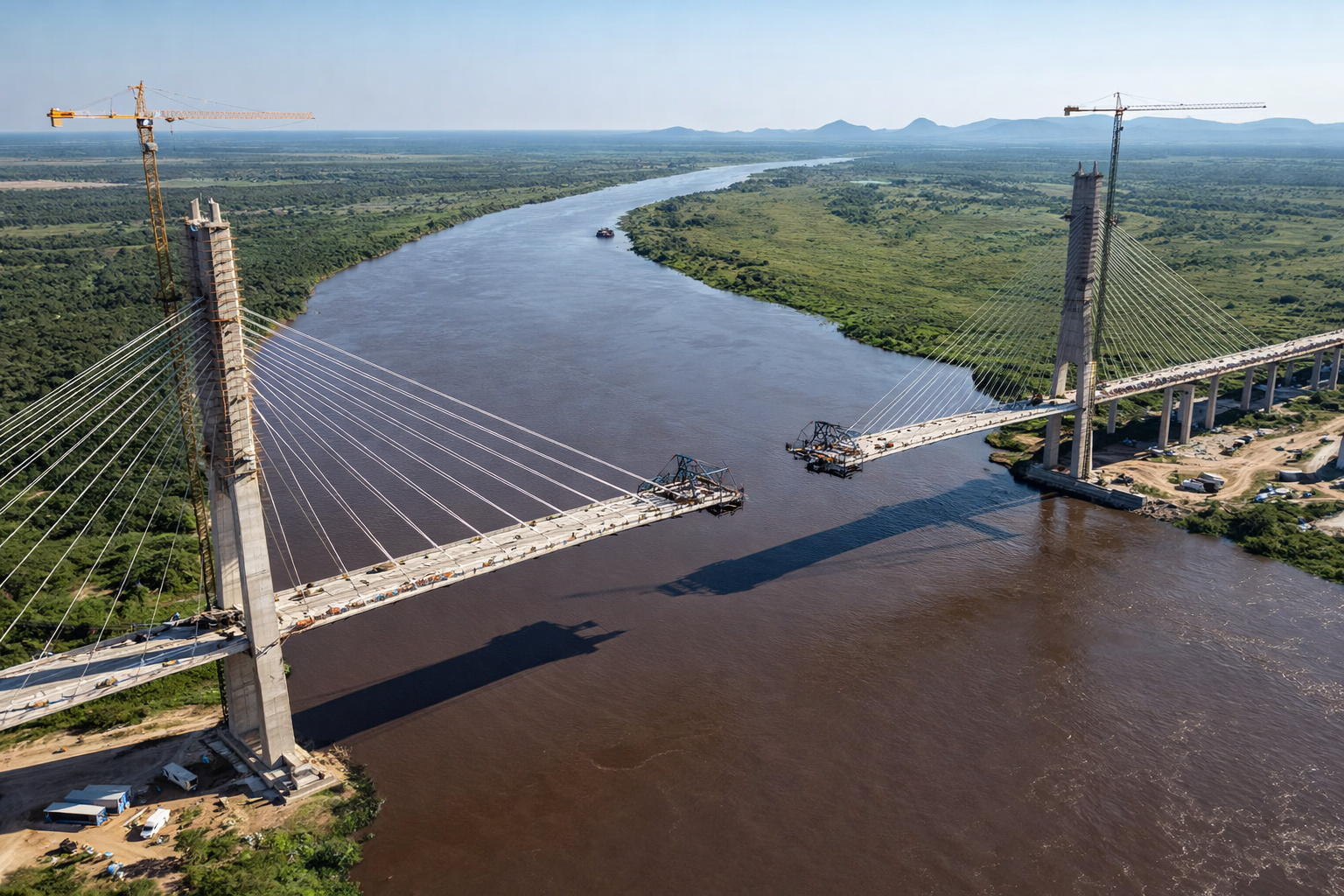
Brazil and Paraguay are just 46 meters away from a historic union on the bioceanic bridge that promises to revolutionize trade between the Atlantic and the Pacific.
-
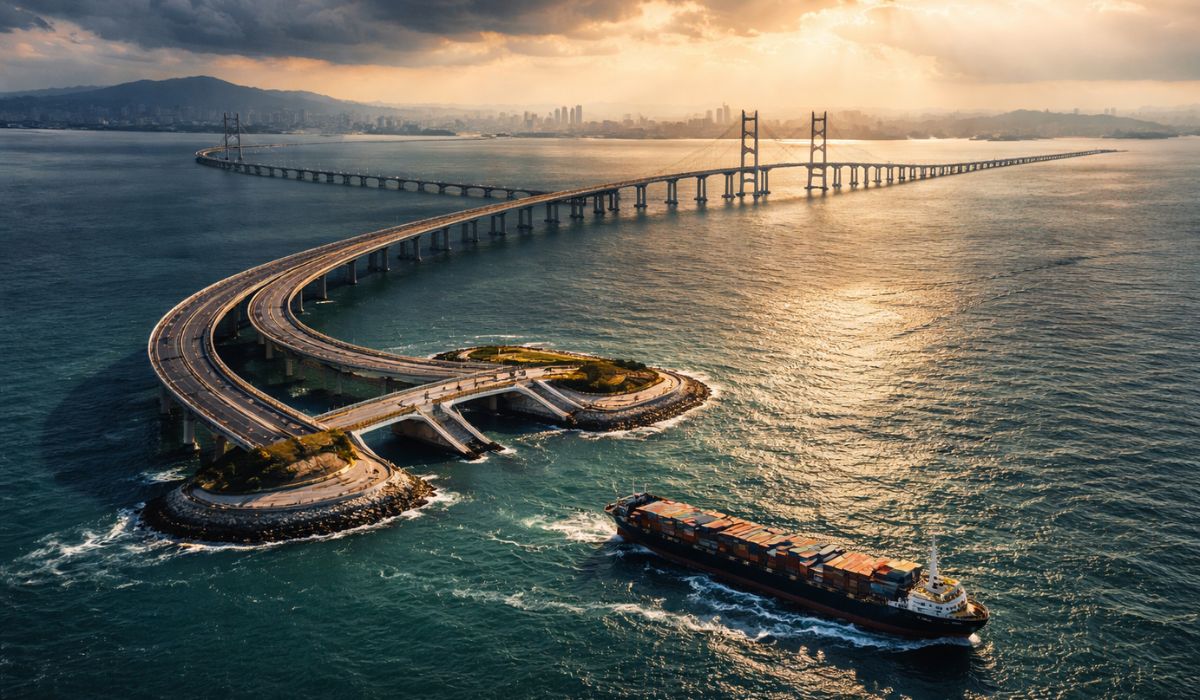
With 55 km over the sea, a cost of US$ 20 billion, and enough steel to build 60 Eiffel Towers, China’s largest project has connected Hong Kong, Zhuhai, and Macau in a colossal bridge that defies the logic of engineering.
-
A trick with joint compound transforms a Styrofoam ceiling into a plaster-like ceiling: leveled panels, wires and mesh at the joints, sand, paint, and change the environment while spending little today.

- Maximize solar energy capture, keeping the panels always facing the best angle of incidence.
- Adjust internal thermal comfort, with the building seeking more sunlight in winter and avoiding excessive heating in summer.
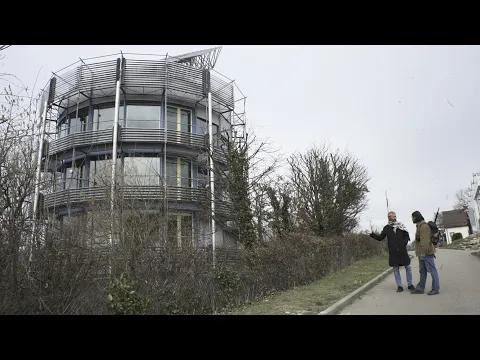

The turning is slow, almost imperceptible to those inside, but continuous. At the end of the day, the building will be completely repositioned compared to the morning.
Solar Panels On All Sides And On The Roof
The Heliotrope is practically a “giant solar panel in the shape of a building.” It employs:
- photovoltaic panels on the roof,
- solar modules integrated into the facades,
- thermal capture systems for water heating.
This combination allows the structure to generate electrical and thermal energy simultaneously, turning the building into a small urban solar plant. The curved design and rotation throughout the day ensure that the capture surface is always at the best possible angle.
Produces More Energy Than It Consumes: The “Positive Building” Concept
While most buildings in the world are designed to merely reduce consumption, the Heliotrope was designed to be energy positive. This means that:
- it generates more electricity than it uses for its own functioning,
- the surplus can be returned to the power grid,
- the building functions as a permanent urban microgenerator.
In practice, this includes energy for:
- lighting,
- internal electrical systems,
- heating,
- ventilation,
- equipment and automation.

This means that the building not only sustains itself but also helps supply other consumers.
A Project That Began As A Living Laboratory For Sustainability
The Heliotrope was created by German architect Rolf Disch, one of the pioneers of solar architecture in Europe. The proposal was not to build just another building, but to create a real and permanent experiment, which could be studied by universities, engineers, architects, and urban planners around the world.
Since then, the building has been receiving technical visits, documentaries, and delegations from various countries interested in understanding, in practice, how a construction that:
- turns by itself,
- generates its own energy,
- practically does not depend on the conventional power grid,
- maintains thermal comfort with minimal consumption.
Why Do So Many People Think The Building Is A “Lie” When They See It For The First Time
The shock comes from the combination of rare factors gathered in one place:
- a building that actually turns,
- solar panels integrated into the entire architecture,
- energy production greater than consumption,
- continuous operation for over two decades.
For those who see photos or videos for the first time, the feeling is of being in front of a futuristic project that should not yet exist. No wonder the Heliotrope almost always appears on lists of “buildings that look like fiction but are real.”
Freiburg And The Title Of Solar Capital Of Germany
The Heliotrope did not come about by chance. It is located in Freiburg, one of the most advanced cities in Europe in environmental and solar policies. The region has been investing for decades in:
- photovoltaic rooftops,
- zero-energy buildings,
- entire neighborhoods with self-generation,
- low-impact environmental architecture.
The rotating building has become the ultimate symbol of this urban philosophy, showing concretely that buildings need not only consume resources but can also produce them.
A Building That Anticipates What The Cities Of The Future Will Be Like
The Heliotrope proves that concepts that seem futuristic have been functioning in the real world for years. It anticipates a model of a city where:
- buildings automatically adapt to the sun,
- energy is generated locally,
- the dependence on fossil fuels decreases drastically,
- architecture ceases to be passive and begins to “react” to the environment.
More than a curiosity, the German rotating building has become a landmark of sustainable architecture worldwide and one of those rare cases where reality manages to be more impressive than fiction.









-

-

-

-

6 pessoas reagiram a isso.