





 Portuguese
  English
  Spanish
  4 min of reading
  0 comments


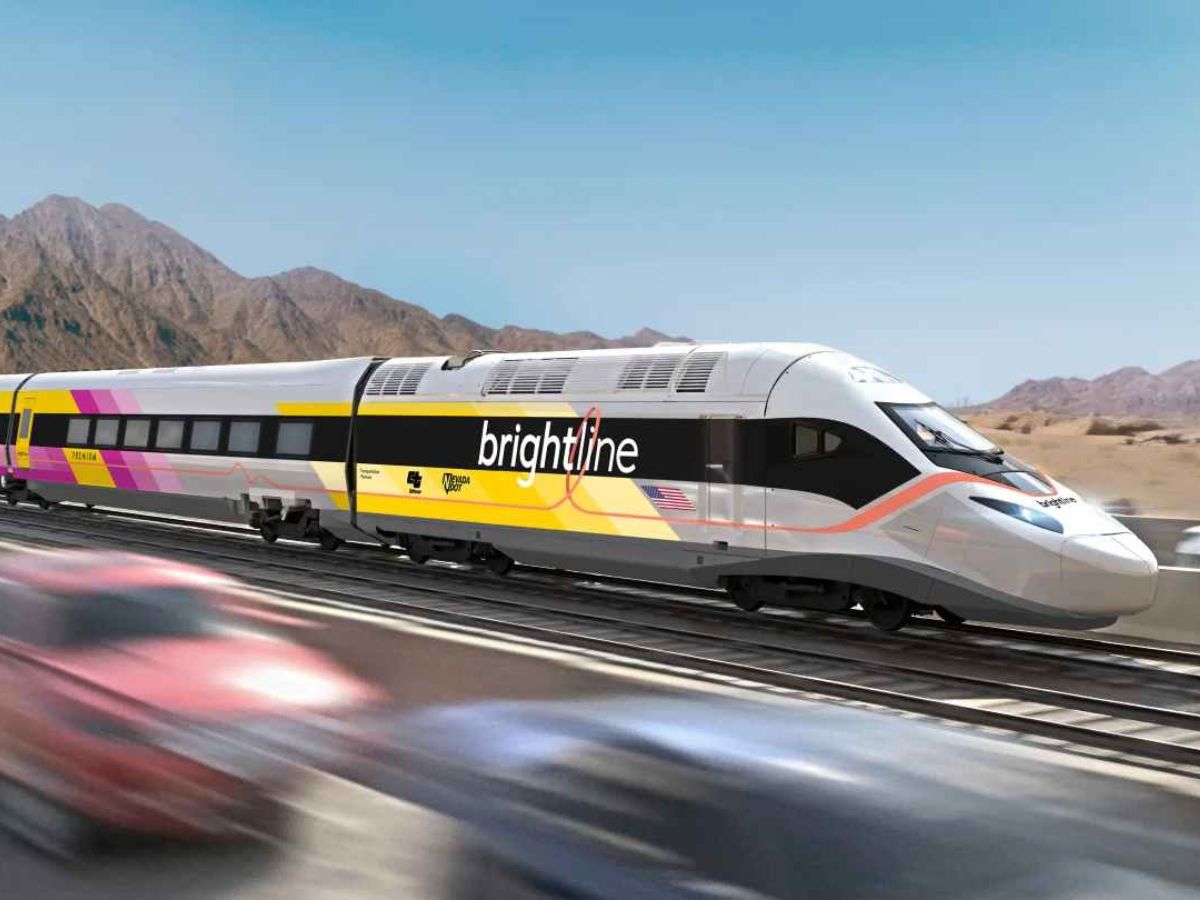
With an investment of US$ 12 billion and construction starting in 2024, the first private high-speed train in the U.S. promises to revolutionize travel and the economy of the American Southwest, connecting Southern California to Las Vegas in about two hours
The rail landscape of the United States is about to enter a new era with the Brightline West project. This endeavor, which will become the first private high-speed train in the U.S., aims to build a high-speed link between Southern California and Las Vegas, two of the country’s most iconic destinations. Construction is already underway and promises not only to alleviate traffic but also to establish a new paradigm for infrastructure development.
Understand the Brightline West project in depth, from its vision strategy and technology to its hybrid financing model and the transformative impact it can have on American transportation.
The Vision Behind The Project: An Alternative To I-15 Traffic
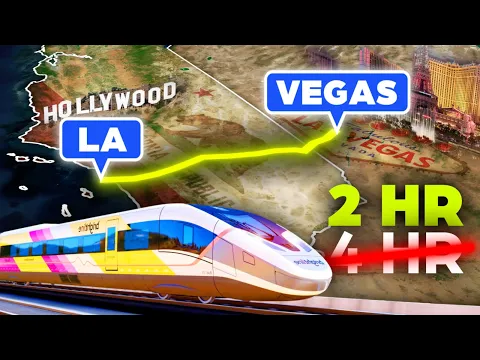
Brightline Holdings, the company behind the project, focuses on connecting pairs of cities that are “too short to fly and too long to drive.” The route between Southern California and Las Vegas is a perfect example. Currently, over 85% of the 50 million annual trips between the two destinations are made by car along the congested Interstate 15 (I-15).
-
A retired IT professional built a 22-meter boat in his backyard in Oklahoma with a school bus engine, light pole masts, and handmade watertight doors to become the redneck version of Jacques Cousteau.
-
China is building a city in Brazil: a complex with an investment of R$ 5.5 billion comes to light, but allegations involving workers draw attention.
-
While Argentina buys old war equipment, Brazil is keeping an eye open and joins the select group of nations with advanced military technology by investing $5.2 billion, producing 36 Gripen fighters in the country, and reducing operational costs.
-
Brazil on alert? Why invading Brazil is a NIGHTMARE for the USA: 8.5 million km², 213 million inhabitants, Amazon covering 60% of the territory, trillion-dollar war, and resistance that even 13,000 aircraft could not control.

Brightline West emerges as a fast, eco-friendly, and reliable alternative, with the potential to remove about 3 million car trips from the roads annually. The official groundbreaking ceremony took place in April 2024, and construction began at the end of the same year, with the service launch planned for 2028.
Inside The Route And The Trains
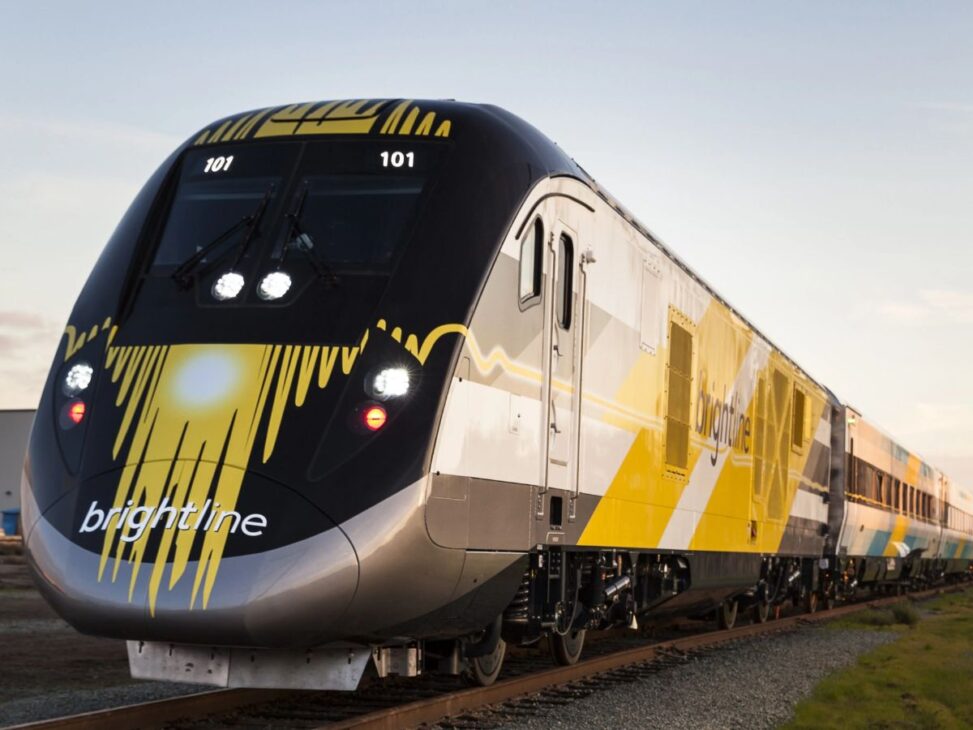
The route of 351 km (218 miles) will be built mostly in the median strip of the I-15, a strategy that minimizes the need for land acquisition and environmental impacts. The project will feature four stations:
Las Vegas (NV): near the famous Strip.
Victor Valley (Apple Valley, CA): a future regional hub.
Hesperia (CA): for local passengers.
Rancho Cucamonga (CA): the southern terminal, with a direct connection to the Metrolink suburban train system.
The fleet will consist of ten American Pioneer 220 (AP220) trains, supplied by Siemens. These trains, capable of reaching operational speeds of 300 km/h (186 mph), will be the first high-speed trains truly manufactured in the U.S., at a new Siemens facility in New York. The journey between Las Vegas and Rancho Cucamonga is projected to take approximately 2 hours and 10 minutes.
A US$ 12 Billion Public-Private Hybrid
The total cost of Brightline West is estimated at US$ 12 billion. The financing structure is a hybrid model that combines private investment with strategic government support.
Federal Grant: the project received a crucial grant of US$ 3 billion from the Bipartisan Infrastructure Law, a federal infrastructure law.
Private Activity Bonds (PABs): the U.S. Department of Transportation allocated a total of US$ 5.5 billion in tax-exempt bonds for the project.
Private Capital: the remainder of the investment comes from private capital, led by Fortress Investment Group, the parent company of Brightline.
The Benefits Beyond Speed
Projections indicate that Brightline West will have an economic impact exceeding US$ 10 billion. The project is expected to create over 35,000 construction jobs (with more than 10,000 unionized) and over 1,000 permanent jobs.
The commitment to sustainability is a pillar of the project. The train fleet will be 100% electric, aiming to operate with zero emissions. It is estimated that the system will avoid emitting over 400,000 tons of CO₂ per year. Additionally, in partnership with Caltrans, the project includes the construction of three new wildlife crossings to protect desert bighorn sheep and other species.
The Future Of HSR In America, The Legacy Of The First Private High-Speed Train In The U.S.

Brightline West faces the inherent challenges of a megaproject, including revising the completion timeline to 2028, which means it will not be operational for the Los Angeles Olympics. However, its development model, which contrasts with the difficulties of public projects like the California High-Speed Rail (CAHSR), positions it as a defining case study.
The success of the first private high-speed train in the U.S. could serve as a catalyst for a national high-speed network, validating a new hybrid approach to public-private investment. If Brightline West fulfills its promises, it could indeed usher in a new era for rail transportation in the United States, demonstrating a viable path to faster, cleaner, and more efficient mobility.





Seja o primeiro a reagir!