





 Portuguese
  English
  Spanish
  4 min of reading
  0 comments


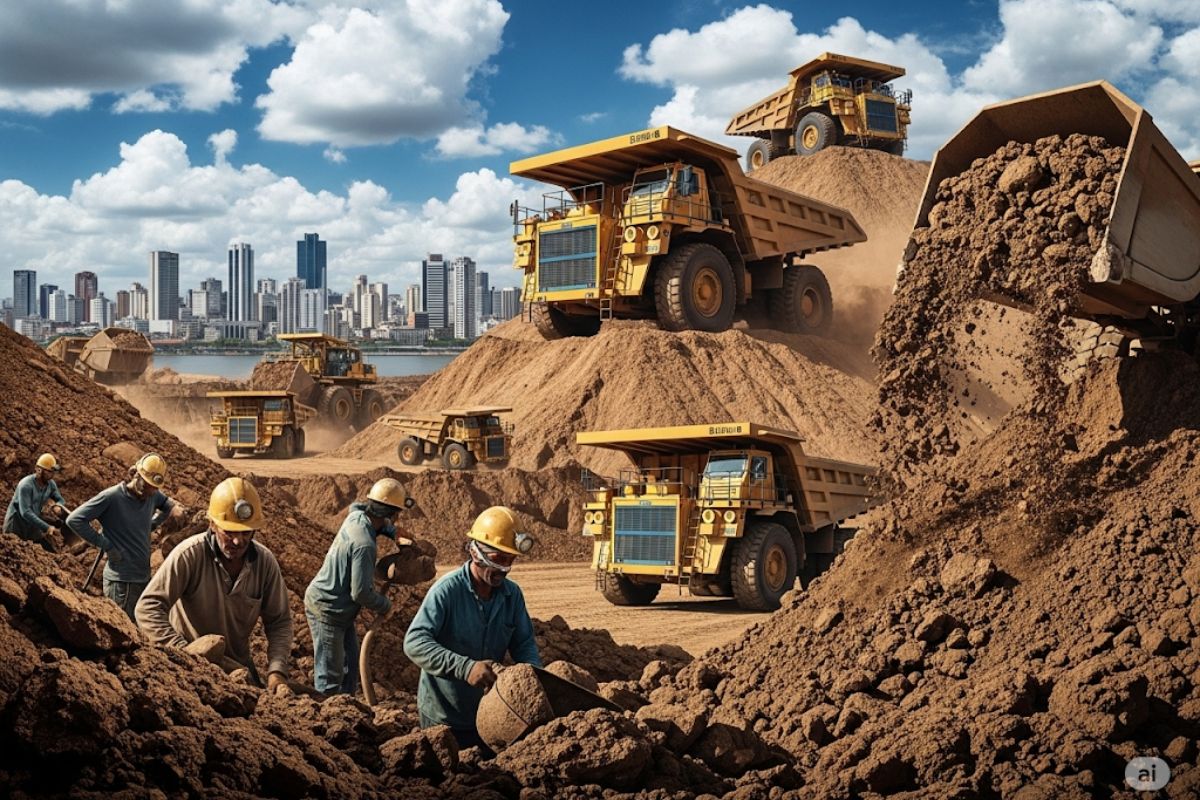
The Australian Company Viridis Mining and Minerals Advances with Its Ambitious Colossus Project, Aiming to Explore Rare Earths in Minas Gerais and Create an Integrated Supply Chain in Brazil, Focusing on Sustainability and Innovation.
Viridis Mining and Minerals (ASX: VMM) is at the center of a strategic movement to position Brazil on the global map of rare earth production. Its Colossus Project, located in Minas Gerais, promises to be a landmark in the exploration of these critical minerals, essential for energy transition and cutting-edge technologies.
Understand Viridis’s plans and operations in Brazil. We will address the specifics of the Colossus Project, the Viridion joint venture for vertical integration of the production chain, the innovative partnership with UNIFAL-MG for research and development, and the challenges and opportunities of this initiative in the growing market of rare earths.
Viridis Mining and Minerals: Strategic Focus on Brazilian Rare Earths
Viridis Mining and Minerals is a mineral exploration company listed on the Australian stock exchange (ASX). Recently, the company has redirected its primary focus towards the development of projects for Rare Earth Elements (REE) from Ionic Adsorption Clay (IAC) in Brazil. A key factor for Viridis’s credibility in executing its projects in the country is the presence of an executive leadership team with deep local experience, including professionals with a background in Brazilian niobium and rare earth mining.
-
Brazil extracts 26.3 million tons of ore from what was previously treated as waste, transforming residues into wealth, producing over 3 million tons of sand, and demonstrating how national mining is relearning to generate value.
-
A $3.5 billion megaproject in Latin America pumps desalinated seawater at 1,050 liters per second over 194 km to keep a copper supermine in the Andes operational for another 20 years.
-
A hidden mine in the Andes valued at nearly R$ 1 trillion is starting to attract global attention, containing copper, gold, and silver, and raises an intriguing question: why do Argentina and Chile need to act together to exploit this gigantic wealth?
-
A silent discovery in the interior of Bahia could change the future of energy in Brazil: a uranium reserve in Lagoa Real has an estimated capacity to produce 400 tons per year and is already attracting the attention of energy sector specialists.
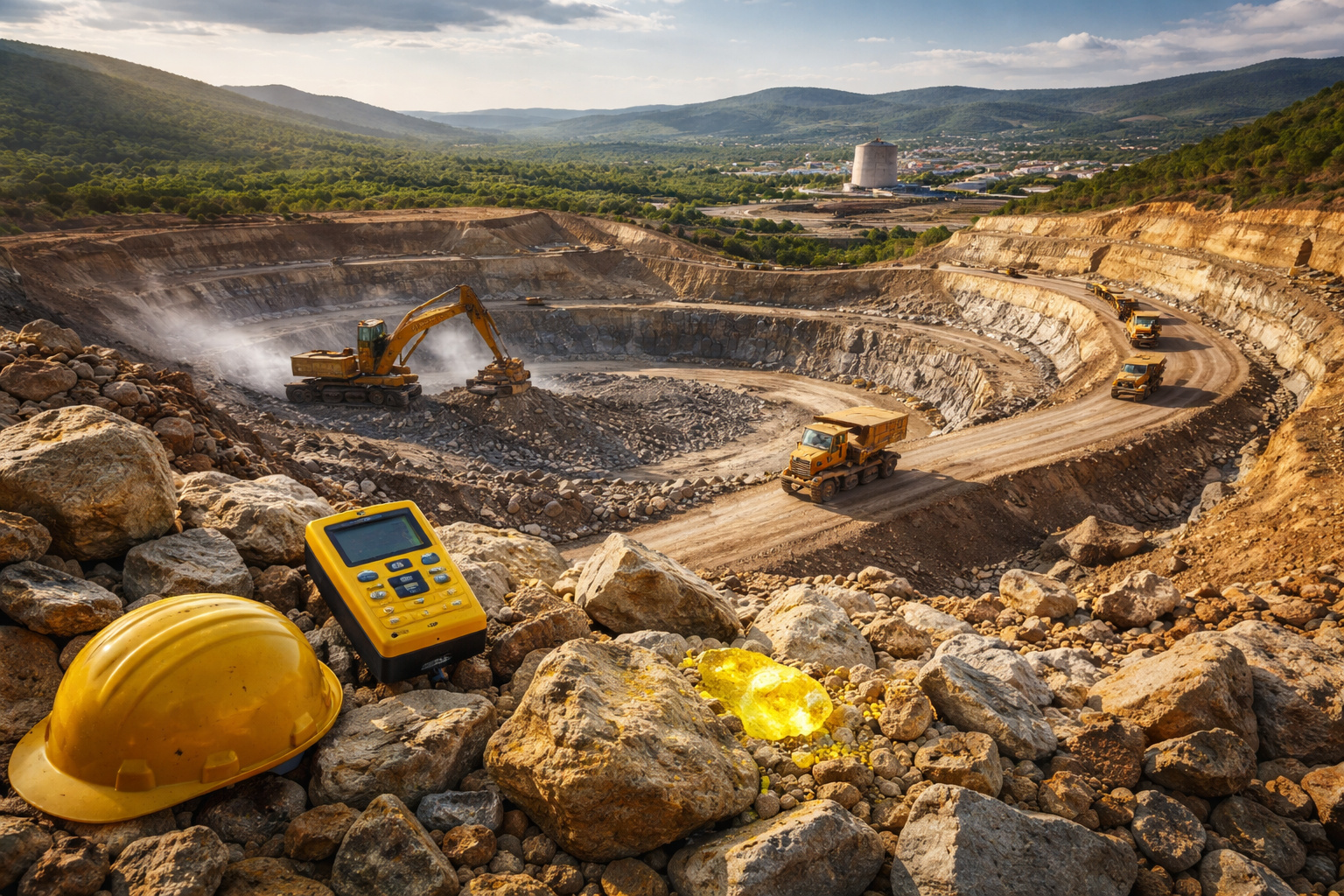

The strategic goal of Viridis is ambitious: to develop a fully integrated rare earth supply chain, with the vision of being the first of its kind outside of China, the current global leading producer.
Colossus Project: A Giant of Ionic Clay Rare Earths in Minas Gerais
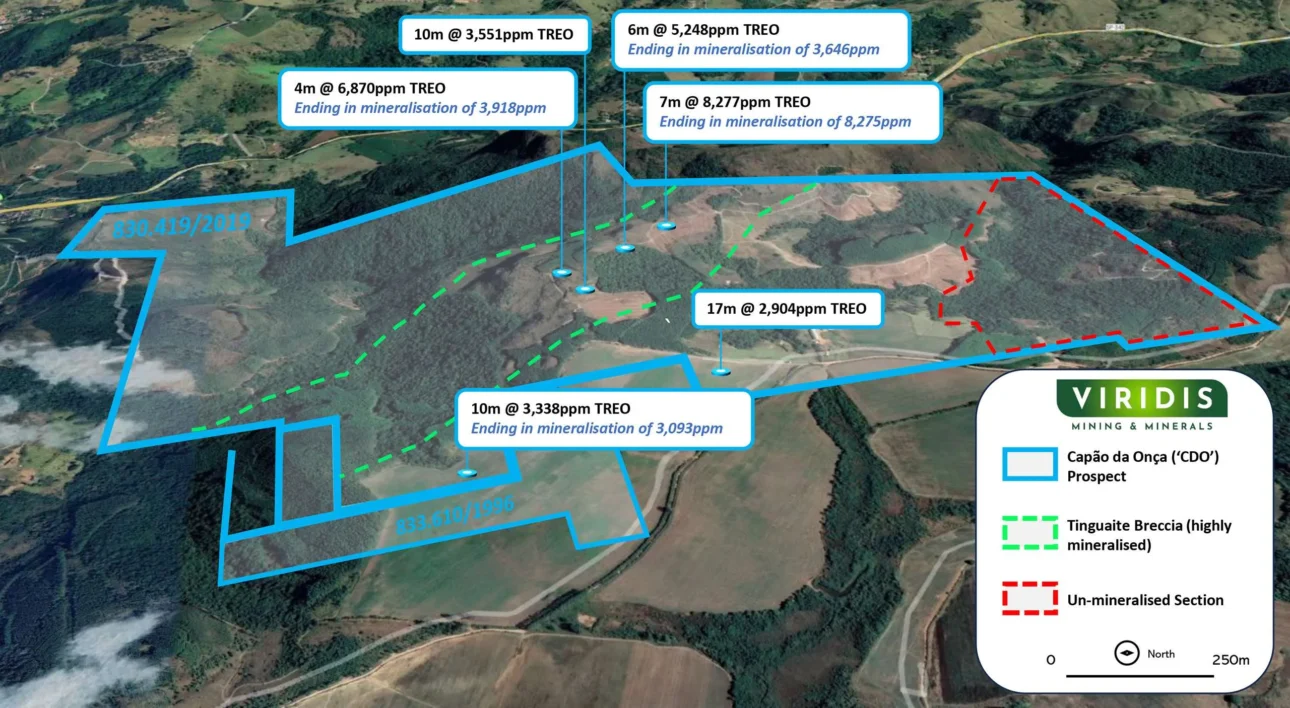
The main venture of Viridis in Brazil is the Colossus Project, located in the Poços de Caldas Alkaline Complex in Minas Gerais, extending into the neighboring municipality of Caldas. This region is known for its mining tradition. The project has a significant global mineral resource, according to the JORC standard, of 493 million tons (Mt) with an average grade of 2,508 parts per million (ppm) of Total Rare Earth Oxides (TREO). The focus of the exploration is on high-value Magnetic Rare Earth Oxides (MREO) – such as neodymium, praseodymium, dysprosium, and terbium – which also exhibit low levels of impurities and radionuclides.
The planned mining method for Colossus is open-pit extraction, utilizing direct excavation, which is facilitated by the soft nature of ionic clay mineralization, eliminating the need for explosives. The processing of the ore will involve leaching with ammonium sulfate. The initial investment (CAPEX) for a plant with a capacity to process 5 million tons per year (Mtpa) is estimated between US$287 million and US$373 million, with first production or nameplate production expected to occur between 2027 and 2028.
Viridion: Verticalizing the Rare Earths Production Chain in Brazil
To strengthen its integration strategy, Viridis Mining and Minerals established the Viridion joint venture, in partnership with the also Australian Ionic Rare Earths (ASX: IXR). The goal of Viridion is to become the only local source of separated and purified rare earth oxides in Brazil and Latin America.
Viridion’s initiative will initially focus on recycling end-of-life permanent magnets, such as those found in wind turbines and magnetic resonance imaging equipment, using Ionic Rare Earths’ proprietary RRT (Magnet Recycling) technology. Additionally, Viridion will apply the Selective Separation Technology (SST) from its partner. It is estimated that this arm of the operation could meet up to 7% of global MREO demand and access significant Brazilian government funding initiatives for strategic minerals.
Innovation and Training: The Partnership with UNIFAL-MG
A fundamental pillar in Viridis’s strategy is the partnership with the Federal University of Alfenas (UNIFAL-MG) to create the Rare Earth Research and Processing Center (CPTR) on the university campus in Poços de Caldas. This center, with an anticipated investment that may exceed R$ 50 million, is expected to begin operations in the second quarter of 2026.
The main objectives of the CPTR include consolidating and improving the Colossus Project through a pilot-scale plant. This plant will allow for the validation of processing technologies and environmental parameters. Additionally, the center aims to train a skilled workforce for the rare earth sector and foster technological innovation in Brazil. UNIFAL-MG emphasizes that its collaboration with Viridis is strictly limited to research and development activities at the CPTR, not involving participation in mineral extraction.
Viridis’s Approach to the Colossus Project
Viridis Mining and Minerals declares a strong commitment to sustainable and responsible mining practices in its Colossus Project. Planned environmental measures include recirculation systems that allow for the reuse of 75% of process water, the elimination of traditional tailings dams through the use of dry stacking of inert waste, and the use of 100% renewable energy sourced from the power grid (hydroelectric and solar).
The project is expected to bring socioeconomic benefits to the Poços de Caldas and Caldas region, such as job creation (approximately 120 direct jobs at the mine and 40 at the CPTR), the development of the local production chain, and increased royalty (CFEM) revenues for the municipalities. The environmental licensing process is underway, with the Environmental Impact Study (EIA/RIMA) for the project’s North Concessions submitted to the Minas Gerais State Foundation for the Environment (FEAM) and a public hearing held in May 2025.







Seja o primeiro a reagir!