





 Portuguese
  English
  Spanish
  4 min of reading
  0 comments


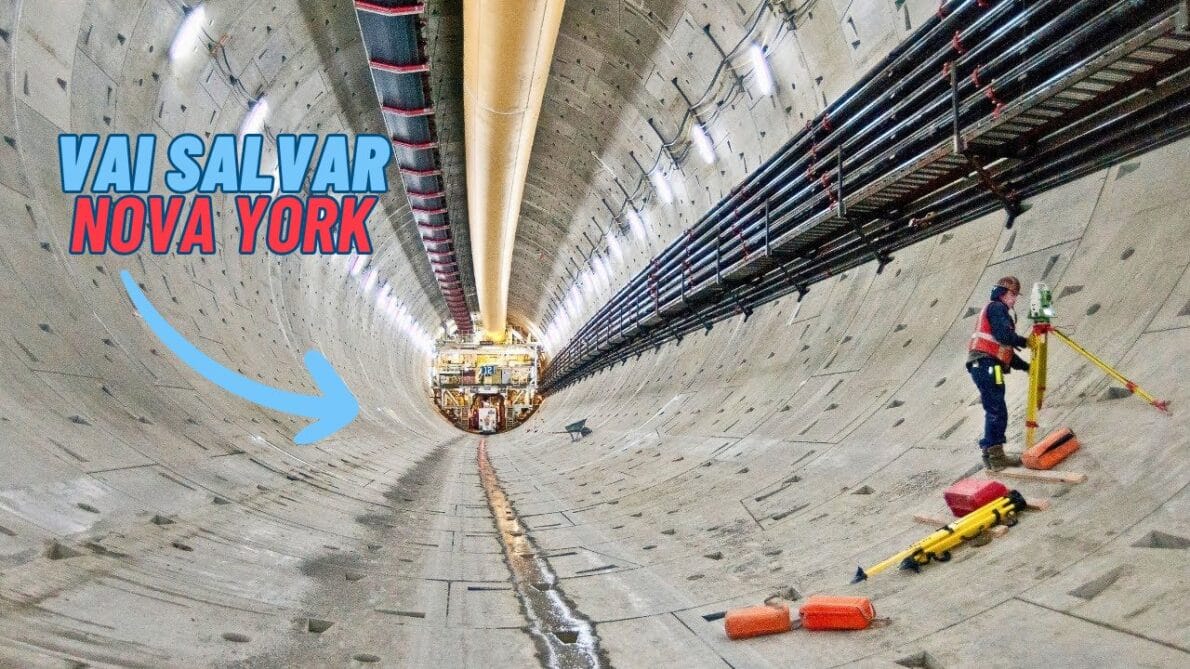
New York, The Most Populous Metropolis In The US, Is In The Process Of Transforming Its Transportation Infrastructure With Multibillion-Dollar Projects.
Located in the United States, New York is an iconic city known for its dynamism and diversity, housing over 8.8 million residents across its five boroughs: Manhattan, Brooklyn, Queens, Bronx, and Staten Island. While the city’s public transportation, which includes one of the largest subway systems in the world, serves its vast and diverse population, New York’s transportation infrastructure is undergoing a monumental transformation.
New York, one of the most iconic cities in the world, is launching three revolutionary projects to revitalize its transportation infrastructure. First, LaGuardia Airport is undergoing a comprehensive transformation to increase its capacity and efficiency. Second, the Hudson River Tunnel project promises to renew and expand a critical connection between New York and New Jersey, alleviating one of the region’s worst traffic bottlenecks.
Finally, the subway expansion through the Second Avenue Subway aims to extend the city’s underground network, improving access and service for millions of New Yorkers. Together, these projects reflect an ambitious effort to modernize and strengthen New York’s transportation infrastructure, ensuring its position as a resilient and dynamic urban center.
-
New CCR concrete paving technology promises roads up to 3x more durable, less maintenance, and cost reduction in Brazil.

-
Made from recycled plastic, plastic wood is gaining space in the construction industry because it does not rot, resists moisture, and reduces maintenance costs over the years.

-
Florianópolis will receive a million-dollar BRT that will begin construction in 2026 with nearly 400 million in funding from the federal government and the Inter-American Development Bank, and the map already shows the routes for the exclusive bus corridors.

-
Without a blueprint, without an engineer, and using scrap from the dump, a father spends 15 years building an 18-room castle for his daughter, featuring tram tracks, 13 fireplaces, and over 700 m², which may now be demolished.

Projects To Improve Transportation Infrastructure In New York: LaGuardia Airport


LaGuardia Airport, located in Queens, just 14 kilometers from downtown Manhattan, is a centerpiece in the modernization of New York’s transportation infrastructure. Opened in 1939, it was designed to be a more central terminal for the city. However, with the increase in air traffic and the growth of aircraft, the airport has faced significant challenges, including frequent delays and decreased customer satisfaction.
The airport’s original infrastructure, especially Terminal B, has become inadequate for contemporary demands. This led to a decision to undertake an extensive remodeling, with a budget of $4 billion. The renovation aimed not only to modernize the facilities but also to address structural and operational issues, such as space constraints and the inefficient layout of the runways.
One of the most notable innovations was the transformation of Terminal B into a satellite configuration, allowing for a more efficient flow of air traffic and increasing the airport’s capacity to accommodate larger aircraft. Additionally, the introduction of new technologies and services aims to enhance the user experience and elevate passenger satisfaction standards.
The New Hudson River Tunnel
New York’s transportation infrastructure is being driven not only by airport renovations but also by the ambitious project of the new Hudson River Tunnel. The existing tunnel, with over a century of history, has become a critical point, causing significant delays.
The Hudson project, part of the Gateway Program, aims to alleviate this bottleneck by constructing a new tunnel and repairing the existing one, with an estimated budget of $12.3 billion. This initiative is vital not only for the city but for the national economy, as the tunnel serves as a critical artery for the busiest region in America.
Subway Expansion: The New Second Avenue Line
The new Second Avenue subway line in New York represents a significant expansion of the city’s underground transportation system, marking the largest addition to the system in over half a century. This line, planned since the 1920s, began to become a reality with the completion of its first phase in 2017, extending from 63rd to 96th Street, at a cost of approximately $1.7 billion per kilometer.
The construction of the Second Avenue line was motivated by the need to relieve overcrowding on the 4, 5, 6 lines along Lexington Avenue, which is one of the most congested in the subway system. The new line not only offers an alternative for these passengers but also significantly improves access to public transportation in the eastern parts of Manhattan, which historically have had fewer subway options.
Phase 2 of the expansion, currently in planning, proposes to extend the line further north, from 96th to 125th Street, connecting more remote neighborhoods and facilitating access to important transportation hubs, such as the Harlem-125th Street train station. This proposed extension, estimated at $6 billion, promises to bring substantial economic and social benefits, improving connectivity and urban mobility. The proposed extension to 125th Street, estimated at $6 billion, promises to significantly enhance connectivity and accessibility.







Seja o primeiro a reagir!