





 Portuguese
  English
  Spanish
  4 min of reading
  0 comments


Research Reveals Volcano- Heated Caves, Unprecedented Organisms, Lakes Isolated for Millions of Years, and a Dispute Over Oil That Could Change the Geopolitical Future
Under up to 5 kilometers of permanent ice, Antarctica hides a world still largely unknown. Even with advances in technology and aerial surveys, over 90% of the Antarctic subsoil remains unexplored. The few available data already reveal extraordinary discoveries that change our understanding of the planet and raise alarms about the region’s future.
Active volcanoes, colossal impact craters, subterranean lakes with possible isolated life forms, and even an oil field estimated at US$ 44 trillion are just part of what is known. Scientists estimate that Antarctica harbors unique geological formations and potential natural resources capable of triggering global disputes in the coming decades.
A Continent Hidden Beneath Ice and Silence

Antarctica is the fifth largest continent on Earth, with an area larger than that of the continental United States.
-
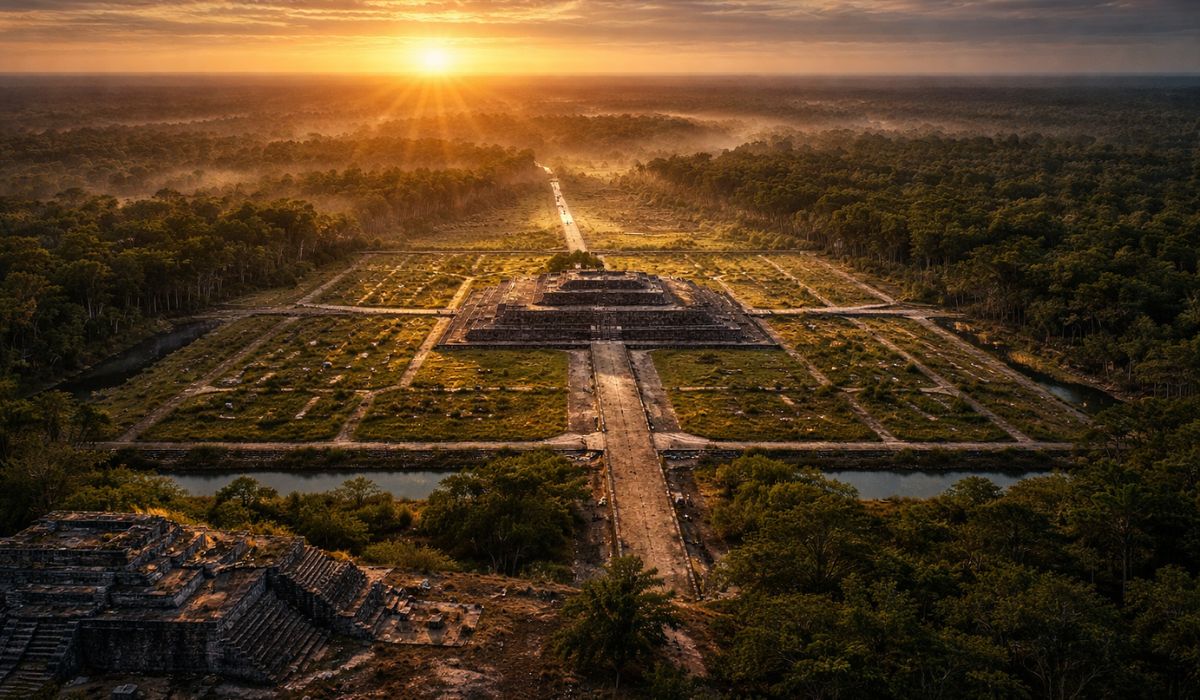
In Mexico, a 3,000-year-old Maya site with the dimensions of an entire city may have been built as a colossal map of the cosmos, created to represent the order of the universe and reveal how this people organized space, time, and rituals.
-
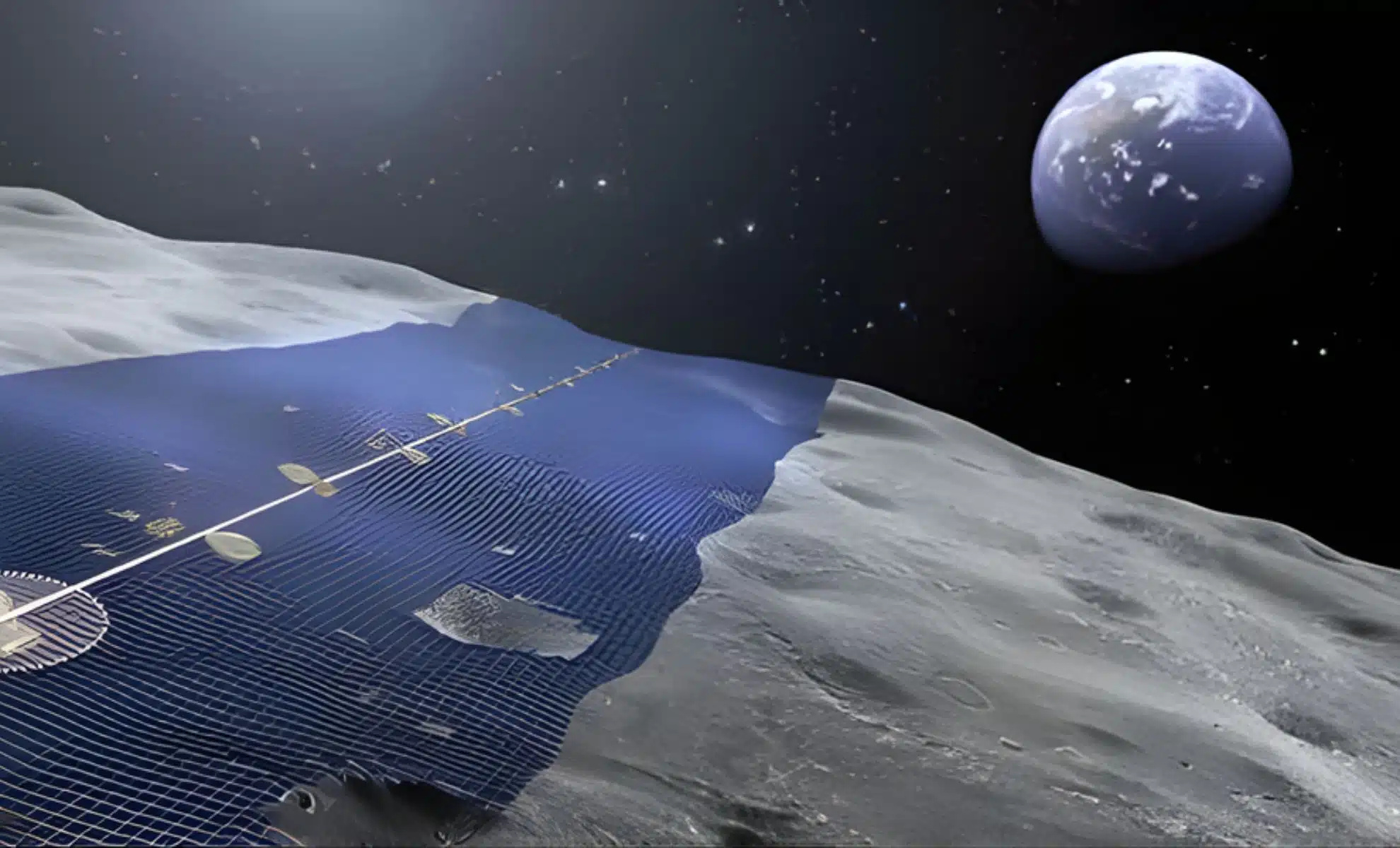
Japan wants to build a solar ring of 10,900 kilometers on the Moon to continuously send energy to Earth.
-
Weighing almost 1 ton, with temperatures of up to 3,000°C, the ability to launch 10,000 fragments within a radius of 1 km, capable of penetrating concrete and melting steel, Turkey’s terrifying bomb emerges as one of the most destructive non-nuclear weapons ever presented.

-
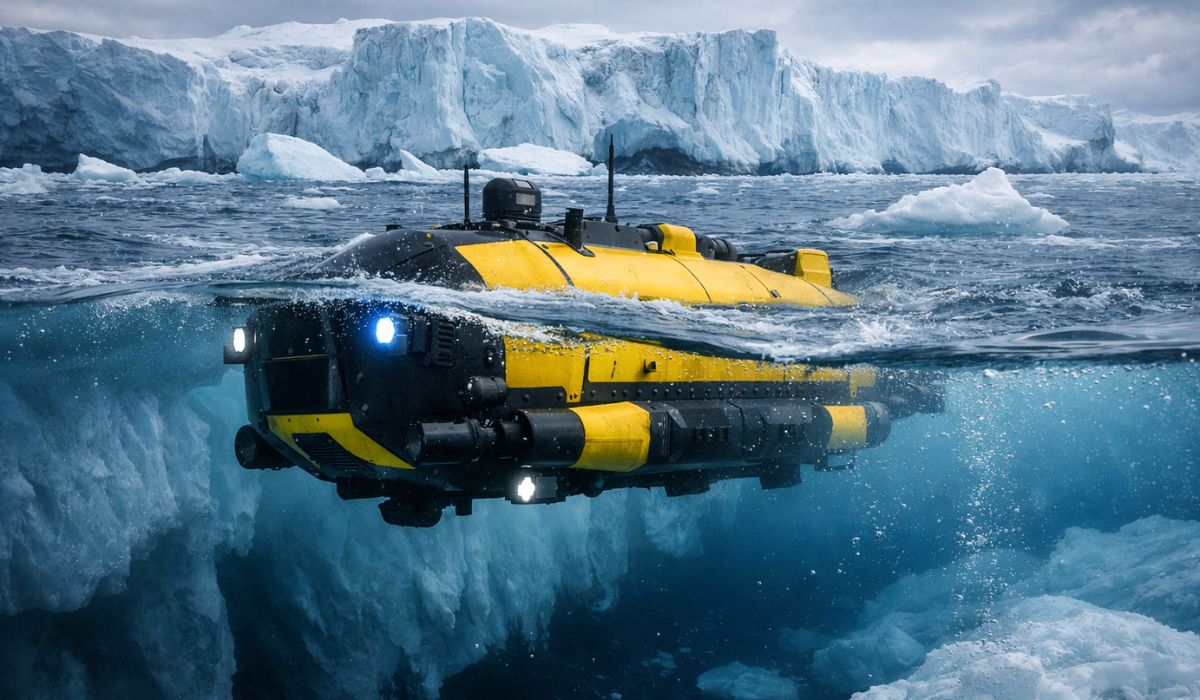
After a submarine disappeared beneath the “Doomsday Glacier,” scientists announce a new monstrous machine capable of operating at 3,000 meters depth to return to the heart of the ice and investigate a threat that could raise sea levels worldwide.

Despite its size, it only hosts a few research stations and a maximum of 4,000 people during the summer.
In the long, dark winters, this population can drop to 1,000.
Covered by an ice layer that reaches 5 km thick in the deepest points, it holds 61% of all the freshwater on the planet.
If it were to melt, global sea levels would rise by about 60 meters.
Under this ice, there are mountain ranges as high as the Alps, canyons deeper than the Grand Canyon, and one of the largest impact craters ever detected on Earth.
Warm Caves and Unknown Life

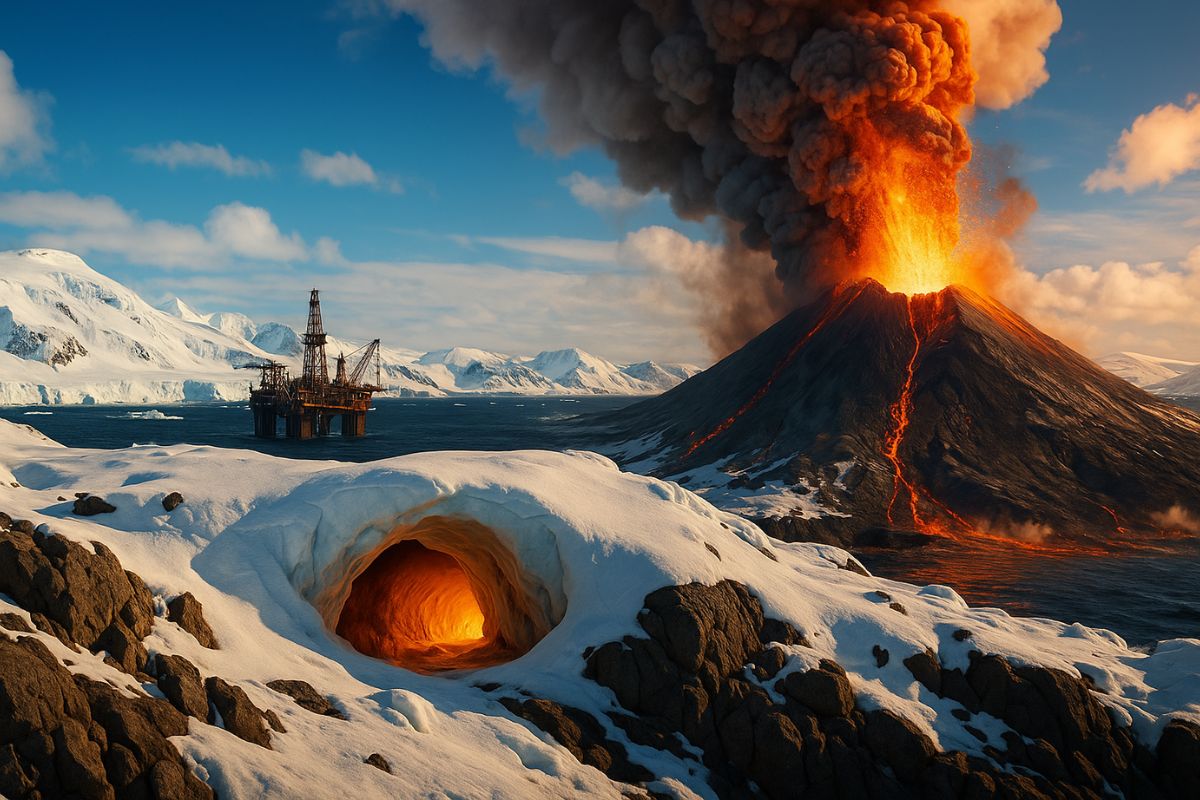
Under Mount Erebus, the southernmost active volcano in the world, the heat generated by magma has sculpted subterranean caves with temperatures of up to 25 °C.
In these caves, researchers have found traces of DNA from mosses, algae, and small animals — including species that do not match any known organism.
It is estimated that at least another 15 active or semi-active volcanoes in Antarctica may also contain similar cave networks.
These underground environments function as geothermal oases, with the potential to harbor unique ecosystems never documented by modern science.
The Enigma of Lake Vostok
Discovered in the 1990s, Lake Vostok is located about 4 km deep beneath the ice of Antarctica.
With a volume that places it among the largest lakes in the world, it has remained completely isolated for at least 15 million years.
Samples obtained in 2012 and 2015 indicated the presence of a potentially unknown bacterium, but the results were inconclusive due to contamination.
Still, Vostok is one of the most promising candidates for the discovery of life forms adapted to extreme environments, which could have implications even for astrobiology.
A Gigantic Canyon and a Hidden Crater
Below the Denman Glacier, scientists found the deepest canyon on Earth outside of the oceans, plunging 3.5 km below sea level.
Close by, the so-called gravitational anomaly of East Antarctica revealed something even more surprising.
In 2006, satellite analyses pointed to an impact crater 480 km in diameter — possibly caused by an asteroid up to 50 km wide.
If confirmed, this crater would be three times larger than the one responsible for the extinction of the dinosaurs and could have played a direct role in the separation of the supercontinent Gondwana.
Oil and Frozen Disputes in Time
In 2024, a Russian mission identified an oil field in the Weddell Sea estimated at 511 billion barrels, in the heart of an area disputed by Argentina and the United Kingdom.
At current oil prices, the estimated value of the field is around US$ 44 trillion.
Although the Antarctic Treaty of 1959 prohibits any economic exploitation below latitude 60°, the agreement will be revised in 2048, and any country can unilaterally withdraw.
Antarctica could therefore become a new center of geopolitical tensions involving energy, territorial sovereignty, and control of resources in an increasingly unstable global scenario.
The Uncertain Future of a Strategic Continent
Beyond scientific discoveries, Antarctica is the stage for strategies of presence and domination.
Argentina and Chile have already sent citizens to be born on the continent as a way to reinforce their territorial claims.
The United Kingdom, in turn, maintains continuous control over the Falkland Islands, a position considered vital for its authority over the region.
With the accelerated melting due to climate change, new routes and previously inaccessible areas are becoming viable.
The possibility of mineral and energy exploration could transform Antarctica into the center of a trillion-dollar dispute between emerging and traditional powers.
Do you think the Antarctic Treaty will continue to withstand economic pressures until 2048? Or are we about to witness a race for frozen wealth? Share your thoughts!






Seja o primeiro a reagir!