





 Portuguese
  English
  Spanish
  4 min of reading
  0 comments


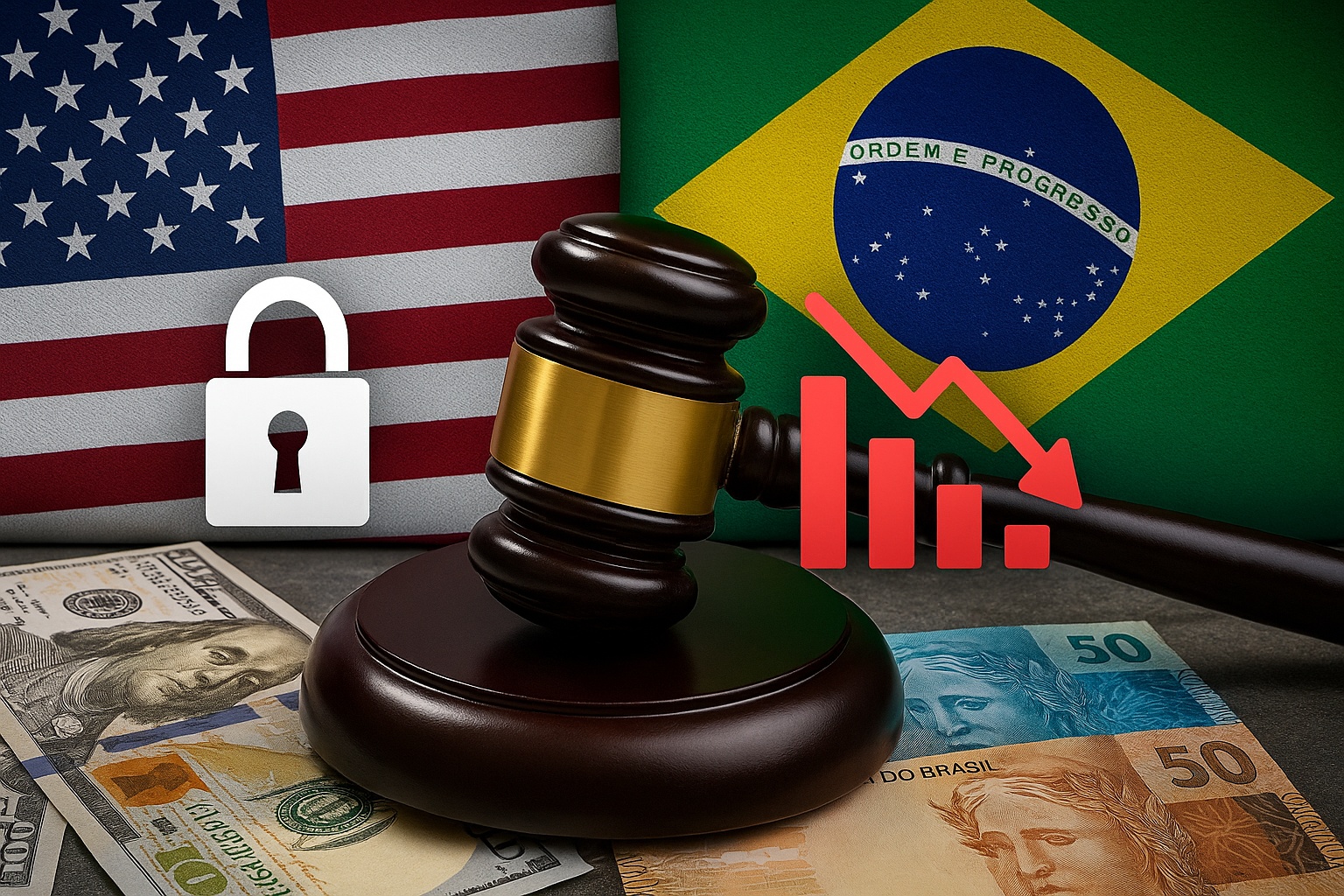
Expert Explains How The Magnitsky Law Could Affect Banks And Investments In Brazil — And Whether There Is A Real Risk For The Pocket Of Ordinary Brazilians.
In recent weeks, political and economic news has been dominated by an unusual topic: the application of the Magnitsky Law against Brazilian authorities, including Supreme Federal Court (STF) ministers. The most emblematic case was that of Minister Alexandre de Moraes, who had assets frozen in the United States and began to face financial restrictions through this American legislation.
This movement generated immediate concern in the markets and raised a question that quickly gained traction on social media: “Could this affect Brazilian banks and, ultimately, the finances of ordinary Brazilians?“
According to an analysis by the jurist and financial specialist from Fonte da Fortuna Channel – Alexandre Winkler, the fear of an immediate collapse is exaggerated, but the situation deserves attention.
-
The institute that trained the greatest aerospace engineers in Brazil has just opened its first campus outside São Paulo after 75 years: ITA Ceará will have R$ 445 million, new courses in energy and systems, and classes are expected to start in 2027.
-
Luciano Hang, owner of Havan, goes to Juiz de Fora after the tragedy in February, brings R$ 1 million, hands out R$ 2,000 cards, and donates up to R$ 15,000 to victims in the region.

-
The Brazilian passport allows legal residence in dozens of countries without the need for a prior visa, and most Brazilians are unaware that they can apply for residency directly upon arriving in nations in South America, Africa, and even Europe.
-
Petrobras sends a message to Brazilian truck drivers after fuel collapse and reveals plan to have 100% domestic diesel.


What Is The Magnitsky Law And Why Does It Matter
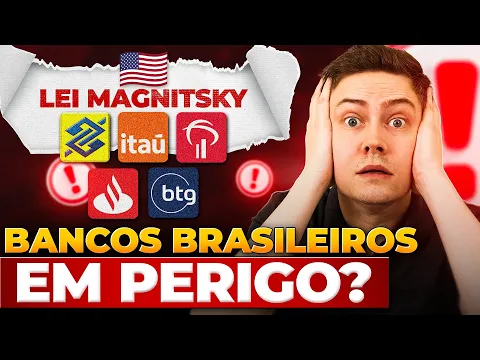

Created in the United States, the Magnitsky Law allows for the imposition of sanctions against individuals or institutions accused of corruption or human rights violations. These sanctions include:
- Freezing assets in American territory;
- Prohibiting business relationships with companies based in the U.S.;
- Restrictions on the use of the dollar in international transactions.
In practice, an individual sanctioned by the law can be excluded from the global financial system, as the dollar and American banks play a central role in international transactions.
The Dilemma Of Brazilian Banks
The specialist from Fonte da Fortuna highlighted a central point: B Brazilian banks are in a tight spot.
- If they apply the American sanctions, they could be punished by the STF, as the Brazilian justice system has decided that foreign determinations cannot automatically apply in national territory.
- If they do not apply the sanctions, they could be punished by the U.S., facing fines from the OFAC or, in extreme cases, even being excluded from the international payment system (SWIFT).
This impasse generated nervousness in the market: shares of major banks fell on the stock exchange shortly after the decision of Minister Flávio Dino, who reaffirmed that foreign sanctions cannot have direct effect in Brazil.
Is Your Money Really At Risk?
Despite the alarm, the specialist from the SOURCE OF FORTUNE – Alexandre Winkler reassures: there is no immediate cause for panic. According to him, Brazilian banks are unlikely to fail to comply with American requirements, as this would jeopardize their international operations — something unthinkable for institutions like Itaú, Bradesco, and Banco do Brasil, which have consolidated businesses in the U.S. for decades.
At the same time, the STF and the Brazilian political system are unlikely to take the crisis to a breaking point, as the impact could be devastating for the national economy. As the jurist explains, “they will find a workaround.”
The Practical Recommendation: Asset Diversification
On one hand, the crisis is not expected to cause an immediate collapse; on the other, it serves as a reminder of something experts have reiterated for years: the importance of asset diversification.
The analyst notes that he has part of his assets in foreign investments, in dollars, and even in cryptocurrencies, but has kept most of his investments in Brazil. For him, the Magnitsky Law does not change this scenario: “I will not pull my money out of Brazil because I do not believe a collapse will occur. But having a portion in dollars is prudent in any situation.”
This partial dollarization can be done through international brokers, investments abroad, or even global digital accounts. The goal is simple: to have a portion of the assets protected in another jurisdiction, should an extreme scenario occur in the future.
What Is At Stake For Brazil
Besides the individual impact on investments, there is also a geopolitical perspective:
- Brazil needs to balance its relationship with the United States, which uses the Magnitsky Law as a tool for political pressure.
- At the same time, it needs to preserve the sovereignty of its legal system, as emphasized by the STF.
- In the midst of this dispute are Brazilian banks — which bridge the local financial system and the international market.
The expert’s final message is clear: the finances of ordinary Brazilians will not be immediately affected, but the episode shows how international decisions can, indeed, knock on the doors of the national financial system.
The Magnitsky Law has brought tension to Brazil, put banks on alert, and scared investors. But, as the jurist from the Fonte da Fortuna Channel explains, the most likely outcome is that a political and legal solution will be found, without major harm to the financial system.
However, the episode reinforces the importance of Brazilian investors thinking beyond borders and seeking asset diversification. In an increasingly connected world, what happens in Washington or Brussels can indeed have repercussions on the finances of those in São Paulo, Recife, or Porto Alegre.








Seja o primeiro a reagir!