





 Portuguese
  English
  Spanish
  4 min of reading
  0 comments


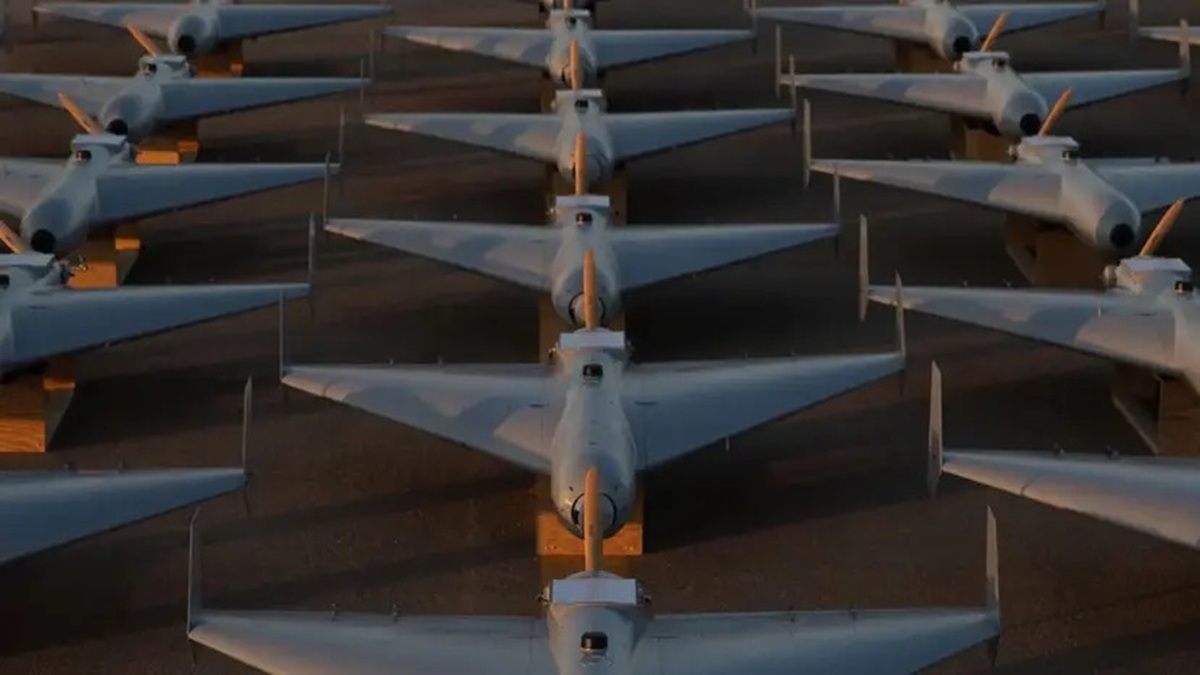
The LUCAS, Attack Drone Developed in the United States Based on the Iranian Shahed-136, Was Employed in Operation Epic Fury, a Campaign Conducted with Israel to Target Iranian Military Infrastructure and Expand Long-Range Precision Strikes Without Exposing Pilots to Highly Defended Airspace
U.S. forces deployed a new domestically manufactured attack munition during Operation Epic Fury. The campaign is conducted in conjunction with Israel and aims to target Iran’s military infrastructure.
The system employed is named LUCAS, an attack drone, and is commercially designated FLM 136. The equipment is developed by SpektreWorks, a company based in Arizona.
The use of the LUCAS, attack drone, expands long-range precision strike options. The system allows targeting without exposing pilots in areas protected by intense air defenses.
-
With a cost per shot close to zero, the DragonFire laser could change naval warfare in 2027 and provide British ships with nearly unlimited defense against drones.

-
A British startup creates tires that generate electricity in electric vehicles when passing over potholes, speed bumps, and cracks.

-
Scientists have created robots made with living cells that have their own nervous system, swim on their own, explore the environment, and self-organize without any genetic engineering, and now they want to do the same with human cells.

-
Students create a solar-powered ambulance that operates without a plug, without fuel, and still keeps medical equipment running in remote areas.


The introduction of this platform represents an operational shift. American forces are beginning to utilize domestically manufactured unmanned systems capable of operating in remote conflict zones.
Military Strategy Now Integrates Scalable Drones in Long-Range Strikes
The adoption of the LUCAS, attack drone, occurs against the backdrop of a changing approach to military operations. Commanders are incorporating scalable drones into attack campaigns.
These systems can remain airborne for hours and strike at the opportune moment. This feature enhances operational flexibility in combat environments.
The strategy reduces the exclusive reliance on high-value crewed aircraft and expensive cruise missiles. The use of drones expands the number of options available during operations.
Operation Epic Fury was launched with the objective of degrading Iran’s integrated air defense systems. The campaign also seeks to target ballistic missile forces and command and control structures.
The operation combines stealth aircraft, long-range weapons, electronic warfare, and unmanned systems. These resources are employed in coordinated attack cycles.
The goal is to weaken the layered defenses used by Tehran. This approach allows pressure to be applied to different components of Iranian military infrastructure.
LUCAS, Attack Drone, Functions as a Persistent Engagement Platform
Within this operational strategy, the LUCAS, attack drone, serves as a persistent engagement platform. The system is designed to stay over the operational area for extended periods.
The drone can identify, track, and engage targets deemed time-sensitive. This capability reduces the interval between detection and firing.
The shortening of the detection and attack chain allows for rapid responses to target movements. This feature is significant in operations against mobile systems.
Among the cited targets are mobile missile launchers and air defense units. These assets often change position frequently.
The LUCAS, attack drone, can loiter over the area while verifying the target’s identity. The attack is executed only when operational conditions are deemed appropriate.
This process reduces the need to send crewed aircraft into areas with dense air defenses. The decision to attack occurs after target confirmation.
Tests in the Persian Gulf Preceded Operational Use of the LUCAS, Attack Drone
Preparations for the use of the system began months before the current operations. An operational test was conducted in December 2025.
On December 16, 2025, a Low-Cost Uncrewed Combat Attack System was launched from the deck of the littoral combat ship USS Santa Barbara.
The vessel belongs to the Independence class and is identified as LCS 32. The test occurred while the ship was operating in the Persian Gulf.
The drone was operated by Task Force 59 of the U.S. Naval Forces Central Command. The unit integrates naval operations with unmanned systems.
The test was conducted within Task Force Scorpion Strike. This squadron assembles unidirectional attack drones deployed to the Middle East.
The demonstration confirmed that the system can operate from naval platforms. Launching can occur without traditional landing strips.
Among the launch options are pneumatic rails and rocket-assisted takeoffs. These methods allow launching from forward positions or ship decks.
Technical Features of the LUCAS
The LUCAS measures about 3 meters in length and has a wingspan of approximately 2.5 meters. The empty weight of the aircraft is 32 kg.
The maximum takeoff weight reaches 82 kg. This configuration allows it to carry fuel and different types of payload.
The system is designed with a compact structure. The shape allows for rapid transport and assembly before operations.
According to manufacturer data, the FLM 136 uses a 215 cc carbureted engine. The drone can remain airborne for approximately six hours.
The cruise speed is 101 km/h. The maximum speed can reach 185 km/h during repositioning or terminal attack.
The LUCAS, attack drone, can operate above 3,000 meters of density altitude. This condition can put it out of reach of some short-range air defense systems.
Under controlled command conditions, the advertised range is 350 nautical miles. This value corresponds to approximately 403 miles.
This range allows for deep attacks from distant launch points. The system can operate outside heavily defended areas.
In the attack configuration, the drone can carry up to 18 kg of payload. Options include high explosive fragmentation warheads or hollow charge munitions.
These payloads can target radars, mobile surface-to-air missile launchers, and ballistic missile launchers. They can also hit fuel depots and hardened command facilities.
During the final phase of the attack, the system transitions from loitering flight to a steep dive. This profile increases penetration and impact on the target.
The drone uses autonomous navigation combined with inertial backup. These systems are designed to reduce vulnerability to electronic warfare interference.
The integration of the LUCAS in Operation Epic Fury indicates an evolution in U.S. military doctrine. The use of low-cost systems enables sustained operational pressure over time.








-

-

2 pessoas reagiram a isso.