





 Portuguese
  English
  Spanish
  3 min of reading



The financial market is increasingly attentive to the social responsibility of companies, especially those listed on the Stock Exchange. Therefore, interest in Socially Responsible Investments (SRI) has been rising among investors around the world, as shown by various studies.
According to information from the Forum for Sustainable and Responsible Investments, 26% of professionally managed assets in the United States, in 2019, were related to SRI funds. In figures, this percentage corresponds to US$ 12 trillion of the total US$ 46.6 trillion that were transacted that year.
In 2021, the participation is expected to be even greater. In an interview with CNBC in July, Credit Suisse CEO Thomas Gottstein stated that the Covid-19 pandemic has increased interest in this type of investment. In Brazil, the modality is maturing and is open to expansion.
-
Brazilian city gains industrial hub for 85 companies that is equivalent to 55 football fields.

-
Peugeot and Citroën factory in Argentina cuts production by half and opens a layoff program for more than 2,000 employees after Brazil drastically harmed purchases of Argentine vehicles.

-
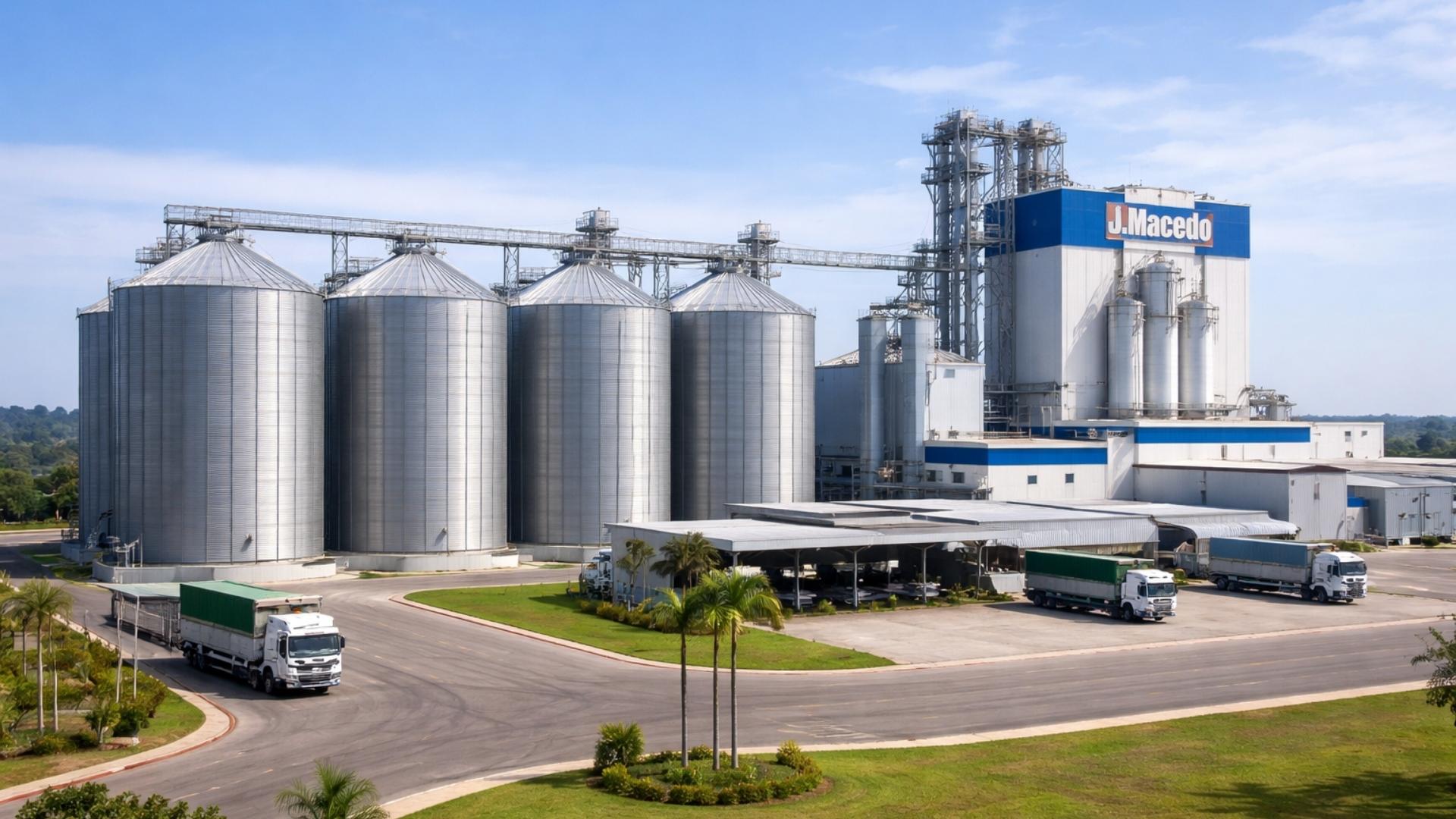
A Brazilian city gains a factory worth R$ 300 million with the capacity to process 200 thousand tons of wheat per year, a mill of 660 tons per day, silos for 42 thousand tons, and an industrial area of 276 thousand m².
-
Havan will leave the shopping mall in Blumenau to inaugurate something the chain has never done before: a megastore in half-timbered style in the Historic Center of the city, which is expected to be ready in May and change the landscape of local retail.


SRI funds are those that consider not only the possibility of good returns for investors but also the stance of the companies that comprise their portfolio on environmental, social, and governance issues – ESG, which stands for Environmental, Social and Governance. The belief is that sustainable and socially responsible organizations also create value for shareholders and are better prepared to face economic fluctuations.
Read Also:
Investment Preferences Among Younger Investors
Younger investors, aged 20 to 30, are the most interested in SRI, according to a report from the Morgan Stanley Institute for Sustainable Investing. The growth of this interest occurs alongside the expansion of Index Funds, known as ETFs, which stands for Exchange Traded Funds. It is the younger generation that has been noticing how the combination of these two concepts can be profitable.
ETFs are a type of variable income investment that has returns linked to a specific index. They are essentially a basket of assets, providing the advantage of diversification for the investor’s portfolio. To participate in the fund, which is professionally managed, one needs to acquire a share. The initial investment can be quite accessible, which adds another advantage to this modality.
Options for ESG ETFs in Brazil
In the case of socially responsible ETFs, the assets that make up the fund are companies that meet ESG criteria ESG. In Brazil, there are already some investment options available to investors such as ECOO11, GOVE11, and ISUS 11.
ECOO11 is linked to the Efficient Carbon Index (ICO2), which includes companies that maintain transparency regarding greenhouse gas emissions and plan for a low-carbon economy.
GOVE11 tracks the Corporate Governance Trade Index (IGCT B3), aimed at companies that meet the criteria of the methodology developed by B3 regarding corporate governance.
ISUS11 is related to the Corporate Sustainability Index (ISE), an indicator of the performance of the share prices of companies recognized for their commitment to sustainability.










Seja o primeiro a reagir!