





 Portuguese
  English
  Spanish
  4 min of reading
  1 comment


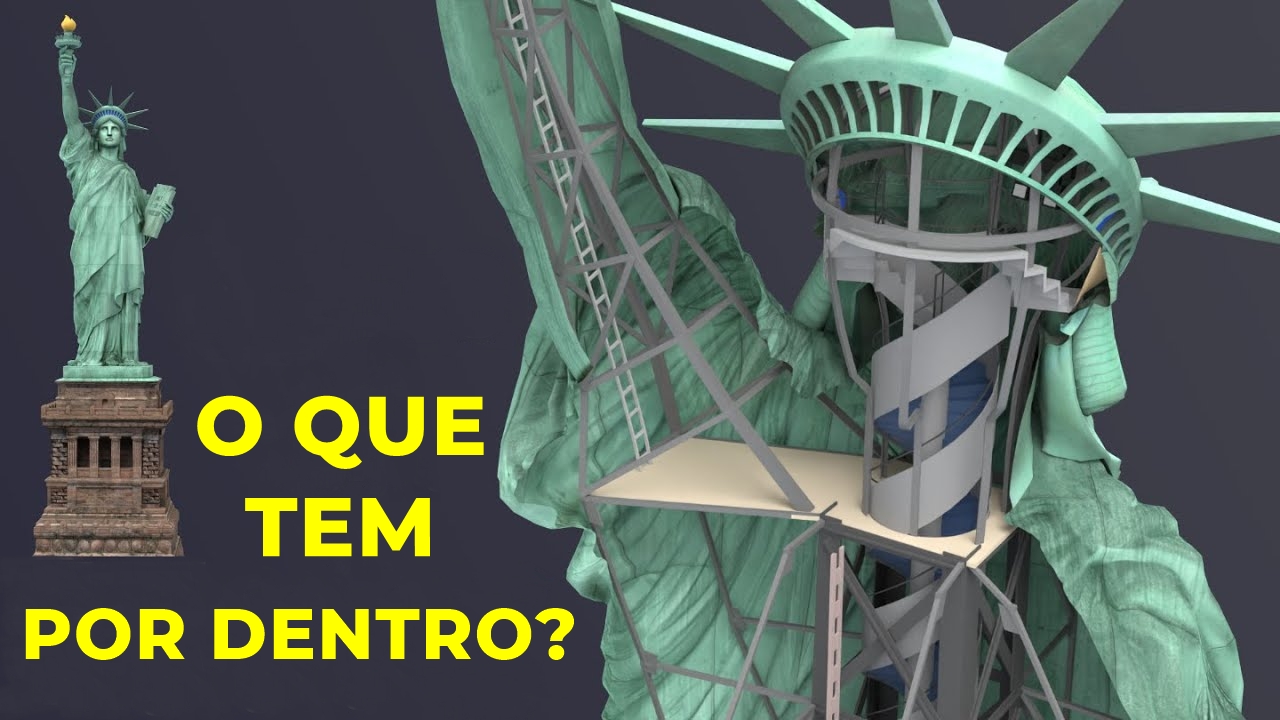


Many People Know The Statue Of Liberty From The Outside, But What Is Inside It? Discover Internal Details, From Its Structure To Secret Spaces!
The Statue of Liberty, inaugurated in 1886, is one of the most iconic monuments in the world. Located on Liberty Island in New York Harbor, this grand sculpture represents freedom and democracy, being a gift from France to the United States.
More than just a monument, the Statue of Liberty carries deep meanings related to immigration, the abolition of slavery, and the historical relations between the two countries.
In this article, we will address a question many people have: what is inside the Statue of Liberty?
-
A megaproject worth R$ 89 billion is advancing in Iraq and promises to change the game in global trade by creating a new corridor between Asia and Europe, reducing traditional routes and repositioning the country as a logistics powerhouse.

-
Goodbye bedside table: floating shelves become a trend in 2026 by freeing up space in the bedroom, improving circulation, bringing visual lightness, and integrating technology without taking up floor space.

-
Israel, Greece, and Cyprus signed an agreement in 2020 to transport gas from the Mediterranean to Europe via a 1,872 km pipeline, but Turkey claimed sovereignty over part of the maritime route, and the project never materialized.

-
Israel, Greece, and Cyprus signed an agreement in 2020 to transport gas from the Mediterranean to Europe via a 1,872 km pipeline, but Turkey claimed sovereignty over part of the maritime route, and the project never materialized.


Origins And Planning
The idea for creating the Statue of Liberty emerged in 1865 when French historian Édouard de Laboulaye proposed building a monument as a symbol of friendship between France and the United States.
Sculptor Frédéric-Auguste Bartholdi was commissioned for the project, while Gustave Eiffel, the engineer responsible for the Eiffel Tower, developed the internal structure of the statue.
The construction occurred in phases and involved detailed planning. To ensure that the design was functional, Bartholdi produced three miniature models before beginning the final sculpture.
The definitive version was completed in 1884 in France and transported to New York in 1885, where it was assembled in 350 separate pieces. Its assembly involved complex engineering and a collective effort that demonstrated international cooperation.
The Construction Process
The Statue of Liberty was made with sheets of copper only 2.4 millimeters thick, using a method called “repoussé“.
This technique involved wooden and plaster molds to shape the copper sheets, allowing greater flexibility in the structure.
The final assembly took place on Liberty Island, where it was installed on a stone pedestal designed by architect Richard Morris Hunt.
This base not only supports the statue but also houses a museum dedicated to its history. This pedestal has a significant height and was built with donations from American citizens, reflecting public involvement in the project.
At approximately 93 meters tall (from the ground to the tip of the torch), the Statue of Liberty remained the tallest structure in New York until the early 20th century.
Its impressive size and innovative construction made it a landmark of engineering at the time.
What Is Inside The Statue Of Liberty


Inside the statue, a metallic structure designed by Gustave Eiffel supports the weight of the copper plates.
This structure allows the statue to move slightly with the wind, preventing damage over the years. This system is essential for ensuring the stability of the sculpture even under adverse weather conditions.
The interior of the statue includes:
- Base: Has seven floors and a viewing platform with panoramic views of the harbor.
- Double Helix Staircase: A spiral staircase that leads to the crown.
- Crown: With 25 windows, it allows a privileged view of New York.
- Torch: Originally accessible to the public, it was closed after an attack in 1916 and replaced in the 1980s.
Historical Significance
The Statue of Liberty symbolizes hope and freedom for millions of immigrants who arrived in the United States in search of a better life.
At its base is a plaque featuring the sonnet The New Colossus, by Emma Lazarus, which highlights the welcome of refugees and immigrants.
Furthermore, the statue also holds significant meaning in the history of the abolition of slavery. Many interpretations suggest that the broken chains at the feet of the statue represent the liberation of enslaved people after the American Civil War. Its symbolism is continuously debated and reinterpreted over the decades.
Restorations
Over the years, the Statue of Liberty has undergone various renovations. The most significant took place between 1984 and 1986 when engineers removed worn parts and replaced the original torch. Currently, the historical torch is on display at the Statue of Liberty Museum.
The green color of the statue is the result of the oxidation process of copper, creating a patina that protects the structure from corrosion. This natural process has been essential for the conservation of the structure over the years.
Today, the Statue of Liberty is one of the most visited tourist destinations in the world. Millions of people explore the island annually, whether to learn about the history of the monument or to admire the panoramic views from the top of the crown. Additionally, the visitation allows contact with one of the main landmarks of American and world history.
Tickets to the crown are limited, requiring advance reservation. However, the pedestal and museum are accessible to most visitors, offering interactive exhibits about the construction and cultural impact of the statue.
With information from statueoflibertytour.








eu já subi até a coroa mas nem dá tempo de curtir a paisegem, a fila vai te empurrando e vc é obrigado a ir descendo …