





 Portuguese
  English
  Spanish
  3 min of reading
  50 comments


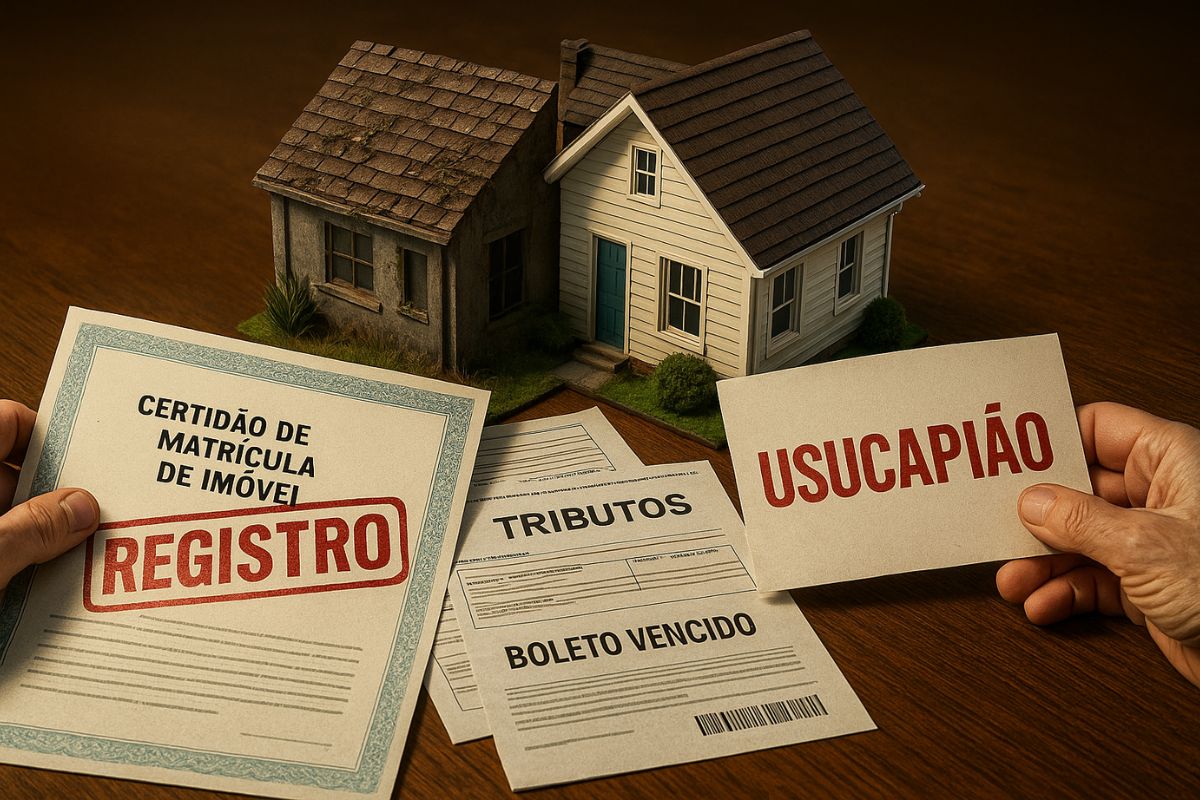


Civil Code Authorizes Loss of Property Due to Abandonment: After 3 Years Without Possession or Taxes, Property Can Be Adverse Possessed or Go to the Union and Municipalities.
Many believe that simply registering property in a notary office is enough to guarantee definitive possession of a house, apartment, or land. However, Brazilian law provides situations where the owner can lose this right, even if they are listed as the owner in the registry. According to attorney Rafael J Dias, failing to exercise possession and not paying taxes paves the way for the property to be considered abandoned, potentially being adverse possessed by third parties or seized by the municipality, Federal District, or Union.
In practice, this means that someone who takes care of the property can gain ownership, while someone who abandons it can lose everything.
This rule, provided for in the Civil Code, aims to give effect to the principle of social function of property.
-
Larger than entire cities in Brazil: BYD is building a 4.6 km² complex in Bahia with a capacity for 600,000 vehicles per year, but the discovery of 163 workers in conditions analogous to slavery has shaken the entire project.

-
With an investment of R$ 612 million, a capacity to process 1.2 million liters of milk per day, Piracanjuba inaugurates a mega cheese factory that increases national production, reduces dependence on imports, and repositions Brazil on the global dairy map.

-
Brazilian city gains industrial hub for 85 companies that is equivalent to 55 football fields.

-
Peugeot and Citroën factory in Argentina cuts production by half and opens a layoff program for more than 2,000 employees after Brazil drastically reduced purchases of Argentine vehicles.


What the Civil Code Says About Loss of Property
Article 1,275 of the Civil Code lists five ways to lose property:
- Disposal (sale or donation).
- Renunciation, made by registered public deed.
- Abandonment.
- Destruction of the thing (when the property ceases to exist or becomes uninhabitable).
- Expropriation when the government takes the property with compensation.
According to Rafael J Dias, abandonment is the most common and also the least known situation among the population.
The law presumes abandonment when the owner stops exercising possession and does not pay taxes such as IPTU.
How the Presumption of Abandonment Works
Article 1,276 of the Civil Code establishes that, after three years of abandonment and tax default, the property can be seized as vacant property.
If it is urban, it goes to the municipality or the Federal District. If it is rural, it goes to the Union.
Additionally, the so-called “absolute presumption of abandonment” occurs when the owner stops residing in, renting, or taking care of the property and also stops paying taxes.
In this case, even the property registration does not guarantee ownership.
What Happens to Abandoned Properties
The legislation provides two paths for abandoned assets:
- Adverse Possession: if someone takes possession, lives in, pays taxes, and cares for the property, they can request ownership in court after fulfilling the deadlines established by law.
- Seizure by the government: if no one occupies it, after three years of abandonment, the property automatically goes to the municipality, Federal District, or Union, depending on the location.
According to Rafael J Dias, “the property needs to fulfill its social function.
It is not enough to be registered in a notary office; it must be inhabited, utilized, or productive.”
The Social Function of Property

The Federal Constitution and Article 1,228 of the Civil Code establish that property is only legitimate when it serves a social function, that is, when it serves the community.
A closed property, unused and without tax payment, violates this principle.
In practice, those who keep the asset active and regularized strengthen their property rights, while abandonment opens the door to loss of ownership.
Property registration is not an absolute guarantee of ownership. If the owner stops exercising possession and paying taxes, the law presumes abandonment, and the property can be transferred to those who use it or to the government.
According to Rafael J Dias, real estate law specialist, this rule protects society and prevents properties from remaining unused, functionless, and without tax revenue.
Do you think it is fair that the owner can lose property even with the property registration in their name? Or do you believe that just the registry should be enough?
Leave your opinion in the comments — we want to hear from those who have witnessed such cases.







Eu acho que em alguns casos realmente pode ser justo mas acho que muita gente se aproveita dessa lei simplesmente pra roubar o imóvel de outra pessoa. Exemplo os que invadem casas. Na minha família temos um imóvel de herança que um parente invadiu logo após o falecimento do proprietário e passou a morar la. Ninguém teve coragem de brigar ou expulsar ele só imóvel então ele foi ficando mas ele sabe que o imóvel nao é só dele. Então se ele entrar com esse processo de usocapiao pode até ganhar mas não acho justo pois enquanto os outros familiares lutam pra pagar um aluguel ou um financiamento ele está morando de graça há anos se alguém puder me ajudar com esse caso agradeço.
Eis o resultado de um país sabotado pela segurança jurídica, entregue a uma turma que tem por objetivo exatamente isso: abalar a estrutura da sociedade organizada e questionar seus princípios mais sagrados. E começa assim: qualquer um escreve qualquer coisa de maneira superficial e diz ser essa a nova ordem, sendo que na origem da coisa toda está o objetivo subreptício de questionar todos os institutos e princípios jurídicos, diga-se: institutos já consolidados por uma sociedade organizada e ordeira, com o que os grupos interessados em simplesmente surrupiar a propriedade alheia tratam de imprimir interpretações que, de resto, só servirão ao interesse de uma orde de medíocres, invasores e ****, que pela incompetência que os governa toda a vida resolvem que aquilo tudo que não é deles deve ser tomado na mão grande, ao estilo ‘mst’ ou “sem tetos”, autoregulados por um sindicalismo imbecilizado e ilegítimo, sob os auspícios de um exercício retórico de que nada é de ninguém e tudo está sujeito a ser tomado. Rasguem-se os códigos então, pois o que se vê é uma iniciativa maliciosa de regular o modo de utilização da propriedade alheia, de maneira a contemplar algum **** que não conseguiu conquistar sequer seu próprio espaço, vindo a avançar sob o de terceiros, sob o argumento de “função social”. Balela.
Totalmente **** essa balela **** de função social do imóvel. Depois, pagar iptu não garante nunca a propriedade frente a gatunos posseiros. Depois se todos os imóveis já cumprissem função social como quer a lei a favor de ****, não haveria mais imóveis disponíveis para ninguem. Penso o seguinte, se a pessoa trabalhou, pagou pelo seu imóvel com o suor do seu corpo, ele podeia fazer o que bem entendesse, inclusive deixar fechado e pagando seus tributos. Agora, tenta um herdeiro pobre ficar com a herança sem pagar todos os impostos atrasados, imposto de herança, não pode, tem que pagar tudo. E se tentar uso capitão não tem jeito, eles alegam que elecesta tentando burlar osvpagamentksxdevidos. Mas se for maluco invasor, posseiro de mão grande, aí dão de mão beijadaxexso precisa pagar os impostos dali para frente. Maior incentivo ao crime de invasão.
Olá, a postagem da pessoa que fez o anúncio está equivocado, pra requerer usucapião de imóveis só pagando iptu não garante,a lei mudou, usucapião é ora quando não existem os vendedores pra assinar a escritura no cartório, caso o comprador tenha recibos de quitação do vendedor, contrato de compra e venda ou procuração do advogado com os recibos assinados e autenticados e esteja pagando corretamente os tributos ele poderá requerer usucapião , caso seja apenas um vendedor do imóvel e tenha pago pelo.menos 60% do valor ele tem chance de conseguir também,mas se o imóvel ainda estiver em débito com vendedores, mesmo pagando o iptu e tendo construído na casa não é possível usucapião imóvel, isso em caso de maus de um vendedor herdeiro