





 Portuguese
  English
  Spanish
  3 min of reading
  0 comments


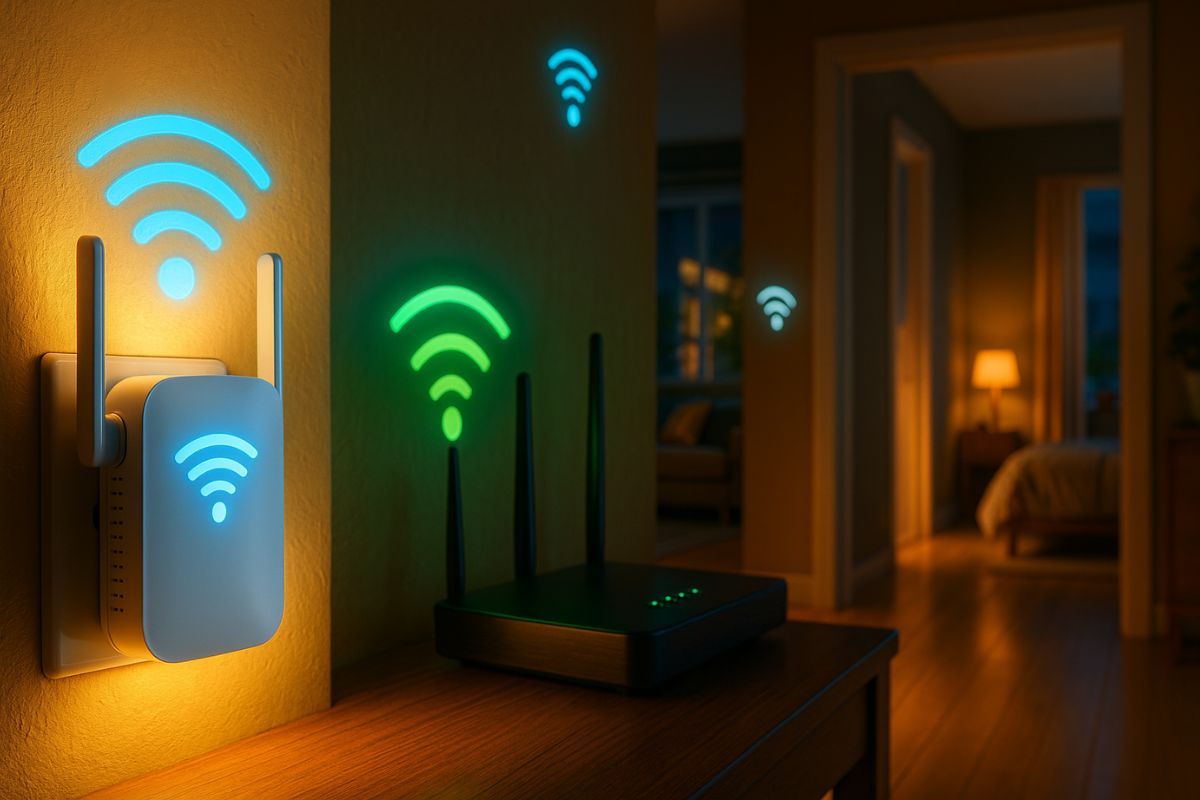
Wi-Fi Signal Repeater Increases Internet Range at Home at Low Cost, but May Reduce Speed and Does Not Replace Mesh Systems in 2025.
The Wi-Fi signal repeater has gained popularity as a quick and affordable solution to improve internet coverage in homes and small offices. By 2025, given the growing demand for stable connections in different parts of the house, the device has become a common choice among users seeking practicality without major investments.
According to an analysis by the portal Olhar Digital, the repeater works by <strongreceiving the signal from the router and retransmitting it, allowing areas with weak coverage, such as distant bedrooms, home offices, or balconies, to have minimal access for browsing.
However, experts warn that although it is useful in some scenarios, the device has performance limitations and does not solve problems in large homes.
-
The Earth will plunge into a few minutes of darkness in broad daylight in August 2026, when a total solar eclipse transforms the sky into one of the most impressive astronomical phenomena in recent years.

-
How the terraforming of Mars can transform the planet: artificial aerosols can increase the temperature by up to 35°C in 15 years, creating conditions for liquid water.

-
Scientists drilled nearly 8,000 meters into the ocean floor above the fault that caused the 2011 tsunami in Japan and discovered that a layer of clay 130 million years old was responsible for making the wave much worse than any model had predicted.

-
Thousands of years after causing the largest eruption of the Holocene, one of the world’s largest supervolcanoes is rebuilding itself beneath the sea south of Japan, receiving new magma and alarming scientists with its transformation.


How the Wi-Fi Signal Repeater Works
The principle of operation of the Wi-Fi signal repeater is simple: the device must be installed in a part of the house where there is still reasonable signal, to retransmit it efficiently.
If placed in areas without connection, it will not be able to perform its function.
This operation differentiates it from mesh systems, which use multiple interconnected access points to create a single stable network throughout the residence.
While the repeater only expands the existing signal, the mesh replaces the traditional network, ensuring more stability and performance, especially in large or multi-story homes.
Advantages and Practical Limitations
Among the advantages, the Wi-Fi signal repeater stands out for its low cost, compatibility with most routers, and simple installation, which usually does not require additional software.
Additionally, its portability allows it to be repositioned as needed by the user.
On the other hand, tests indicate that the device may reduce connection speed when retransmitting the signal, especially when it is far from the router.
This limitation hinders activities that require stable internet, such as online gaming, video conferencing, or 4K streaming. Thick walls, microwaves, and other electronics also affect its performance.
When It Is Worth Using
According to Olhar Digital, the Wi-Fi signal repeater can serve families living in small apartments or homes with up to three bedrooms, providing enough connection for browsing, using social media, or watching videos in basic quality.
However, for users who consume large amounts of data in larger or corporate environments, the repeater may fall short of expectations.
In these cases, the recommendation is to invest in mesh systems or more powerful routers, which ensure continuous and stable coverage throughout the residence.
Tips to Improve Performance
Even with its limitations, the Wi-Fi signal repeater can offer better performance if some precautions are taken:
- Install in strategic locations, close to the router.
- Keep the firmware updated to fix bugs.
- Configure less congested transmission channels to reduce interference.
These measures do not eliminate speed loss, but can improve the device’s efficiency in daily use.
The Wi-Fi signal repeater is a useful solution to address network blind spots and expand coverage with minimal investment.
However, it does not replace more robust systems and shows speed drops that limit its use in larger environments.
And you? Have you used a Wi-Fi signal repeater at home? Did it resolve your connection issues or did it end up causing more frustrations?
Share your experience in the comments; we want to hear from those who have tested it in practice.









Seja o primeiro a reagir!