





 Portuguese
  English
  Spanish
 5 min of reading
  0 comments


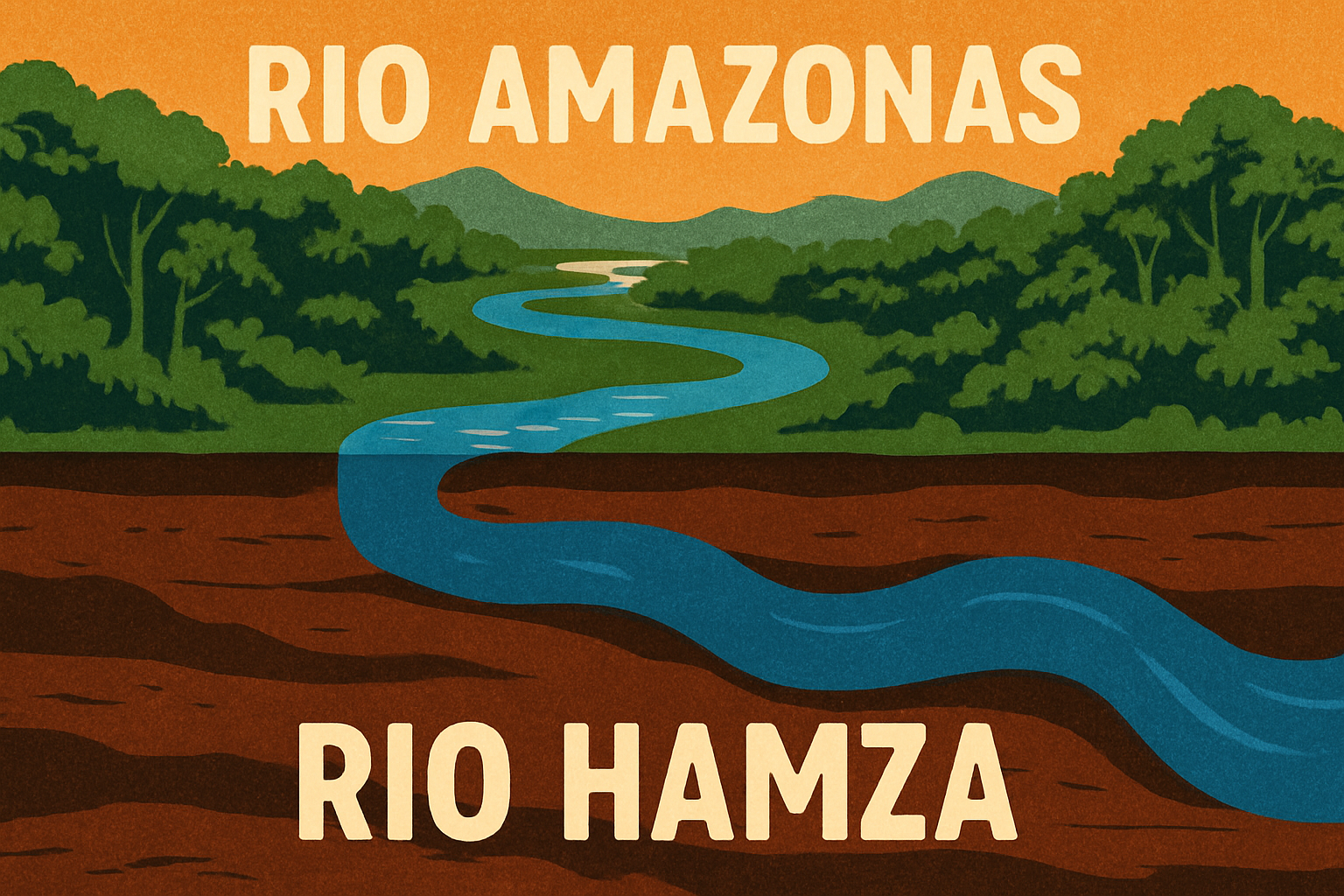
Few people imagine, but beneath the largest river in the world flows another hidden giant at kilometers of depth. Discovered by a Brazilian researcher, the Hamza River spans a length similar to that of the Amazon but underground, away from human eyes. The story of this discovery is marked by surprising data, criticism from the scientific community, and the challenge of investigating a water flow that still intrigues scholars today.
The Amazon region holds secrets beneath the surface. One of them caught the attention of the scientific world in 2010 when Professor Elizabeth Pimentel discovered, during her doctorate, the existence of a gigantic underground river that runs beneath the Amazon River. Its name is Hamza River.
The discovery was surprising as it indicated the presence of a water flow over six thousand kilometers long, hidden thousands of meters deep.
The research began with temperature data from wells drilled by Petrobras during oil exploration in the Amazon region. But the results led to an unexpected revelation.
-
Few remember, but the submarine that disappeared in 1968 with 52 crew members was found after 51 years at the bottom of the sea at more than 2,000 meters, intriguing the entire world.

-
With 1,200 tons suspended, the Japan mega-structure in a grid shape with a floating sphere from Fuji TV features two 25-story towers connected by elevated walkways, titanium panels, and impresses the world with its ability to reduce wind impact.

-
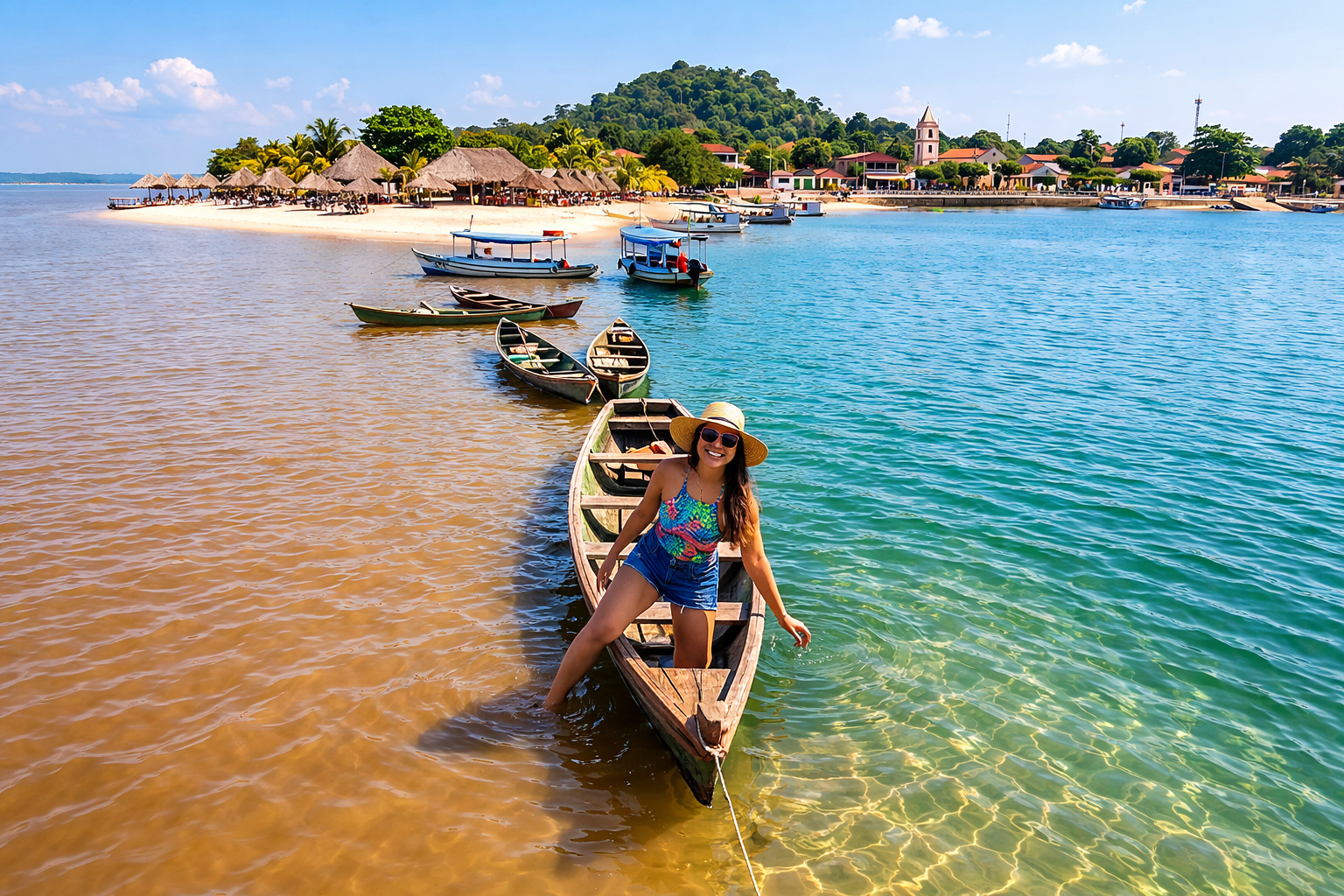
The village where two rivers run side by side without mixing in Santarém and Alter do Chão reveals some of the most beautiful freshwater beaches on the planet.
-
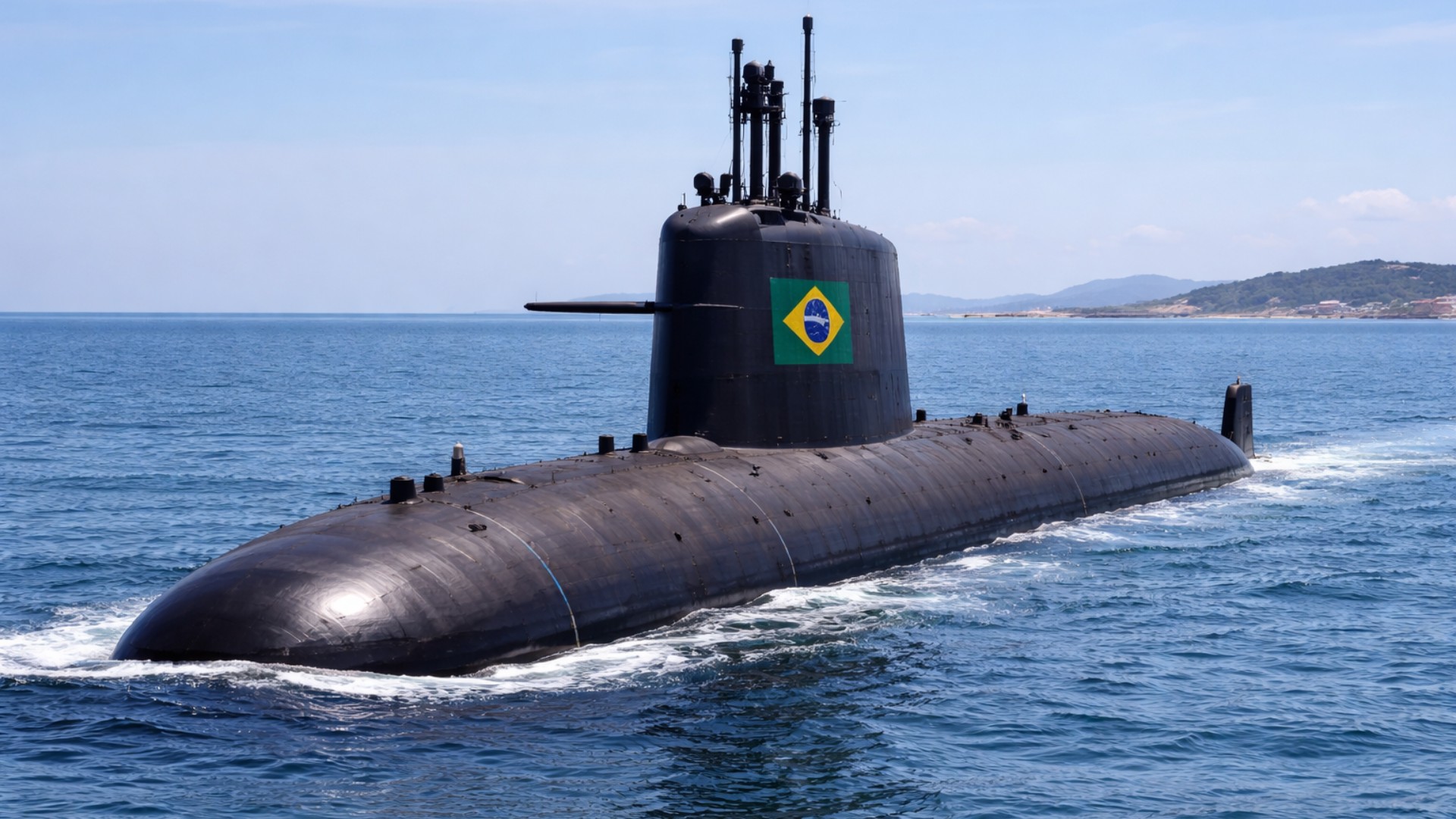
Brazil’s nuclear submarine with a speed 5 times greater than normal advances after nearly 50 years and R$ 40 billion spent.

The Discovery Arose from Thermal Data
Elizabeth was analyzing temperatures recorded at the bottom of isolated wells, where only water was found.
Her goal was to understand the geothermal behavior of the region. However, the professor noticed something out of the ordinary: the Amazon area exhibited cooler temperatures compared to other regions.
This different behavior served as motivation to deepen the study. Fluid circulation models were applied to interpret the data.
One of them fit perfectly. This led to the conclusion that there was a significant movement of underground water capable of dissipating heat and keeping the subsurface cooler.
According to the researcher, this flow occurs at depths of up to four thousand meters.
The water would not rise due to the tilt of the tectonic plates in the region, which directs the flow from the Andes to the Atlantic Ocean. Just like on the surface, the path of underground water would follow from the Andes to the river’s mouth.
Slow, Yet Continuous Movement
The analyses showed that the flow does not occur like in rivers with rapids, but rather slowly, through the rocks. The sedimentary basins between Acre and the Atlantic Ocean demonstrated a drop in depth that reinforces this hypothesis.
According to the professor, the water travels this silent path, thousands of meters from the surface, through the pores of the rocks.
The confirmed extent of the underground water presence matches that of the Amazon River—over six thousand kilometers. However, the researcher believes that this extent could be even greater, as the research only covered areas within Brazilian territory.
The tribute to her doctoral advisor named the river: Hamza. And thus this discovery that opened a new perspective on Brazil’s water resources became known.
Evidence and Pockets in the Ocean
Without images or direct records, the existence of the Hamza River relies on geophysical evidence. But the researcher points out phenomena that reinforce her thesis, such as the presence of freshwater pockets offshore.
Elizabeth claims that fishermen have reported finding freshwater in areas far from the coast. The explanation, according to her, would be the flow of underground rivers like Hamza, which extend to the ocean and end up releasing this freshwater into the sea, even at great distances from the coast.
For the researcher, this phenomenon reinforces the idea that underground water travels great distances in depth and emerges at specific points, which would support the existence of an underground river with the characteristics described in her research.
Reactions from the Scientific Community
The response was immediate but also divided. The professor recalls that, upon publishing the data, she received several criticisms, particularly from geologists. According to her, part of the resistance stemmed from the difference in approach between geologists and geophysicists.
While geologists tend to require physical samples to validate theories, geophysicists use indirect evidence, such as temperature measurements, to make inferences and projections. It was based on this second method that the Hamza River was described.
Another point of disagreement concerns the communication between the sedimentary basins. Elizabeth’s research indicates that they are connected through the flow of water, while geologists often consider them isolated compartments, separated by structures like geological arches.
According to the professor, the model she adopted shows that there is a continuous flow between the basins, with the water moving through the pores of the rocks.
This creates a broad circulation, which would be the basis for the existence of the underground river.
Research Halted Due to Lack of Support
After completing the research in 2013, Elizabeth managed to publish two international articles. However, she had to return to her work at the Federal University of Amazonas, which prevented her from continuing her studies at an accelerated pace.
The continuation of the research faced difficulties. According to the professor, sophisticated equipment and a significant financial investment would be necessary to collect new deep data. Resources she was unable to obtain at the time.
Later, in 2018, Elizabeth managed to approve a project at the Foundation for Research Support of the State of Amazonas (Fapeam) for collections in shallower areas. The collections were made in Manaus and Humaitá, where she currently resides.
These new analyses detected climate changes over the last millennium but did not bring new deep data about the Hamza River. Technical and budget limitations still hinder the advancement of the study in depth.
Future Potential of the Reservoir
Even with the halt of deep research, the professor believes that the Hamza River represents a significant discovery. According to her, the flow indicates the existence of a subsurface water reservoir that may prove useful in the future.
She emphasizes that, in addition to the already known aquifers, there are still other water reserves in deeper layers of soil. And this water, possibly potable, could become a strategic resource.
For Elizabeth, the Hamza River represents a guarantee that the Amazon’s subsurface holds a water potential that is still underexplored and could serve as an alternative in future scenarios of scarcity.
The professor concludes by stating that, although work on the Hamza River has not advanced in recent years, the discovery remains valid.
And she believes that, with new technologies and adequate support, it will be possible to continue exploring this phenomenon and reveal even more about what flows beneath the largest river in the world.







-

-

-

-

-

25 pessoas reagiram a isso.