





 Portuguese
  English
  Spanish
  7 min of reading
  0 comments


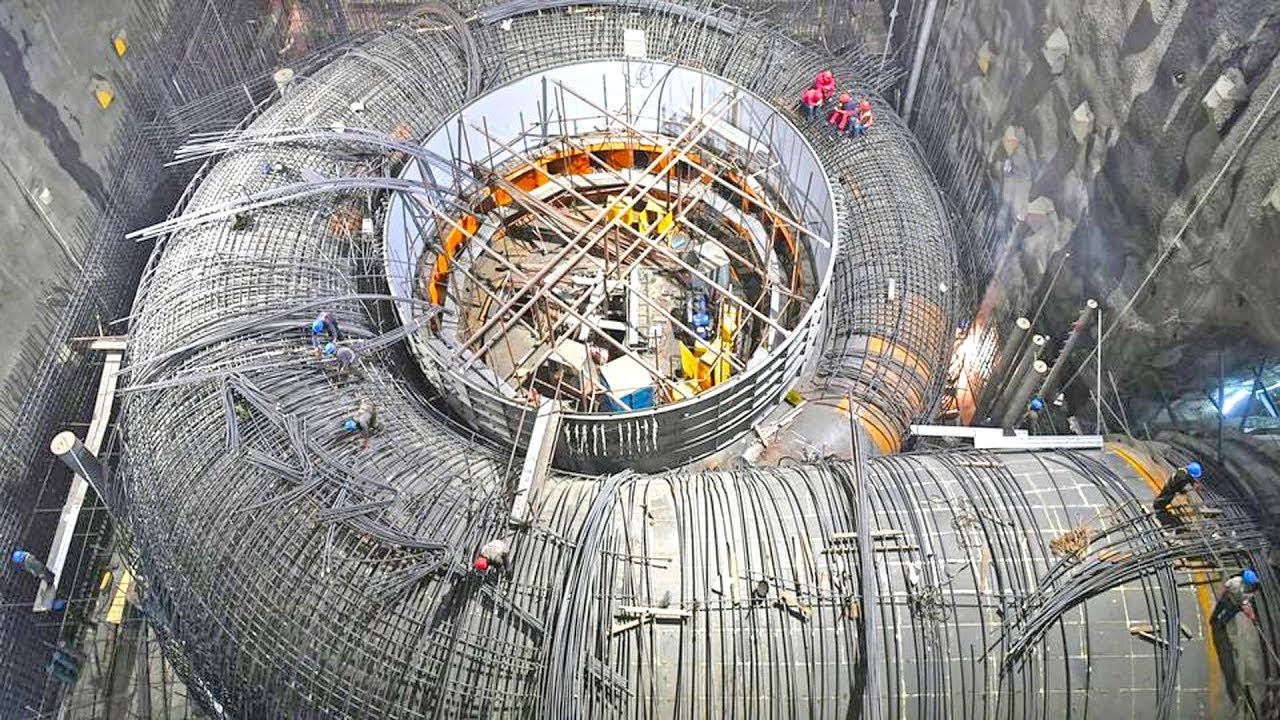
Baihetan Hydropower Plant in China Houses 1,000 MW Turbines with 8.62-Meter Rotors Weighing 346 Tons Made On-Site in Giant Underground Caverns Excavated in the Mountain.
Baihetan Power Plant houses giant 1,000 MW turbines made within the mountain in China: On June 21, 2020, engineers and operators slowly lifted a colossal piece into a cavern excavated in the mountains of southwestern China. It was the first turbine rotor of the Baihetan Hydropower Plant, a component that will continue to spin there for many decades. The most impressive detail was not just the size of the piece but the fact that it had been manufactured on-site. The rotor was so massive that there was no factory in the world capable of producing and transporting it to the site without facing nearly impossible logistical challenges. Thus, the solution found by engineers was radical: to assemble a temporary factory within the construction site itself.
This episode summarizes well the scale of the Baihetan project, now considered the second largest hydropower plant on the planet, behind only the Three Gorges Dam, also in China. With 16 giant turbines and an installed capacity of 16,000 megawatts, Baihetan represents one of the greatest feats of modern hydropower engineering.
1,000 MW Hydropower Turbines Required Giant Rotors That Could Not Be Transported
The challenge began during the design phase when engineers calculated the power needed for each generating unit of the plant. The goal was ambitious: to build turbines capable of producing 1,000 megawatts each, something that no hydropower turbine had achieved until then.
-
A gigantic dam project in the Himalayas could solve one crisis but silently create another for millions of people.
-
Nikola Tesla said that intelligent people tend to have fewer friends, and now science partially confirms this: a study with over 15,000 people showed that for the more intelligent, socializing too much can even reduce life satisfaction.

-
A superyacht worth US$ 17 million is delivered in impeccable condition, sets out to sail, and hits a bridge in the Bahamas just two hours later.

-
Residents of Australia woke up to a sky completely red like blood before the arrival of Cyclone Narelle, which hit the coast with winds of 250 km/h, tearing off roofs and lifting iron dust in a scene they described as apocalyptic.


To achieve this power, the rotor — technically known as the runner of the hydropower turbine — would need to be about 8.62 meters in diameter and weigh over 340 tons. A piece of this size demands millimeter precision in manufacturing, as any imbalance can compromise the efficiency and safety of the equipment.

No factory for heavy equipment in China had, at that time, the capacity to machine a piece of that dimension with the required level of precision. Even if it were possible to manufacture it elsewhere, a second problem arose: transporting the rotor to the power plant.
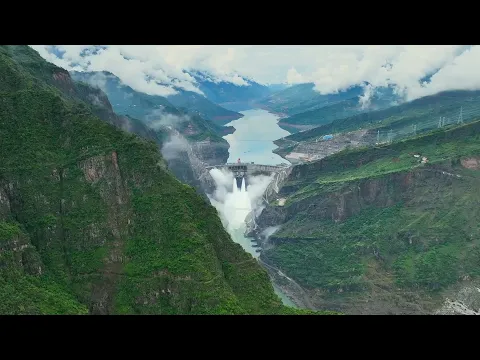
Baihetan Plant was built in the Jinsha River valley, in the Hengduan Mountain Range, an area with narrow roads, limited bridges, and tunnels that could not accommodate a piece weighing hundreds of tons and nearly nine meters in diameter.
In response, Dongfang Electric made an unprecedented decision: to set up a temporary manufacturing plant within the construction site. The first rotor was completed right there on January 12, 2019, completely eliminating the logistical challenge. This was one of the most symbolic moments of the project: a giant turbine being manufactured inside the very mountain where it would operate.
Giant Underground Caverns House the Turbines of the Baihetan Hydropower Plant
Unlike many traditional hydropower plants, Baihetan was built inside caverns excavated in the mountains, along the banks of the Jinsha River, the main upstream tributary of the Yangtze River. The choice of an underground structure was not aesthetic but a direct result of the geological conditions of the region.
To accommodate the 16 giant turbines, engineers excavated two symmetrical underground complexes, one on each riverbank. Each main chamber has impressive dimensions: 438 meters long, 34 meters wide, and 88.7 meters high.
This height is approximately equivalent to a 30-story building buried inside the mountain, making these caverns some of the largest ever built for a hydropower plant.
The total volume of rock removed during excavation exceeded 25 million cubic meters. For comparison, this volume would be enough to build approximately ten Pyramids of Khufu, according to estimates presented by the project’s chief engineer, Chen Jianlin.
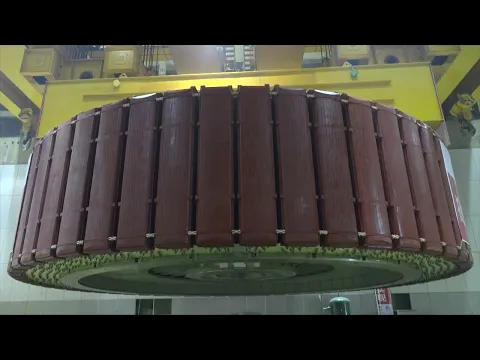
These giant underground caverns are the heart of the plant’s infrastructure, housing turbines, generators, control systems, and water flow channels.
Building the Plant Inside the Mountain Protects the Structure Against Earthquakes
The decision to build Baihetan inside the mountain was primarily geological. The Jinsha River valley is an area known for significant seismic activity. Throughout history, several earthquakes with magnitudes over 7 have been recorded in the area. In a project of this scale, surface structures would require extremely robust foundations and could still remain vulnerable to extreme seismic events.
Inside the massive rock, the situation changes completely. The mountain itself acts as a natural protection, absorbing some seismic energy and helping to stabilize the plant’s structure. Furthermore, the turbines operate under massive hydraulic pressures. At full load, each unit can reach about 10 megapascals of pressure, values that require an extremely stable structural environment.
The underground installation also offers protection against landslides, weather conditions, and potential external hazards, ensuring a designed lifespan of over 100 years for the plant.
The Runner of the Turbine is the Heart of Hydropower Generation
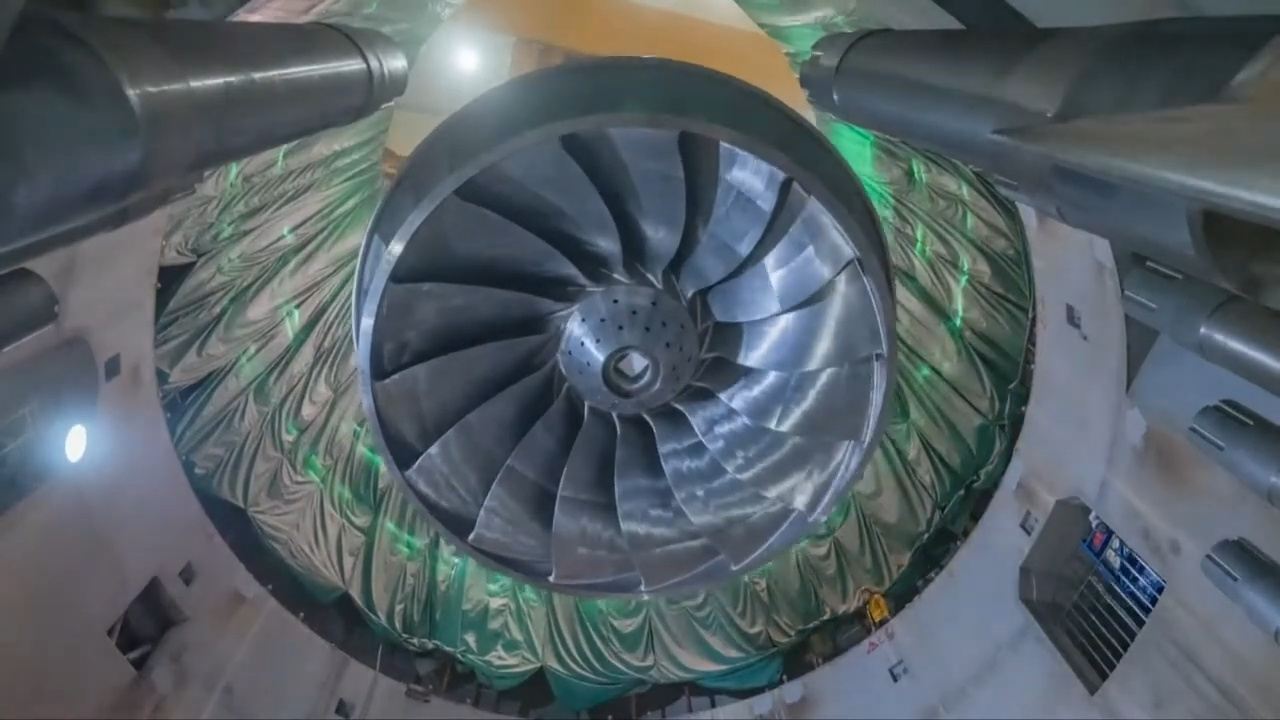
At the center of each generating unit is the runner of the turbine, the piece responsible for converting water energy into rotary motion. This motion drives the electric generator and produces electricity. In the equipment manufactured by Dongfang Electric, installed on one bank of the river, each rotor has 8.62 meters in diameter, 3.92 meters in height, and weighs approximately 346 tons. Each unit comprises 15 giant blades, precisely distributed around a central axis.
Each blade weighs about 11 tons, and any minimal variation in positioning can compromise the turbine’s operation.
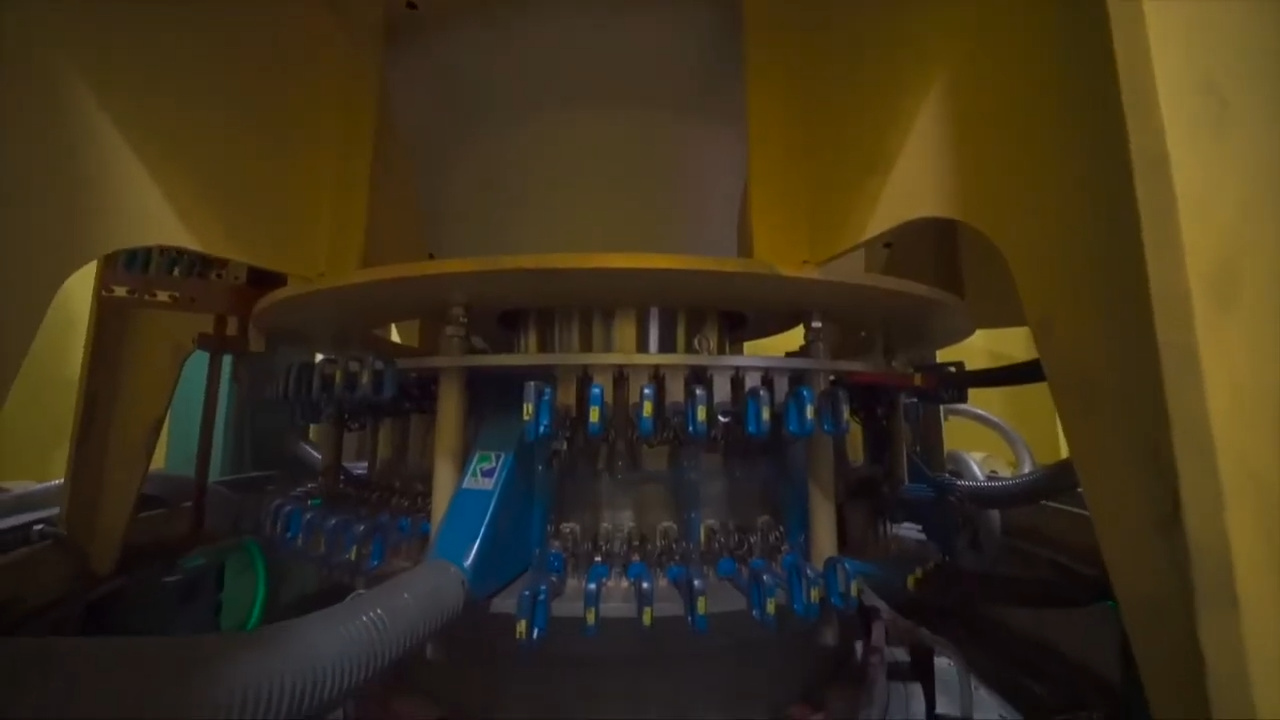
On the other side of the plant, the turbines manufactured by Harbin Electric follow a different design. They feature 30 interleaved blades — 15 long and 15 short — with a diameter of 8.9 meters, one of the largest rotating structures ever installed in a hydropower plant. During operation, the outer edge of these turbines can reach speeds close to 192 km/h, driven by the enormous force of the water descending from the reservoir.
Baihetan Established the World’s First Hydropower Rotor with Zero Balancing
One of the most notable technological achievements of the project was the so-called “zero counterweight balancing”. For decades, large hydropower turbines required the installation of lead counterweights after manufacturing to correct minor imperfections in mass distribution. Even small asymmetries can cause excessive vibration in giant structures that rotate continuously.
At Baihetan, for the first time in the history of hydropower engineering, the rotors were manufactured with sufficient precision to completely eliminate the use of counterweights.
According to Qin Daqing, chief engineer at Harbin Electric, this represents a significant technological leap. The less the residual deviation in the rotor’s mass distribution, the higher the level of engineering involved and the better the turbine’s performance over decades of continuous operation.
289-Meter Dam Creates Reservoir That Feeds the Giant Turbines
All the energy generated by the plant comes from the water stored behind the Baihetan double-curvature arch dam, a structure that reaches 289 meters in height, equivalent to a building of approximately 100 stories. The reservoir formed by the dam stores about 20.6 billion cubic meters of water, creating the pressure needed to move the turbines.
Each generating unit receives water through a high-pressure tunnel. The water descends over 200 meters in height before reaching the turbine rotor. The flow can reach 700 cubic meters per second per turbine, enough to fill an Olympic-sized swimming pool in less than four seconds.
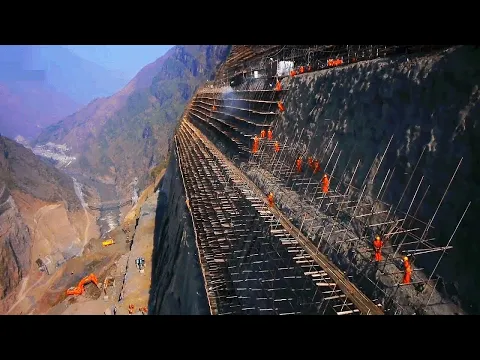
After transferring its energy to the rotor, the water returns to the Jinsha River through discharge tunnels located about 217 kilometers downstream from the reservoir.
Baihetan is the Second Largest Hydropower Plant on the Planet
The Baihetan Hydropower Plant has 16 turbines of 1,000 MW each, resulting in a total installed capacity of 16,000 megawatts.
This makes it the second largest hydropower plant in the world, behind only the Three Gorges Dam, which has a capacity of 22,500 MW. The estimated annual production is 62 billion kilowatt-hours, enough to supply tens of millions of homes.
According to China Three Gorges Corporation, the company responsible for the project, a single full day of operation of the plant can generate enough energy to supply about 500,000 people for an entire year.
Another impressive record lies in the efficiency of the turbines. Each unit operates at maximum efficiency of 96.97%, one of the highest rates ever recorded for equipment of this size.
Ultra-High Voltage Transmission Lines Carry Energy Over More Than 2,000 km
Although it is located in southwestern China, the energy generated by Baihetan is mainly destined for the industrial regions of the eastern part of the country. To transport this energy over long distances, the plant was connected to 800 kV ultra-high voltage direct current transmission lines.
This technology allows for the transmission of enormous amounts of electricity over more than 2,000 kilometers with much lower losses than conventional alternating current systems. The converter substation located in Butuo occupies 62 hectares, being considered the largest facility of its kind in the world.
Baihetan Integrates the Largest Clean Hydropower Corridor on the Planet
The plant does not operate in isolation. It is part of a massive generation system known as the clean energy corridor of the Jinsha and Yangtze Rivers. Besides Baihetan, the system includes the following plants:
- Wudongde (10,200 MW)
- Xiluodu (13,860 MW)
- Xiangjiaba (7,798 MW)
- Three Gorges (22,500 MW)
Together, these five plants form a hydropower complex with a capacity exceeding 70,000 megawatts, a power greater than the total installed electric generation capacity of Brazil.
A Project Imagined in 1958 That Took Over Six Decades to Become Reality
The site where Baihetan was built was first identified in 1958, when Chinese and Czechoslovak engineers explored the Jinsha Valley in search of suitable locations for large dams.
The project was eventually interrupted several times due to political and technological factors. The rupture of Sino-Soviet relations, the Cultural Revolution, and the lack of adequate industrial technology hindered progress for decades. The main construction of the plant only effectively began in 2017. The first turbines came online in June 2021, and the last unit was connected to the power grid on December 20, 2022.
It took 64 years between the first reconnaissance expedition and the completion of the plant. Today, at the bottom of a giant cavern excavated in the mountain, a 346-ton rotor spins continuously, transforming the force of one of Asia’s largest rivers into electricity for millions of people — a monumental piece created specifically for a place where no other could exist.








-

-

-

7 pessoas reagiram a isso.