





 English
  Francês
  Alemão
  Italiano
  Japonês
  Norueguês
  Portuguese
  Spanish
  5 min of reading
  1 comment


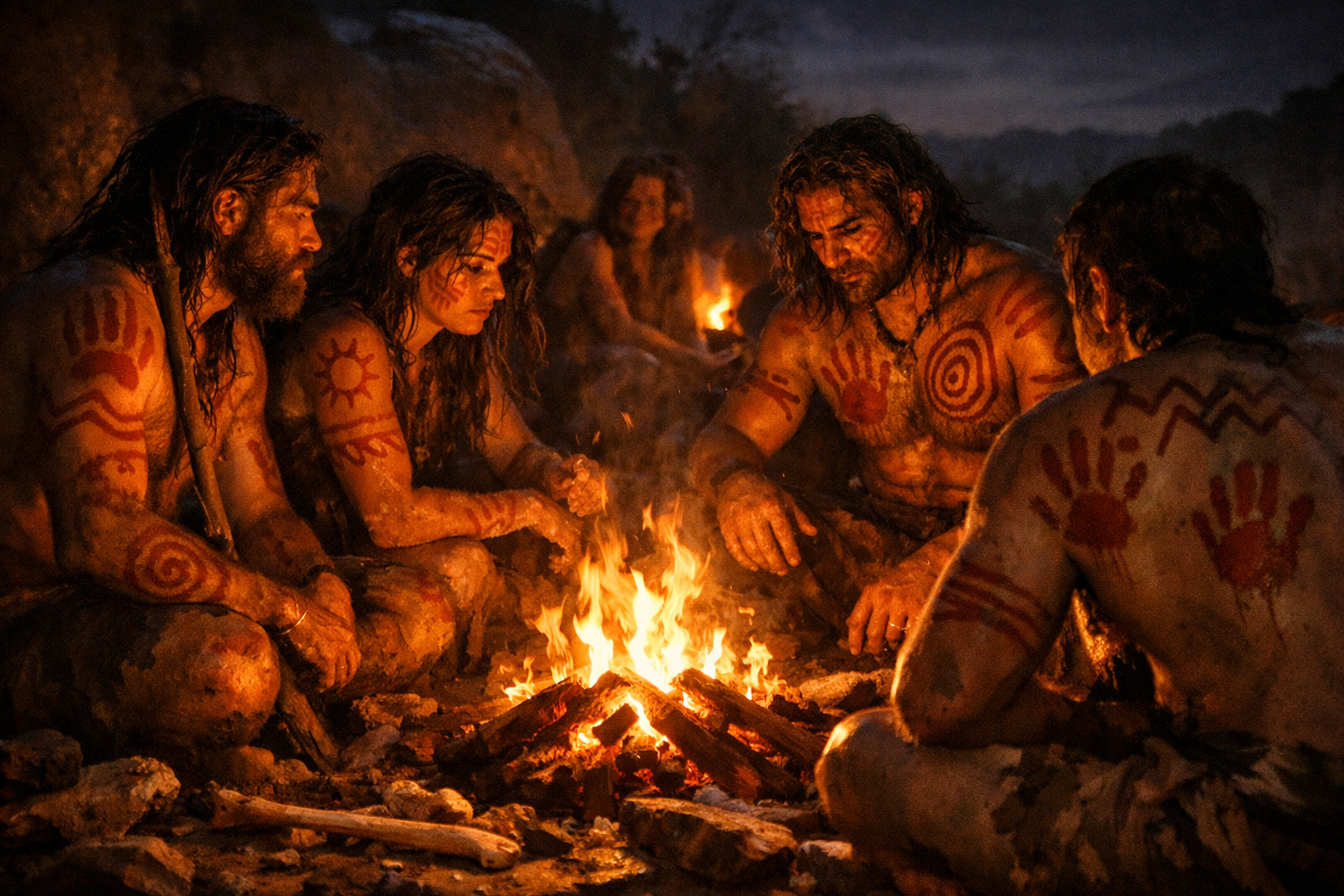


The True Trajectory of Homo Sapiens Reveals a Successive Series of Extreme Climatic Crises, Mass Extinctions, Brutal Scarcity of Resources, and Challenges That, According to Science, Would Make Our Survival Unlikely but Not Impossible.
Where did we come from? To answer humanity’s most fundamental question, we need to go back about 300,000 years to a wild, unstable, and hostile planet. In that primitive world, each dawn represented a continuous gamble against extinction. Yet, it was in this brutal scenario that Homo sapiens emerged, a species that, against all scientific predictions, not only survived but ultimately dominated all the continents of Earth.
However, this story is far from simple. On the contrary, it is a succession of extreme events, environmental collapses, violent disputes, and improbable adaptations that shaped modern humans. The information has been disseminated through various scientific studies and archaeological analyses gathered by specialized portals in science and human evolution, which point to how climatic, genetic, and cultural factors intertwined in this process.
A Planet in Collapse and the Birth of Homo Sapiens
First of all, it is important to understand that Homo sapiens did not arise from a single isolated event. Research shows that different groups of the species were developing simultaneously in various regions of Africa, exchanging genes, knowledge, and survival strategies. Still, this process was anything but peaceful.
-
The climate in 2026 may surprise with extremes even more intense than in 2025, with heatwaves, out-of-season cold, and irregular rainfall in Brazil.

-
Astronomers identify 45 rocky planets that could harbor life, and one of them is just 4.2 light-years from Earth, making it the closest neighbor with the potential to have liquid water on its surface.
-
Archaeologists discover 43,000 ostraca in Egypt with tax lists, drawings, religious texts, and everyday notes that reveal what life was like in ancient Athribis before Cleopatra.

-
China showcases laser defense systems that target drones flying very low and attempts to address a flaw that has been concerning armies worldwide.


The planet was facing violent climate fluctuations, and our ancestors lived at the mercy of prolonged droughts, geological instability, and constant environmental changes. They did not know it, but they were under the shadow of the last great Ice Age, which began about 115,000 years ago and ended only around 11,000 years ago.
During the peak of this period, the average global temperature was approximately 6 °C lower than today. Furthermore, sea levels were about 120 meters below what we know today, and immense ice sheets covered much of the northern hemisphere. In polar regions, temperatures reached as low as −70 °C.
However, the impact was not limited to frozen regions. In Africa, the cradle of humanity, the consequence was paradoxical: less ice meant less available water. Trillions of liters of water were trapped in the polar ice caps, making the planet dramatically drier. Rains became rare and unpredictable, forests shrank, savannas turned into arid steppes, and large lakes evaporated, leaving only salt and dust.
Giants, Hostile Oceans, and a World of Constant Risks

In addition to climatic changes, Homo sapiens shared the planet with true titans of the Pleistocene megafauna. The woolly mammoth, for example, could weigh up to 6 tons, have tusks of up to 4 meters, and carry a layer of fat almost 10 centimeters thick to withstand the extreme cold. Each animal consumed about 200 kg of vegetation per day, forcing it to migrate constantly — and dragging along the human groups that depended on its hunting.
In Eurasia, woolly rhinoceroses roamed like prehistoric tanks, while the saber-toothed tiger hunted by ambush, using its canines to kill with deadly precision. Hunting these animals was an act of extreme courage, as failing was not an option.
However, when the sea level fell 120 meters, a new frontier was revealed: the expanded coastline. For groups living in southern Africa, the tidal pools became a true natural supermarket. Shellfish, mussels, sea urchins, and crabs provided a reliable source of protein, rich in omega-3, an essential nutrient for human brain development.
Some scientists believe that this coastal diet was decisive for our species’ cognitive leap. However, this environment also brought terrifying risks. The ocean was patrolled by ancestors of the great white shark, possibly larger and more aggressive than today’s sharks. Each shadow beneath the water could mean death.
Collective Survival and the Awakening of the Human Mind
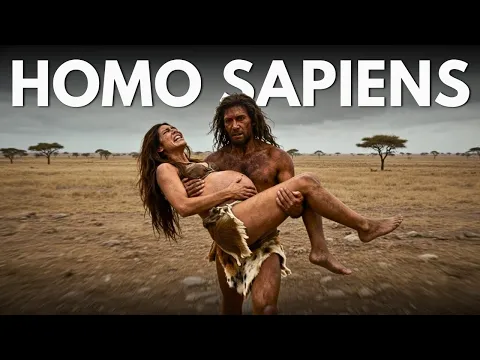

Meanwhile, Africa, especially the Rift Valley, was a true geological pressure cooker. Major earthquakes and volcanic eruptions spewed ash that darkened the sky for days, poisoned rivers, destroyed vegetation, and decimated animals. For small clans of hunter-gatherers, an eruption was not just a natural phenomenon but the end of the world.
In this context, daily survival depended not only on physical strength. On the contrary, knowledge became the primary weapon. Women played a central role, ensuring sustenance with roots, starchy tubers, medicinal leaves, eggs, shellfish, lizards, turtles, and even termites — highly nutritious, rich in protein and fat.
Men refined strategies such as persistence hunting, exploiting a unique advantage of Homo sapiens: sweat. With few body hairs and millions of sweat glands, our ancestors could run long distances under the African sun until the prey succumbed to overheating.
Every part of the animal was utilized. Blood, rich in mineral salts, was consumed. Bones were broken to extract the marrow. Nothing was wasted.
Cooperation, Compassion, and the Conquest of the Planet
Despite everything, the greatest challenge did not come just from nature or predators but from other human groups. Competition for water, territory, and food led to violent confrontations, as evidenced by fossils with cranial fractures and spear tips embedded in bones.
Yet, it was internal cooperation that ensured the survival of the species. In a world where up to 50% of infants did not survive their first year, community care became essential. Pregnancy, childbirth, and child-rearing were collective responsibilities, with support from mothers, aunts, and grandmothers.
This behavior revealed something revolutionary: compassion as an evolutionary strategy. Archaeological evidence shows individuals with severe fractures who survived for months, unable to hunt or gather. They only lived because someone took care of them. This was humanity’s first medicine.
With the mastery of fire, Homo sapiens turned night into safety, expanded their diet, cooked previously toxic foods, and obtained more calories with less effort. This fueled an increasingly larger and more complex brain.
Then came symbols: the obsessive use of red ocher, blocks dated to as much as 300,000 years, perforated shells over 100,000 years old, indicating the first body adornments and the birth of identity. Art did not arise in caves but on the human body.
Finally, about 70,000 years ago, small groups left Africa. Some crossed Sinai, others crossed the strait of Bab-el-Mandeb, then much narrower due to the sea level being 120 meters lower. In Eurasia, they encountered Neanderthals. Modern genetics reveals that humans outside Africa carry between 1% and 4% Neanderthal DNA, inherited from these encounters.
Conclusion
The story of Homo sapiens is the most unlikely of all. A species that should not have survived extreme droughts, ice ages, hostile megafauna, diseases, conflicts, and natural disasters — yet survived. And not only that: it conquered the planet.
Deep down, we are all heirs to this same African journey. The question that remains is simple yet profound: what will we do with this legacy?
If everything we are today was born from a hostile planet and collective choices, do you think we still remember what truly made us human?
Source: Arquefatos








Foi graça de Deus; mas até hoje, existe quem pense q a vida surgiu por acaso…
Um filósofo disse que “Deus criou as regras”.