





 Portuguese
  English
  Spanish
 4 min of reading
  0 comments


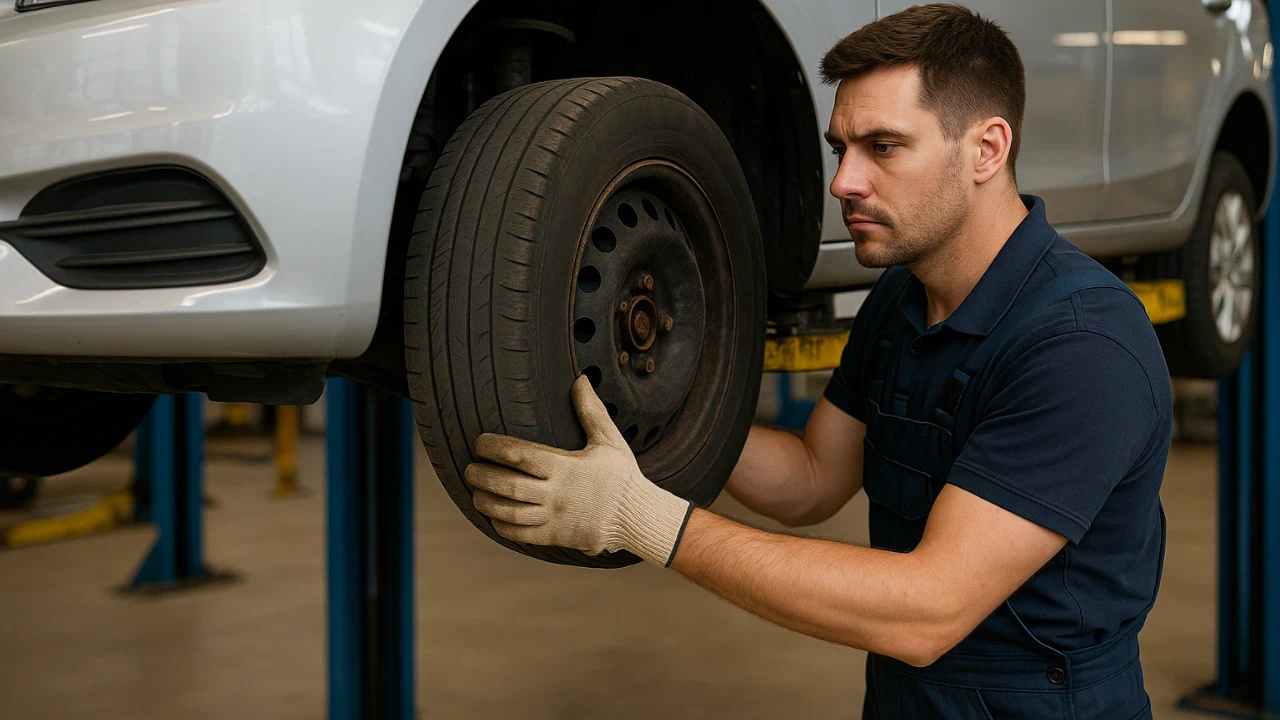
Have you ever stopped to think that tire wear may stem from something hidden in the heart of the car? The engine mount, that part that rarely gets attention, can be responsible for reducing tire life by thousands of kilometers. When damaged, it alters the mechanical balance and creates a cascading effect: vibrations, misalignment, and consequently, tires worn unevenly long before their time.
Engine Mount And Its Impact On Tires
The engine mount is the support that keeps the engine firmly in the bay, isolating vibrations and ensuring stability. Its role is to absorb movements and prevent the engine’s force from transferring directly to the chassis. But when the engine mount is damaged, every jolt is transmitted to the transmission and wheel assembly. The result? Tires that begin to wear unevenly, even with proper alignment and balancing.
This problem is often silent. The car gives small hints — metallic noises when starting, vibrations in the steering wheel at low RPM, or even a slight deviation when driving straight — but many drivers believe it’s just “misalignment.” By the time they realize the real cause, the tires have already lost thousands of kilometers of useful life.
-
The 2026 electric Vitara arrives in Brazil and proves that Suzuki is not leaving: 4×4 traction, 184 hp, 61 kWh LFP battery, 293 km range, R$ 259,000, and a trunk capacity of 224 L.

-
Hyundai has unveiled the Boulder, a square SUV with a body-on-frame design, 37-inch mud tires, and carriage-style doors that seems to be made to take on the Ford Bronco and the Scout Traveller in the United States.

-
The Toyota Hilux is R$ 75.5 thousand cheaper and bets on the 2.8 turbodiesel engine with up to 204 hp and 50.9 kgfm to catch up with the VW Saveiro, which leads with 4,472 sales.

-
The new Renault Koleos has a screen exclusively for the passenger that is invisible to the driver, heated rear seats, and 29 assistance systems, but its Chinese competitors cost R$ 40,000 less and deliver more power.

Shocks And Springs That Lose Efficiency
Besides the mount, the suspension plays a fundamental role in tire wear. Worn shocks make the car hit hard in potholes, transferring impacts directly to the rubber. The most common effect is the formation of “scales” on the tire surface, compromising grip.
The springs also influence wear. When they lose their original height, the car lowers and changes the geometry of the wheels. This involuntary lowering causes uneven pressure, resulting in tires worn more on one side than the other.
Neglected Alignment And Balancing
Even without issues with the engine mount, driving without checking alignment and balancing is one of the costliest mistakes. Misalignment causes constant drag, as if the car is fighting to stay on course. Unbalanced wheels generate vibrations that destroy tire balance. The wear, in this case, appears in specific spots and reduces lifespan by up to 30%.
Checking geometry every 10,000 km or after strong impacts in potholes is a simple measure that avoids high costs.
Incorrect Tire Pressure: A Common Oversight
Tires with incorrect pressure suffer more than one might think. Too low, they wear the edges; with high pressure, they lose rubber from the center. In both cases, the tire fails to fulfill its grip function and loses precious kilometers.
It’s a basic habit, but many drivers forget it: to check tire pressure weekly. This small routine could save not only the tires but also fuel consumption, which increases when the pressure is incorrect.
Brake And Bearing Issues
Another villain is the braking system. If one wheel locks before the other, the tire on that position suffers greater friction, creating irregular marks on the tread. The same happens with worn bearings: they generate vibrations that force the tire to roll off-axis, increasing wear.
These situations are less remembered, but they contribute to the rubber “dying” earlier than expected.
Driving Habits That Increase Wear
The driver’s style also counts. Sudden braking, aggressive acceleration, and high-speed turns cause tires to wear in irregular patterns. Even driving up curbs carelessly or hitting potholes excessively creates impacts that affect both the tire and the engine mount.
In practice, driving more gently can extend the lifespan of a set of tires by up to 40%.
How To Notice The Warning Signs
A vigilant driver can avoid headaches by identifying signs early on. Keep an eye out for:
- Vibrations in the steering wheel at low RPM.
- Metallic noises when starting or slowing down.
- Car pulling to one side on straight roads.
- Increased wear in just one spot on the tire.
- New tires deforming in a few months.
These symptoms may indicate anything from a damaged engine mount to suspension or bearing problems. The sooner the car is checked, the higher the chance of preserving the tires and avoiding high costs.
The Cost Of Neglect
Ignoring uneven wear is not just a financial issue — although spending on new tires prematurely hurts the wallet. The greater consequence is safety: tires that do not touch the ground evenly increase the risk of hydroplaning and reduce braking efficiency, especially on wet roads.
In other words, failing to take care of something seemingly simple, like the engine mount, can cost much more than money. It’s the peace of mind of the driver that is at stake.










-

-

-

3 pessoas reagiram a isso.