





 Portuguese
  English
  Spanish
  4 min of reading
  0 comments


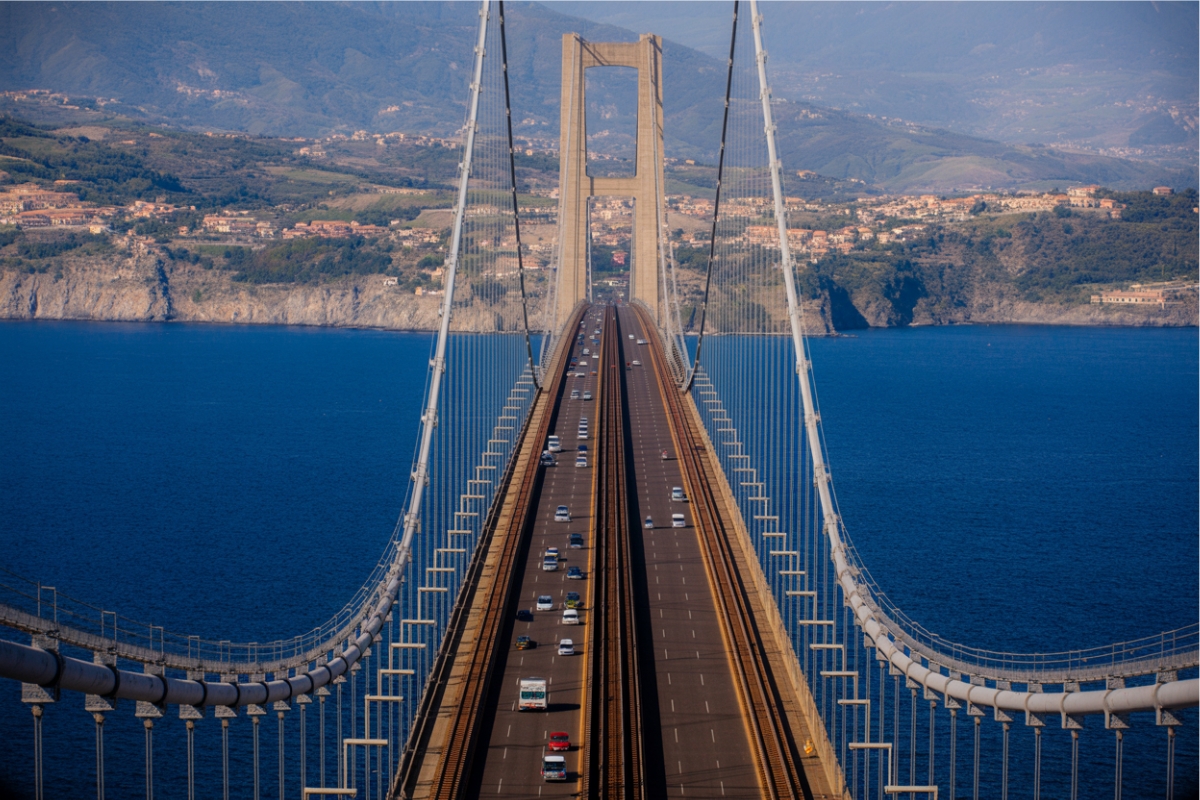
Italy Advances with a Billion-Dollar Project to Build the World’s Largest Suspension Bridge Connecting Sicily to the Mainland and Marking a Deep Change in National Infrastructure
Italy has taken a decisive step to transform an old project into one of the most ambitious infrastructure works of the 21st century. The government approved the construction of the suspension bridge that will connect the mainland territory to the island of Sicily, a mega-structure estimated at €13.5 billion, designed to change the logistics of the country and boost the economy of southern Italy.
For decades, the idea was stalled by technical debates, environmental concerns, seismic risks, and fears about the influence of criminal organizations. Now, the project is advancing with political strength and forecasts positioning it as the largest infrastructure work in the Western Hemisphere.
A Project That Promises to Transform Southern Italy
The Minister of Transport, Matteo Salvini, stated that the bridge will be “the largest infrastructure work in the West,” highlighting its economic and symbolic relevance. Prime Minister Giorgia Meloni described the structure as a future “symbol of engineering of global importance,” emphasizing the strategic nature of the construction.
-
Scientists use sawdust mixed with clay to create a lighter brick, promising efficient thermal insulation and impressing by transforming waste into a solution for construction.

-
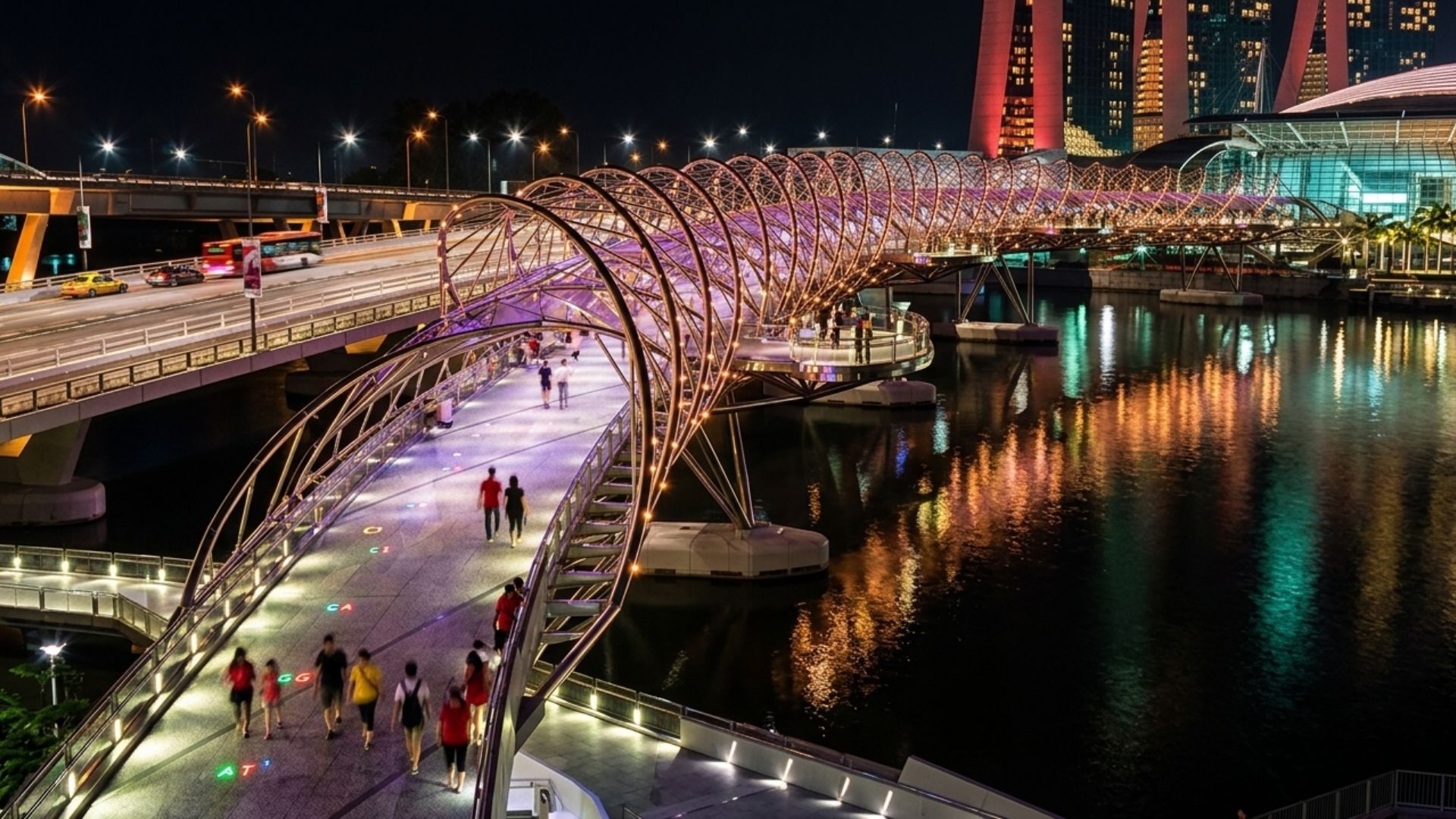
With a DNA shape, this bridge in Singapore draws attention in modern architecture and surprises tourists by transforming a simple crossing into an unforgettable visual experience in the urban heart.
-
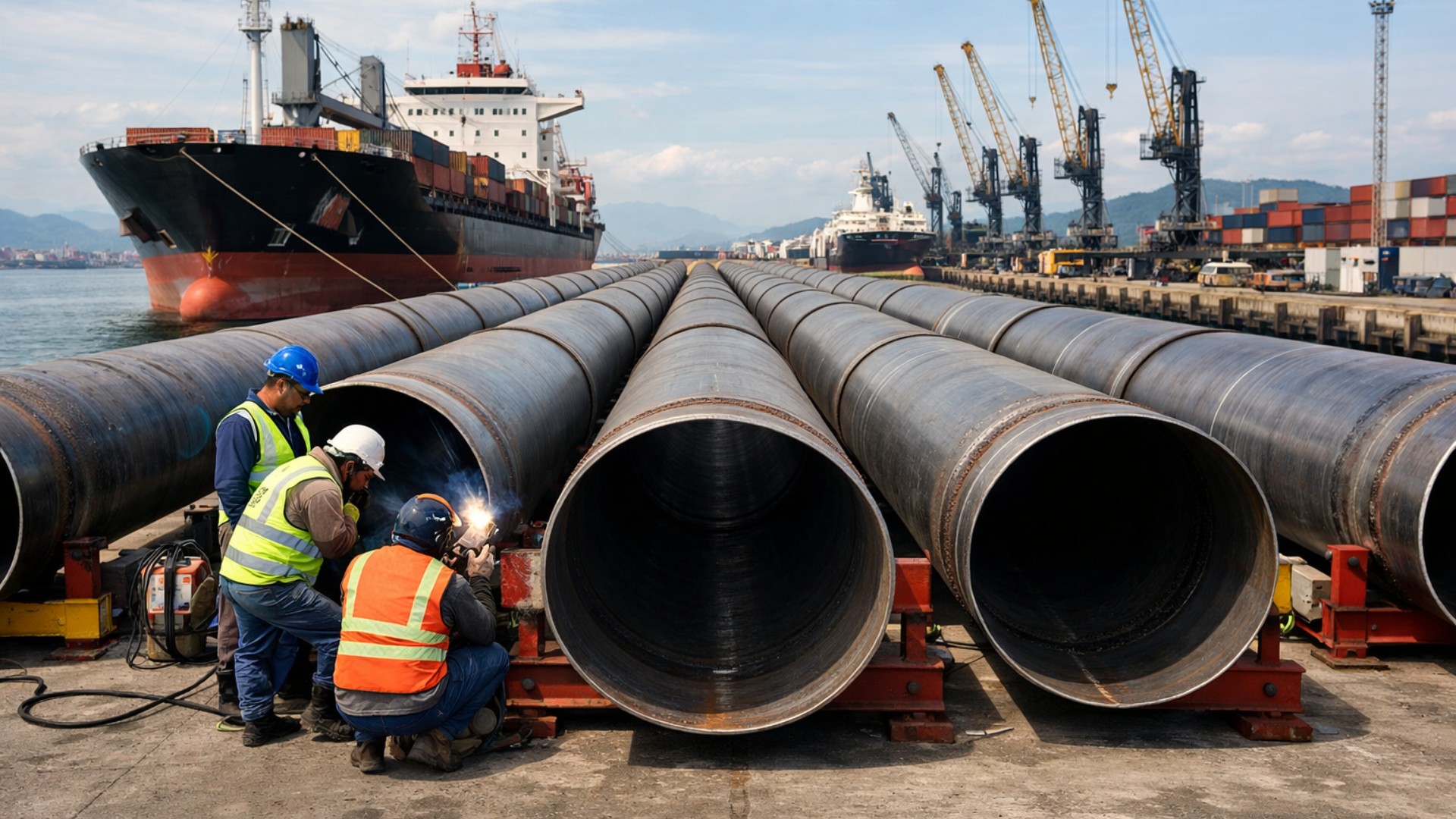
Giant underwater pipeline begins to take shape with a R$ 134.7 million project at the Port of Santos: the 1.7 km structure uses 12-meter and 700 mm pipes to supply water to 450,000 people in Guarujá.
-
A mason reveals a professional plastering technique that uses aligned guides and a 3-meter ruler to plaster an entire wall in up to 3 hours, without visible seams, with uniform thickness, perfect plumb, and a finish ready for painting without rework.


Studies mentioned by the government estimate that the work could generate 120,000 jobs per year, accelerating the growth of a region historically marked by low industrialization. In addition to the bridge, the plan includes new highways, modernization of rail networks, and complementary works to improve integration between Sicily and the rest of the country.

The project has reached its most advanced phase since 1969, the year the Italian government requested the first proposals. Over the years, it has been approved and canceled several times, but reactivation in 2023 allowed it to finally achieve technical and political maturity.
Preliminary work could begin between the end of September and early October, following the approval of the court of auditors. Construction is expected to start next year and be completed between 2032 and 2033, according to the official schedule.
A Record-Breaking Megaconstruction with Strategic Impact
The bridge over the Strait of Messina will be approximately 3.7 kilometers long, with a suspended span of 3.3 kilometers, making it the longest suspension bridge in the world. The structure will surpass the Turkish Çanakkale Bridge, the current record holder, by over one kilometer.
The project provides for three lanes of traffic in each direction and a double-track railway system, allowing for an estimated capacity of 6,000 vehicles per hour and 200 trains per day. As a result, the crossing time between the peninsula and Sicily, which currently can take up to 100 minutes by ferry, will drop to just 10 minutes by car. For trains, the saving could reach two and a half hours.
The Italian government is also studying classifying the work as military-interest infrastructure, linked to NATO defense goals. With this designation, the bridge could count as part of the country’s security expenditures, as it would allow for rapid movement of troops and equipment towards the Mediterranean and the southern flanks of the alliance.
The proposal, however, faces resistance. More than 600 professors and experts signed a letter criticizing the military classification, arguing that it would require additional studies and could make the bridge a strategic target.
Environmental, Seismic Challenges, and the Fight Against the Mafia
Environmental organizations warn that the structure could affect migratory routes of birds and claim that existing studies do not prove that the project represents a public necessity capable of justifying ecological impacts. The European Union is already analyzing the complaints.
Another sensitive issue is the risk of infiltration by organized crime. The regions linked by the bridge, Sicily and Calabria, have historically faced the presence of groups like Cosa Nostra and ’Ndrangheta. To prevent irregularities, the President of Italy has determined that the work follows the same anti-mafia rules applied to all major national infrastructures.
Salvini assured that the government will use the security protocols adopted at the 2015 Expo in Milan and the 2026 Winter Olympics. The goal, according to him, is to keep the entire supply chain “completely impermeable” to illicit practices.
Technology, Engineering, and Geological Risks
The project is in charge of a consortium led by Webuild, an Italian group responsible for large international works. The company had won the original bid in 2006, but the project was canceled shortly thereafter.
The design of the bridge employs solutions used in large global constructions, such as the Çanakkale Bridge inaugurated in 2022. Among the central elements are an aerodynamic profile similar to that of a fuselage and openings that allow wind to pass through, reducing pressure on the structure.
The Strait of Messina region is known for its seismic activity, having been the site of the devastating earthquake of 1908. To address concerns, Webuild claims that suspension bridges perform better against seismic forces and cites examples in Japan, Turkey, and California.
For the CEO of Webuild, Pietro Salini, the work will not only solve a historical logistical challenge but “will be transformative for the entire country.”





-

2 pessoas reagiram a isso.