





 Portuguese
  English
  Spanish
  7 min of reading
  5 comments


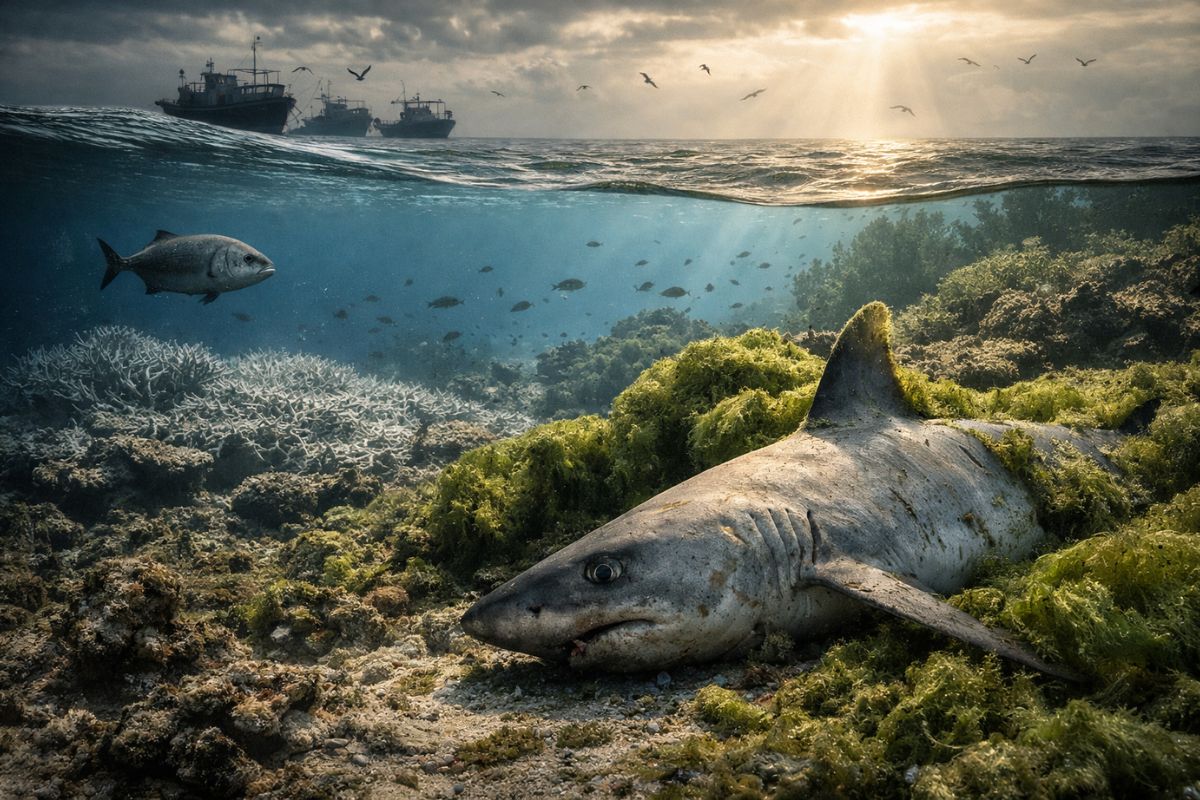


In The Indian Ocean, Sharks Have Plummeted Over Five Decades, Disappearing From Areas Where Divers Went Ten Years Without Seeing A Single Animal. With The Top Of The Food Chain Removed, Seals Exploded By 520%, Coral Reefs Were Taken Over By Algae, Small Fish Disappeared, Dragging Tourism Into Million-Dollar Losses.
In The Indian Ocean, sharks Have Stopped Being A Common Presence And Have Become A Repeated Absence: In Some Areas, Divers Spent 10 Consecutive Years Without Seeing A Single Animal, Even With Cameras Installed For Thousands Of Hours, And The Disappearance Doesn’t Resemble A Natural Cycle.
The Impact Came Like A Domino Effect In The Sea: Without The Apex Predator, Seal Populations Rose By 520%, Coral Reefs Were Covered With Algae, Small Fish Disappeared Completely From Entire Regions, Nautical Tourism Lost Hundreds Of Millions Of U.S. Dollars.
Why Sharks Maintain The Balance Of The Ocean

Sharks Function As “Enforcers” Of The Marine Ecosystem, Equivalent To Large Predators On Land, Because Their Mere Presence Changes The Behavior Of Other Species. This Effect Doesn’t Only Depend On Attack And Consumption: It Reorganizes The Way The Ocean Moves.
-
A Mercado Livre customer opened their package and found 32 resumes of people looking for jobs crumpled as protective paper inside the box, exposing names, addresses, documents, and phone numbers of dozens of candidates.

-
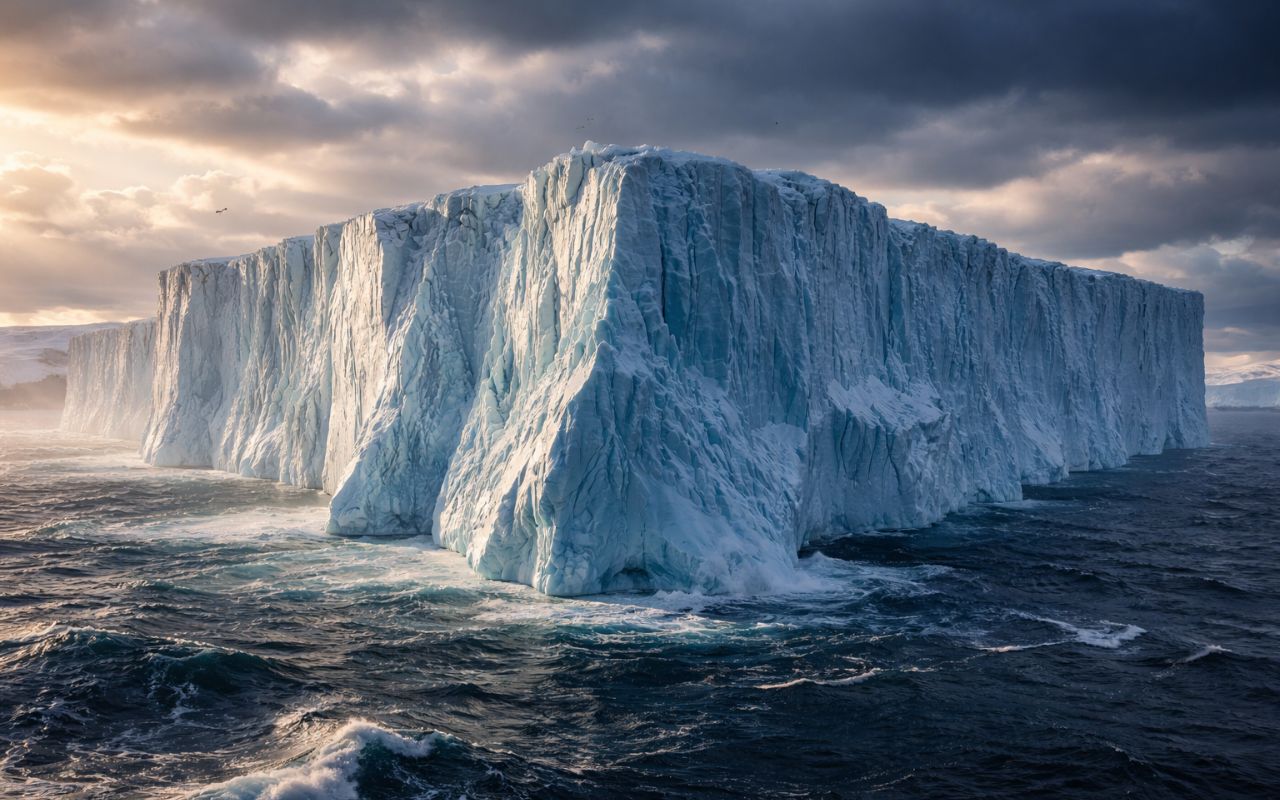
Iceberg A23a, one of the largest in the world, is undergoing accelerated collapse and may disappear: what explains the end of the ice giant?
-
The simplest swap at home can reduce energy consumption by up to 90% without changing habits, using a technology that lasts up to 25 times longer and consumes only a fraction of the electricity.

-
With over 14 million baskets of earth moved, an ancient North American metropolis built a monumental pyramid of 30 meters and established a city with 20,000 inhabitants nearly a thousand years ago.


An Example Cited Occurs Near Seagrass Meadows: Just Having Sharks Roaming Attracts Turtles And Dugongs To Shift, Preventing Overgrazing. When Sharks Are Gone, Turtles Consume All The Seagrass, The Seagrass Dies, And Young Fish Lose Their Shelter. The Result Is A Sequence Of Losses That Starts “Invisible” And Ends In Collapse.
What Makes Sharks So Efficient

There Is A Huge Diversity Of Sharks On The Planet: More Than 500 Species, And If Close Relatives Like Rays Are Included, The Number Exceeds 1,000 Species. Their Sizes Range From Extremely Small To Gigantic: The Pygmy Shark Is About 30 Cm, While The Whale Shark Can Reach 18 M.
They Have Existed For About 400 Million Years And Survived Five Mass Extinction Events. They Appear In Coral Reefs, Deep Sea, Freshwater, And Even Polar Regions. Because They Are Cartilaginous Fish And Lack Structures Like “Ribs”, Out Of Water, Their Own Body Weight Can Crush Internal Organs.
The Skin Is Covered In Dermal Denticles, Structures That Look Like Tiny Teeth And Reduce Friction With Water, Helping To Swim Efficiently. There Are Direct References To Speeds Of Up To 50 Km/h. And There Is A Factor That Explains Why They Remain Efficient Even When Prey Tries To “Hide”: Electricity Detection. The Ampullae Of Lorenzini Can Detect Extremely Weak Electric Signals, On A Scale Of 1 Millionth Of A Volt, Which Makes It Useless To Turn Off Lights, Mask Smell, Or Hold One’s Breath.
The Rhythm Of Disappearance In The Indian Ocean
The Decline Of Sharks Is Described As Rapid And Frightening. In 50 Years, The Indian Ocean Has Lost Over 70% Of The Shark Population, And The Disappearance May Be Even More Severe In Specific Areas, With Reports Of More Than 90% Disappearing In Some Regions.
There Is A Cut That Reinforces The “Blink Of An Eye” Aspect Of The Collapse: Between 2016 And 2020, Sightings Fell By Another 82%. Some Species Have Almost Disappeared Locally, With Extreme Declines Cited For Oceanic And Reef Sharks, Reaching Reductions Of 90% To 99%.
The Point That Is Even More Disturbing Occurs When The Disappearance Reaches Even Protected Marine Areas: Drones And Cameras Have Rolled For Thousands Of Hours And Did Not Register A Single Shark. The Reading Is Harsh: They Were Either Caught Before Reaching Protected Zones or The Environment Degraded So Much That No Young Sharks Are Left To Replace The Adults. Instead Of Gradually Declining, Populations Collapse In 3 To 5 Years, As If Someone Had Flipped A Switch. In Parts Of Tanzania And Kenya, Between 2010 And 2016, Some Species Of Reef Sharks Fell By As Much As 94%.
Who Is Taking Sharks Out Of The Sea
The Direction Is Pointed At Humans. The Annual Volume Is Gigantic: Between 73 And 100 Million Sharks Killed Each Year, With The Comparison That In 10 Minutes, About 1,500 Sharks Disappear From The Ocean.
Shark Fins Appear As The Motor Of The Status Market, Because They Almost Have No Flavor And Are Composed Mainly Of Collagen, Yet Are Treated As Luxury Items In Large Celebrations. There Are References To Prices Between 500 And 1,000 Dollars Per Kilo For High-Quality Fins. Since The 1970s, Ultra-Resistant Nylon Nets, Vessels Capable Of Traveling Thousands Of Kilometers, And Longlines That Stretch Over 300 M Have Facilitated Large-Scale Capture.
In Addition To Targeted Capture, There Is A Second Engine That “Grinds” Sharks Without Even Targeting Them Directly: Commercial Tuna And Swordfish Fisheries. Accidental Capture Is Described As The Largest In The World, With Sharks As The Number One Victims. It Is Estimated That Up To 50% Of Sharks Killed Each Year Die Due To Accidental Capture, And Many Of These Incidents Are Not Even Reported, Which Pushes The Real Numbers Upward.
When Fishing “Doesn’t Aim”, But Kills Just The Same
The Scenario Becomes Even Heavier When Large Industrial Fleets And Operations In Huge Lines And Nets Come Into Play. There Are Descriptions Of Longlines Measuring 50 To 70 Km, And International Inspections Indicating That 40% To 60% Of Fish Caught In Tuna Fisheries In The Indian Ocean May Be Sharks. In Some Areas, The Figures Cited Are Even More Brutal: For Every 1 Kg Of Tuna, 2 To 3 Kg Of Sharks Are Pulled In.
Illegality Also Appears As Fuel, With Fleets Entering The Waters Of Countries Like Kenya, Tanzania, Somalia, And The Maldives, Turning The Region Into A Shark Capture Machine With No Reporting Of Catches.
In The Midst Of This System, Local Fishermen Emerge As Victims Of An Empty Ocean: When Foreign Fleets Remove Anchovies, Sardines, And Small Fish, Few Protein Options Remain. An Adult Hammerhead Shark Is Cited As Being Equivalent To 5 To 7 Days Of Average Income, And A Large Tiger Shark Can Sustain A Family For Half A Month.
In Interviews Associated With A 2022 Study On The Kenyan Coast, 90% Of Fishermen Reportedly Hunted Sharks Because There Were No More Fish.
Little Legal Protection, Habitat Decline, And Slow Reproduction
Another Bottleneck Cited Is Limited International Protection: Only 17% Of Shark Species Are Internationally Protected, And Many Rules Exist More On Paper Than In Practice, With Fishing Continuing Unrestricted, Unreported, And Uncontrolled In Different Parts Of The Indian Ocean.
Meanwhile, Essential Habitats Are Quickly Disappearing. There Are References To Rising Temperatures, Loss Of 70% Of Eastern Africa’s Mangroves In 50 Years, And Over 90% Of The Coral Reefs Of The Maldives Suffering Bleaching During Heat Waves In 2016 And 2020.
There Is Also A Loss Of 30% To 50% Of Seagrass Meadows In Zanzibar And Lamu, Areas Where Young Sharks Hide. When These “Nurseries” Disappear, Juveniles Are Left Exposed And The Replacement Is Halted.
The Replacement Process Is Already Slow By Nature. Some Species Take 25 To 30 Years To Reach Maturity. Female Mako Sharks May Only Bear 4 To 18 Young Every 3 Years. Female Tiger Sharks Carry Their Gestation For 16 Months. It Is A Dangerous Formula: Slow Reproduction With Accelerated Mortality.
The Domino Effect On The Reef, Fishing, And Tourism
When Sharks Leave The Top, “Midlevel” Predators Explode. The Most Visible Example Cited Is In False Bay, South Africa, Which Was Known As A Stronghold Of Great White Sharks And Has Reportedly Not Registered A Single Individual Since The End Of 2018.
After The Disappearance, Cape Fur Seal Populations Increased By Over 520% And Dominated Feeding Areas, While Other Medium Predators Began Appearing In Abnormal Densities.
The Next Level Of The Domino Affects Small Fish, Precisely Those That Help Graze Algae And Keep Reefs Clean. Without Them, Algae Grow Up To 100 Times Faster Than Coral And Cover The Reef’s Surface Like A Blanket, Blocking Light, Suffocating The System, And Preventing Recovery. Vibrant Reefs Become Gray And Lifeless Structures.
With Collapsing Reefs, Fishing Declines Alongside. In Areas Of Kenya And Tanzania With Strong Declines In Hammerhead Sharks, The Drop In Coastal Fishing Yields Is Cited As Between 50% And 70% In Five Years.
And Tourism Also Feels The Impact: In The Maldives, The Decline In Diving Tourism Is Cited As 39% Over Five Years, With Estimated Losses Between 200 And 300 Million U.S. Dollars Per Year.
What Works When Someone Decides To Act
There Is A Concrete Example Described As A Turnaround: The Maldives, Since 2010, Transformed Its Entire Exclusive Economic Zone, Covering More Than 923,000 Km, Into A National Shark Sanctuary. All Forms Of Shark Fishing Have Been Prohibited, Even Taking Sharks Onboard As Bycatch.
The Cited Penalties Include Fines Of Up To 100,000 U.S. Dollars, Confiscation Of Equipment, And Even Permanent Bans On Access To The Country’s Waters. In Less Than 10 Years, The Density Of Reef Sharks In Coral Reefs Is Said To Have Increased By 126%, With Records Of Groups Of 10 To 20 Sharks Swimming Together Near Tourist Islands.
Another Case Involves Kenya: Starting In 2017, Armed Maritime Patrols, Radar Tracking, And Identification Systems Began Targeting Fleets That Were Blocking Signals To Fish Illegally. In Five Years, This Is Estimated To Have Reduced Accidental Capture Of Sharks By 60%, With Inspections, Fines, And Training To Release Sharks Alive, Along With Annual Publication Of Bycatch Data.
There Are Also Trade And Control Measures: Requirements For Fins Naturally Attached To The Body Upon Landing In 2022 Regulations, Bans On Fin Trade In Countries Like The United States, Canada, And The United Kingdom, And A Decline In Shark Fin Soup Consumption In China After A National Campaign And Ban On Official Banquets In 2014.
There Is Even Technology, Such As Cameras With Artificial Intelligence Onboard, Capable Of Identifying Species, Recording Conditions, And Alerting The Captain, With Tests Indicating A 42% Reduction In Accidental Deaths From Capture. And On The International Stage, Expanded Protection Lists For Dozens Of Species And The Estimate That Rigorous Enforcement Could Save A Significant Slice Of Endangered Species In The Coming Decade.
In The End, The Message Is Simple And Harsh: Where There Is Decision, Sharks Come Back, And Where There Is Omission, The Ocean Loses Its Capacity To Regulate.
Do You Think The World Will Only Take The Shark Crisis Seriously When Reefs, Fishing, And Tourism Collapse Completely In More Places?









É questão de tempo para q esse ser, que se diz inteligente, acabar com esse planeta
Isso é Bíblico
Menos de 1 % escapa, o resto, vão queimar pela eternidade
O ser humano por si mesmo se destrói
Ser humano é um verdadeiro câncer para o planeta…