





 English
  Francês
  Alemão
  Italiano
  Japonês
  Norueguês
  Portuguese
  Spanish
  6 min of reading
  0 comments



Ancient Aquifers in the Andes Are Being Pumped in the Lithium Triangle to Extract Mineral Essential for Electric Car Batteries, Consuming Ancestral Water in Evaporation Pools in the Desert.
Under the driest soil on the planet, at an altitude of 2,300 meters in the Andes, there are aquifers that took tens of thousands of years to form. The water they hold has slowly infiltrated through the rocks over eras, accumulating in a fragile balance with the ponds and wetlands that have supported indigenous communities for over 11,000 years. Today, this very resource is being pumped to the surface at an industrial pace to supply the electric car revolution. The process takes place in the Lithium Triangle, a region that includes parts of Chile, Argentina, and Bolivia and concentrates more than 50% of the known lithium reserves in the world. To extract it, mining companies drill the soil of the salt flats — the salt plains that cover the bottoms of the Andean valleys — and pump a lithium-rich brine to the surface.
This water is then poured into gigantic open evaporation pools, where the sun and wind of the desert do the work of concentrating the mineral over a period of 12 to 18 months. In the end, the lithium precipitates and can be collected. The water, nearly all of it, disappears into the atmosphere irreversibly.
Lithium Triangle: What Comes Out of the Ground Never Returns
Only in the Atacama Salt Flat in Chile, the largest lithium extraction center in the world, it is estimated that the process consumes about 21 million liters of water per day in the evaporation pools. To produce a single ton of lithium carbonate, an average of 500,000 liters of brine is needed. Since almost all of this water evaporates, the aquifers cannot recover at the rate they are being emptied.
-
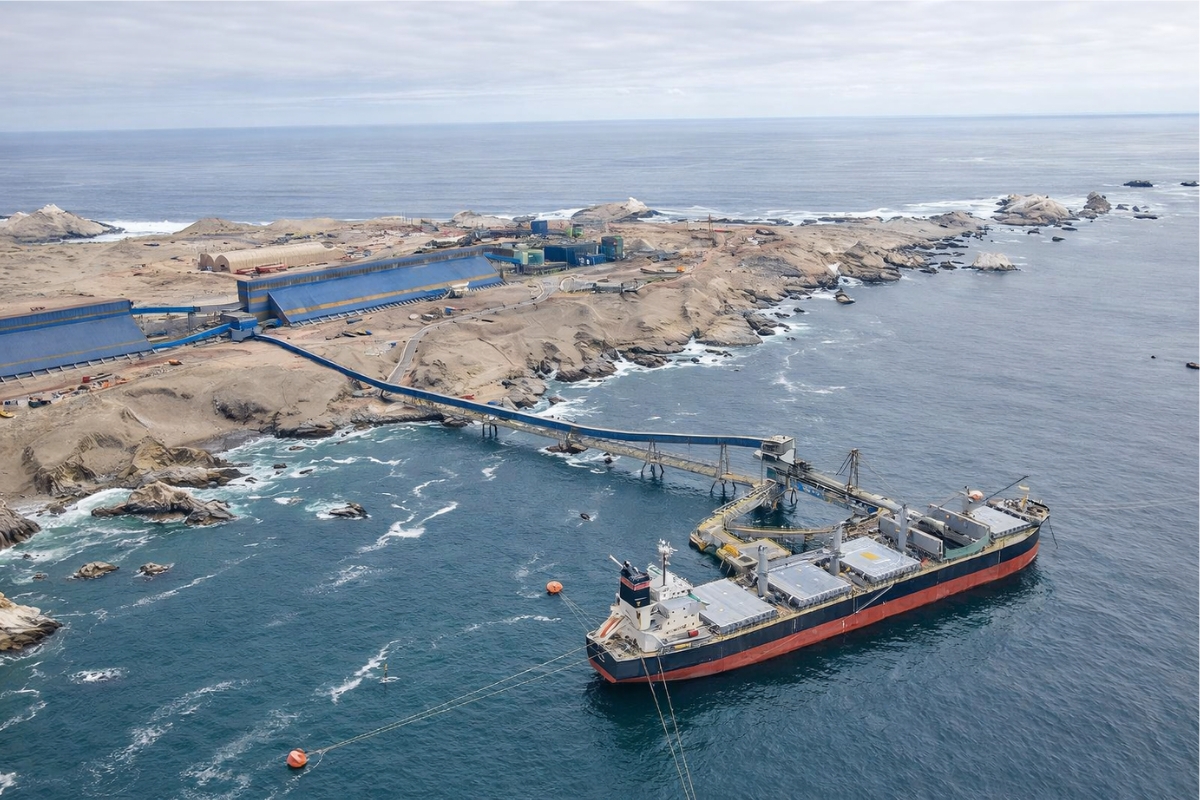
A $3.5 billion megaproject in Latin America pumps desalinated seawater at 1,050 liters per second over 194 km to keep a copper supermine in the Andes operational for another 20 years.
-
A hidden mine in the Andes valued at nearly R$ 1 trillion is starting to attract global attention, containing copper, gold, and silver, and raises an intriguing question: why do Argentina and Chile need to act together to exploit this gigantic wealth?
-
A silent discovery in the interior of Bahia could change the future of energy in Brazil: a uranium reserve in Lagoa Real has an estimated capacity to produce 400 tons per year and is already attracting the attention of energy sector specialists.
-
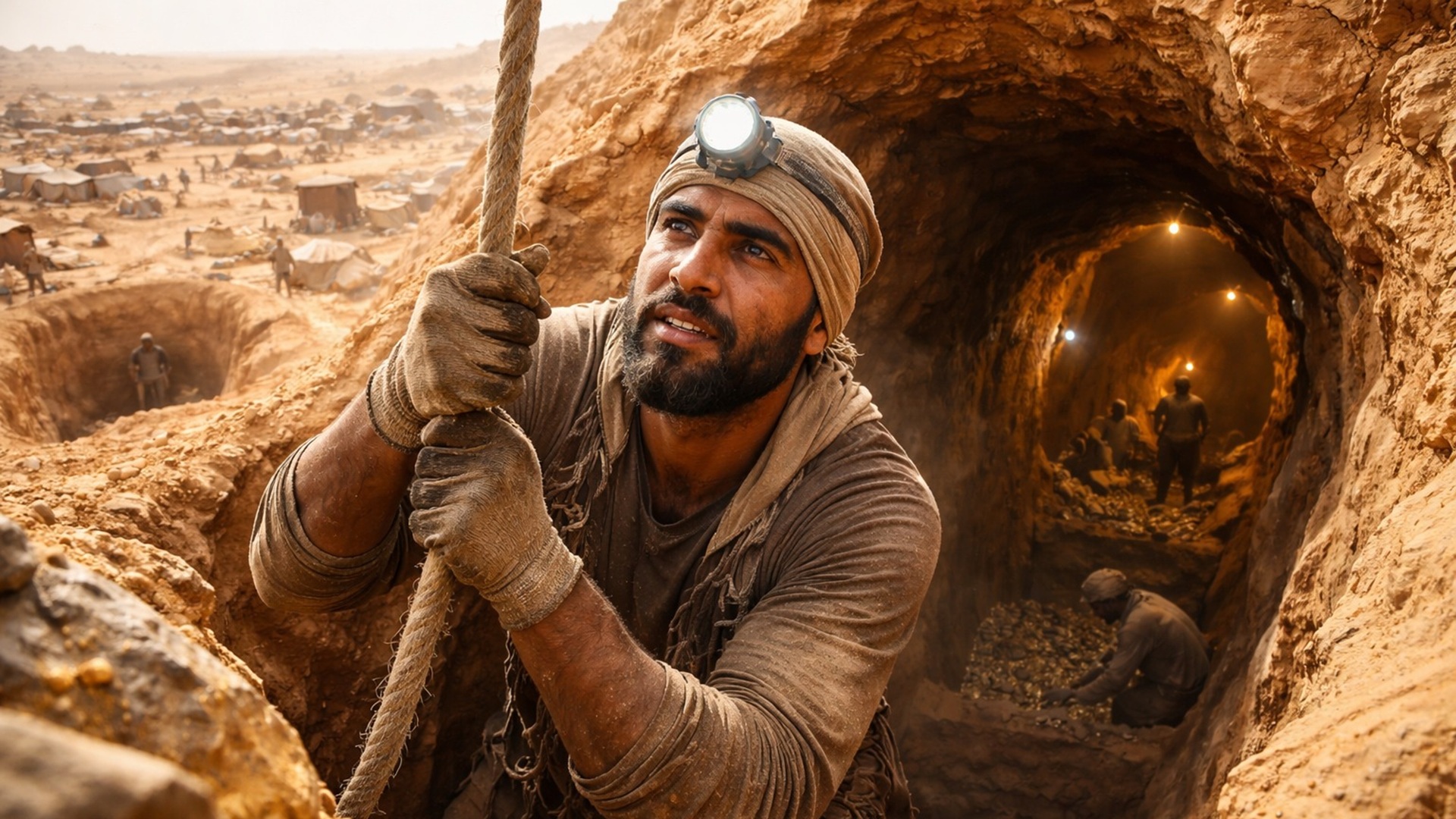
Gold Miners Descend Into Narrow Holes Up to 48 Meters Deep in the Mauritanian Desert and Spend Up to Two Days Living Inside Tunnels in an Underground City with Over a Thousand Mines



The result is visible in the numbers. The groundwater level in the region has dropped by more than 10 meters in the past 15 years. The Atacama Salt Flat itself is sinking between 1 and 2 centimeters per year, a direct consequence of the depletion of the underground layers.
Mining companies have already consumed, according to researchers, up to 65% of all available water in the region — in one of the driest places on Earth, where the average annual precipitation does not reach 15 millimeters.
To get a sense of the scale of this loss, researchers from the Interamerican Association for Environmental Defense calculated that the water evaporated by mining operations is equivalent to the total consumption of Antofagasta — a Chilean city of 166,000 inhabitants — for two whole years.
The Paradox of Clean Energy in the Lithium Triangle
Lithium is the heart of lithium-ion batteries, the technology that powers everything from smartphones to electric vehicles that promise to reduce carbon emissions from global transportation. In 2024, batteries accounted for 87% of all global lithium consumption.
More than 17 million electric cars were sold worldwide that year, and projections from Albemarle, one of the largest mining companies in the sector, point to a global demand of 3.7 million tons of lithium carbonate equivalent by 2030, more than double the current consumption.

The World Economic Forum projects that total demand for the mineral could triple compared to 2022 levels by the end of this decade. It is in this context that the Lithium Triangle becomes increasingly strategic — and increasingly pressured.
Bolivia alone holds 23 million tons of lithium resources, according to the US Geological Survey, the largest individual reserve on the planet. Argentina has 22 million tons, and Chile, 11 million. Together, the three countries concentrate what the entire world will need to electrify its vehicle fleet and store renewable energy in the coming decades. The problem is that much of this lithium is buried in regions where groundwater is not just an industrial resource — it is the basic condition for the survival of ecosystems and communities that have existed for millennia.
Ponds That No Longer Exist – Lithium Extraction Does Not Just Affect Invisible Aquifers
In the salt flats of the Andes, lithium extraction does not only affect invisible aquifers. It is drying up ponds that were visible to the naked eye.
These bodies of water, fed by the balance between fresh water from the mountains and brine from the valleys, sustain Andean flamingos, vicuñas, and a biodiversity adapted to the extreme conditions of altitude and aridity. When mining companies lower the groundwater level, this balance is broken — and the ponds simply disappear.
The Water That Disappears Took Centuries of Agricultural Practices with It
For the Atacameña indigenous communities, who have inhabited the region since pre-Columbian times, the loss is not just ecological. The water that disappears took with it centuries of agricultural practices, rituals, and ways of life that directly depend on these water resources. Communities like Toconao, in Chile, have documented direct conflicts with mining companies over contamination and diversion of the few available freshwater sources.
In Argentina, the provinces of Catamarca, Salta, and Jujuy concentrate dozens of advanced mining projects. In many of them, access to information about the water impact and the participation of local communities in the approval processes remains precarious.
The Technology That Can Change the Game, but Has Not Arrived Yet
The direct lithium extraction, known by the acronym DLE (Direct Lithium Extraction), is a technological alternative to the traditional evaporation method. Instead of pumping brine into open pools, the process uses membranes or chemical resins to extract lithium directly from the liquid, returning treated water to the aquifer.
Water consumption drops drastically and processing time, which in the conventional method takes between 12 and 18 months, is reduced to hours or days.

Researchers and governments see DLE as a potential solution to the water dilemma of lithium mining. In 2024, the Chilean government announced plans to encourage the adoption of the technology in licensed operations at the Atacama Salt Flat. Argentina is also advancing in pilot projects in different salt flats.
The problem is that DLE still accounts for only 11% of the global lithium production. Each salt flat has a different chemical composition, which requires the technology to be adapted on a case-by-case basis, a costly and time-consuming process. With the demand projected to triple by 2030, the time to scale this transition is increasingly short.
The Invisible Cost of Every Electric Car Battery
When a consumer in São Paulo, Berlin, or Shanghai buys an electric vehicle, the water footprint of the battery that powers the car rarely enters the calculation. But it exists and is embedded in the ancient aquifers of the Atacama Desert, in the ponds that have dried up in the Bolivian altiplano, in the complaints of Argentine farmers who have lost access to irrigation.
The global energy transition is necessary and urgent. But the numbers coming from the Lithium Triangle show that it is not free from an environmental perspective.
Swapping oil for lithium means exchanging one type of pressure on the planet for another, and ignoring this cost would be to repeat the same mistake made with fossil fuels: to grow without accounting for what is destroyed in the process.
The question that the sector will have to answer in the coming decades is whether it can scale the production of the mineral that the world needs without irreversibly depleting the aquifers that entire communities depend on to exist.









-

-

-

-

-

19 pessoas reagiram a isso.