





 Portuguese
  English
  Spanish
  4 min of reading
  0 comments


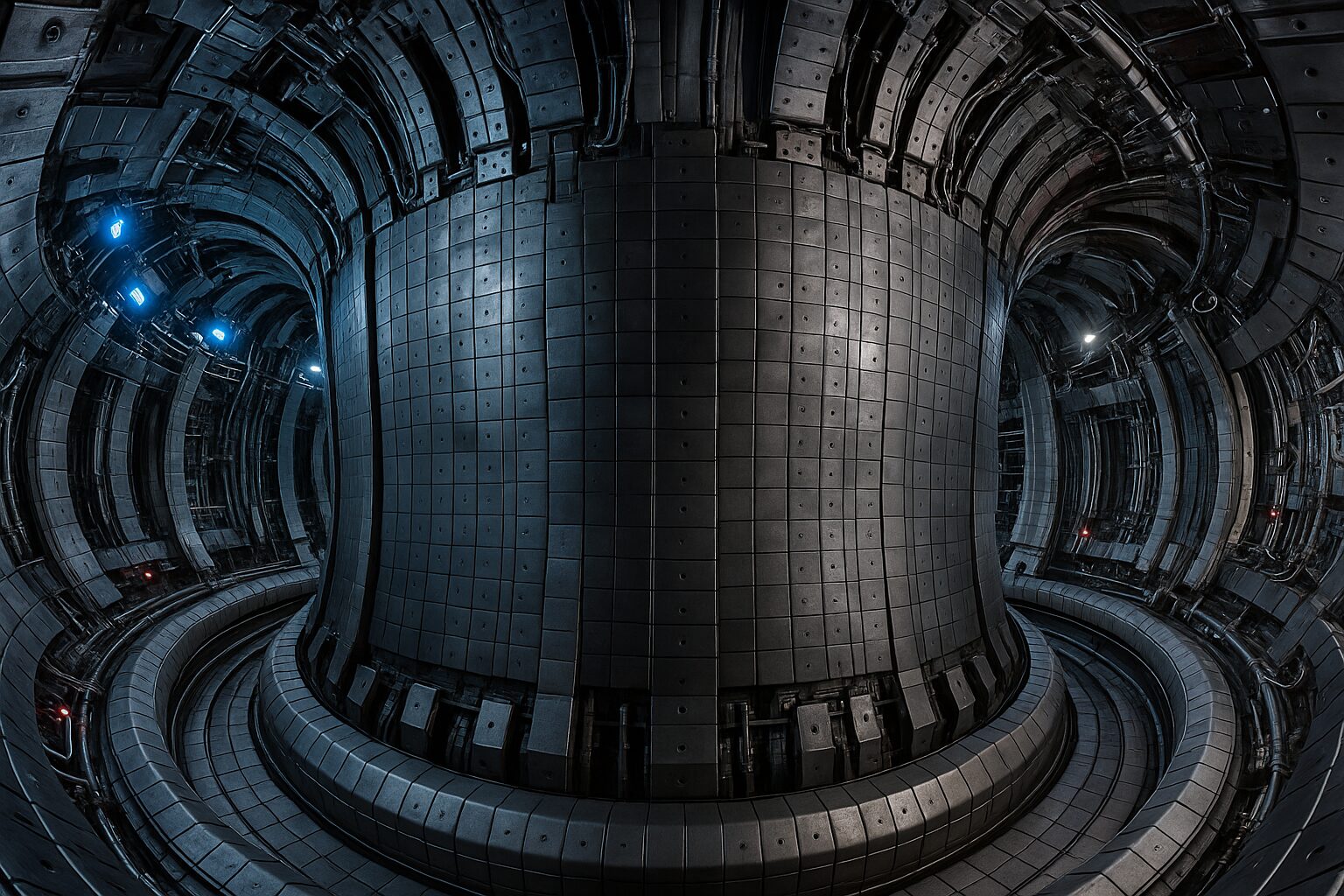
Promising as it is, nuclear fusion faces a critical challenge: the scarcity of tritium. ITER is developing technologies to produce the isotope directly in the reactor.
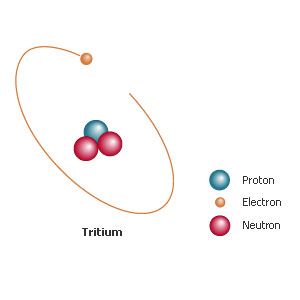
Tritium, essential for nuclear energy, is extremely rare in nature. This radioactive hydrogen isotope is naturally produced in the upper atmosphere through the interaction of cosmic rays with atmospheric gas nuclei, but its production is very modest. In fact, only a few kilograms are produced annually in Earth’s atmosphere. So few that scientists estimate we can count them on our fingers.
Interestingly, not all tritium available on our planet has a natural origin. Atmospheric nuclear tests carried out between the end of World War II and the 1980s released several dozen kilograms of this isotope into the oceans. Additionally, CANDU nuclear reactors, which are pressurized heavy water devices developed in Canada, also produce it. Each 600 MW reactor generates around 100 g of tritium annually, resulting in a global production of about 20 kg per year.
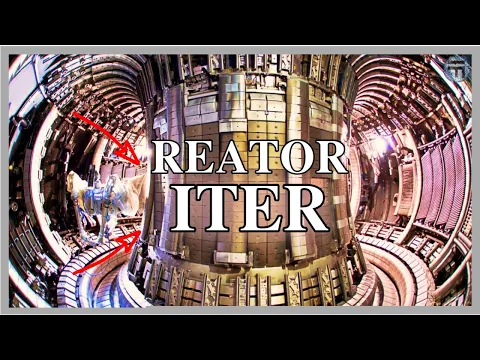
ITER, the experimental nuclear fusion reactor being built in Cadarache, France, by an international consortium led by the European Union, will use two isotopes of hydrogen as fuel: deuterium and tritium. As we have seen, tritium is very scarce, but the current supply on the planet is sufficient to ensure that this experimental fusion energy reactor will have what it needs throughout its operational life, which will last approximately fifteen years.
-
Fukushima Marks A Turning Point In Japan’s Energy Policy: After The Disaster, The Country Shut Down Its 54 Nuclear Reactors And, 15 Years Later, Only A Small Portion Have Returned To Operation
-
How Japan Overcame The Nuclear Bomb And Now Houses Millions In Hiroshima, While Ukraine Lost Chernobyl?

-
Bill Gates Receives Historic Approval to Build Giant 345 MW Nuclear Plant in the U.S. and Promises to Generate Up to 500 MW of Energy with Innovative Technology
-
India Opens Nuclear Energy to Private Capital to Accelerate Projects and Attract Billions, While Brazil Remains Stalled at Angra 3 and Discusses Who Will Foot the Bill for Completion

ITER Will Test an Innovative Strategy to Produce Large Quantities of Tritium.
The problem is that after ITER comes DEMO, which will be the nuclear fusion demonstration reactor aimed at proving the viability of this technology to produce large amounts of electricity. And after DEMO, if everything goes according to plan with the ITER engineers, the first commercial nuclear fusion power plants will emerge. Each of its reactors will need between 100 and 200 kg of tritium annually, so it is clear that the numbers do not add up.
CANDU reactors cannot produce the large amounts of tritium that fusion machines will need, but fortunately, this dilemma has a solution. A very clever one.
These are the timelines that ITER currently handles to demonstrate the viability of nuclear fusion. The goal of scientists working with magnetic confinement nuclear fusion, the strategy currently used by the experimental reactors JET in Oxford (England) and JT-60SA in Naka (Japan), is to ensure that future fusion power reactors can generate all the tritium they need by themselves. That they can be self-sustaining. This plan proposes that the external contribution of tritium be minimal and limited to very specific moments in the operational life of the nuclear fusion reactor. It seems promising, but the most interesting thing is to know how they will achieve this.
Challenges and Technological Solutions for Tritium Self-Sufficiency
And, on paper, what they will do is simple: they will place lithium in the lining that covers the interior of the vacuum chamber of the fusion reactor. One of the byproducts resulting from the fusion of a deuterium nucleus and another of tritium is a neutron ejected with an energy of about 14 MeV. When one of these particles hits one of the lithium atoms housed in the chamber’s lining, it alters its structure, thereby producing a helium atom, which is a harmless chemical element, and a tritium atom. There you go. That is exactly what fusion power reactors need. On paper, it seems like a simple idea, but putting it into practice is anything but easy.
The challenges that implementing the technological solutions necessary for tritium self-sufficiency presents are enormous. On one hand, it is crucial that the ratio of high-energy neutrons produced in the fusion to the tritium atoms generated in the walls of the vacuum chamber is ideal. Furthermore, it is necessary to solve the transportation of tritium from where it is generated to where it will be consumed, and this is not trivial because it is a gas that disperses easily, especially at high temperatures. This procedure presents other challenges, but these two are critical. Let’s keep our fingers crossed for the regeneration of tritium in ITER to go well.

Cover Image: ITER
Source: Fusion for Energy , ITER









Seja o primeiro a reagir!