





 Portuguese
  English
  Spanish
  3 min of reading
  1 comment


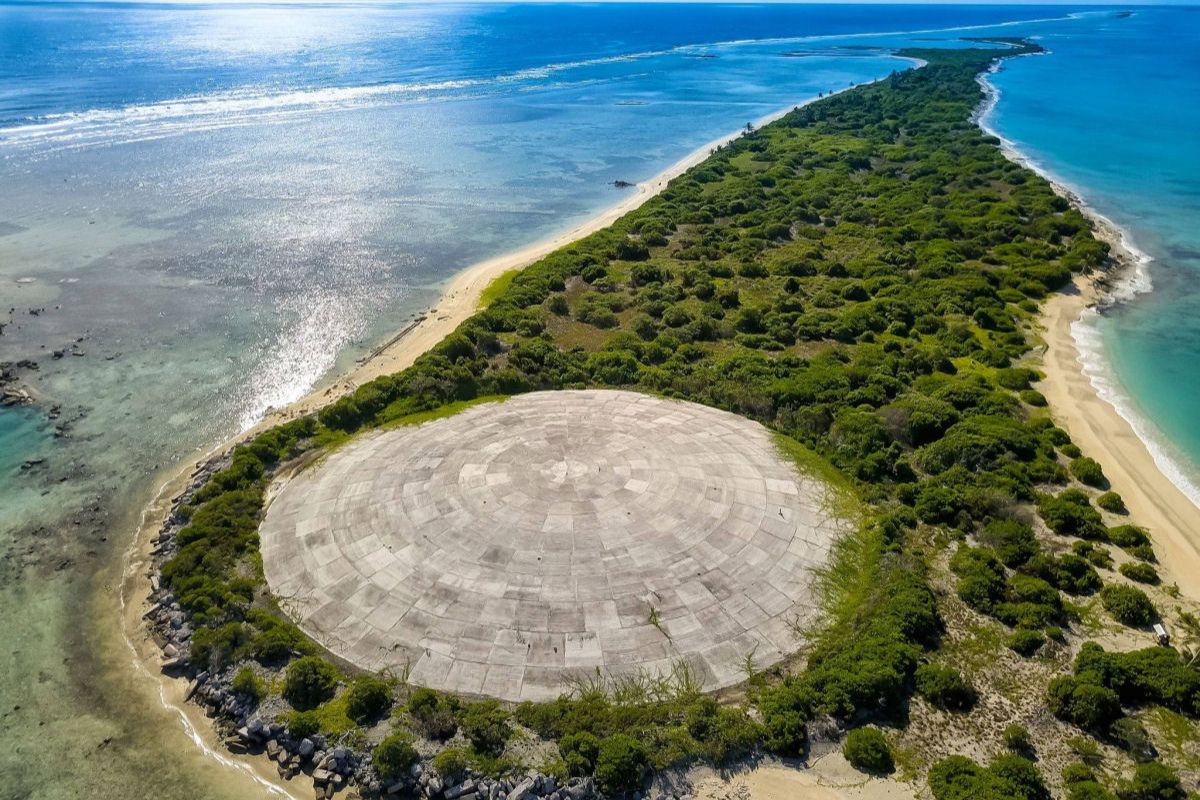


The Nuclear Tomb That Is Cracking In The Pacific Threatens Entire Ecosystems. The Runit Dome, Built To Contain Radioactive Waste From Nuclear Tests, Is Showing Cracks And Leaks That Worry Scientists And Residents Of The Marshall Islands.
In the Heart Of The Pacific Ocean, A Concrete Dome Guards The Remnants Of The Atomic Era. Known As The Runit Dome, The Structure Was Erected By The United States In The 1970s To Store Tons Of Soil And Radioactive Waste Resulting From Nuclear Tests. More Than 40 Years Later, The Cracking Nuclear Tomb Has Become An Environmental Time Bomb That Could Release Contaminants Directly Into The Sea.
Satellite Images Reveal Growing Cracks, While Rising Sea Levels And Tropical Storms Increase The Risk Of Infiltration. Despite The Evidence, Washington Does Not Assume Legal Responsibility And Transfers The Burden Of Maintenance To The Government Of The Marshall Islands — Which Lacks Resources Even To Maintain Basic Services.
What Is The Runit Dome?
The Construction Covers A Crater Created By Nuclear Explosions On The Enewetak Atoll, In The Marshall Islands. Beneath The 46-Centimeter Thick Concrete Slab Are Stored About 85 Thousand Cubic Meters Of Radioactive Soil Mixed With Plutonium-239, Cesium-137, And Other Dangerous Isotopes.
-
Something is happening around the Earth: Inside the huge explosion of fireballs in 2026

-
A hot air bubble coming from Argentina expands over Brazil, causing thermometers to exceed 38 degrees with a thermal sensation of 40 degrees in late March, affecting 6 states at once.

-
The radish leaf that almost everyone throws away has more polyphenols, flavonoids, and fiber than the consumed root, and a 2025 study showed that the leaf contains compounds that protect the intestine, combat inflammation, and may inhibit the growth of cancer cells.

-
A planet that seemed to defy the laws of physics has intrigued scientists for decades, until the James Webb revealed what is really affecting Saturn’s rotation.
The Original Project Was Conceived As A Temporary Solution. The Concrete Had An Estimated Lifespan Of 30 Years, But More Than Four Decades Have Passed Without Proper Structural Maintenance. Experts Warn That The Toxic Material May Already Be In Contact With The Water Table, Increasing The Likelihood Of Ocean Contamination.
The Dark Past Of Nuclear Tests
Between 1946 And 1958, The United States Conducted 67 Nuclear Tests In The Marshall Islands, Some Of Them A Thousand Times More Powerful Than The Bomb Dropped On Hiroshima. Local Communities Were Forcefully Removed And Never Returned To Their Homelands.
The Impacts Are Still Felt Today: Increased Cancer, Thyroid Diseases, And Birth Defects Have Been Reported Among Populations Exposed To Radiation. For Residents, The Runit Dome Is Called “Our Forgotten Chernobyl”, A Constant Reminder Of The Consequences Of The Cold War Arms Race.
Cracks, Leaks, And Global Risks
The Cracking Nuclear Tomb Has No Bottom Barrier: Below The Concrete There Is Only Sand. This Means That Infiltration Of Seawater Could Lead Radioactive Particles Directly Into The Ocean. Plutonium-239, Present In The Waste, Has A Half-Life Of 24 Thousand Years And Poses A Lasting Risk To Marine Ecosystems And Food Chains.
The Situation Is Even More Severe Given Climate Change. Rising Sea Levels And The Frequency Of Tropical Storms Increase Pressure On The Structure, Accelerating Wear. Documents From The U.S. Department Of Energy Have Already Acknowledged The Entry Of Water Beneath The Dome.
International Responsibility And Political Silence
Despite The Severity, The Topic Receives Little Global Attention. The United States Claims That The Maintenance Of The Dome Is The Responsibility Of The Marshall Islands, A Country With Less Than 60 Thousand Inhabitants And A Limited Economy. Meanwhile, Scientists And Activists Are Calling For Urgent International Action To Prevent An Environmental Disaster Of Oceanic Proportions.
Senator Hilda Heine, Former President Of The Marshall Islands, Has Described The Structure As A “Radioactive Time Bomb” That Is About To Explode. But Without Diplomatic Pressure, The Risks Remain Invisible To Much Of The Public.
The Cracking Nuclear Tomb In The Pacific Is Not Just A Local Problem: It Is A Threat That Could Affect Biodiversity, Migration Routes Of Marine Species, And Even The Health Of Populations That Depend On Fishing In Different Countries. Ignoring This Legacy Of The Cold War Could Cost Dearly For Future Generations.
And You, Do You Think The United States Should Take Responsibility For The Maintenance Of The Runit Dome Or Should The International Community Act Together? Share Your Opinion In The Comments — We Want To Hear Your Thoughts On This Silent Risk.






Isso que dá ser um país “amigo” dos EUA… Aceitaram dinheiro pra receber lixo radioativo alheio.. Agora os EUA não querem nem saber, já pagaram, então que se danem