





 Portuguese
  English
  Spanish
  4 min of reading
  0 comments


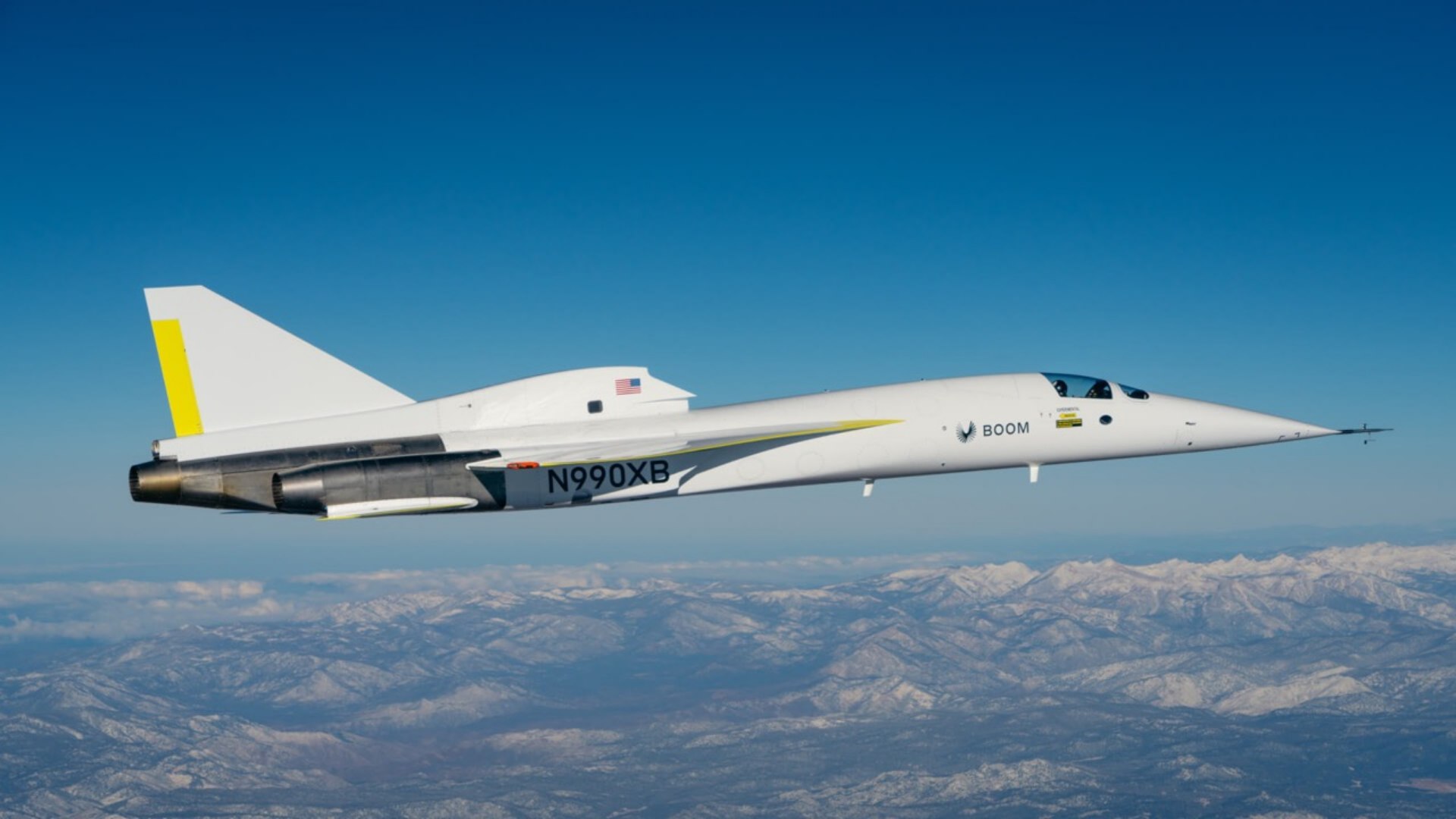
The New Measure Revokes 1973 Restrictions and Promises to Revitalize the Aerospace Industry with Advances in High-Speed Aviation!
In a historic change, the President of the U.S., Donald Trump, signed on June 6, 2025 a decree that revokes the bans on supersonic flight over continental areas, according to the website aeroin.
This measure represents a significant step to modernize the regulations of the Federal Aviation Administration (FAA) and regain American leadership in high-speed aviation after more than five decades of restrictions.
With this new regulation, the United States is preparing for a future where air travel can be faster and more efficient than ever.
-
Chaos On Airplane Could Be Expensive: Proposal Aims To Prevent Disruptive Passengers From Flying For Up To 1 Year In Brazil And Face Fines Of Up To R$17,500
-
Man Arrested After Halting Takeoff of Fire Department Helicopter During Child Rescue in Guaratuba

-
With 37 Tons of Cargo, Over 8,000 km Range, and Ability to Land on Unpaved Runways, the Airbus A400M Demonstrates How Europe Created a Military Giant That Transports Armored Vehicles, Aerially Refuels Fighters, and Operates in Conflict Zones and Humanitarian Missions Worldwide
-
Emergency Landing in Campos Amarais After Bird Strike on Small Plane

Revocation of Outdated Regulations
The decree establishes that, within 180 days, the FAA must edit rules that eliminate the ban on supersonic flight set forth in 14 CFR 91.817.
In addition, additional barriers in regulations 91.819 and 91.821 will also be removed.
A new provisional noise certification standard (14 CFR 91.818) will be created, aligning with safety, sustainability, and compatibility requirements with populated areas.
This change is essential because, for decades, supersonic flights were considered a threat to the comfort and safety of communities on the ground due to the noise generated by breaking the sound barrier.
New Noise Standard and Consultation Timelines
Within a period of 18 months, the FAA will publish a notice of proposed rulemaking (NPRM) to establish noise limits for takeoffs, landings, and cruise operations of supersonic aircraft (14 CFR Part 36).
This proposal will take into account data from testing and research development (RDT&E) and will seek community acceptance. The final standard is expected to be approved within 24 months after the signing of the decree.
This careful approach demonstrates a concern for environmental impact and public acceptance, critical factors for the successful implementation of supersonic flights.
Promotion of Research and Development
The Office of Science and Technology Policy (OSTP) will coordinate with the Department of Defense, Department of Commerce, Department of Transportation, and NASA to promote research and testing at federal facilities.
The goal is to identify the R&D needs to integrate supersonic aircraft into the National Airspace System.
The results will be shared with the FAA, helping to shape new regulations and environmental standards.
Have you ever thought about how technology can transform aviation? What innovations would you like to see in the future of flights?
International Engagement
The Secretary of Transportation, in partnership with the FAA, the OSTP, and the Department of State, will seek to harmonize supersonic flight rules within the International Civil Aviation Organization (ICAO) and establish bilateral safety agreements with foreign authorities.
This goal is crucial to ensuring the safe global operation of supersonic aircraft.
International cooperation can open new opportunities for trade and tourism, as well as promote a safer and more efficient aviation environment.
Immediate Impact on the Aerospace Industry
With the update of supersonic flight regulations and the promotion of coordinated research, the Trump administration aims to stimulate private investments in new generations of supersonic passenger and cargo jets.
This initiative reinforces the U.S. commitment to global competitiveness and technological independence in the high-speed aviation sector.
Projects like the X-59 QueSST from NASA and commercial initiatives from companies like Boom Supersonic are among the most promising that could benefit from these new regulations.
The Future of Supersonic Flights
The rule change regarding supersonic flight will also allow American civilians who own supersonic fighters to conduct flights above the speed of sound.
This opening could lead to an increase in demand for pilot training and certification, as well as boost the maintenance and technical support industry for these aircraft.
How do you feel about the possibility of supersonic flights becoming part of everyday life? Could this change the way we travel and connect?
Comments from the CEO of Boom
The CEO of Boom, Blake Scholl, who was one of the main advocates of the legislative change, expressed his satisfaction in a tweet: “A ban enacted in 1973 aimed to protect the public from the sonic boom of supersonic flight, but in reality banned innovation. Today we celebrate that supersonic flights without noise will be allowed!”
Scholl’s celebration is related to the fact that his company’s aircraft possess technology called “Mach Cut,” which allows supersonic flights to not generate the noise heard on the ground.
A New Era in Aviation with Supersonic Flight
With these changes, the United States not only revokes old restrictions but also positions itself to lead a new era in aviation.
The combination of advanced technology and modern regulations can transform the travel experience, making it more efficient and enjoyable.
Are you excited about the possibilities this new regulation may bring to aviation? How do you see the future of supersonic flights? Share your thoughts in the comments!







Seja o primeiro a reagir!