





 Portuguese
  English
  Spanish
  3 min of reading
  0 comments


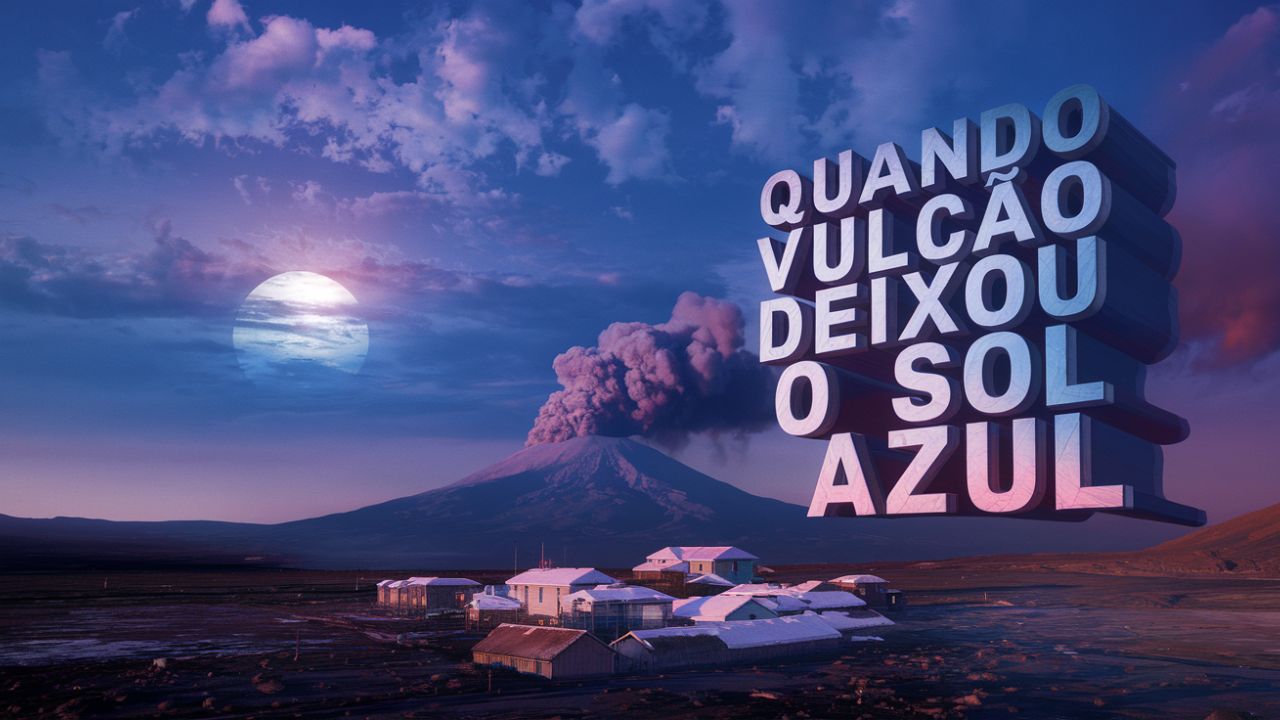
The Eruption of a Remote Volcano in the Pacific in 1831 Released So Much Sulfur into the Atmosphere That It Transformed the Sun into Shades of Blue and Purple, Chilled the Planet, and Triggered a Global Food Crisis. After Two Centuries, Scientists Finally Discovered Its Origin.
In the summer of 1831, the Northern Hemisphere experienced a peculiar phenomenon: the Sun appeared blue, purple, and even green. Temperatures plummeted, turning what should have been a warm season into an extension of winter. For nearly two centuries, the cause of this dramatic climate event remained a mystery. Now, scientists have finally unraveled the secret, tracing its origin to a remote volcano in the Pacific. But what exactly happened, and what can we learn from it?
The Enigma of the Blue Sun in 1831
During the summer of 1831, reports of unusual weather emerged across Europe and other parts of the Northern Hemisphere. While the Sun took on surreal hues, farmers struggled to plant, and entire communities suffered from food shortages. This event, marked by drastic changes in the climate, seemed a mystery worthy of a detective story.
But the impact went beyond climate changes. Economies were shaken, and the daily lives of millions were affected. Curiously, the cause remained hidden, like a crucial piece of a puzzle that simply did not appear.
-
A gigantic dam project in the Himalayas could solve one crisis but silently create another for millions of people.
-
Nikola Tesla said that intelligent people tend to have fewer friends, and now science partially confirms this: a study with over 15,000 people showed that for the more intelligent, socializing too much can even reduce life satisfaction.

-
A superyacht worth US$ 17 million is delivered in impeccable condition, sets out to sail, and hits a bridge in the Bahamas just two hours later.

-
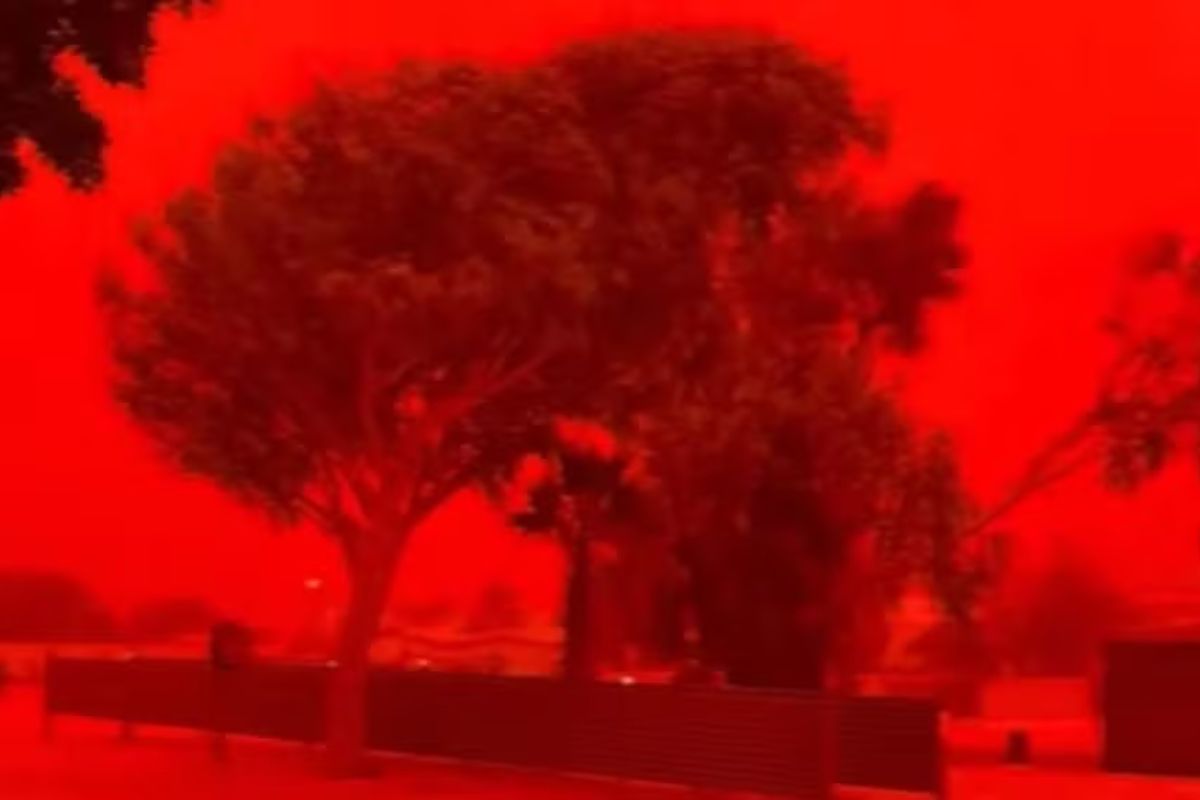
Residents of Australia woke up to a sky completely red like blood before the arrival of Cyclone Narelle, which hit the coast with winds of 250 km/h, tearing off roofs and lifting iron dust in a scene they described as apocalyptic.

Unraveling the Mystery: Traces in the Ice

The answer began to emerge from polar ice cores, which act as natural archives, preserving atmospheric particles from past events. Scientists found traces of volcanic ash dated to 1831 in these cores. The chemical composition pointed to a volcano in the Pacific region.
After ruling out densely populated areas like Japan, the investigation led to the remote Kuril Islands. There, researchers identified the Zavaritskii Volcano on Simushir Island as the cause of the catastrophic eruption.
The Zavaritskii Volcano: A Remarkable Discovery
The 1831 eruption of the Zavaritskii Volcano released enormous amounts of sulfur dioxide, forming sulfate aerosols in the atmosphere. These aerosols reflected sunlight, causing the global cooling that transformed the climate of that time.
But how did such a significant event go unnoticed? The answer lies in the remote location of Simushir Island and the dense fog that frequently covers the region. The sparse population in the area meant that almost no one witnessed the event, making it a “ghost” in historical records.
Global Consequences of the 1831 Eruption
The impact of the Zavaritskii Volcano was felt worldwide. In Europe, harsher winters and cold summers hampered agriculture, leading to food crises. In Asia, erratic monsoons damaged crops, resulting in famine and social unrest.
The changes in climate demonstrated how natural events can profoundly affect human societies. It was a clear reminder that the Earth is, in many ways, the “maestra” of the conditions shaping our lives.
Lessons for the Future of Climate Science
If a similar eruption were to occur today, the impact could be equally devastating. The discovery of the Zavaritskii Volcano highlights the importance of monitoring remote and sparsely populated areas, such as the Kuril Islands, to predict and mitigate climate disasters.
With modern technologies such as satellites and atmospheric sensors, we have more tools than ever to track volcanic activity. However, most of the world’s volcanoes are still unmonitored, leaving humanity vulnerable to unpleasant surprises.
The resolution of this 200-year mystery teaches us about the power of natural forces and the importance of studying historical climate events. By better understanding the past, we can prepare for a future where climate changes can be triggered in the blink of an eye.
The Zavaritskii Volcano is not just a reminder of how unpredictable the Earth can be, but also a call to invest in science, technology, and global collaboration. After all, the next climate mystery may be closer than we think.









-

Uma pessoa reagiu a isso.