





 Portuguese
  English
  Spanish
 5 min of reading
  0 comments



More Than 20 Construction Projects Have Been Stalled for Decades in the Most Valued Areas of Natal, Causing Disturbances to Neighbors, Increased Disease, and a Sense of Insecurity, Without Effective Actions from the City Hall.
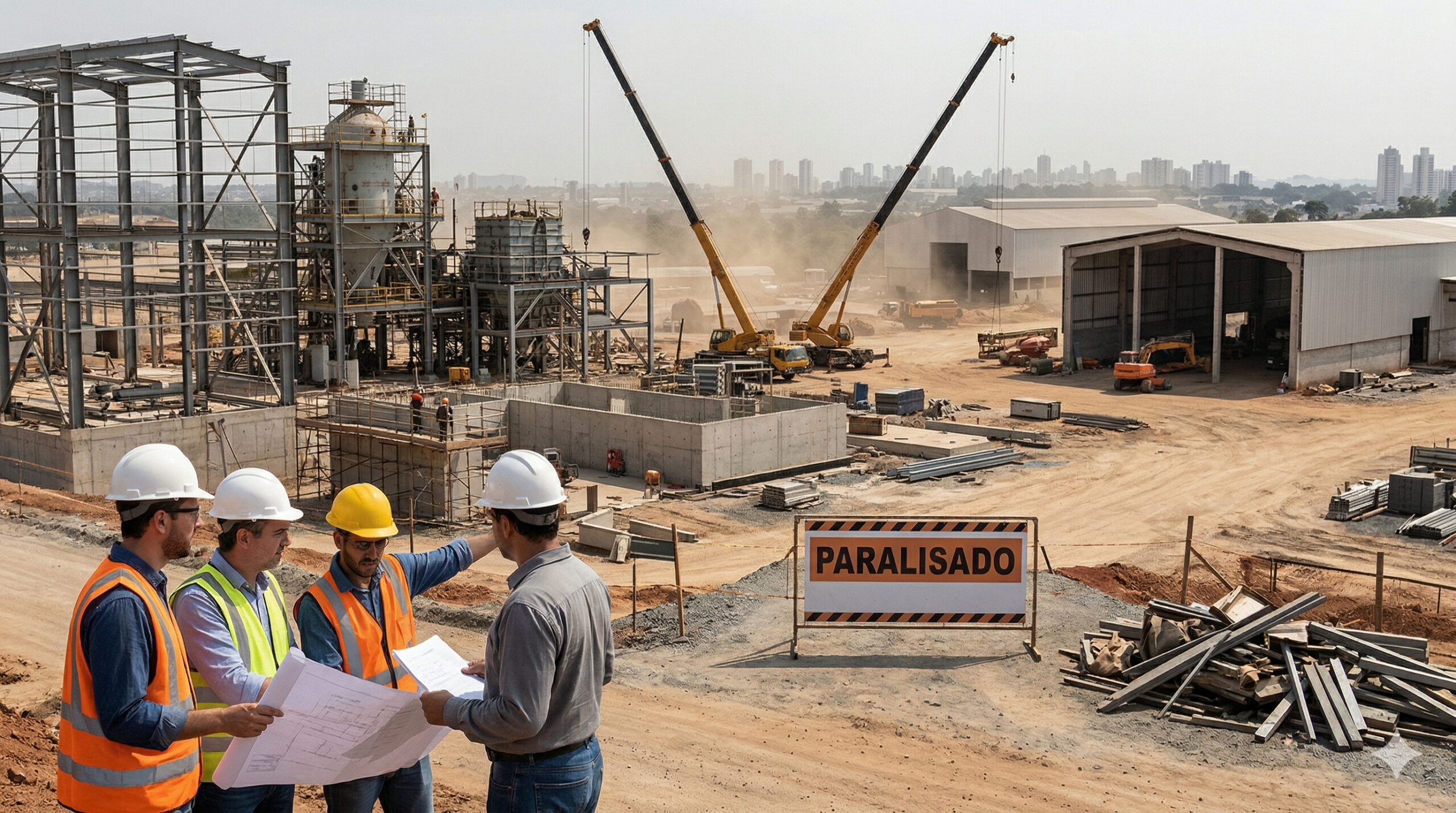
In Natal, the capital of Rio Grande do Norte, at least 20 buildings with unfinished work have remained halted for years — some for over three decades. These properties, located in upscale areas like Petrópolis, Tirol, Capim Macio, and Ponta Negra, have turned into hotspots of insecurity, proliferation of diseases, real estate devaluation, and visual pollution.
Real estate agent Antônio Baía, who has mapped these cases since 2017, claims he tried unsuccessfully to present proposals to the government to enable the resumption of these constructions:
“My proposal at the time was to resume construction through these abandoned buildings. But it’s such a thing: we take suggestions, the government shows no interest, and everyone loses.”
-
The lack of welders, electricians, and operators becomes a structural threat in 2025, with the construction industry and manufacturing already suffering from delays, cost pressures, and labor shortages in Brazil.
-
Brazil and Paraguay are just 46 meters away from a historic union on the bioceanic bridge that promises to revolutionize trade between the Atlantic and the Pacific.

-
With 55 km over the sea, a cost of US$ 20 billion, and enough steel to build 60 Eiffel Towers, China’s largest project has connected Hong Kong, Zhuhai, and Macau in a colossal bridge that defies the logic of engineering.

-
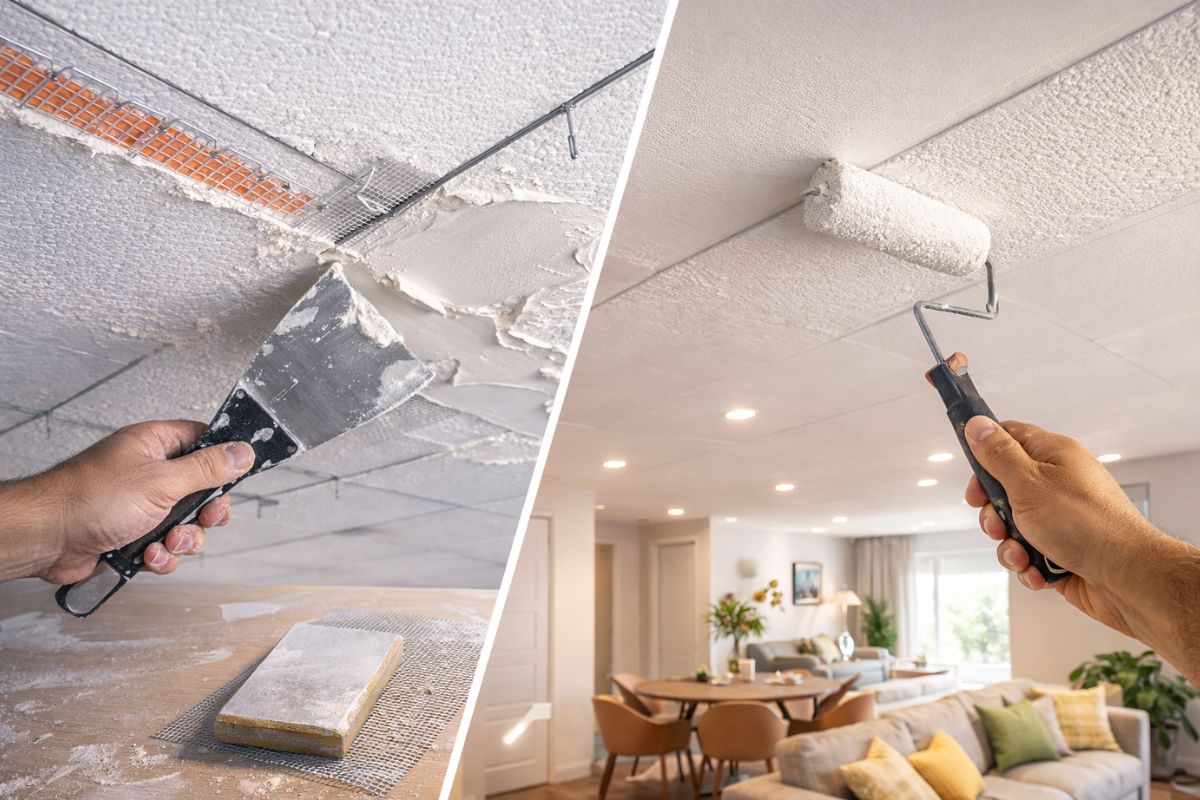
A trick with joint compound transforms a Styrofoam ceiling into a plaster-like ceiling: leveled panels, wires and mesh at the joints, sand, paint, and change the environment while spending little today.

Mayor Cannot Intervene in Private Property, Says Secretary
Despite the negative impacts on the population, the Municipal Secretariat for Environment and Urbanism (Semurb) claims it has legal limitations to act in cases of private properties with stalled work. The secretary of the department, Thiago Mesquita, was categorical:
“The Municipality, through Semurb, issues a construction permit, an installation license to build an enterprise, and, many times, that enterprise fails. (…) It’s not the Municipality’s role to call the owner of that enterprise and another private entity to establish a negotiation for that area, nor do we have authorization to demolish. Private property is sacred in Brazil since the Federal Constitution of 1988.”
Stalled Construction in Natal: City Hall Only Acts in Cases of Urban Planning Irregularity
The only recent case in which the City Hall managed to intervene directly was in the construction of the Hotel BRA, on Via Costeira, which exceeded the height limit allowed by law and was started without proper environmental licensing.
“For example, in the area, only 25 meters of height were allowed and that building is already at 30 meters. That’s when we would intervene, as was the case with BRA,” explained Mesquita.
“We went in there, demanded that the last floor be demolished, and the Justice accepted. So, there, I think it’s the only example we have of an abandoned construction in which the Municipality intervened because it violated a Municipal legislation.”
Damages Caused by Stalled Construction Must Be Resolved Judicially
Cases of compromised structures that cause material damage to neighboring properties are also concerning. However, the responsibility, according to the secretary, is not that of the Municipality.
“Who should compensate? The owner of the construction. That person who carried out that construction. And how? Judicially,” said Mesquita.
He advises affected residents to contact Semurb or the Civil Defense to register the occurrence but emphasizes that any compensation depends on a judicial decision or an agreement with the owner.
Abandoned properties also become easy targets for irregular occupations, illegal dumping, and even illegal connections for electricity and water. In these cases, Semurb informs that it can hold the legal responsible parties for the constructions accountable, imposing administrative or civil sanctions.
“Semurb can hold that entrepreneur responsible, as we have information on who was building that enterprise, so they can take administrative measures,” said the secretary.
“We cannot arrest anyone. That’s the role of the Public Ministry or DEPREMA,” he added.
Risk of Losing Property Due to Adverse Possession
According to the secretary, the lack of initiative from the owners can result in losing the area if occupations persist continuously for over five years.
“Who should regain the area, it should be the owner of the area. Once again: they need to. If they show no interest, they end up losing the area through adverse possession, as it is a private area, in 5 years proving an occupation, you end up losing that area.”
Abandoned Properties Become Breeding Grounds for the Dengue Mosquito
Another recurring problem is related to the proliferation of disease vectors, such as Aedes aegypti, the mosquito that transmits dengue, zika, and chikungunya.
Abandoned pools, accumulated debris, and poorly maintained lots are constant targets of complaints.
“[In these cases,] Semurb should indeed be contacted. Any type of case, solution related to the presence of vectors, or a pool that is abandoned, accumulating water, serves as a large nursery for Aedes aegypti [should be reported to Semurb],” advised Mesquita.
Municipal legislation mandates that owners keep properties clean. If the owner does not comply with the notification, the Sanitary and Urban Vigilance can perform the service and recover the costs judicially.
“We clean the area, which we shouldn’t have to, but for a public health issue, it is done, and Urban opens an administrative process against that taxpayer so that they reimburse with interest and corrections for what was spent on that cleaning,” explained the secretary.
Judicialization is the Main Way for Affected Neighbors
For residents affected by the impacts of abandoned buildings in Natal, justice is the only possible path for accountability and compensation. The Municipality can only be held responsible if it has received a complaint and has failed to act.
“I think everyone who has such a situation should go to court to seek their rights, but really this sphere does not come here. The Municipality cannot be penalized because it is not responsible for that, [which belongs to] a private entity. Unless the Municipality has received a complaint that there was a pool, there was a proliferation and did not act. Then we enter as the passive pole.”
The abandonment of constructions in Natal is a problem that transcends urban aesthetics and directly compromises the quality of life of the population.









Seja o primeiro a reagir!