





 Portuguese
  English
  Spanish
  3 min of reading
  0 comments


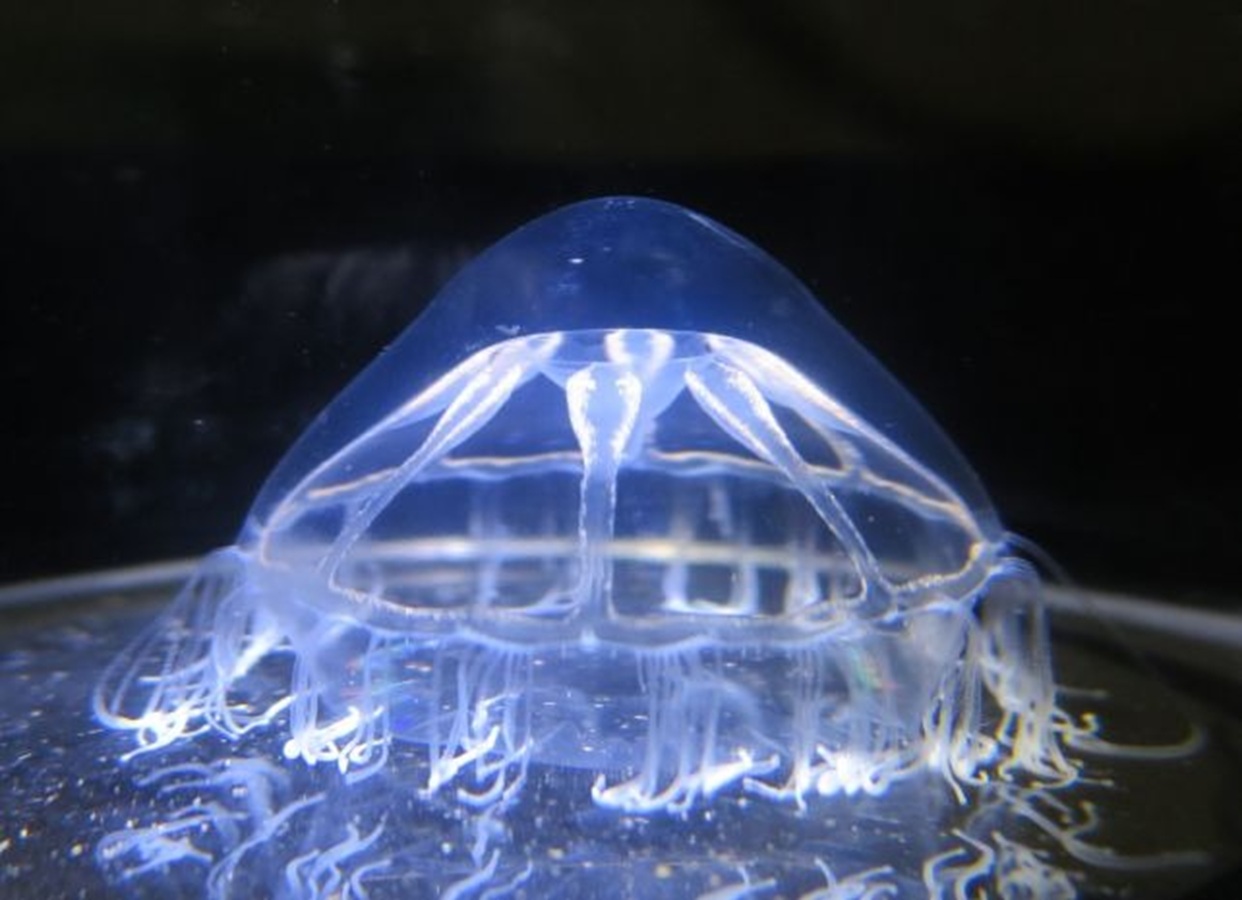
At The Frozen Depths Of The Arctic Ocean, Scientists Identified An Invisible Separation That Divides Populations Of The Same Jellyfish, Even Without A Clear Physical Barrier. The Discovery Reveals How Much We Still Don’t Know About The Ocean Depths
In The Cold And Dark Waters Of The Arctic Ocean, More Than A Thousand Meters Deep, Scientists Identified A Curiously Phenomenon Involving The Species Of Jellyfish Botrynema brucei ellinorae.
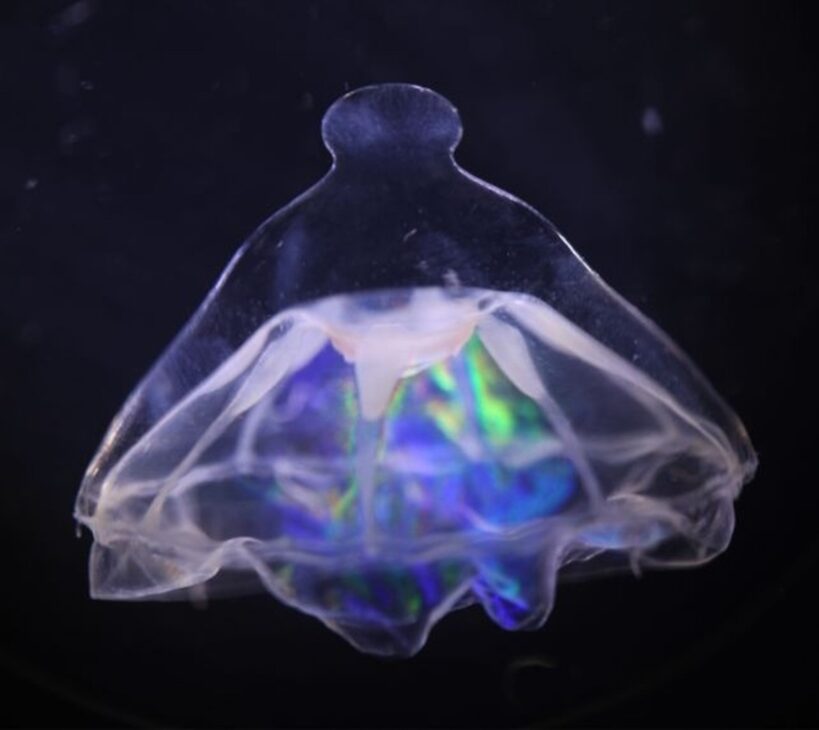
This Subspecies Exhibits Two Distinct Forms: Some With A Button-Like Protuberance On Top Of The Structure, Others Completely Smooth.
The Most Important Thing Is That This Difference In Shape Is Not Related To Genetic Variation. On The Contrary, Both Belong To The Same Lineage.
-
How the terraforming of Mars can transform the planet: artificial aerosols can increase the temperature by up to 35°C in 15 years, creating conditions for liquid water.

-
Scientists drilled nearly 8,000 meters into the ocean floor above the fault that caused the 2011 tsunami in Japan and discovered that a layer of clay 130 million years old was responsible for making the wave much worse than any model had predicted.
-
Thousands of years after causing the largest eruption of the Holocene, one of the world’s largest supervolcanoes is rebuilding itself beneath the sea south of Japan, receiving new magma and alarming scientists with its transformation.
-
China has activated a magnet 700,000 times more powerful than the Earth’s magnetic field that operates for over 200 consecutive hours while consuming little energy, and now the world wants to know what Beijing plans to do with this technology in 2026.


However, The Smooth Jellyfish Are Only Found North Of Latitude 47 Degrees, While Those With Protuberance Appear In Different Parts Of The World.
Boundaries Without Physical Barriers
According To Marine Biologist Javier Montenegro From The University Of Western Australia, This Abnormal Distribution Suggests The Existence Of An Unidentified Biogeographical Barrier In The Deep Ocean.
Even Without An Apparent Physical Divider, There Is A Clear Separation Of Habitats, As Seen In Other Examples On The Planet’s Surface.
Similar Lines, Such As Wallace’s Line In Indonesia, Are Already Known To Delimit Different Faunas Even In Nearby Regions.
They Indicate How Environmental Or Geographical Factors, Even If Subtle, Influence The Presence Of Certain Species.
Therefore, The Case Of Arctic Jellyfish Seems To Follow This Same Logic. The Difference In This Case Is The Extreme Depth Where Everything Happens. An Inaccessible Environment, Where Robots Are Used To Explore And Collect Samples.
Detailed Survey And Use Of Technology
Montenegro’s Research And His Team Collected Data From Scientific Vessels And Remotely Operated Underwater Vehicles. In Addition, The Scientists Analyzed Old Records And Images Collected Over Time.
This Combination Of Modern And Historical Data Revealed Something Surprising: Even Being Genetically Identical, The Two Morphotypes Occupy Distinct Regions.
The Jellyfish Without Protuberance Do Not Cross The 47 Degrees North Boundary.
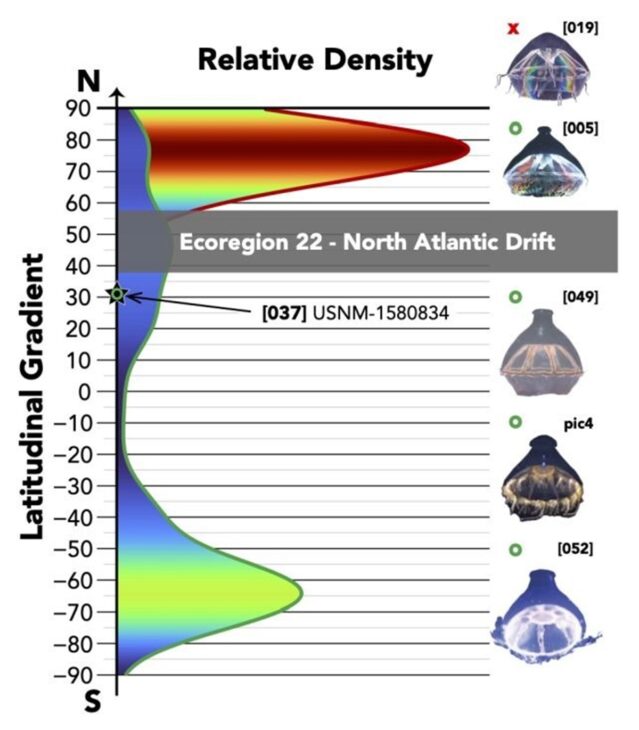
Deep-Sea Res. I: Oceanogr. Res. Pap., 2025)
Moreover, This Division Coincides With An Area Known As The North Atlantic Drift. It Is An Area Described In Previous Studies As An Ecotone — A Transition Zone Between Environments — Where Boreal And Subtropical Species Mix.
Hypothesis On Evolutionary Advantage
The Shape With Protuberance May Provide Some Type Of Advantage. Montenegro Suggests That This Structure Could Help Protect The Jellyfish From Predators In Areas Outside The Arctic. This Would Explain Why Only This Morphotype Is Able To Spread To More Southern Areas.
Still, Scientists Have Not Found A Definitive Explanation For What Causes This Separation. The Barrier Remains Invisible, With No Clear Physical Obstacle.
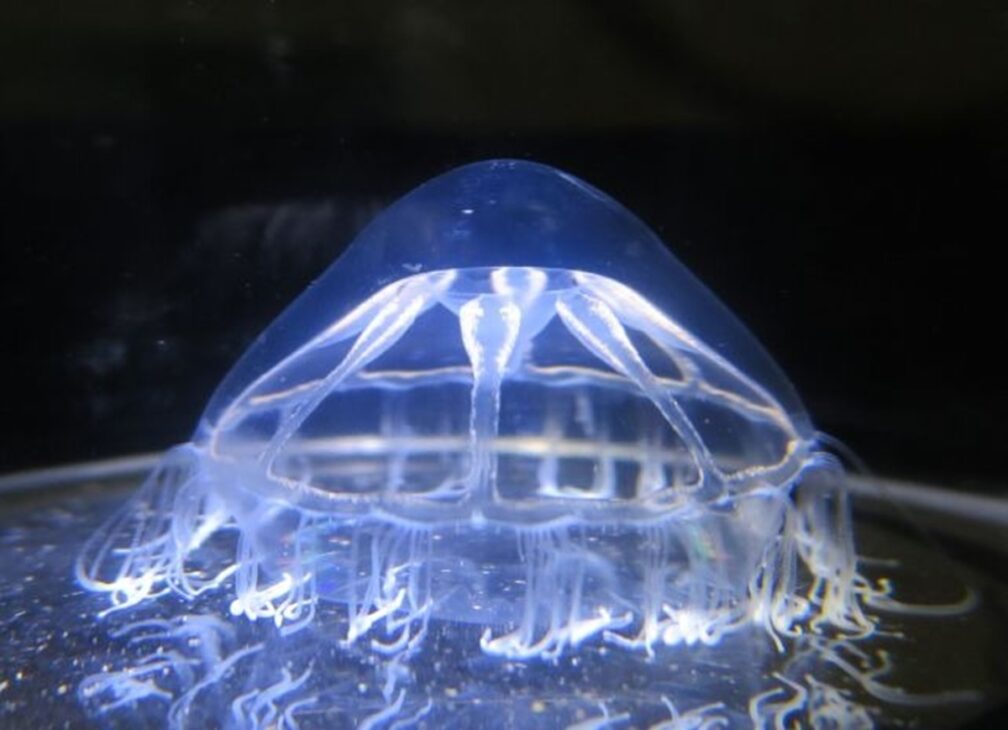
This Makes The Discovery Even More Intriguing And Reinforces The Idea That Many Mysteries Still Linger In The Deep Ocean Regions.
Importance Of The Discovery
According To Montenegro, This Finding Shows How The Biodiversity Of Gelatinous Marine Animals Is More Complex Than Previously Thought. He Emphasizes The Importance Of Delving Deeper Into Research On Ocean Life.
Most Importantly, This Discovery Paves The Way For Investigations Into Other Possible Similar Divisions In Different Regions Of The Globe.
This May Help To Better Understand How Environmental Conditions Shape Marine Populations.
In Addition, The Existence Of Biogeographical Barriers In The Deep Ocean, Until Now Unknown, Shows That We Still Know Very Little About The Underwater Environment.
The Full Study Was Published In The Journal Deep Sea Research Part I: Oceanographic Research Papers, Reinforcing The Relevance Of This Investigation In The Field Of Marine Biology.










-

-

-

-

-

-

66 pessoas reagiram a isso.