





 Portuguese
  English
  Spanish
  8 min of reading
  41 comments


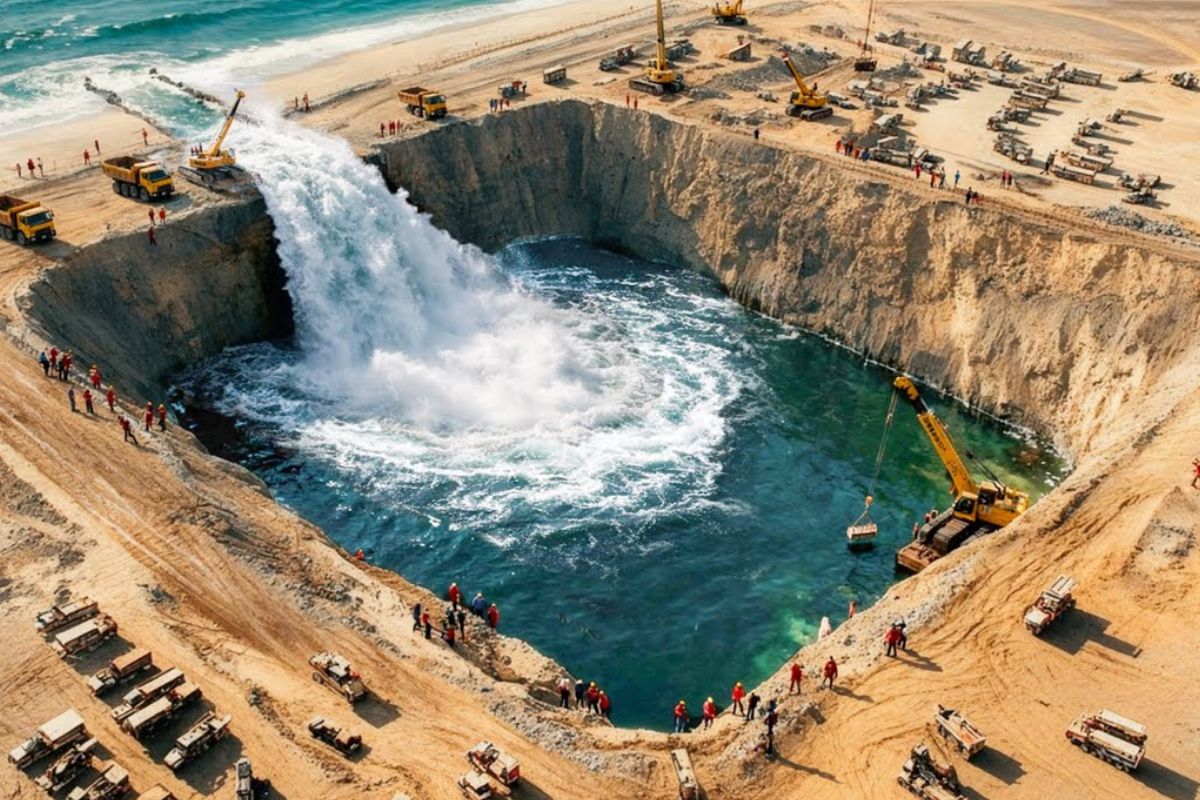


With Only 7 Inches of Rain per Year and No Steady Rivers, Nevada Discusses Pumping Billions of Liters from the Pacific Ocean, Desalinating on the Coast, and Transporting Water through Canals and Pipes over Mountains. The Cost, Energy, and Brine Raise Alerts, Reminding the Disaster of the Salton Sea.
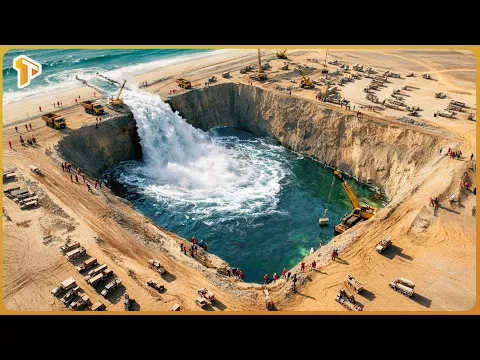
The idea of pumping billions of liters from the Pacific Ocean to Nevada is back on the table as the Colorado River fails to meet demand and large reservoirs begin to hit historically low levels repeatedly. For the driest state in the U.S., the proposal seems like a last resort that defies natural logic.
The plan combines coastal desalination, transport through infrastructure, and the ambition to create new lakes in the desert. However, besides being extraordinarily expensive, it carries environmental risks that are hard to ignore, especially when looking at precedents of “water in the desert” that turned into ecological traps.
Why Nevada Lives as if Drought Were the Norm
In Nevada, water is treated as something more valuable than electricity for one simple reason: a blackout passes, but the lack of water for daily life paralyzes everything.
-
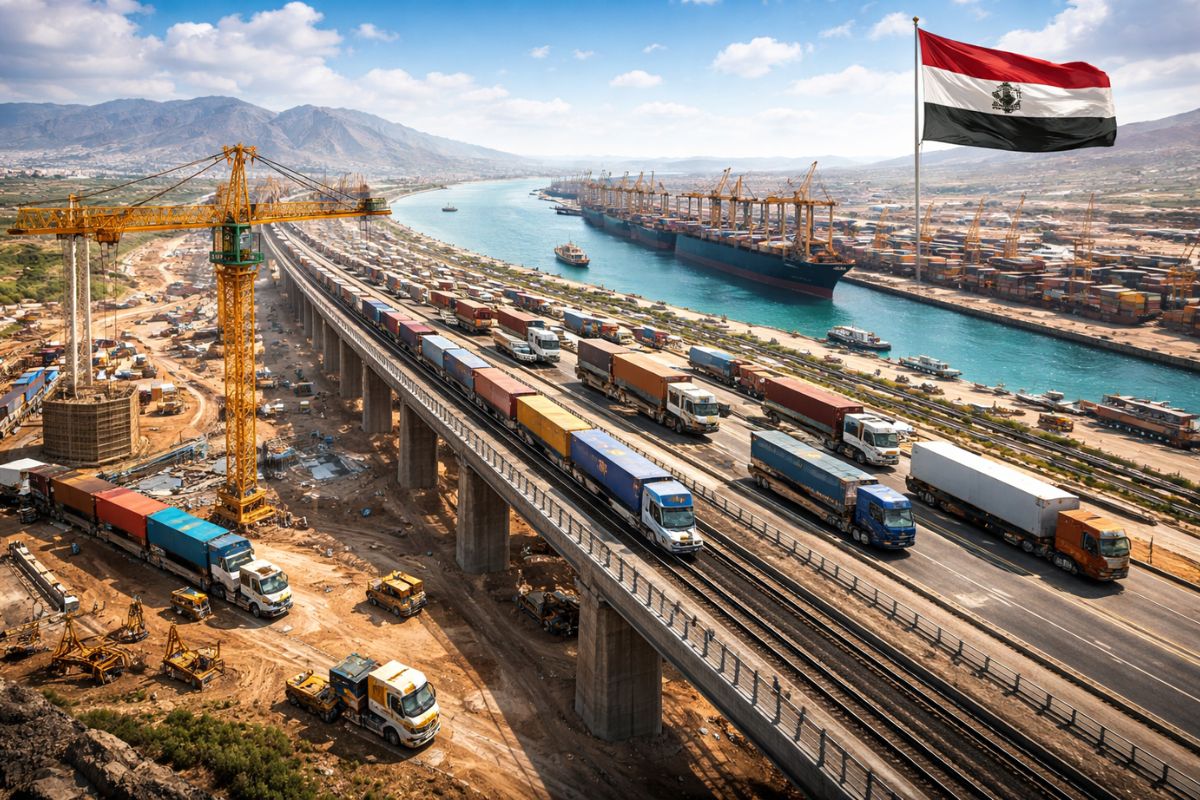
A megaproject worth R$ 89 billion is advancing in Iraq and promises to change the game in global trade by creating a new corridor between Asia and Europe, reducing traditional routes and repositioning the country as a logistics powerhouse.
-
Goodbye bedside table: floating shelves become a trend in 2026 by freeing up space in the bedroom, improving circulation, bringing visual lightness, and integrating technology without taking up floor space.

-
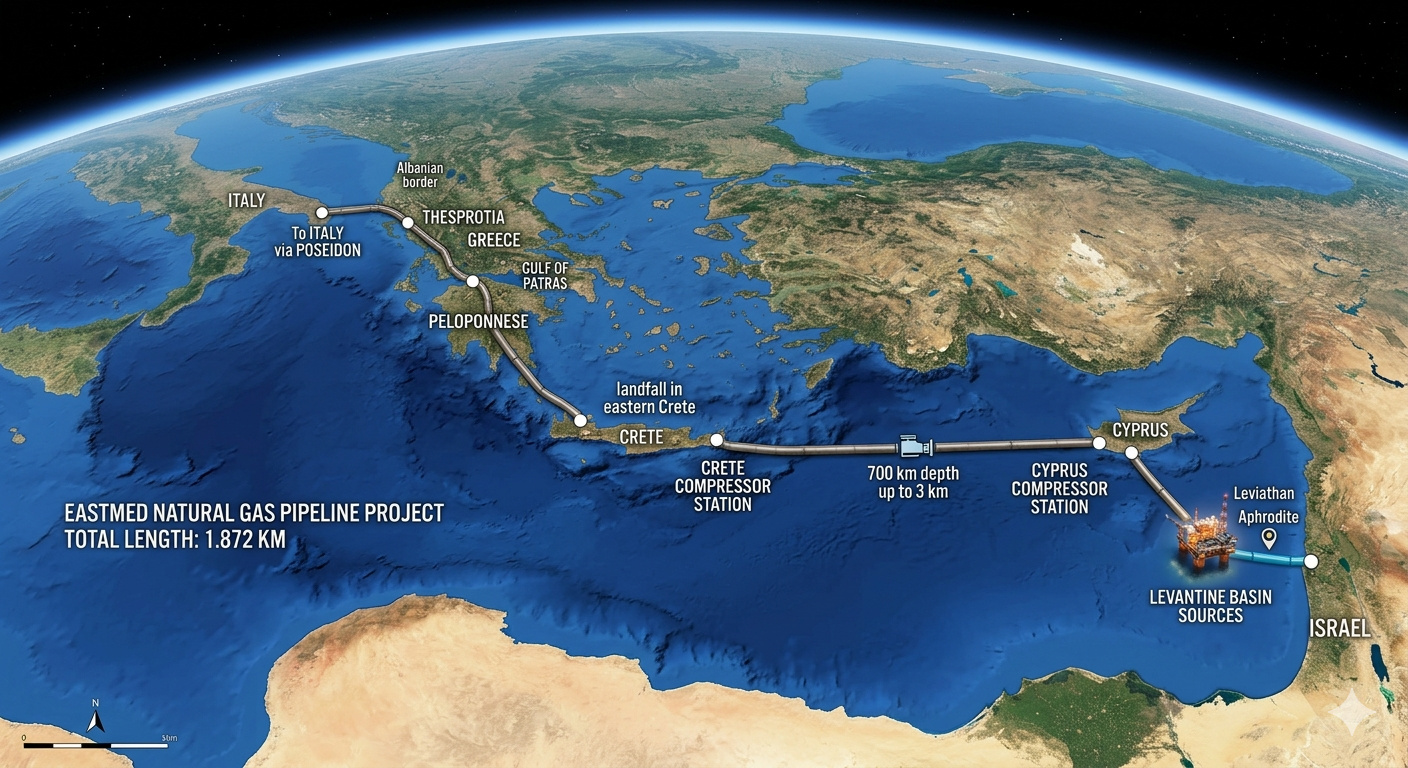
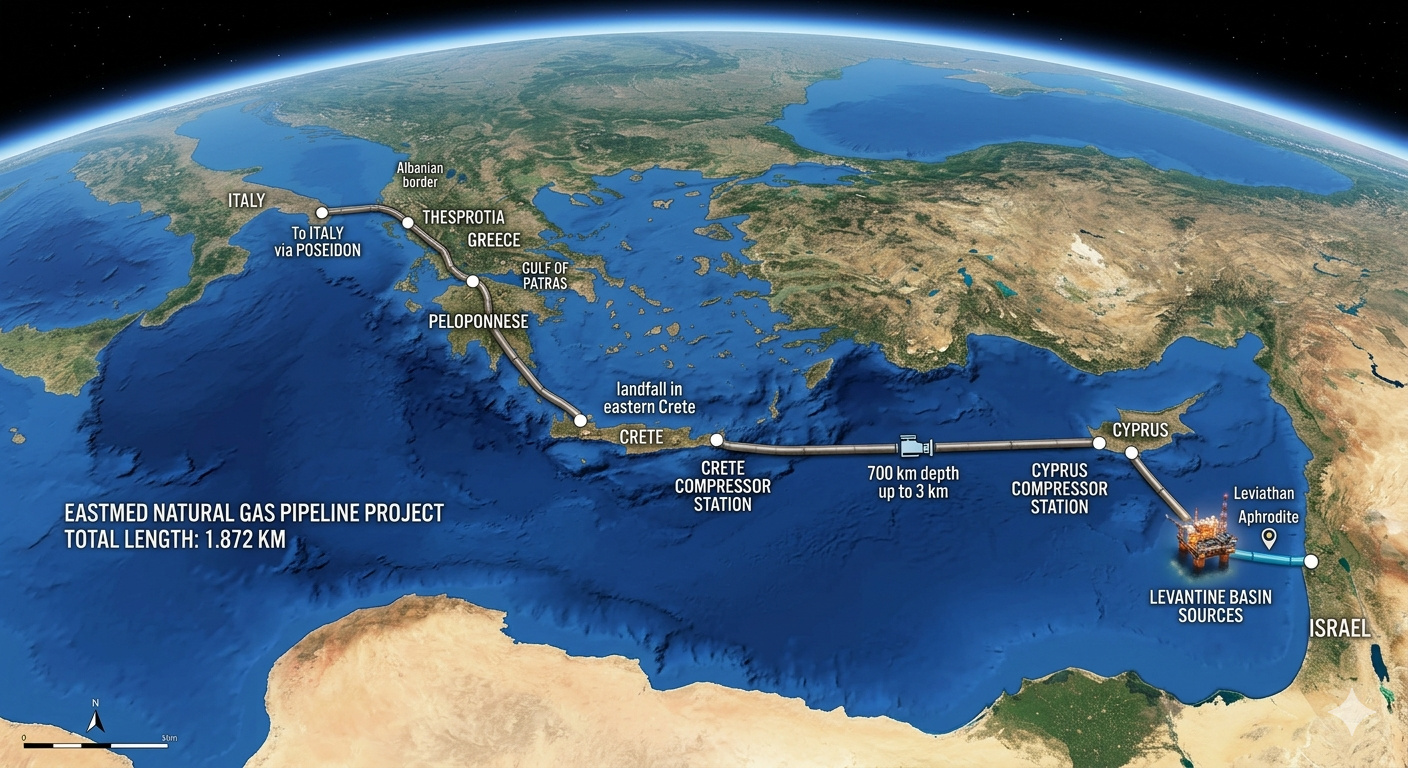
Israel, Greece, and Cyprus signed an agreement in 2020 to transport gas from the Mediterranean to Europe via a 1,872 km pipeline, but Turkey claimed sovereignty over part of the maritime route, and the project never materialized.
-
Israel, Greece, and Cyprus signed an agreement in 2020 to transport gas from the Mediterranean to Europe via a 1,872 km pipeline, but Turkey claimed sovereignty over part of the maritime route, and the project never materialized.
The state receives about 7 inches of rain per year, a very low volume even for semi-arid regions.
Most of the territory lies in the Great Basin, a system of closed basins where rare precipitation does not reach the ocean nor usually accumulates in rivers and lakes. Instead, it evaporates quickly or infiltrates and disappears from the surface.
Without major rivers to nourish the land and without stable natural lakes for long-term storage, Nevada has grown accustomed to living on water brought from elsewhere.
As cities expand, especially Las Vegas, the thirst has become more evident. Population and tourism have grown, but the natural supply has not kept pace.
Gradually, daily life, the economy, and energy began to depend on a single logic: if borrowed water weakens, everything else trembles alongside.
The Engineering of the West and the Illusion that Water Can Always Be “Delivered”
In the West, the search for water has never been trivial. Throughout the 20th century, the region entered an era in which many believed that nature could be reshaped by engineering projects.
Straight canals were designed to cut through deserts, and water began to be pumped across mountains and valleys for hundreds, even thousands of miles.
Projects like the Hoover Dam and the Colorado River system helped sustain cities and agriculture in places where rivers have never flowed abundantly.
Success, however, fostered a dangerous belief: with money and willpower, water would always find a way to arrive.
Nevada was not a bystander. The state has been at the forefront of proposals for diversion and importation of water, ready to consider almost any plan capable of alleviating a thirst that is not a “crisis” but a prolonged state lasting centuries.
From Megaprojects to a New Obsession: The Ocean as an “Infinite Source”

At the height of the water ambition, a continental-scale proposal known as NABA emerged, described as a meticulously calculated system of hundreds of dams, pumping stations, canals, tunnels, and reservoirs from Alaska and Canada to the West Coast.
The promise was to quench the thirst of arid states, expand cities, and boost large-scale agriculture.
The same scale that seduced also doomed the plan: costs beyond financial capacity, international disputes, advancement of the environmental movement, and ecological risks kept it from leaving the drawing board.
However, the legacy remains: the mindset that water could be controlled on a continental scale.
When these ideas collapsed, the West was forced to look in another direction: the Pacific horizon. If there isn’t enough fresh water to share, why not “create” fresh water from the sea?
The proposal to pump billions of liters from the ocean to the desert arises from this reasoning, not as a promise of miracle, but as an alternative when traditional sources cease to support growth.
How Desalination Works and Why It Is So Expensive, Energy-Intensive, and Risky
Transforming seawater into freshwater requires brute force. Saltwater is corrosive and unsuitable for human consumption and agriculture in its natural state.
To turn it into drinking water, it must be forced through ultrathin membranes under immense pressure, a process associated with reverse osmosis, consuming large amounts of energy.
And producing fresh water does not come alone. For every volume of clean water, there is a byproduct: brine that is even saltier than the original ocean.
If mishandled, this brine can devastate coastal ecosystems for decades. That’s why desalination has long been sidelined, seen as too expensive, too energy-intensive, and too risky.
What changes the equation are the combined factors: more efficient technologies, falling solar energy costs, and, primarily, the weakening of traditional sources.
When the Colorado River can no longer meet demand and large reservoirs repeatedly hit historically low levels, ideas once considered madness begin to seem more reasonable than ever.
The Plan to Transport Billions of Liters and Cross Mountains Is Still a Hypothesis
The ambition to bring the ocean to Nevada is not yet a project in execution. It remains as a hypothesis discussed in boardrooms, technical reports, and simulation models.
No canal is being dug, no pipeline is being installed across the desert, and no political decision has been strong enough to transform the idea into a real enterprise.
This does not happen for lack of technical groundwork. On the contrary: the concept has been analyzed in detail, including desalination technologies, energy requirements, possible transport routes, and long-term economic impacts.
The main barrier is that the complete package involves an extremely high cost, gigantic infrastructure, and environmental risks, along with a fundamental question: how far does it make sense to challenge the climate that has shaped this land for millions of years?
The Ghost of the “Inland Sea” and the Bitter Lesson of the Salton Sea
The West has already learned an expensive lesson about “bringing water to the desert.” It has a name: Salton Sea. It was born from a technical error in the early 20th century when engineers tried to divert water from the Colorado River for irrigation.
The river broke through the canal system and flooded a large depression below sea level, forming a new inland sea in the California desert.
At first, it seemed like a miracle: a surface reflecting the sun, fish thriving, migratory birds returning, resorts and marinas springing up around.
The problem is that the Salton Sea had no outlet. Every drop that entered had only one way out: evaporation. When the water evaporated, salt and chemicals were left behind.
Over time, salinity rose beyond ocean levels. Fish died in mass. Toxic algae spread in the heat.
As the level fell, the bed was exposed, revealing sediments of salt, pesticides, and heavy metals. Desert winds lifted these particles, creating toxic dust storms that traveled dozens of miles and directly affected the health of neighboring communities.
The lesson is harsh and straightforward: water in the desert does not automatically create a sustainable ecosystem. Without natural flows, without self-cleaning mechanisms, and without long-term management, water can become a catalyst for degradation, not rebirth.
That’s why any proposal that speaks of creating new lakes in Nevada and pumping billions of liters inevitably runs into the same question: will the desert be saved or will the mistake be repeated on a larger scale?
The “Safer” Path that Nevada Has Chosen for Now: Wastewater Reuse in a Closed Loop
Faced with the risk of pushing forward with the ocean idea, Nevada has opted for a more cautious path: wastewater reuse.
In a state where every error with water can have consequences for decades, the current strategy focuses on preserving what already exists.
The logic is a closed loop. Almost all indoor water used in the Las Vegas area is collected, treated, and pumped back to Lake Mead, the source of supply for southern Nevada.
In return, the state is allowed to withdraw additional potable water from the federal system, extending the life of each drop, rather than consuming it once and losing it forever.
The result of this mindset is practical: Las Vegas is now described as one of the most efficient cities in water use in the U.S. It’s not glamorous, but it has a direct impact. Instead of seeking more water, the priority is to waste less.
Where Nevada Loses the Most Water: The Outside and the War Against Lawns
Even with an efficient closed loop, reuse primarily addresses the portion of water used indoors.
The big hole is on the outside. The water that disappears through evaporation is where Nevada loses most, and this puts the state in front of a symbol of the American lifestyle: the green lawn.
In Las Vegas and other cities in the West, a significant portion of the water doesn’t go to sinks and showers.
It disappears into lawns, gardens, and golf courses under the desert sun. That’s why Nevada has started doing something once considered unthinkable: removing grass from the desert.
Decorative lawns have begun to be reduced and replaced with native landscaping: stones, gravel, cacti, and drought-resistant plants.
This approach, known as zero-scaping, trades the aesthetics of constant green for a design compatible with the climate.
And where irrigation still exists, it tends to be done more precisely, with moisture sensors and strict schedules.
Every square meter of grass removed represents thousands of gallons saved per year. It’s a strategy without flair, but aligned with reality: in a water crisis, winning isn’t about having more water, it’s about wasting less.
The Final Dilemma: Bring the Ocean or Accept Limits
The recent history of Nevada shows a change in mindset.
After decades of dreams of massive engineering, from redirecting rivers to plans to pump billions of liters from the ocean, the state is starting to face a hard truth: water cannot be created infinitely just with money and technology.
The Pacific proposal remains alive as a hypothesis because it offers something seductive: a water source that does not depend on rain, rivers, or geographical boundaries.
At the same time, it carries costs, energy, brine, and the specter of repeating past mistakes.
If you were in Nevada’s position, would you bet on pumping billions of liters from the Pacific as a last resort or prioritize only reuse and cutting waste, even if that limits growth?




Most of what Nevada is doing to replace grass with native desert landscapes is called Xeriscaping. Zero landscaping eliminates all plants, and is a much smaller part of what’s being done. But no matter how effective this program is, it will never be enough because the largest portion of Colorado River water is used for California agriculture. I believe controlling the need to use Colorado River water for water intensive crops such as Alfalfa is where the opportunity for a solution lies.
I got a concept for you instead of trying to make an inhospitable kind of climate hospitable to human life. How about move the hell away from where you’re at? To some place, it is hospitable to human life. Ps. I know that’s a gigantic stretch. LOL
Nevada was meant to be a desert. You cant change what was intended. Stupid article, idiots that move to a desert basically are asking for it. Only ruining other parts of the country that deserve the water. Nevada doesn’t.