





 Portuguese
  English
  Spanish
  4 min of reading
  0 comments


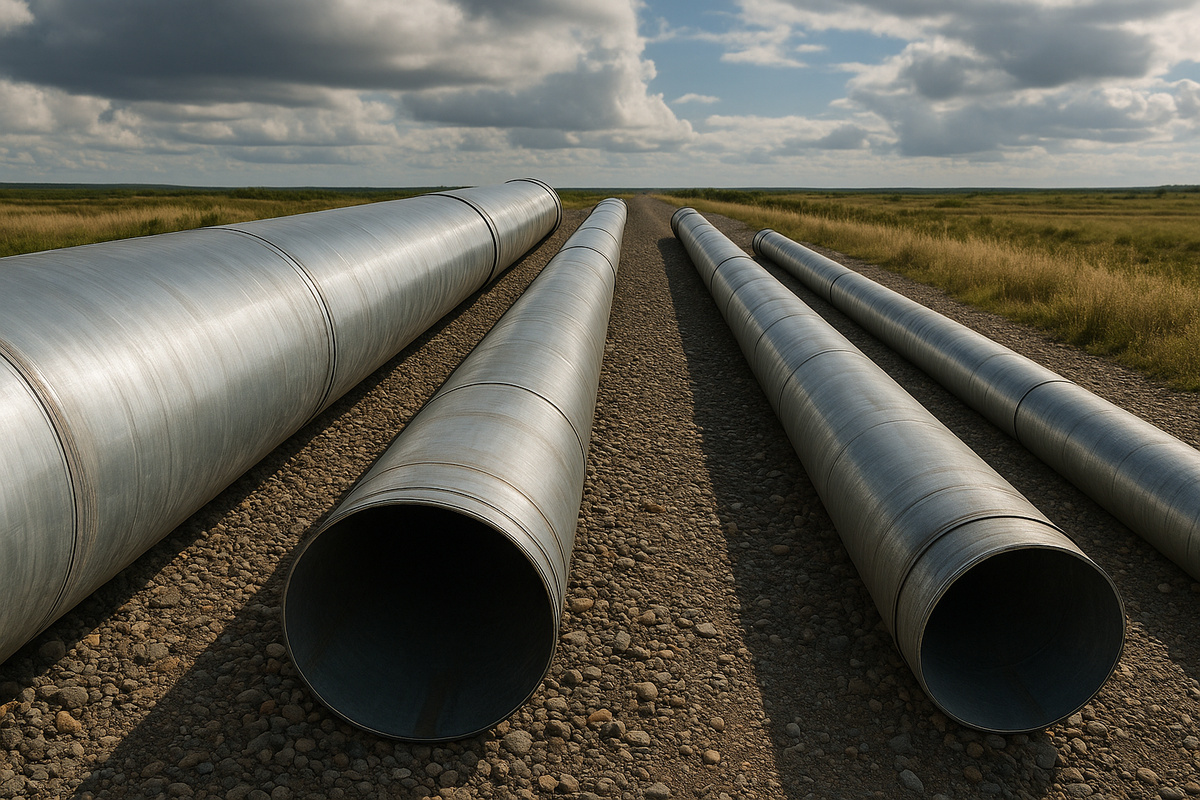
International Energy Infrastructure Moves Billions and Defines the Course of Economies and Politics in the 21st Century.
The global network of oil and gas pipelines is essential for energy security, as well as ensuring the balance of large economies.
Thus, oil and gas pipelines transport billions of barrels of oil and enormous volumes of natural gas to major markets every day.
According to the International Energy Agency (IEA), the United States transported over 14 billion barrels through pipelines in 2024 alone. This figure represents almost 70% of all the oil in the country. In this way, the country maintains an efficient network.
-
A major turn in the Justice system suspends tax increases and directly impacts oil and gas companies in Brazil by affecting costs, contracts, and financial planning, leaving uncertain what could happen to the sector if these costs had increased.

-
Brava Energia begins drilling in Papa-Terra and Atlanta and could change the game by reducing costs in oil while increasing production and strengthening competitiveness in the offshore market.
-
Petrobras surprises the world again by announcing a new discovery in the pre-salt with excellent quality oil.
-
Offshore industrial demand in Macaé skyrockets with the recovery of oil and gas and could grow by up to 396% by 2026 in the Campos Basin.

Moreover, these systems ensure efficiency, reliability, and continuity of supply, even in the face of crises and international shocks.
Behind major urban centers and industrial hubs, energy infrastructure operates silently. Nonetheless, it is crucial for the functioning of modern societies. In other words, without it, daily life would be impacted.
Underground Transportation Shapes the Global Market Since the 1960s
Therefore, the relevance of pipelines has become clear over the last few decades, especially during periods of international crisis.
In 1964, Russia inaugurated the Druzhba Pipeline. It connected Soviet oil fields to Central Europe, according to state-owned Transneft. In this way, energy integration began to strengthen on the continent.
The system, which today crosses more than 4,000 kilometers, reaches Germany and supports up to 1.4 million barrels daily. Thus, Russian infrastructure solidified its importance for European supply.
Recently, in June 2025, flows to Germany were reduced due to sanctions. This information was confirmed by Reuters. Despite this, the pipeline remains significant.
Back in 2008, Russia launched the ESPO pipeline, connecting Eastern Siberia to Asia and the Pacific. The system expanded capacity to 1.6 million barrels daily by 2025, according to Rosneft.
In this way, the expansion reinforced Russia’s position in Chinese and Asian markets.
Additionally, in the Baltic Sea, the Nord Stream 1 and 2 pipelines connected Russia and Germany with a total capacity of 110 billion cubic meters annually.
Nord Stream 1 has been operational since 2011. Meanwhile, Nord Stream 2, completed in 2021, has not entered operation. However, explosions in September 2022 compromised part of this infrastructure, creating instability, as reported by the IEA.
Environmental and Strategic Challenges Mark the Expansion of Energy Routes
Due to the need for diversification, the search for alternatives led to the creation of corridors like Keystone, which connects Alberta’s sands (Canada) to refining centers in the United States.
The Keystone transports about 590,000 barrels daily since 2010. However, the Keystone XL expansion project was canceled in 2021, following environmental and political pressures. The decision followed the U.S. Department of Energy. Thus, the system remains crucial for continental logistics.
Another important milestone is the Baku-Tbilisi-Ceyhan (BTC) Pipeline, which has linked Azerbaijan to the Mediterranean since 2005 over 1,768 km.
BP reported in June 2024 that the BTC has a real capacity of 600,000 barrels daily. Thus, the region expanded its international reach.
In Turkey, the Trans-Anatolian Pipeline (TANAP) began operating in 2018. The system can reach 32 billion cubic meters annually, according to state-owned SOCAR in 2020.
In this way, it connects gas from the Caucasus to the European market, reinforcing regional energy integration.
Economic and Social Impacts Cross Borders and Influence Global Decisions
The Iraq-Turkey Pipeline (ITP), since 1976, transports oil from Kirkuk to the Mediterranean. The potential is 1.4 million barrels daily, according to the Iraqi Ministry of Oil.
In 2023, a legal dispute halted the flow. The process interrupted vital exports to Turkey. Therefore, the impact was felt throughout the production chain.
Additionally, Canada invested in the expansion of the Trans Mountain Pipeline. In May 2024, the system doubled its capacity to 890,000 barrels daily, according to the federal government.
The goal is to diversify exports and face market volatility in the U.S., despite higher tariffs. This way, the country expands its strategic options.
The China-Myanmar pipelines, about 800 km long, allow China to receive 440,000 barrels daily of oil. The system also transports 12 billion cubic meters of gas annually, according to CNPC in May 2025.
These corridors bypass the Strait of Malacca. Thus, they reduce risks of naval interruptions and strengthen China’s energy security. Therefore, maritime dependence decreases.
Sustainability, Geopolitical Challenges, and Trends for the Future
The influence of these corridors reflects not only on the energy market but also on geopolitics, national revenues, and social development in the regions involved.
According to the International Monetary Fund (IMF), any significant interruption in these pipelines could raise prices. Additionally, it may impact stocks and alter global trade flows, as observed in recent crises. Thus, stability depends on these routes.
Experts from BP, Gazprom, and international agencies highlight the need to invest in modern infrastructure. Therefore, they recommend monitoring operations and adopting strict environmental standards. This becomes urgent given accidents, sabotage, and increasingly discussed environmental risks in global forums.
As governments, businesses, and society debate the future of the energy matrix, underground transportation infrastructure remains fundamental.
It connects continents, defines strategies, and shapes decisions that affect everyone, from major industrial centers to small communities. In this way, the future of energy depends on safe and efficient paths.
Do you believe that the energy routes of the 21st century will prioritize security and sustainability, or will strategic interests continue to dominate decisions?








Seja o primeiro a reagir!