





 Portuguese
  English
  Spanish
  5 min of reading
  0 comments


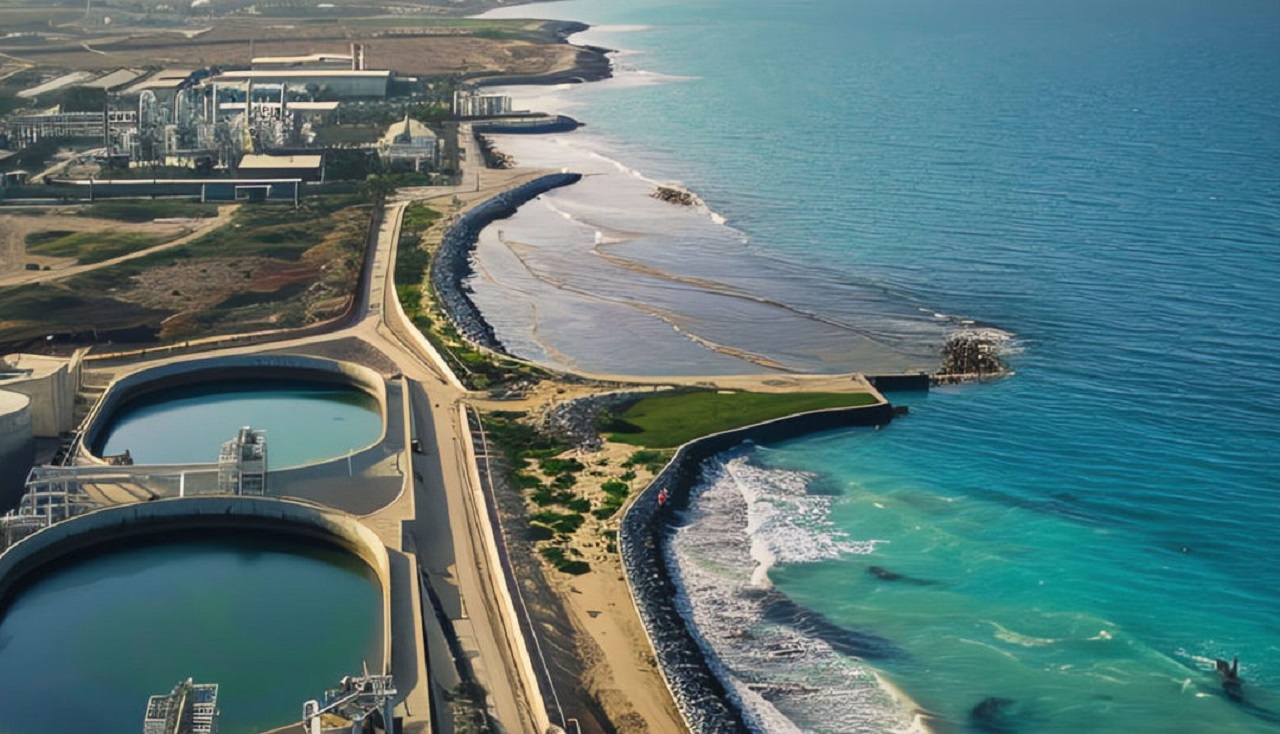
Oman Transformed Gulf Water Into Its Main Supply Source. Desalination Plants Along The Coast Produce About 86% Of The Drinking Water Consumed In The Country.
Located in one of the most arid regions on the planet, the Sultanate of Oman has built over the past decades a water infrastructure that redefines how desert countries deal with water scarcity. Without permanent rivers and with irregular rainfall, the country massively relies on desalination to ensure the supply of its cities. Today, approximately 86% of the drinking water consumed in Oman comes directly from the desalination of seawater, according to studies on water management in the Gulf. This technology allows for the transformation of saline water captured in the Gulf of Oman and the Arabian Sea into water suitable for human consumption.
This model is not exclusive to the country but is part of a regional phenomenon. The Gulf countries concentrate the majority of the desalination infrastructure in the world, accounting for about 60% of the installed global capacity and approximately 40% of all desalinated water produced on the planet. In this context, Oman has become one of the clearest examples of how modern engineering can sustain populations in extremely dry environments.
Water Scarcity In A Desert-Dominated Country
Oman has a territory marked by vast desert areas and arid mountains. The climate is characterized by high temperatures for most of the year and very limited precipitation. Most of the country receives less than 100 millimeters of rainfall per year, a value considered extremely low to sustain natural freshwater systems.
-
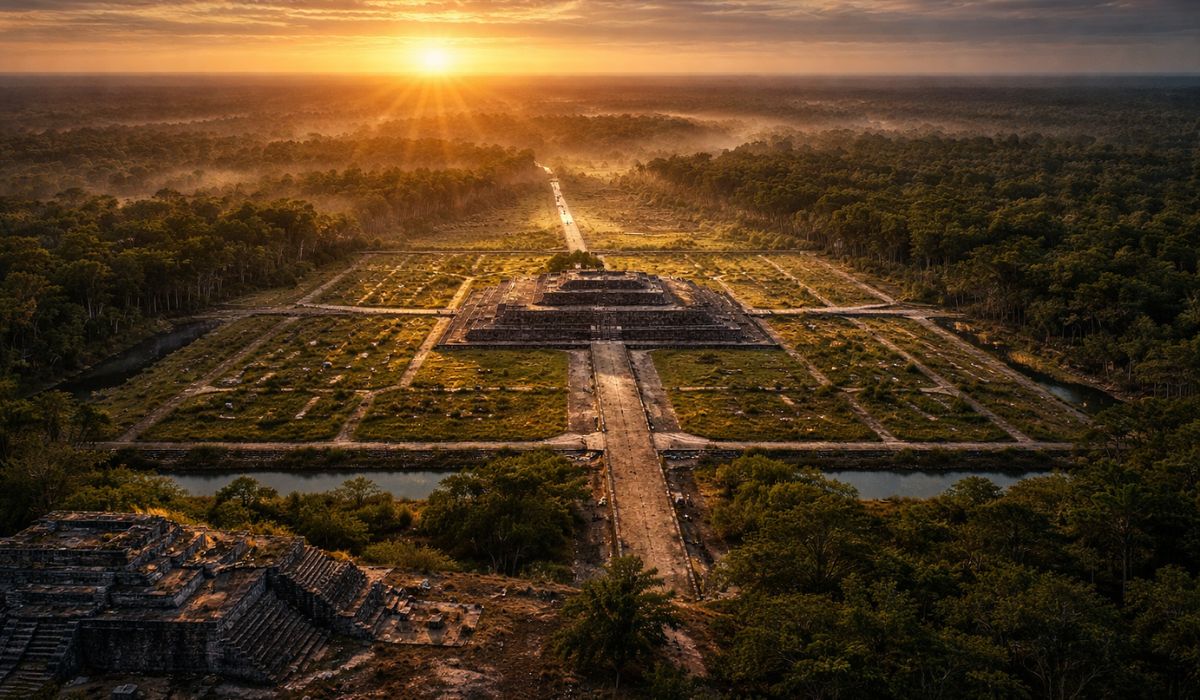
In Mexico, a 3,000-year-old Maya site with the dimensions of an entire city may have been built as a colossal map of the cosmos, created to represent the order of the universe and reveal how this people organized space, time, and rituals.
-
Japan wants to build a solar ring of 10,900 kilometers on the Moon to continuously send energy to Earth.

-
Weighing almost 1 ton, with temperatures of up to 3,000°C, the ability to launch 10,000 fragments within a radius of 1 km, capable of penetrating concrete and melting steel, Turkey’s terrifying bomb emerges as one of the most destructive non-nuclear weapons ever presented.

-
After a submarine disappeared beneath the “Doomsday Glacier,” scientists announce a new monstrous machine capable of operating at 3,000 meters depth to return to the heart of the ice and investigate a threat that could raise sea levels worldwide.


Furthermore, Oman does not have permanent rivers capable of supplying large urban centers. The few watercourses that exist are temporary and depend on occasional rainfall. Historically, local communities relied on traditional irrigation systems called aflaj, underground channels that capture water from aquifers and springs. This system, used for over a thousand years, still exists in some regions.
However, with the population growth and rapid urbanization in recent decades, these natural sources have become insufficient. It was in this context that the country began to invest heavily in desalination.
How Desalination Works In Oman
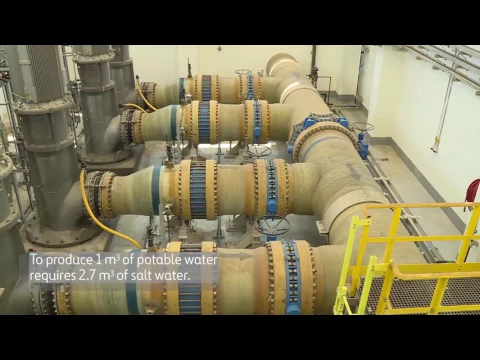
Desalination consists of removing salt from seawater to make it drinkable. In Oman, most modern plants use reverse osmosis technology, considered the most efficient method today. In this process, seawater goes through several treatment stages.
First, the water is captured by pipelines installed in the sea. Next, it goes through filtration systems that remove sediments and particles. After that, the water is pressurized and forced through special membranes capable of retaining salts and impurities.
The result is freshwater ready for final treatment and distribution.
This process requires high pressure and energy consumption, but technological advances in recent decades have significantly reduced costs and energy usage.
In older plants, the process used was thermal desalination, which evaporates the water and condenses the vapor to separate the salt. This method still exists but is gradually being replaced by reverse osmosis.
The Large Desalination Plants In The Country
Along the coast of Oman, there are various large-scale plants responsible for supplying the main cities. Among the most important installations are the plants of Barka, Sohar, and Ghubrah, which produce hundreds of thousands of cubic meters of drinking water daily.
These plants are integrated into industrial complexes that include power stations, pumping systems, and distribution networks. The desalinated water is transported through long pipeline networks connecting the coastal plants to urban centers.
Cities such as Muscat, Sohar, Sur, and Salalah depend directly on this system to maintain supply. Without this infrastructure, it would be practically impossible to sustain the current population in these regions.
The Gulf Region As The Global Desalination Center
Oman is part of a group of countries leading the use of this technology on the planet. The Persian Gulf hosts hundreds of desalination plants installed over the last few decades.

Among the countries most dependent on the technology are:
- Kuwait, where about 90% of the drinking water comes from desalination
- Saudi Arabia, with approximately 70%
- Oman, with about 86%
- United Arab Emirates, with over 40%
This level of dependence occurs because the region has some of the lowest natural freshwater availability in the world. Without desalination, large cities like Dubai, Doha, or Muscat simply could not exist on their current scale.
Infrastructure That Sustains Entire Cities
The production of desalinated water is only one part of the system. After leaving the plants, the water needs to be stored and transported to consumers. Oman has built over the years a complex network composed of:
- strategic reservoirs
- pumping stations
- long-distance pipeline networks
- final treatment centers
This infrastructure allows for the distribution of drinking water to millions of people in urban and industrial areas. In many cases, the water travels tens or even hundreds of kilometers from the coastal plant to reach the interior cities.
The High Energy Cost Of Desalination
Although it is essential for water supply, desalination requires a large amount of energy. Producing drinking water from seawater requires extremely high pressures to force the liquid through the membranes.

Traditionally, many plants in the region use natural gas or oil as an energy source. This makes the cost of desalinated water higher than that from natural sources.
For this reason, governments in the region have been seeking to integrate new energy technologies, including solar energy, to reduce costs and emissions.
The Environmental Challenge Of Brine
Another challenge associated with desalination is the disposal of brine, the highly concentrated salt waste left over after the process. This liquid is returned to the sea, usually near the plants.
If not adequately diluted, it can temporarily alter the salinity of the surrounding water near the facilities. To reduce this impact, many modern plants use diffusion systems that rapidly spread the waste in the ocean.
With the growing population and economy, the demand for water in Oman continues to rise. To face this challenge, the country plans to expand its desalination infrastructure and modernize existing plants.
Investments include:
- new reverse osmosis facilities
- greater energy efficiency
- integration with renewable sources
- expansion of the distribution network
These measures are part of national strategies to ensure long-term water security. In a region where natural water is extremely scarce, desalination has become one of the most important technologies for sustaining cities, industries, and populations.
In Oman, transforming seawater into drinking water has ceased to be merely an emergency solution and has become the foundation of the entire national water infrastructure.







-

-

-

-

8 pessoas reagiram a isso.