





 Portuguese
  English
  Spanish
  3 min of reading
  1 comment


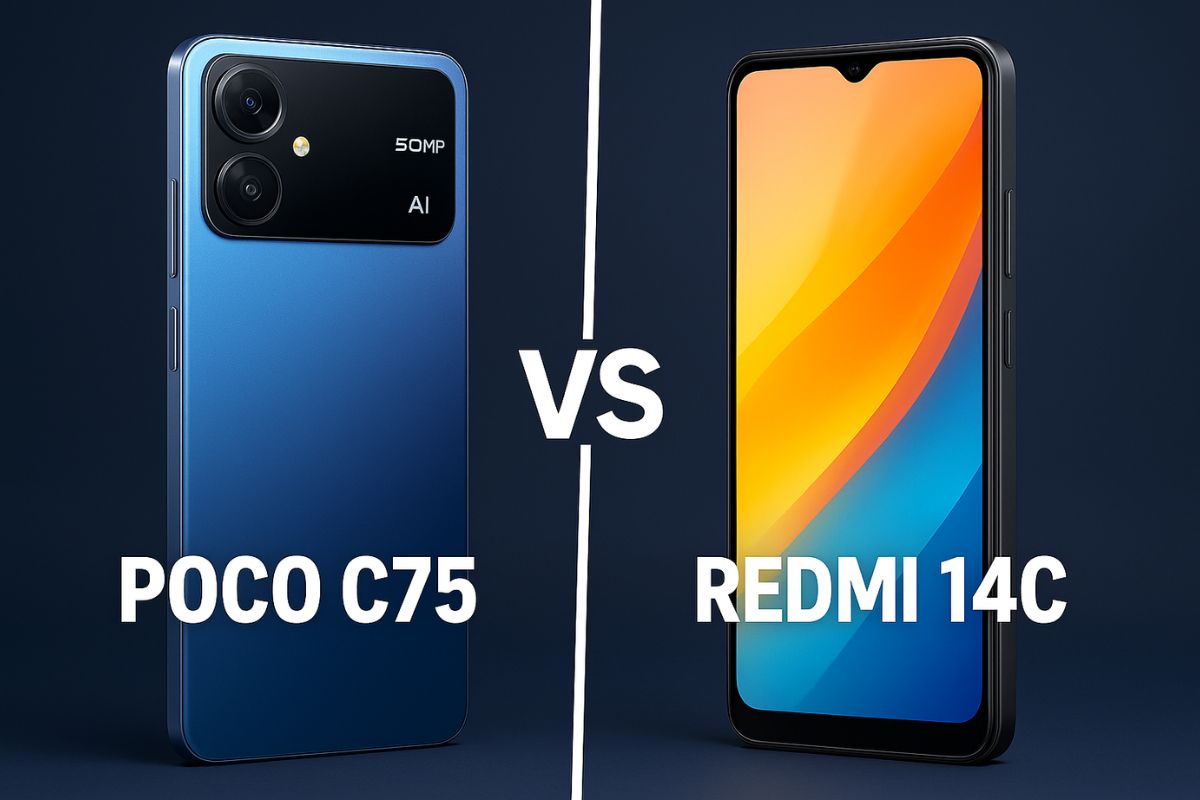

Xiaomi’s Entry Models Share Solid Specifications, But There Are Important Differences in Cameras, Performance, and Connectivity.
The comparison between Poco C75 and Redmi 14C reveals that, although both have a 6.88-inch display at 120 Hz, a 5,160 mAh battery, and the same MediaTek processor, the choice can vary significantly depending on the usage profile.
According to journalist Murilo Fraga from TechTudo, Xiaomi introduced two very similar devices in proposal, but with differences that can impact both the wallet and the user experience, especially in RAM, cameras, and additional features like NFC.
Display and Design
In terms of visuals, both phones feature identical 6.88-inch displays at 120 Hz, something rare in the entry-level category.
-
Cement battery inspired by chemistry used since Ancient Rome resurfaces as a rechargeable thermal solution and enters the competition for the future of industrial heat.

-
Scientists have found in the dark depths of the North Sea giant marks from 18,000 years ago left by colossal icebergs, and the discovery could help predict the future of Antarctica.

-
In Mexico, a 3,000-year-old Maya site with the dimensions of an entire city may have been built as a colossal map of the cosmos, created to represent the order of the universe and reveal how this people organized space, time, and rituals.

-
Japan wants to build a solar ring of 10,900 kilometers on the Moon to continuously send energy to Earth.


The resolution is HD+, sufficient for social media and videos, but limited for those seeking more clarity. The TÜV Rheinland certification helps reduce eye strain.
According to Murilo Fraga, the Poco C75 focuses on a textured back with rounded central modules, while the Redmi 14C offers versions in glass or matte finish.
The choice, in this case, depends more on personal preference, as there is a technical tie in terms of screen and overall quality.
Cameras
Here, the differences become clearer. The Poco C75 features a 50 MP main camera supported by AI capabilities, but lacks significant details about auxiliary sensors.
On the other hand, the Redmi 14C includes a triple camera setup, with a 50 MP lens, depth sensor, and QVGA support, as well as a 13 MP selfie camera with HDR and a soft light ring.
In practice, the Redmi 14C provides more features for everyday photography, especially in portraits and low-light environments.
Performance and Storage
Despite sharing the same Helio G81-Ultra chip, the Poco C75 has a decisive advantage: 6 GB or 8 GB of RAM options, compared to just 4 GB in the Redmi 14C.
This difference directly affects multitasking fluidity.
TechTudo emphasizes that the Poco also offers greater flexibility in storage (128 GB or 256 GB), with microSD expansion, while the Redmi comes only in the 256 GB version. For those intending to use the phone for a longer time, the Poco C75 is better prepared.
Battery
Battery life is a tie. Both have 5,160 mAh and 18 W charging, ensuring up to two days of moderate use.
The practical difference between the two models in this regard is minimal, with both being good options for those prioritizing battery duration.
System and Support
Both devices already run Android 15 with HyperOS 2.0, an interface that includes AI features, such as real-time audio transcription and dynamic wallpapers.
The advantage of the Poco lies in its clearer support policy: two major updates guaranteed, compared to one confirmed update for the Redmi.
Additional Features
In the extra package, the Poco C75 comes out on top by offering NFC in the Brazilian version, allowing for contactless payments, as well as more powerful audio.
The Redmi 14C, although it has FM radio and a P2 input, does not offer the same feature in Brazil.
Price and Cost-Effectiveness
At launch, both were priced around R$ 1,700 to R$ 1,800, but today they are already appearing in promotions well below that.
The Redmi 14C can be found starting at R$ 713, while the Poco C75 is close to R$ 804. Despite the price difference, the analysis considers that the extra RAM and NFC of the Poco justify the small additional investment.
At the end of the comparison, the Poco C75 is deemed the winner for being more complete, especially in performance and connectivity.
The Redmi 14C remains attractive for those looking to spend less and valuing cameras but falls short in multitasking and updates.
And you, would you choose the more robust Poco C75 or the cheaper Redmi 14C aimed at photography?
Leave your opinion in the comments; your experience can help other readers decide.








Excellent breakdown, I completely agree with the challenges you described. For our projects we started using an AI-driven system called AI link building by OptiLinkAI, and it has simplified the entire process. It’s refreshing to see technology finally making link acquisition smarter, not just faster.