





 Portuguese
  English
  Spanish
  3 min of reading
  0 comments


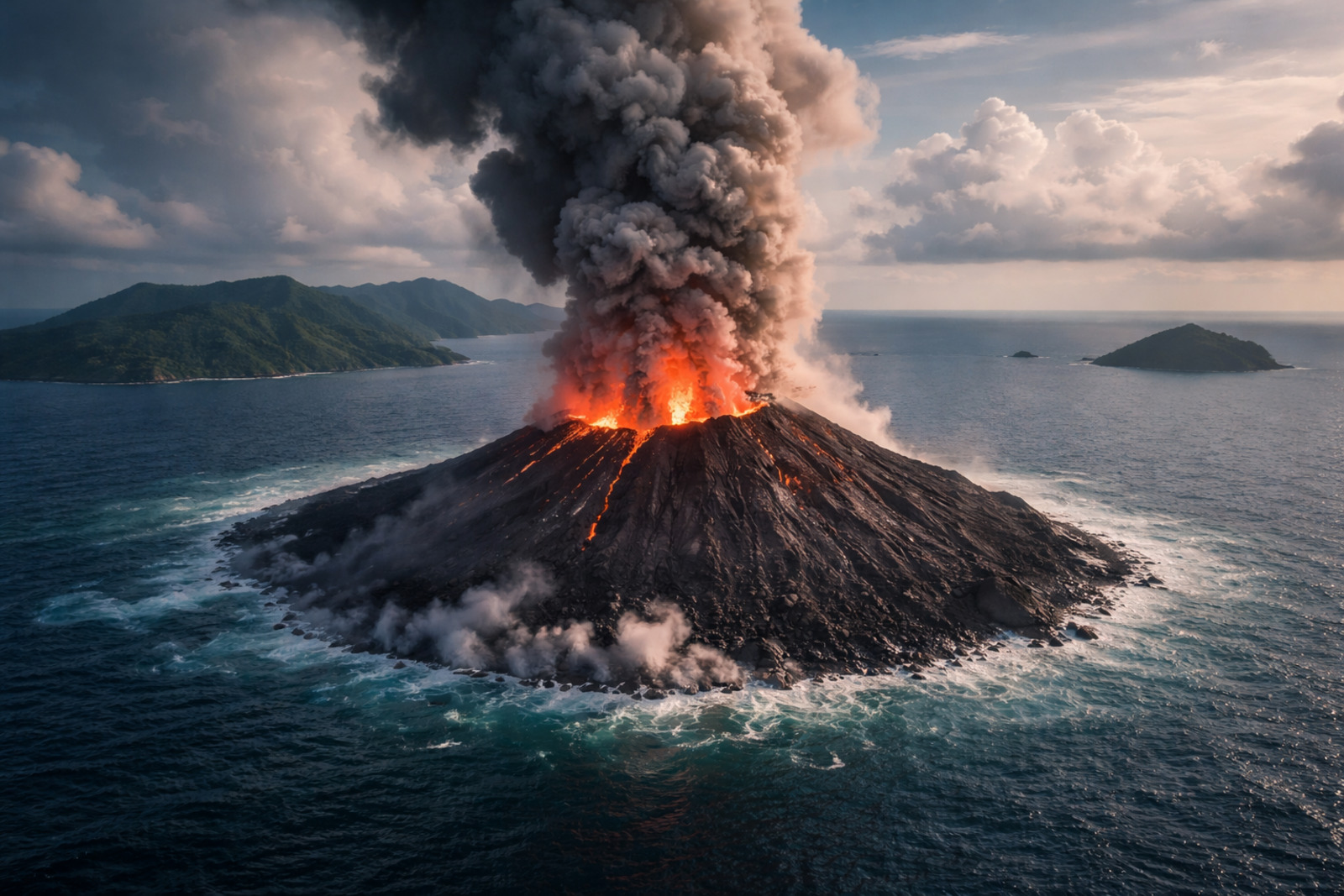
Research identifies new magma beneath Kikai caldera in Japan, where the largest eruption of the Holocene reignites alerts about future volcanic risk
The Kikai caldera, south of the Ryukyu Islands in Japan, is being replenished by newly injected magma, according to a study published in the journal Communications Earth & Environment, reigniting fears of a future eruption in one of the world’s most unstable volcanic systems.
Study identifies new magma beneath Kikai
Co-author Seama Nobukazu, a geophysicist at Kobe University, stated that the magma present in the magma reservoir beneath the lava dome is likely newly injected material.
The conclusion reinforces the assessment that the situation is worsening.
-
Rubin Observatory debuts and already reveals 11,000 new asteroids in just a few days, maps tens of thousands, finds 33 near-Earth objects, and promises to discover millions in the entire southern sky.
-
Artemis 2 only passed by the Moon and returned: Orion does not land, the module is still not ready, and the Apollo evidence includes 382 kg of rocks, laser mirrors, and photos.
-
NASA observed from orbit a green patch advancing over a reservoir in South Africa, and what seemed harmless revealed a real threat to water, fish, and public health.
-
A YouTuber who was trying to recreate piece by piece the mechanism of the oldest computer in the world ended up helping scientists uncover how it, lost for about 2,000 years, likely measured time with impressive accuracy.
Nicknamed Kikai caldera, the structure is mostly submerged and lies south of the Ryukyu Islands. The 19-kilometer diameter caldera is located in the Ōsumi Islands, in Kagoshima Prefecture, Japan.
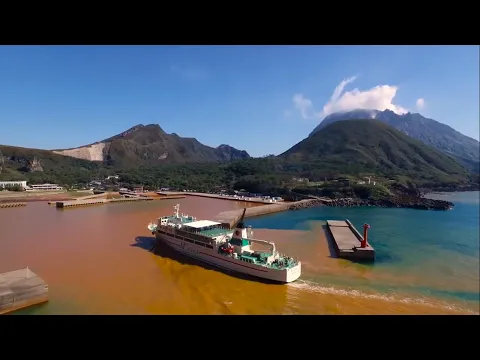

The mark left by the eruption of Akahoya
Kikai last erupted 7,300 years ago. This event, known as the Akahoya eruption, was described as the largest volcanic eruption of the current geological era, the Holocene.
The explosion is believed to have released about 61 cubic kilometers of dense rock into the air. The volume is approximately 11 times the material ejected by the Novarupta eruption in Alaska in 1912.
The material was spread over more than 4,400 square kilometers, an area nearly three times larger than New York City.
The eruption also triggered pyroclastic flows that advanced 150 kilometers from the epicenter.
The episode is believed to have decimated the Jōmon people, who lived in ancient Japan from approximately 14,000 B.C. to 300 B.C. The magnitude of the eruption keeps Kikai among the most concerning volcanic systems.
New dome has been growing for 3,900 years
Over the past 3,900 years, a new lava dome has been forming beneath Kikai. Although there has not been another eruption as explosive since then, there has been sporadic volcanic activity.
Unlike the last explosion, however, this lava was composed entirely of new material. Chemical analyses showed that the recent material was different from that expelled in the previous eruption, indicating recharge of the reservoir with newly injected molten rock.
Nobukazu assessed that this magma reinjection model resembles that observed in other large shallow magma reservoirs, such as the one beneath Yellowstone.
How researchers investigated the reservoir
To investigate the phenomenon, researchers sent research boats to the area. They used air guns and seismographs installed on the seabed to examine the underground structure.
With these tools, it was possible to measure how the pulses propagated through the Earth’s crust. The data revealed a large lava reservoir that apparently supplied Akahoya.
What the discovery could change
Scientists observed that even an eruption of lesser magnitude could be devastating.
At the same time, the results may serve as a basis for future models on how magma reservoirs recharge after major eruptions.
This advancement could help volcanologists better predict if and when a volcano will erupt.
Nobukazu stated that the team wants to refine the methods used in the study to gain a deeper understanding of the reinjection processes and monitor future giant signals.
With information from New York Post.




Seja o primeiro a reagir!