





 Portuguese
  English
  Spanish
  6 min of reading
  6 comments


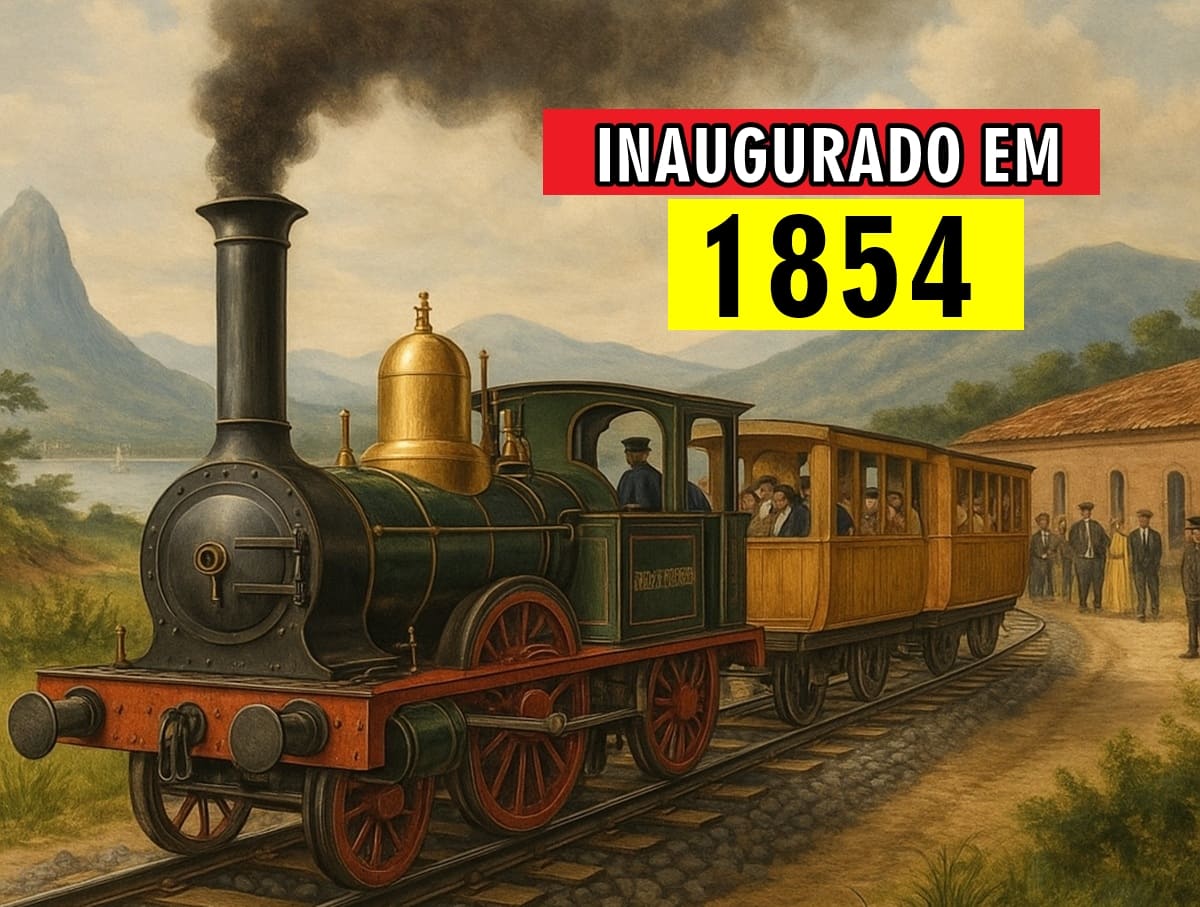


The First Railway in Brazil, the Mauá Railway, Was Inaugurated in 1854 and Revolutionized Transportation Between Rio and the Serra de Petrópolis
On April 30, 1854, Brazil took an important step towards modernization. On this day, the first railway in Brazil was inaugurated: the Mauá Railway.
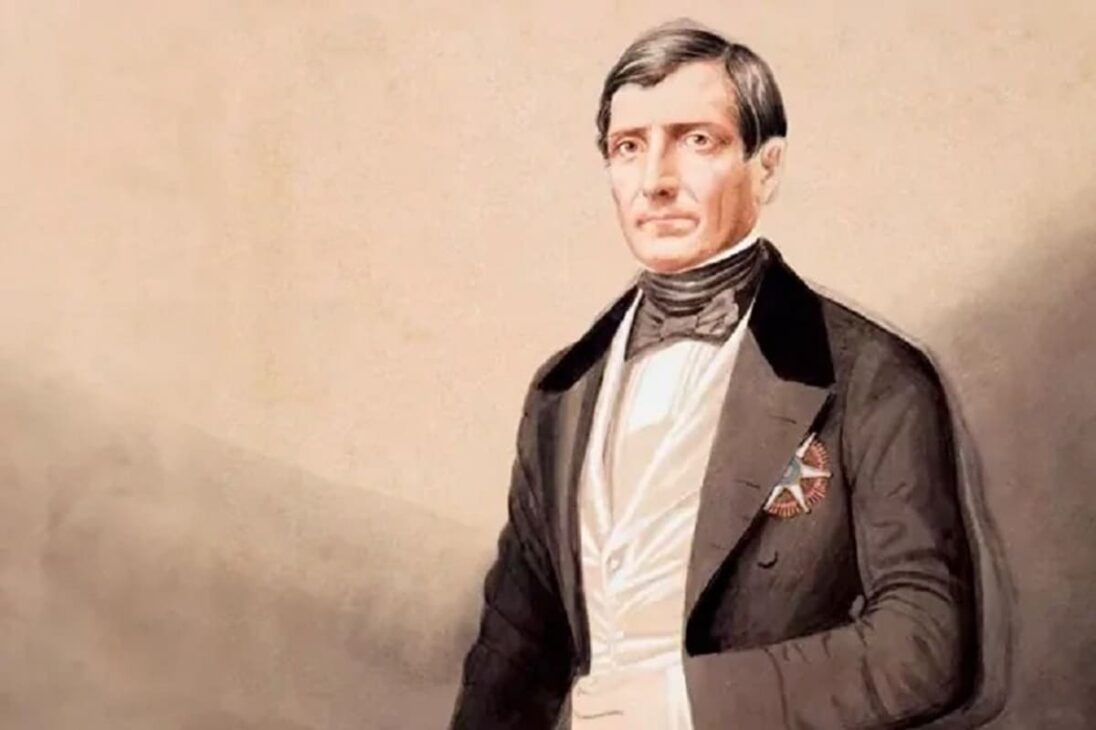
Envisioned by Irineu Evangelista de Sousa, better known as Barão de Mauá, the railway linked the Port of Mauá, in Guanabara Bay, to the locality of Fragoso, in the municipality of Magé (RJ). It was the beginning of the rail era in Brazil.
Brazil in the 19th Century
At that time, Brazil was under the rule of Dom Pedro II.
-
How an innovative city combines high technology, well-being, and sustainability to become the largest reference in clean energy on the planet.
-
Couple buys 1846 church in ruins for R$ 660,000, invests R$ 3.2 million in renovations, transforms it into a millionaire mansion, and even preserved a historic cemetery with over 300 graves.

-
He started running at 66 years old, broke records at 82, and is now a subject of study for having a metabolic age comparable to that of a 20-year-old, in a case that is intriguing scientists and inspiring the world.

-
Oldest tree on the planet reappears after 130 years of searches: Wattieza, 385 million years old, was 10 meters tall and had no leaves or seeds; Gilboa fossils in New York solved the mystery in 2007.


The Empire sought ways to integrate the territory, stimulate the economy, and transport coffee production.
Meanwhile, railways were already a reality in the world, especially in Europe and the United States. England, for instance, had begun its railway network in the early 19th century.
In contrast, Brazil still relied on dirt roads and rivers to transport goods and people.
The journey between the city of Rio de Janeiro and the interior was slow and difficult. The need to improve transportation infrastructure was urgent, but there were no investors willing to take the risks.
Only in 1852 did the imperial government approve a law offering tax exemptions and guarantees of returns to railway investors. This incentive opened the doors for Mauá’s project.
Barão de Mauá’s Vision with the First Railway in Brazil
Irineu Evangelista de Sousa was a bold and innovative businessman.
He was already involved in various sectors, such as navigation, industry, and finance. Recognizing the potential of the railway, he decided to invest in a short but strategic stretch.
He proposed the construction of a railway linking the Port of Mauá to the Serra de Petrópolis, where part of the imperial elite lived.
This route would also facilitate the transportation of coffee from the interior of Rio to the port, easing exportation.
With support from foreign and national investors, Mauá founded the Imperial Steam Navigation Company and Petrópolis Railway. The work began in no time.
The Construction of the First Railway in Brazil
The works of the first railway in Brazil began in 1852. The original stretch was 14.5 km long and linked the port to the Fragoso locality. Later, it was extended to Raiz da Serra, totaling 16.3 km.
The railway was constructed with technology imported from England. The tracks, locomotives, and wagons came from there. The gauge (distance between the tracks) was 1.676 meters, a standard that would be used in many Brazilian railways later.
The terrain was relatively flat, which facilitated construction. Still, there were challenges, such as landslides and a lack of skilled labor. Mauá had to train the local workforce and improvise materials.
The Baroneza Locomotive
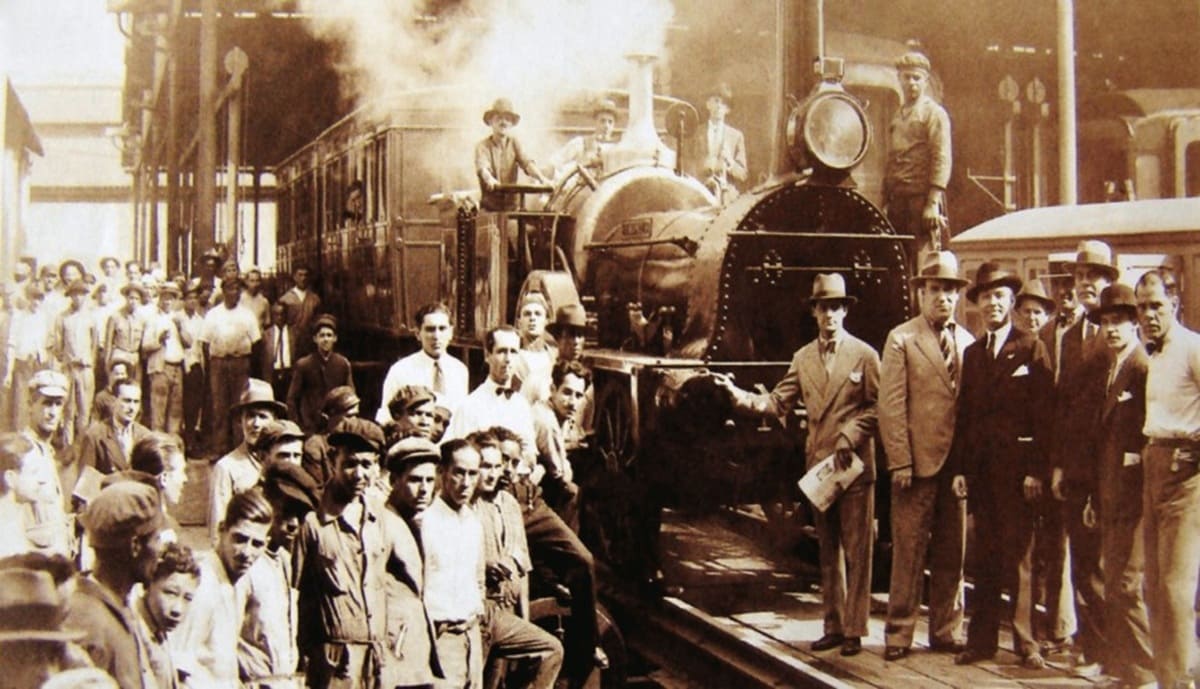
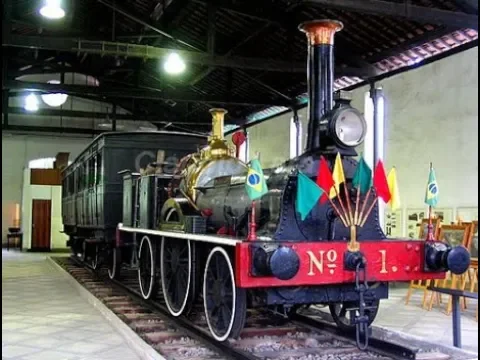
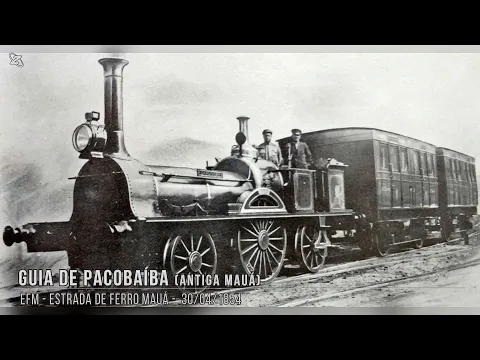
The star of the inauguration was the Baroneza locomotive, named in honor of Mauá’s wife. Manufactured in England, it was the first steam locomotive to operate in Brazil.
On April 30, 1854, Baroneza pulled the inaugural train, carrying Dom Pedro II and other authorities from Mauá Station to Fragoso. The journey lasted about 20 minutes and marked the beginning of the railway era in the country.
The train covered the 14.5 km at an average speed of 36 km/h. It was unprecedented for the population, who gathered along the tracks to see the novelty.

Pioneering Intermodality
Mauá’s project was innovative also for integrating two modes of transportation. Passengers left the center of Rio on steam boats to the Port of Mauá. From there, they boarded the train to the base of the mountain. Afterwards, they continued by stagecoach to Petrópolis.
This combination of boat, train, and carriage was the first example of intermodal transport in Brazil. It facilitated the movement of people and the transportation of goods between the interior and the capital.
Economic Impact
The impact of the railway was immediate. In the first year of operation, over 650,000 passengers and nearly 3.7 million arrobas of products, primarily coffee, were transported.
The railway reduced transportation time and cost. The route was used by both the elite and merchants and rural producers. Consequently, the Petrópolis region developed even further, attracting investment and residents.
The success of the Mauá Railway served as a model for other railways in Brazil. Soon after, projects began to emerge in other provinces, such as São Paulo and Minas Gerais.
Imperial Recognition
For his achievement, Mauá was granted the title of baron on the same day the railway was inaugurated. Dom Pedro II, an enthusiast of innovations, saw the project as a symbol of the progress he desired for the country.
Mauá would also become a viscount and would be remembered as one of the greatest entrepreneurs of the 19th century in Brazil. His name became associated with modernization and economic development.
The Decline of the Railway
Despite its initial success, the railway lost importance in the following decades. In 1867, the Dom Pedro II Railway was inaugurated, linking Rio to the Paraíba Valley. This new line diverted much of the traffic that previously passed through Magé.
In addition, the opening of the União e Indústria road, linking Petrópolis to Juiz de Fora, offered an alternative route. Consequently, Mauá’s railway began to operate at a loss.
In 1883, Mauá sold the company. The line was incorporated into the Príncipe do Grão-Pará Railway and later into the Leopoldina Railway. The original stretch continued to operate for several decades, but its national importance had already diminished.
The End of the Tracks
In the 20th century, the railway was gradually deactivated. The stretch between Mauá and Bongaba was closed in 1962. The climb of the mountain, which had been made with a cogwheel, was also deactivated in 1964.
Today, the only active stretch is operated by SuperVia and connects Piabetá to Vila Inhomirim in the Baixada Fluminense. It is a suburban train, spanning only a few kilometers, but it still follows the original route of the railway from 1854.
The Preservation of History
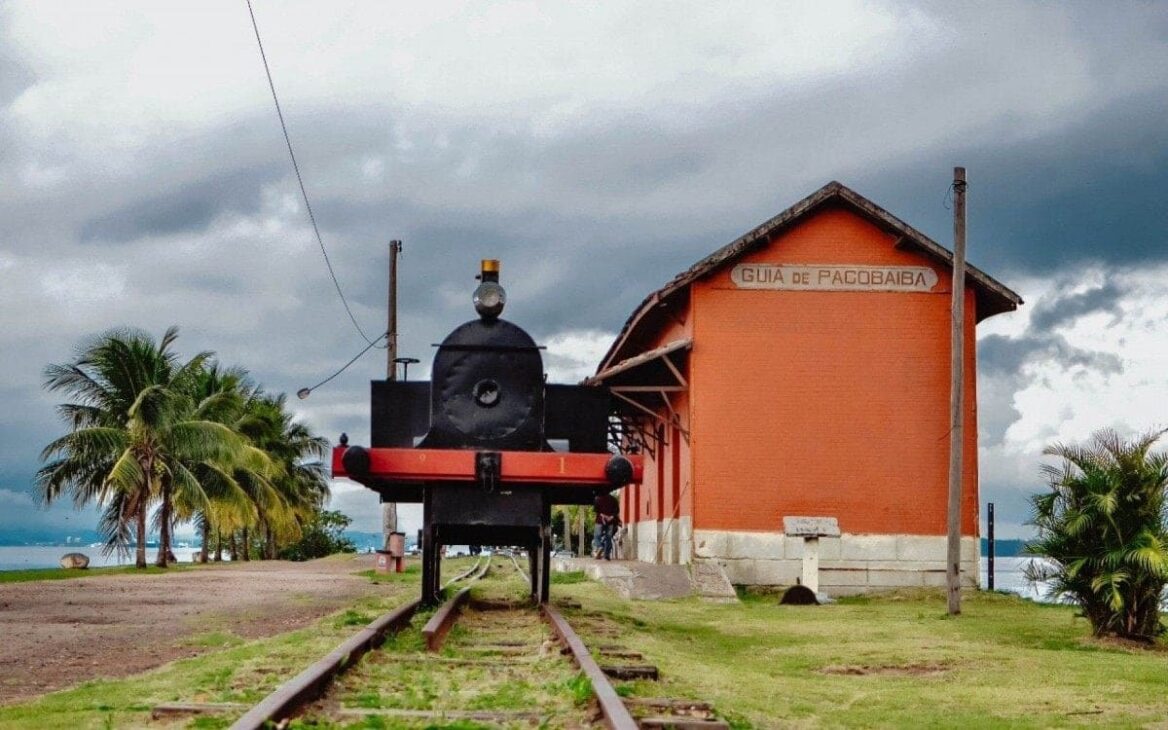
The original station, in Guia de Pacobaíba (Magé), is in ruins. It was declared a historical heritage site in 1954, during the centenary of the railway, but has suffered from neglect.
For a time, a small railway museum operated there. However, the site was closed in the 1970s, and the collection was transferred to the Engenho de Dentro neighborhood in Rio de Janeiro, where the Train Museum now operates.
The Baroneza locomotive has been restored and is on display in this museum. It is considered one of the oldest steam locomotives in the world still preserved.
A Legacy That Endures
Even without operating as it did in its glory days, the Mauá railway remains present in Brazilian history and culture. It was the first step towards industrialization and the integration of the country.
The Brazil of railways was born there, on the shores of Guanabara Bay, with an English locomotive pulling the train of the future.
And although the tracks have rusted, the memory remains alive — as a sign that progress is possible, even in the face of challenges.






A maior **** que se fez neste país foi acabar com a malha ferroviária. Em vez de modernizar o que ja havia e aumentar para alcançar mais destinos, simplesmente foi destruida. Um país do nosso tamanho e com uma população com poucos recursos ganharia enormemente com uma malha ferroviária funcionando tanto para transporte de todo tipo de material quanto de pessoas que seria mais acessível e econômico. Não dependeríamos tanto do petróleo para a distribuiçao de mantimentos e transporte de passageiros tornando-os mais econômicos. Enquanto isso na Europa a malha ferroviária só faz crescer e se modernizar, agora o trajeto do túnel por baixo do Canal da Mancha além da França chega também a Holanda e a Bélgica.
Somos réfens do petróleo para a distribuiçao de bens e agora com a guerra e a subida do preço do barril certamente rezemos um aumento do preço dos combustíveis e dos alimentos. Graças a interesses políticos que na época queriam instalar e desenvolver a indústria automobilistica, destruíu-se a existente malha ferroviária quando poderia-se ter mantido as duas coisas.
Moro nessa região de tantas histórias da época imperial que poderia ser mais exploradas e contadas nas escolas.
Errata,o trem atual tem duas linhas: uma de Saracura até Raiz da serra e outra de Saracura até Guapimirim