





 Portuguese
  English
  Spanish
  5 min of reading
  0 comments


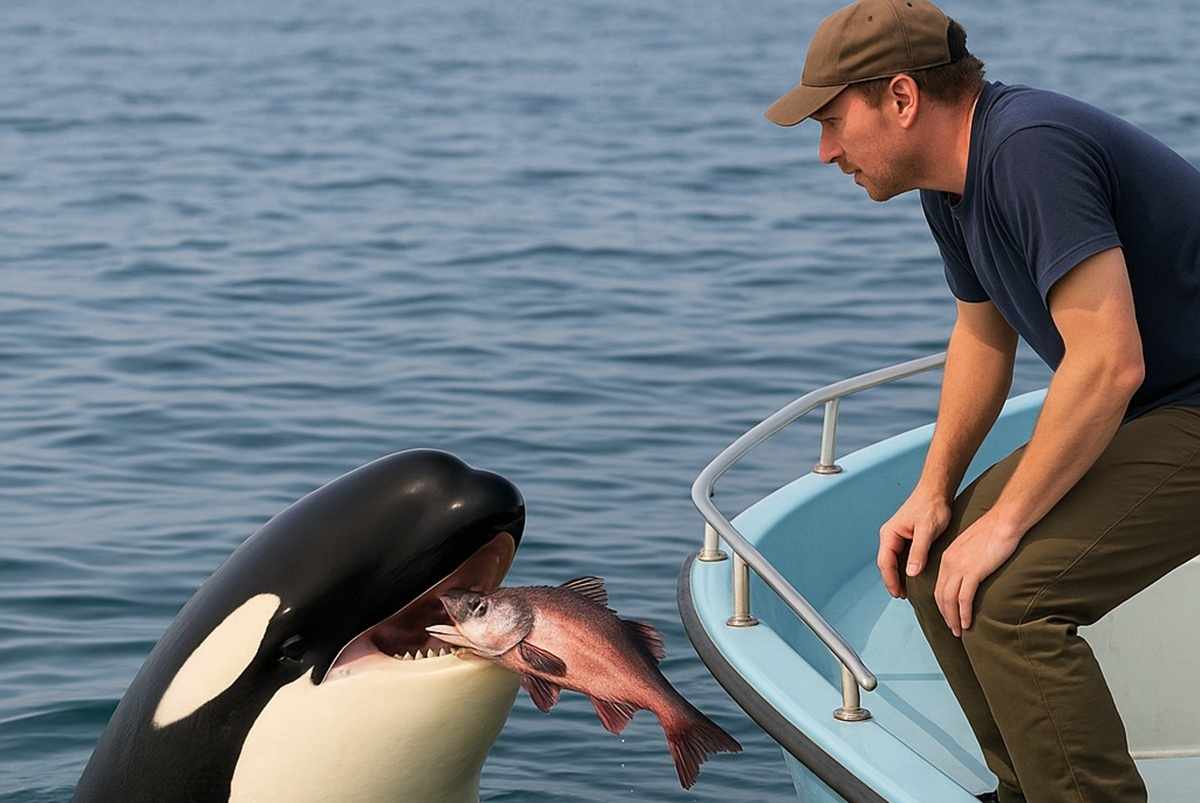
Wild Orcas Have Surprised Researchers by Offering Prey to Humans, a Gesture That May Reveal an Attempt to Create Bonds Between Species.
On an afternoon in 2015, researcher Jared Towers was navigating off the coast of Alert Bay, British Columbia. He was observing orcas feeding on seabirds when something unusual happened. Akela, a young female orca, surfaced with a soft bird in her mouth.
She swam up to Towers, placed the bird near him, and remained still. Then, her brother, Quiver, repeated the gesture. They both watched the human for a few moments, took the birds back, and swam away.
The scene raised an immediate question: did that really happen?
-
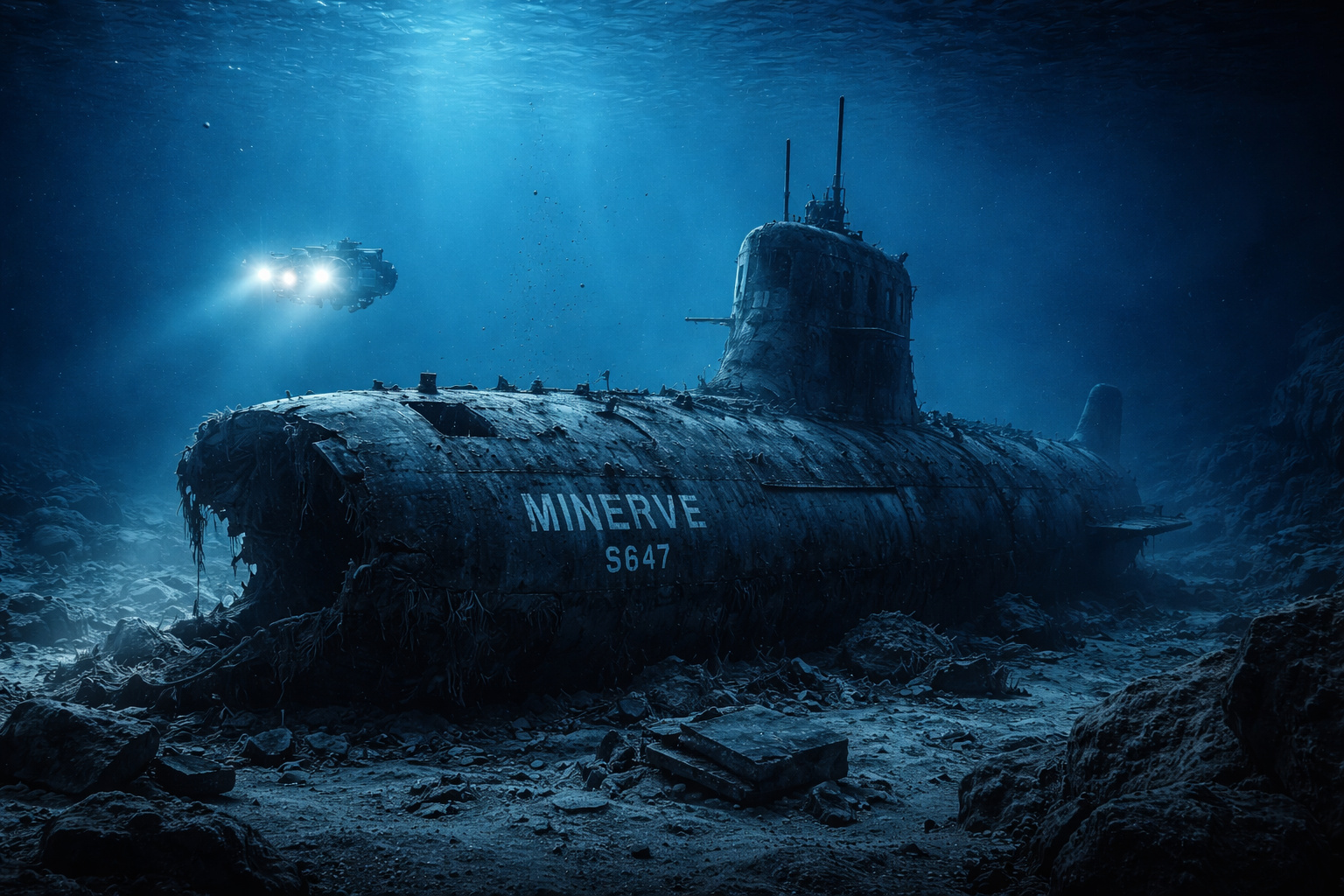
Few remember, but the submarine that disappeared in 1968 with 52 crew members was found after 51 years at the bottom of the sea at more than 2,000 meters, intriguing the entire world.
-
With 1,200 tons suspended, the Japan mega-structure in a grid shape with a floating sphere from Fuji TV features two 25-story towers connected by elevated walkways, titanium panels, and impresses the world with its ability to reduce wind impact.

-
The village where two rivers run side by side without mixing in Santarém and Alter do Chão reveals some of the most beautiful freshwater beaches on the planet.

-
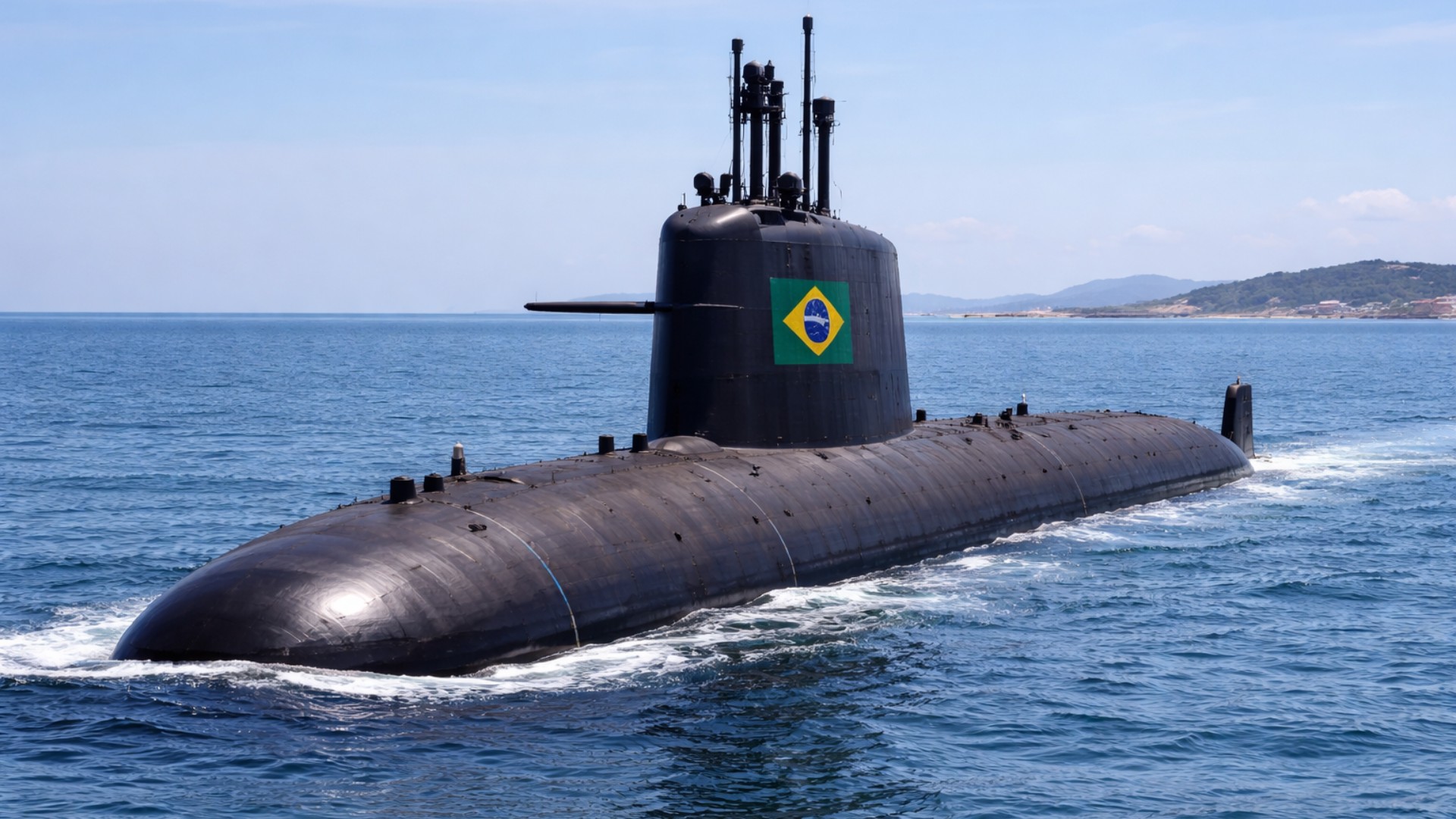
Brazil’s nuclear submarine with a speed 5 times greater than normal advances after nearly 50 years and R$ 40 billion spent.

Since then, Towers and his team have been investigating this type of behavior among wild orcas.
Gift or Experiment?
Towers teamed up with researchers Ingrid Visser from New Zealand and Vanessa Prigollini from Mexico.
The group recorded 34 similar episodes between 2004 and 2024.
The situations followed strict criteria. The orca had to approach voluntarily, release an item — usually a freshly caught prey — and wait for the human’s reaction.
The offerings were not simple. In one case, a young male in New Zealand carried a stingray on his head.
In another, a Norwegian orca offered a jellyfish to a diver.
In total, 18 different species were delivered, including rays, birds, sea turtles, seals, and even part of a gray whale.
Even with refusals, the whales did not give up. In 76% of the interactions, they retrieved the item after the human refusal.
Some even tried to offer again. For Towers, this shows that the orcas were testing, exploring, perhaps learning.
Altruism or Curiosity?
Orcas are marine mammals known for their intelligence and social behavior.
They live in cohesive groups, share food, and use team hunting strategies.
This social structure includes knowledge transmission, such as vocalizations and hunting techniques — what scientists call cetacean culture.
Sharing with humans, however, is rare in the animal kingdom.
The study suggests that these interactions may be signs of “generalized altruism,” when an animal performs an act of generosity with another species, without an apparent gain.
Other animals have demonstrated this type of behavior, such as some primates, dolphins, and birds.
Lori Marino, a neuroscientist at New York University, points out that orcas may be projecting onto humans the same goodwill they express among themselves.
Recognition of Consciousness
Some scientists suggest that orcas may be recognizing humans as conscious beings.
This refers to the “theory of mind,” meaning the ability to understand that others have their own thoughts and intentions.
This ability develops in humans during childhood but has also been observed in chimpanzees, magpies, and dolphins.
If orcas are indeed practicing intentional acts of interaction, this may indicate that they also belong to this select group of animals with complex cognitive abilities.
Why Now?
Orcas are predators with varied habits. Some hunt fish, others seals or sharks.
Some even attack whales. Often, leftovers remain after the hunt. This creates opportunities to use the remains in social experiments, according to Towers.
Curiosity seems to be the main driver. In 97% of recorded cases, the orcas observed human behavior after the offering.
When the item was returned, some whales insisted, re-presenting the offering.
The behavior does not seem to be linked only to feeding, but to a learning process. The delivery of the prey may be a way to reduce uncertainties about the other, provoke reactions, and generate mental stimulation.
Differences Between Groups
Not all orca populations exhibited this behavior. The recorded cases came from groups that hunt at the surface and rely on vision. Offers were not observed in groups that hunt at the ocean floor using echolocation.
This suggests that visual cues and social play play an important role in these interactions. In 38% of the records, the whales were playing with the prey before delivering it. They flipped, tossed, and spun the items in the air or water.
The profile of the orcas varied: adults, juveniles, and even calves. Some offered more than once, raising the hypothesis that this may be a learned behavior, perhaps transmitted through generations.
A New Cultural Trait?
Many of the whales that participated in the interactions belong to the same matrilineal groups — female-led groups based on family bonds. This reinforces the possibility that the behavior is cultural, emerging within certain groups and spreading through observation and repetition.
Towers considers this hypothesis quite plausible. The offering of prey, in this context, may be more than play: an attempt at relationship, a way of experimenting with bonds between species.
Encounters with Humans
Orcas are not newcomers to interactions with humans. In the past, they have helped Australian whalers catch bowhead whales in exchange for leftovers. They have also learned to steal fish from fishing lines or damage boats.
But the gesture of offering, directly and seemingly intentionally, is new.
The study’s authors propose that this may represent a combination of behaviors: culture, curiosity, learning, and bond building. However, they also issue an important warning.
Caution Without Romanticizing
Despite the intriguing nature of these encounters, scientists urge caution. Orcas are powerful, unpredictable, and wild animals. Misinterpreting gestures or trying to encourage these interactions can be dangerous.
Still, the events should not be ignored. They may represent a new form of cognitive connection between two very different but equally complex species.
Towers avoids definitive conclusions. But he remains attentive to the signals.
“It’s not always easy to interpret what an orca is thinking,” he says. “But when one swims up to you and drops a seal at your feet, it’s hard not to feel like she’s trying to say something.”
The findings were published in the Journal of Comparative Psychology.







-

-

-

-

-

12 pessoas reagiram a isso.