





 Português
  Inglês
  Espanhol
  6 min de leitura
  0 comentários


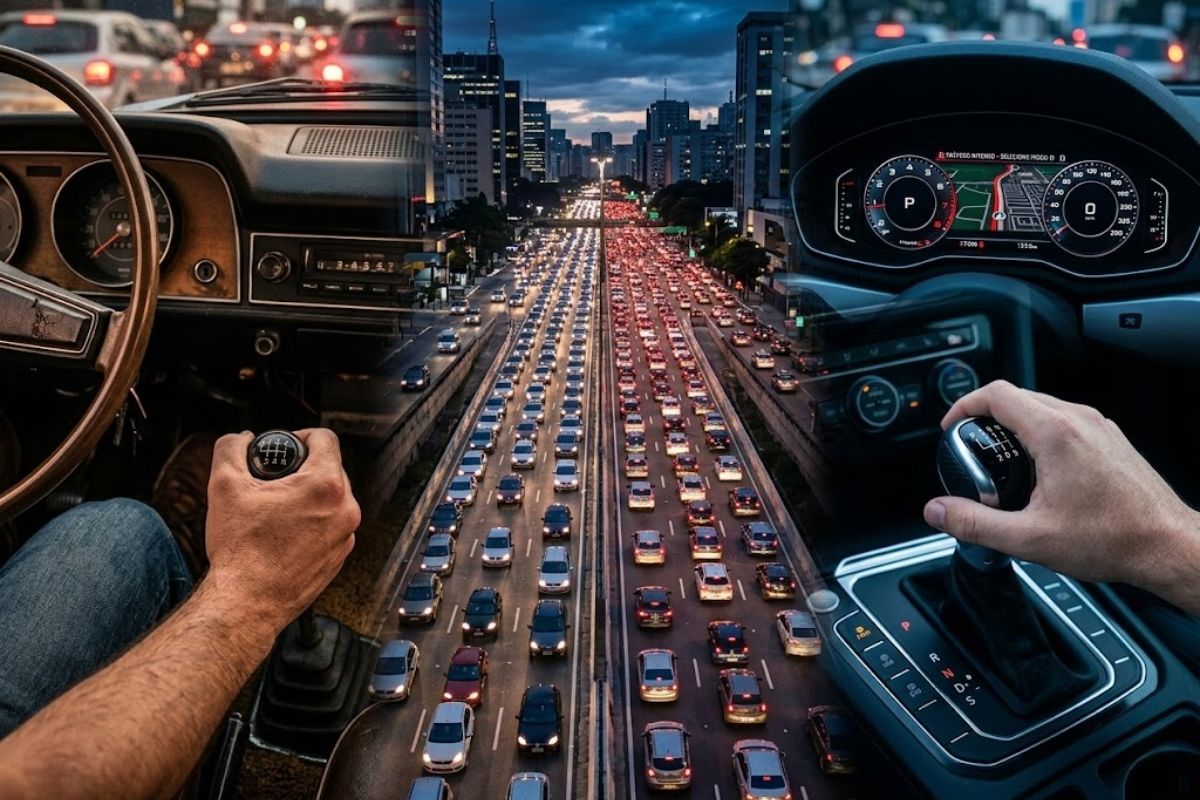
The Rise of Automatic Transmission Over Manual Transmission in Brazil Reveals a Profound Change in the Car Market Driven by Traffic Jams, Technical Evolution, and New Driver Habits, While Manufacturers Reduce Mechanical Versions and Make It Clear That the Old Preference Has Lost Strength Even in the Most Popular Segments of the Country.
The manual transmission is losing ground in Brazil in a movement that has already redesigned entire markets and is now also altering the supply of cars for different profiles of drivers. The shift gained momentum with the expansion of automatic transmission, which has ceased to be a luxury item and is now at the center of buying decisions.
In the United States, where automatics represent about 99% of the models traded and only 18% of drivers can drive manual cars, this process seems almost complete. In Brazil, the change has been slower but reached a clear milestone when, in 2019, sales of automatic transmission surpassed those of manual transmission, consolidating a transformation that had already been maturing.
When Did Manual Transmission Stop Being the Majority?
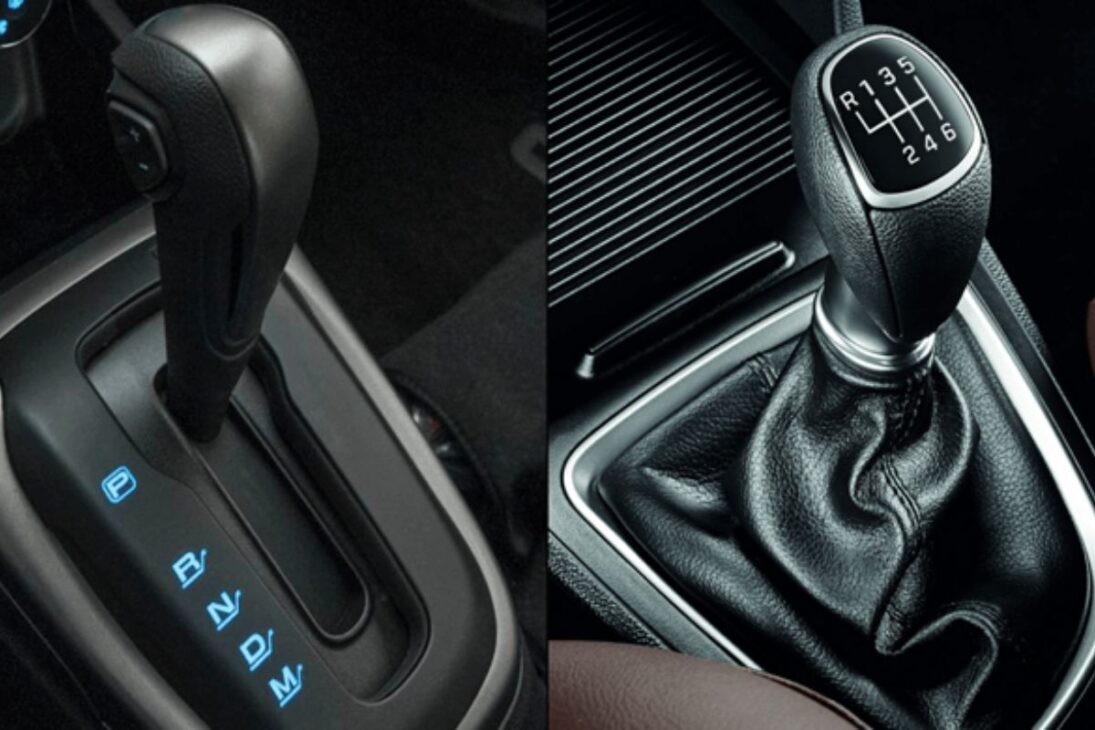
For many years, manual transmission dominated the Brazilian market because it was cheaper, more familiar, and more compatible with a fleet accustomed to mechanical simplicity.
-
With awards in various countries, the Jaecoo 7 is establishing itself globally and accelerating the expansion of Omoda & Jaecoo in the hybrid SUV market.
-
5 cheapest used cars than a Honda CG 160 Titan 0 km, with options starting at R$ 13,000 for those who want to trade their motorcycle for a car and escape the rain, sun, and risks of riding.

-
Around R$ 24,000: 4 used Ford SUVs with up to 253 hp, V6 engine, all-wheel drive, 7 airbags, panoramic sunroof, and a complete package that surprises with its price and performance in Brazil.
-
A brand new car starts at around R$ 75,000 in Brazil, but what stands out the most is seeing streets filled with SUVs and expensive sedans in a country where millions remain in debt.


This scenario began to change more visibly when automatic transmission stopped being restricted to the more expensive cars and started appearing in more affordable versions.
The change did not happen all at once, but it became structural.
The shift became concrete between 2019 and 2020 when automatic transmission began to account for the majority of sales in Brazil.
In the first half of 2022, 63.5% of cars traded already had automatic transmission.
In segments such as medium hatches, sedans, and SUVs, the share of manual transmission shrank even further, and among SUVs, 94.8% of sales in the first five months of 2022 went to automatic models.
The market has stopped viewing the automatic as an exception and has begun to see the manual as a niche.
From Expensive Solution to Popularized Technology in Brazil
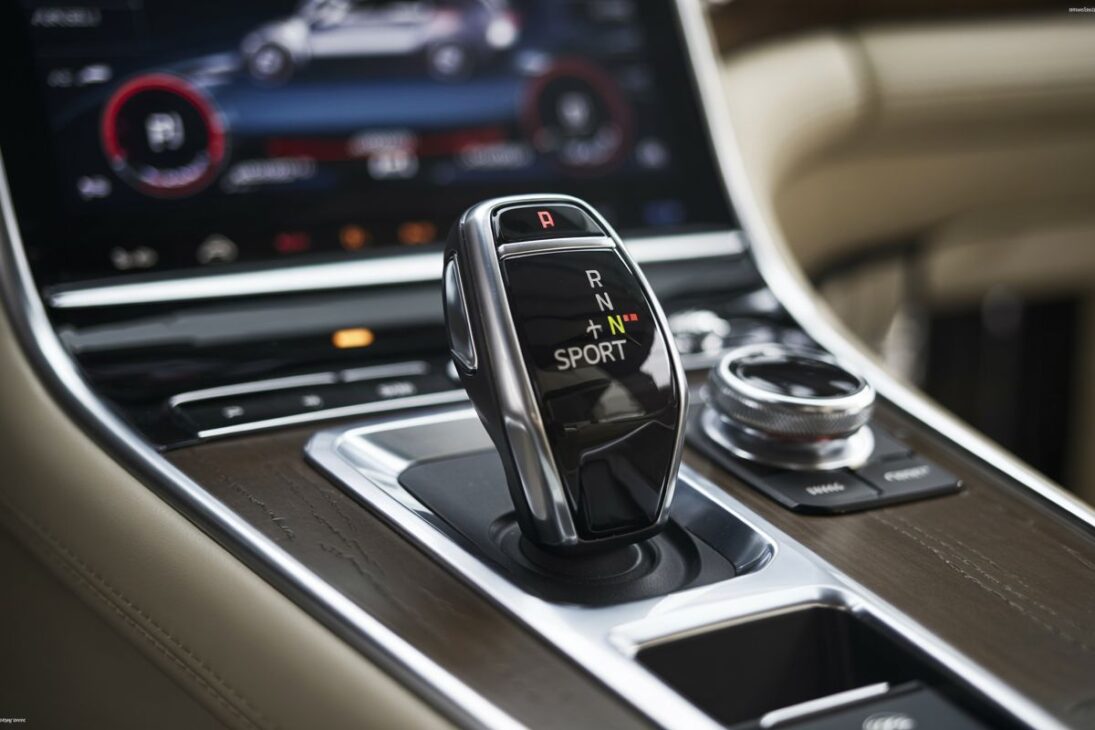
The trajectory of automatic transmission did not start as a mass phenomenon.
According to the National Association of Inventors and journalist Fernando Morais, two Brazilians, José Braz Araripe and Fernando Lemos, created a system called Hidramático, based on the hydraulic activation of the gearbox, which became commercially viable and paved the way for mass production.
The first car credited with receiving automatic transmission was the Oldsmobile 60 Series, in 1940. Initially, the innovation was technical but still out of reach for most people’s budgets.
In Brazil, the introduction of this solution was slow and marked by high prices, limited availability, and strong association with luxury cars.
Models with automatic transmission were more expensive and circulated as a symbol of sophistication, while manual transmission maintained the image of a rational and dominant option.
The opening of imports in 1990 accelerated the pressure for modernization after a ban that had been in place since 1976.
With more foreign cars in the country and a record US$ 2 billion in imports at the beginning of the second half of 1995, local manufacturers began to react.
It was in this environment that automatic began to cease being a privilege and became the standard.
Why Did Drivers Switch from Manual to Automatic Transmission?
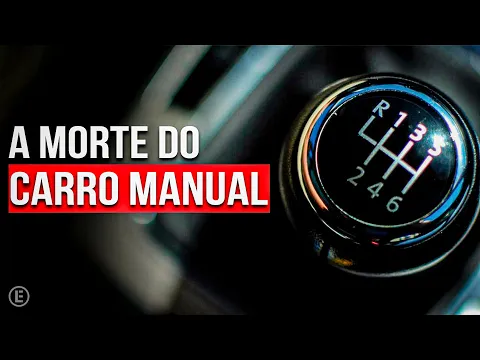

The rise of automatic transmission is linked to a very concrete change in the driving experience.
In cities marked by traffic jams, comfort has gained increasing importance, and many drivers have begun to view cars less as objects of pleasure and more as daily tools.
In this context, eliminating the constant repetition of clutch operation and gear shifting has become a practical advantage. For those facing heavy traffic, comfort stops being a luxury and becomes a criterion for urban survival.
There has also been a technological and cultural change. With more information about maintenance and more efficient automatic gearboxes, some of the prejudice against this type of transmission has lessened in Brazil.
At the same time, younger generations show a different relationship with mobility. According to the cited research by Deloitte, among app transportation users from generations Y and Z in Brazil, 56% question whether they will own a vehicle in the future.
This helps explain why many drivers who still wish to buy cars tend to prioritize practicality over tradition.
Manual transmission has lost ground because the logic of car use has changed.
Where Does Manual Transmission Still Resist and Why Has It Not Disappeared?
Despite the decline, manual transmission has not completely vanished. It retains symbolic and functional value among enthusiasts who associate gear shifting with a more direct connection to the car.
This defense is stronger in sports niches, where some models like Camaro, Mustang, Porsche, and Supra still offer a manual option.
In some cases, precisely because it is becoming rare, manual transmission can even gain a higher resale value.
The scarcer it becomes, the more it becomes an identity.
Still, the industrial trend points in the opposite direction. Ferrari abandoned manual transmission in 2016, and Mercedes has already declared support for its end in higher segments, prioritizing more profitable models.
In Brazil, the reduction in supply follows this logic and also extends to the regulatory field. Senator Eduardo Gomes has presented a bill to allow a driver’s license only for cars with automatic transmission, which, if advanced, could further reinforce the distancing of new drivers from manual transmission.
When the industry, driver training, and daily habits move together, the change gains almost irreversible strength.
Will the Disappearance Be Total or Restricted to Some Markets?
Talking about the immediate extinction of manual transmission would still be premature, but the shrinkage is evident.
What is unfolding is a reorganization of the market in which automatic transmission assumes the majority of cars sold, while manual transmission becomes restricted to specific segments, price-sensitive markets, and consumers who value mechanical control over convenience.
The question is no longer if manual will lose space, but how much space it will still manage to preserve.
The popularization of electric vehicles tends to push this transition further, as this type of vehicle reinforces the logic of simplified driving.
Therefore, the most likely future does not seem to be the instantaneous disappearance of manual transmission, but rather its survival in very specific pockets.
In the short and medium term, Brazil is expected to continue experiencing the expansion of automatics, with cars increasingly shaped by comfort, efficiency, and urban routines. The market talks less about mechanical passion and more about convenience.
In the end, manual transmission is ceasing to be the dominant choice and becoming a personal preference amidst a market that values ease, speed, and less effort in traffic.
Brazil has not reached the stage of the United States, but the signs of migration are already too strong to be treated as a passing trend.
If the trend continues at this pace, the next few years should expand the dominance of automatic transmission and further reduce the presence of manual cars in dealerships and on the streets.
Do you think that drivers will still defend manual transmission as a real market choice, or will it be restricted to a few cars and an increasingly smaller group of enthusiasts?








Seja o primeiro a reagir!