





 Portuguese
  English
  Spanish
  3 min of reading



Pilot Projects Are Vital to Boost 5G in Brazil
Brazil is a country with continental dimensions and there is a significant social and financial inequality that afflicts part of its territory. This impasse also exists in the field of digital infrastructure, which reveals aspects of exclusion, according to the economic development of each region, making the country extremely heterogeneous in relation to the implemented infrastructure.
The Arrival of New Technologies
The implementation of new technologies can change the reality of more remote regions, a decisive factor for this being the deployment of the 5G internet network in Brazil. The auction for the concession of operation in the 5G frequency bands took place on December 4 and 5, 2021, and the deployment of the 5G network in all capitals was expected by July 31, 2022. However, on June 2, 2022, ANATEL extended the deadline for deployment in the capitals to September 29, 2022.
The significant impact that is expected to occur in the country’s infrastructure has a maintained schedule, which establishes the entry of operations in other regions beyond the capitals gradually until 2029.
-
Astronauts from Artemis 2 flew over the side of the Moon that is never visible from Earth and found mysterious formations with such intense brightness that they appeared to be covered in snow.

-
Commercial satellites captured images in the Taklamakan Desert of giant replicas of US aircraft carriers and destroyers, with tracks and precise impact craters, deliberately exposed to demonstrate power and change the global naval game.

-
Motorola launches Moto G Stylus 2026 with a 5,200 mAh battery and 120 Hz OLED display; check out the price, technical specifications, and news.

-
A new technology in China looks like a giant tower, but it is used to store energy and provides 4 hours of electricity.
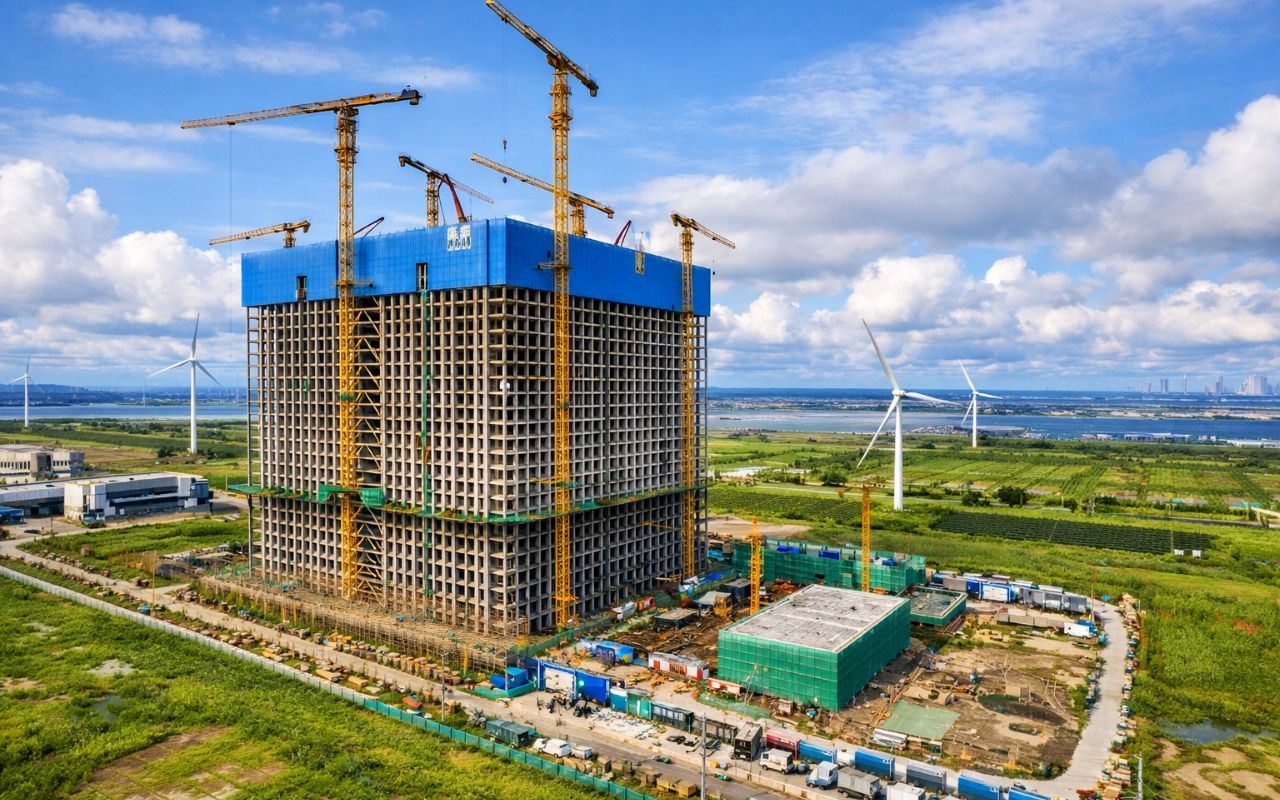
The 5G technology will increase connection speed and reduce latency (response time); the network is designed to connect practically everything (phones, vehicles, computers, and even machinery) in a wireless network.
Moreover, 5G technology will change the world we live in; the difference between 4G and 5G is enormous, and we should see significant advancements in areas such as telemedicine and autonomous cars. The biggest difference between the technologies lies in response time (latency), which can allow for efficiency in remote surgeries in telemedicine, an area that cannot tolerate errors. Additionally, it will enable the full functionality of autonomous cars that require a high level of connectivity, given the volume of data that needs to flow at the highest possible speed with the data center.
New Investments
The level of long-term investment in infrastructure is expected to increase considerably in the more remote regions of the country, bringing development and the need for new demands. One cannot envision a future with autonomous cars and 5G networks on deteriorating roads and without electricity, as is the case in some more distant cities in the country, such as Assis Brasil and Manoel Urbano, both located in the state of Acre, according to data from the National Household Sample Survey (Pnad) in 2018.
The digitalization of the infrastructure sector has contributed to a higher quality of structured projects and greater accuracy when it comes to implementing a project.
According to IDC, by 2023, digital infrastructure will be the fundamental platform for all IT and business automation initiatives everywhere. Such technology needs to enable seamless data and operations exchange between edge and core ecosystems.
Acceleration of Projects
One of the main outcomes of these implementations is the ability to accelerate projects that would normally take a long time to come to fruition and even longer to be actually realized. Tools such as artificial intelligence, Big Data, cloud solutions, and CRM were far from the reality of many companies.
Nowadays, they are essential for their operation and to remain relevant in the market. Revisiting old structures shows us how far we have come in this scenario. Today, it is possible to find equipment that allows for this.
Credits: Luciano Machado — Partner at MMF Projetos, civil engineer from Universidade Presbiteriana Mackenzie, with an MBA in business management from Fundação Getúlio Vargas (FGV), Specialist in Geotechnics from Instituto Brasileiro de Educação Continuada (INBEC), and Philosopher from Universidade Cruzeiro do Sul.





Seja o primeiro a reagir!