





 Portuguese
  English
  Spanish
  5 min of reading
  3 comments


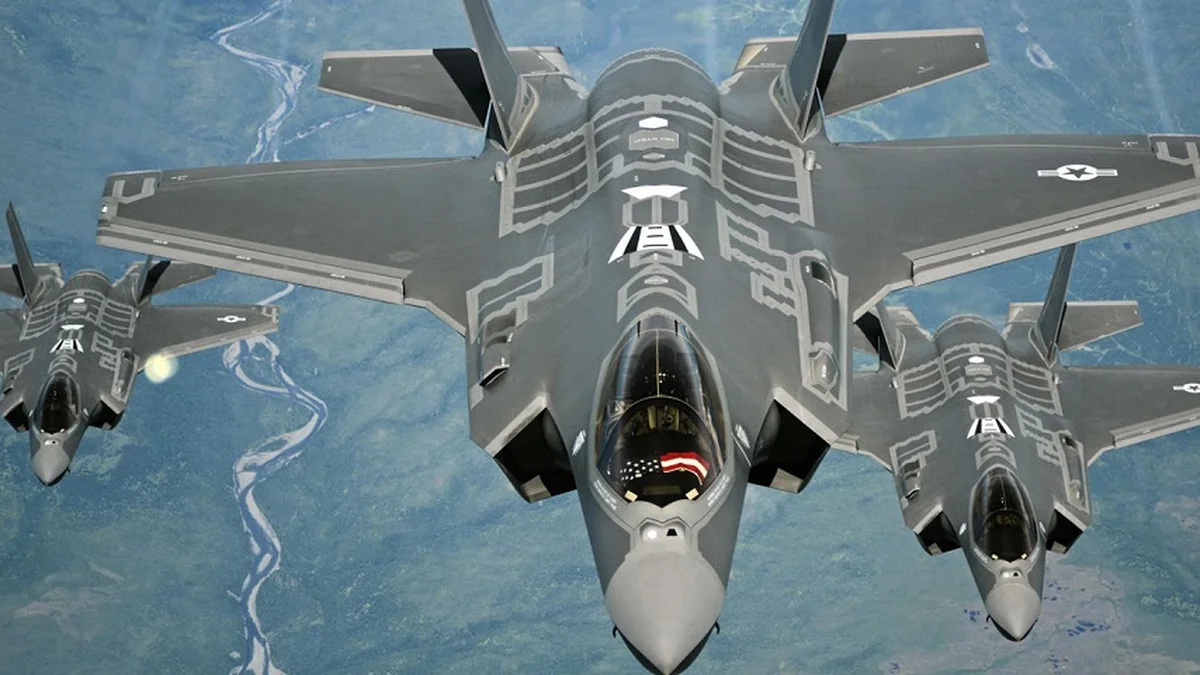


Update With AI on the F-35 Promises to Shorten the Time Between Identifying Suspicious Signs and Reacting in Flight, in Tests Released by Lockheed Martin. Demonstration at Nellis Focuses on Classifying Emitters and Rapid Recharging of the Model, Without Detailing Autonomous Weapon Use.
The United States tested in-flight a capacity of artificial intelligence integrated into the combat identification system of the F-35, with the stated goal of reducing the time between detecting suspicious signals and classifying them during the mission.
The demonstration, released by Lockheed Martin under the name Project Overwatch, took place at the Nellis Air Force Base in Nevada.
According to the company, the proposal is to accelerate the pilot’s decision-making in electronic warfare scenarios where the environment changes quickly.
-
A startup sends robotic gloves for users to wear at home while washing dishes, folding clothes, and making coffee; every finger movement is recorded and sent back to train a domestic robot that has already learned 10 million real tasks without ever having entered a kitchen.

-
In a flooded well, archaeologists found a 1,700-year-old Roman egg that still contains clear and yolk intact inside the very thin shell.

-
Something is happening around the Earth: Inside the huge explosion of fireballs in 2026

-
A hot air bubble coming from Argentina expands over Brazil, causing thermometers to exceed 38 degrees with a thermal sensation of 40 degrees in late March, affecting 6 states at once.


The test was not presented as an “autopilot” capable of deciding independently on the use of weapons.
From the information released, the initiative focused on identifying and classifying emitters in the electromagnetic spectrum, with the support of an AI model aimed at reducing ambiguities and updating the system’s learning more quickly.
Test at Nellis and What Project Overwatch Put to the Test
At the center of the demonstration was a recurring operational problem: the speed at which onboard systems can recognize signals that do not immediately fit expected patterns.
In practical terms, radars and transmitters can appear with different parameters, operate in unusual modes, or vary patterns to make it more difficult for the adversary to read.

During the tests, according to Lockheed Martin, the algorithm was integrated into the F-35 identification system and generated independent classification, displayed directly on the pilot’s interface.
At the same time, the reading from the traditional system remained visible, which, according to the company, allows for comparing indications and reducing delays in the decision-making process in flight.
Another point described was the update flow.
After the mission, engineers labeled new emissions, retrained the model in a few minutes, and uploaded the updated version still within the same planning cycle.
The company states that this shortening of the process can accelerate adaptation to unforeseen signals.
Threat Libraries and the Bottleneck of Electronic Warfare
The evolution of combat aviation, from the end of the 20th century to the present, has increased the integration between sensors, data links, and information fusion systems.
Still, part of the performance in electronic warfare depends on databases with signatures, parameters, and patterns of emitters, which need to be maintained and revised to support identification and response.
When an unknown signal appears, the system may point out the anomaly, but detailed interpretation often requires subsequent ground analysis.
In many cases, this involves reviewing records, comparing parameters, and updating files so that the aircraft can recognize that pattern more accurately in subsequent missions.
This dependence on update cycles can become more sensitive in scenarios where air defense systems vary frequencies, modes, and emission routines to reduce predictability.
In this logic, the greater the difference between what the aircraft encounters and what is cataloged, the greater the effort required for identification tends to be.
What Changes for the Pilot: From Detection to Classification in Flight
By shortening the identification phase, the company claims that the pilot can receive clearer signals about what is in the environment and, with that, gain time to decide.
In practice, faster classification can influence route choices, altitude, and entry profile in defended areas, in addition to guiding the use of self-protection resources and electronic warfare.
The workload inside the cockpit is also taken into account.
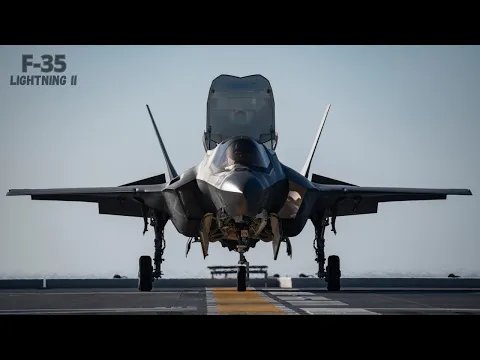

In a contested environment, the pilot needs to deal with alerts, threat prioritization, and navigation, in addition to coordinating actions with other platforms.
Lockheed maintains that a system capable of reducing ambiguities tends to alleviate some of that pressure, at least in the signal interpretation component.
This type of initiative is often associated with the concept of “cognitive” electronic warfare, a term used to describe approaches that employ automation and learning models to interpret the electromagnetic spectrum and adapt classifications more quickly.
However, what has been released so far refers to identification and model updates, and not to a complete package of automatic actions in combat.
“Holy Grail” and the Limits of What Has Been Released About Autonomy
The public description of Project Overwatch, as presented by the company itself, is centered on the ability to classify emissions and accelerate updates to the system’s knowledge, and not on authorizing engagement or executing autonomous weapon use.
Thus, the “autonomy” associated with the test refers to data processing and identification in a shorter operational time, with rapid model recharging for subsequent flights.
Issues such as rules of engagement, command chain, validation, and limits for automated decisions on the use of force do not appear as part of the scope described for this demonstration.
Still, the reduction in identification time can have practical impacts on how a mission is conducted, especially when the objective is to reduce uncertainty and increase the margin for reaction.
From this perspective, the reported advancement relates to the pace of the “detect, classify, and act” cycle, without it necessarily meaning that the F-35 has begun to operate with autonomous lethality.
Modernization of the F-35 and the Connection With System Updates
The F-35 is undergoing a continuous trajectory of modernization, with planned software and hardware updates in phases, including in packages associated with Block 4.
In general terms, this type of update seeks to enhance processing, integration, and capabilities in sensors and electronic warfare, among other items.
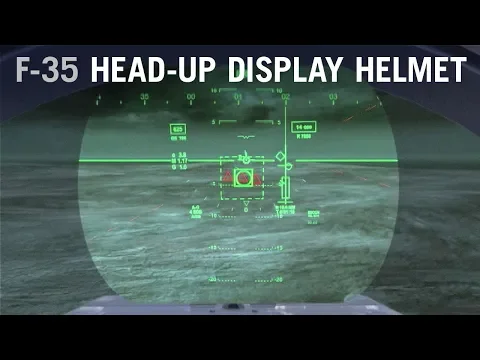
Project Overwatch, as reported, serves as a demonstration method within this context: using an AI model to accelerate identification and reduce the gap between what was observed in mission and what can be incorporated into the system in the next planning.
The proposal, according to the company, is to bring the update closer to the operational environment, reducing dependencies on long cycles.
What Is Still Needed to Become Operational Routine
Although the test was presented as successful, turning a rapid retraining flow into operational capability involves steps for validation and control.
In military systems, certification, security, and version management processes are used to prevent that rapid changes lead to unforeseen effects, especially in high-risk environments.
Additionally, there is a difference between recognizing an emitter more quickly and “knowing what to do” automatically.
Faster identification can guide countermeasures and tactical decisions, but it does not equate to a system that decides on its own to engage a target.
What has been released so far points to a gain in the classification and updating stage, without detailing automations at more sensitive levels.









Essa plataforma de notícias fica o tempo todo mostrando notícias dos eua mas, não mostra nada sobre o Brasil! Poderiam prestar algum tipo de serviço ao povo brasileiro sobre as coisas boas que ocorrem no Brasil. Só sabem lamber botas dos EUA. Pelo amor de Deus! Sejam mais patriotas!
Os F-35 Lightning II Versões A/B/C, são as melhores aeronaves já criadas na face da terra, não por ser de fato a melhor aeronave em tudo, em testes gerais de Combate corpo à corpo, perdeu para alguns 4.5ª Geração em simulações como Eurofighter Typhoon, Rafale e F-2 (Viper Zero) Mitsubishi e provavelmente pode perder para o F-39 Gripen E/F ou F-16 Fighting Falcon (Viper) 4.5ª e F15EX 4.5ª Geração também ou mesmo os 5° Geração Sukoi SU-57 ou F-22 Raptor mas, o que faz desta aeronave, o Caça F-35 Lightning II tão formidável e uma máquina de Combate que se supera e supera os adversários sempre mesmo depois de tudo o que eu falei?
1° É um programa que foi iniciado com falhas mas feito para evoluções constantes em parceria conjunta de desenvolvedores em um projeto de programa conjunto entre 17 Países onde os mesmos, acumulam horas de voos e aprimoram estes Super Caças F-35 Lightning II que aprendem com seus sistemas de Inteligência Artificial e compartilhamento de dados.
2° Este programa tem o Japão como principal aliado tecnológico e como o Segundo maior comprador depois dos EUA, e hoje, Até hoje, 2 de março de 2026, a Lockheed Martin já entregou aproximadamente 1.300 aeronaves F-35 no total para clientes globais.
3° Recorde em 2025: A empresa encerrou o ano de 2025 com um recorde histórico de 191 caças entregues, superando a meta anterior de 142 unidades.
4° Frota Global: Em janeiro de 2026, a frota mundial ultrapassou a marca de 1 milhão de horas de voo.
4° Entregas em 2026: Novas remessas começaram a ser processadas a partir de janeiro sob os contratos dos Lotes 18 e 19, que preveem a entrega de mais 296 aeronaves nos próximos anos.
5° Status Tecnológico: A maioria das entregas atuais já inclui a atualização TR-3 (Technology Refresh 3), embora testes operacionais completos para essa versão estejam previstos para serem concluídos em meados de 2026.
6° As atualizações estão disponíveis para todas as aeronaves numa transmissão de dados entrelaçados entre cada uma das unidades que aprendem como atuar colocando elas no Topo.
7° Por mais que os F-22 Raptor são tratados como os tais por muitos, ou o SU-57 como o caçador de 5° Geração, os F-35 tem tudo o que precisam para lutarem com quaisquer coisas devido ao processo de produção, programas conjuntos com os 17 Parceiros, imensa quantidade numérica de aeronaves, muitas horas de voos e missões e atualizações constantes.
Caramba! Os EUA estão precisando de um jato nesse formato: reune tudo em uma só carcaça. Assim os chineses não precisarão ocupar muitos monitores, pois apenas um radar pode degustar, digo, desligar as luzes do palco..