





 Portuguese
  English
  Spanish
  6 min of reading
  0 comments


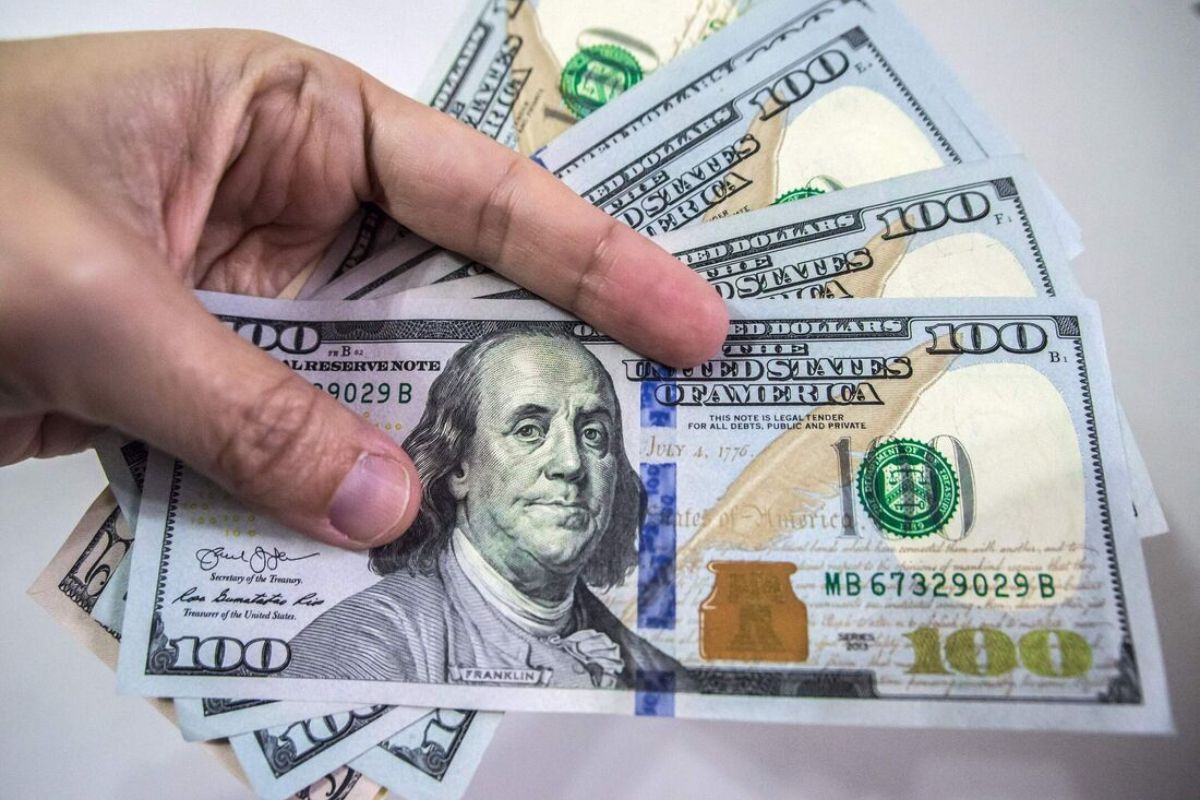
US Created Federal Rules for Payment Stablecoins, Prohibiting Interest and Forcing Reserves in Public Securities, in a Move to Contain Deposit Flight and Reshape Control.
The US Reprograms the Dollar has become an expression used to describe a shift in power, not just technology. The central concern is that stablecoins, by growing as a payment method and also as interest-bearing savings, may compete with the Treasury and banks, draining credit funding.
The response presented is the GENIUS Act, a federal law aimed at payment stablecoins. The logic described is straightforward: if stablecoins become an interest-bearing savings substitute, they can displace bank deposits and threaten the machinery of debt and credit that sustains the American economy.
Why Stablecoins Have Become a Problem Within the Debt Structure


The report maintains that the risk is not just in dubious transactions or in storing money out of the government’s reach.
-
Larger than entire cities in Brazil: BYD is building a 4.6 km² complex in Bahia with a capacity for 600,000 vehicles per year, but the discovery of 163 workers in conditions analogous to slavery has shaken the entire project.

-
With an investment of R$ 612 million, a capacity to process 1.2 million liters of milk per day, Piracanjuba inaugurates a mega cheese factory that increases national production, reduces dependence on imports, and repositions Brazil on the global dairy map.

-
Brazilian city gains industrial hub for 85 companies that is equivalent to 55 football fields.

-
Peugeot and Citroën factory in Argentina cuts production by half and opens a layoff program for more than 2,000 employees after Brazil drastically reduced purchases of Argentine vehicles.


The most important point would be the relation to the United States’ debt.
The narrative asserts that the United States is heavily indebted in relation to GDP and has an advantage from issuing the currency that structures international exchanges.
In this scenario, dollar-backed stablecoins could become a private instrument for “parking” value, especially if they offered yields above the American interest rate.
The described consequence is a shift in demand.
If people and companies migrate from the traditional system to interest-bearing stablecoins, the Treasury loses its base and banks lose deposits, especially in a system where credit relies on constant funding.
What Are Stablecoins in the Report and How They Grew Outside of Regulation
Stablecoins are presented as digital currencies created by private companies to circulate on crypto platforms, promising parity with a real currency, such as the dollar or real.
The described mechanism involves the idea of audited reserves to support issuance.
The report states that this grew with inadequate regulation and that, over time, it began to be used as a means of payment.
However, at the same time, it also began to attract users as a tool to keep value “parked,” especially when there was yield linked to loans, leverage, and operations in the crypto market, with returns above average.
What the GENIUS Act Changes: Stablecoins Without Interest and Without a Savings Face
The GENIUS Act emerges as the axis of the reprogramming.
The central description of the law is a prohibition: stablecoins cannot pay interest or offer any type of yield to those who simply hold them.
The rule has an explicit objective in the report: to prevent stablecoins from competing with American public debt.
The formulation of the argument is that digital money can be a means of payment, but cannot become “interest-bearing savings” that transforms public debt into private debt.
The described practice tries to block the scenario in which stablecoins become popular as an alternative to the Treasury and bank deposits, draining money from the system and putting the dollar and credit at risk.
Stablecoins x Banks: Why Credit Funding Becomes the Sensitive Point
The report delves into banking operations to justify the urgency.
The explanation is that banks are leveraged and depend on deposits to lend, often in amounts greater than the money they received, keeping only a portion as reserves.
The narrative uses the Basel index as a reference to illustrate the logic of reserves and leverage.
The described effect is that, if deposits migrate to stablecoins, the “machine” of credit loses fuel and can enter into crisis.
The conclusion is that it would not only be a Treasury problem, but also an issue for everyday credit, such as mortgages and car financing, which in the report are presented as central to the American economic style.
The Described Turn: From Threat to Tool of the Treasury
The report proposes that regulation transforms the problem into a tool.
The thesis is that by imposing rules, the government does not eliminate stablecoins, but channels their growth to strengthen the United States’ debt ecosystem.
The mechanism described for this is the requirement of viable dollar reserves.
In the narrative, stablecoins need to prove backing to maintain confidence.
And the pointed solution is that, to sustain the backing, issuers need to purchase government securities and keep them in custody.
This changes the flow direction.
Instead of stablecoins taking power from the Treasury, they begin to push capital into American public debt, expanding the system’s financing capacity.
Silent Control: Data, Obligations, and Regulatory Leash in Crypto
Another point described is the government’s change in posture: instead of trying to prevent existence, the government allows it under specific rules and begins to require data and impose obligations, controlling a previously uncontrolled market.
The image used in the report is that of a “leash”: a free market operating, but within a framework that prevents certain practices, especially compensation for holding.
The suggested political-economic effect is to keep the dollar at the center, without needing to create an official stablecoin dollar, but acting as a regulator of the environment where money concentrates.
The Fragile Side Pointed Out: Lower Traceability and Risk of Mass Sale
The report also points out a future risk. Even regulated in issuance, stablecoins would be described as less traceable and less tied to banks than dollars in accounts. This would open space for use outside the traditional tracks.
The hypothetical scenario presented is one of scale: if the market moves from billions to trillions, the economy could coexist with a significant portion of money circulating in stablecoins.
From there, a crisis of confidence, real or manufactured, could trigger a mass sale.
The critical point described is that the reserve would be in public securities.
Thus, a run for redemptions would pressure the sale of American public debt, creating a potentially larger shock, due to the operational simplicity of moving stablecoins at scale.
The Geopolitical Reading in the Report: Swift Loses Exclusivity and the Dollar Gains a New Path
The report mentions the Swift system as a traditional mechanism of control and suggests that stablecoins create an alternative route.
The idea presented is that enemies and countries under sanctions can use this structure to circulate value outside previous tracks.
At the same time, the report insists that there is American interest in facilitating the use of the dollar globally, including to strengthen demand for public debt.
The synthesis is of a United States 2.0 trying to update the economy, creating rules for others to use the dollar more easily and, along with it, buy a piece of the debt.
US reprograms the dollar, in the report, is not a currency exchange.
It is a redesign of incentives: stablecoins can no longer pay interest, stop competing as interest-bearing savings, and begin to operate as a means of payment within a framework that pushes reserves into public securities.
At the same time, the pointed risk of lower traceability and a future rush that pressures the public debt itself remains.
In your reading, is the GENIUS Act more of a brake for stablecoins or a way to expand the dollar through new routes?









-

-

-

-

7 pessoas reagiram a isso.