





 Portuguese
  English
  Spanish
  5 min of reading
  0 comments



Nuclear Exclusion Zone Turned Natural Laboratory for Studies on Wolves, Radiation, and Genetics, with Research Showing High Population Density, Biological Selection, and Possible Clues About Cellular Mechanisms Linked to Cancer, Far From Fanciful Explanations or Monstrous Mutations.
In the exclusion zone created after the 1986 nuclear accident in northern Ukraine, gray wolves have returned to occupy a territory virtually free of human presence.
Recent field studies and genetic analyses indicate that the local population of the species is now significantly denser than in neighboring areas and that these animals show signs of biological selection in genes linked to immune response and cellular protection.
From these observations, the hypothesis arose that the wolves of Chernobyl may offer relevant clues for cancer research.
-
He started running at 66 years old, broke records at 82, and is now a subject of study for having a metabolic age comparable to that of a 20-year-old, in a case that is intriguing scientists and inspiring the world.

-
Oldest tree on the planet reappears after 130 years of searches: Wattieza, 385 million years old, was 10 meters tall and had no leaves or seeds; Gilboa fossils in New York solved the mystery in 2007.

-
A 48-square-meter house assembled in hours with 4,000 bricks made of recycled plastic that does not absorb moisture, has natural thermal insulation, and costs less than 90,000 reais in a complete kit.

-
Luciano Hang revealed that Havan’s air fleet has already accumulated more than 20,000 landings, 10,000 flight hours, and 6 million kilometers traveled, and he says that without the planes, the company would never have grown so quickly.


The scientific dissemination of the topic, covered in detail by the channel Pido Biologia, gained international attention in recent years but also became accompanied by exaggerations and interpretations without direct backing from the data.
The forced removal of people after the explosion of reactor 4 led to the abandonment of entire cities and transformed the region into a large involuntary ecological laboratory.
For decades, it was believed that the area would become a radioactive desert. What has been observed, however, is the opposite.

Without hunting, intensive agriculture, vehicle traffic, or urban expansion, large mammals have begun to occupy the space left by humans.
Deer, wild boars, lynxes, and wolves have expanded their populations, a phenomenon already documented by international reports and independent research.
Human Absence Explains Wolf Explosion in Chernobyl
Research published in the scientific journal Current Biology and reported by The Guardian showed that the density of wolves within the exclusion zone can be up to seven times higher than in nearby natural reserves without radioactive contamination.
This data, often misinterpreted, does not mean that wolves reproduce seven times faster, but rather that there are more individuals per area.
The main factor associated with this growth is the human absence, considered by ecologists to be a much more immediate pressure on fauna than chronic environmental radiation.
This point is constantly reinforced by Pido Biologia, which highlights how human presence tends to be the most limiting factor for large predators.
Hunting, vehicle collisions, habitat fragmentation, and direct conflicts drastically reduce wolf populations almost everywhere in the world.
In Chernobyl, these factors have virtually disappeared.
Scientific Monitoring Reveals Radiation Exposure

To understand how these animals coexist with a contaminated environment, researchers led by Timothy Mousseau and Shane LaChance used GPS collars and dosimeters on wolves in the region.
The equipment allowed them to map movements and estimate radiation exposure over time.
The data indicated that some individuals receive cumulative doses higher than those considered safe for humans, although it is not a uniform or constant exposure.
From a biological standpoint, chronic doses of this type are usually associated with a higher risk of infertility, neurological changes, and the development of tumors.
Still, the monitored wolves continued to hunt, reproduce, and maintain stable populations.
This contrast caught the attention of the scientific community and was widely discussed in reports by the magazine Science and in analyses released by science communication channels, including Pido Biologia.
Wolf Genetics and Cancer Relationship
In 2024, researchers presented preliminary results at a congress of the American Association for Cancer Research, indicating that wolves in the exclusion zone exhibit patterns of gene expression associated with DNA repair mechanisms and immune response.
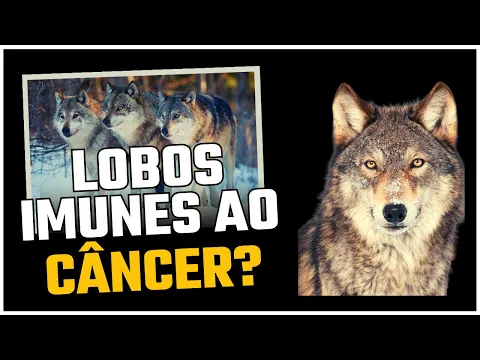

Part of these patterns is similar to those observed in humans subjected to radiotherapy, according to the disclosed scientific summary.
These findings raised the hypothesis that natural selection may be favoring individuals with more efficient cellular systems in protecting against genetic damage.
This is a hypothesis under investigation.
So far, there is no peer-reviewed study proving lower cancer incidence in these wolves or any form of absolute immunity to the disease.
Even Pido Biologia emphasizes that the data point to potential biological resilience, not to evolutionary superpowers.
Genetic Mutations Do Not Create Monsters
Another often distorted point is the concept of mutation.
In biology, mutations are natural alterations in DNA that may or may not have visible effects.
Studies with wolves and other canids in the region did not find evidence of widespread deformities, explosions of mutations, or changes in germ cells indicating chaotic hereditary changes.
The appearance and behavior of these animals are consistent with those of wolves from other regions of Eastern Europe.
What the data suggest is a classic process of natural selection.
Individuals who already possessed genetic variants more favorable for survival in a hostile environment had a greater chance of reaching reproductive age and leaving descendants.
Over nearly four decades, these characteristics have become more frequent in the population.
This interpretation appears in both scientific articles and reports from BBC Science Focus and analyses made by Pido Biologia.
Limits of Science and What Is Still Left to Prove
Answering definitively whether these wolves have less cancer requires long-term monitoring, histological analyses of tissues, and direct comparisons with populations outside the exclusion zone.
Part of this research was interrupted or delayed due to logistical limitations and conflicts in the region.
Without this data, any categorical statement remains speculative.
Still, the scientific interest is legitimate.
Understanding how organisms cope with DNA damage can contribute to research on cancer prevention and treatment in humans.
Nature already offers other examples of species with efficient tumor suppression mechanisms, a recurring theme in journals such as Nature and Science.
The wolves of Chernobyl enter this debate not as ready-made answers, but as one more piece of a complex puzzle, an approach frequently highlighted by Pido Biologia in contextualizing the issue.
If human absence was enough to transform a territory associated with disaster into a refuge for large predators, to what extent are we prepared to separate solid science from sensationalist narratives as new data about these wolves continues to emerge?








-

-

-

13 pessoas reagiram a isso.