





 Portuguese
  English
  Spanish
  4 min of reading
  0 comments


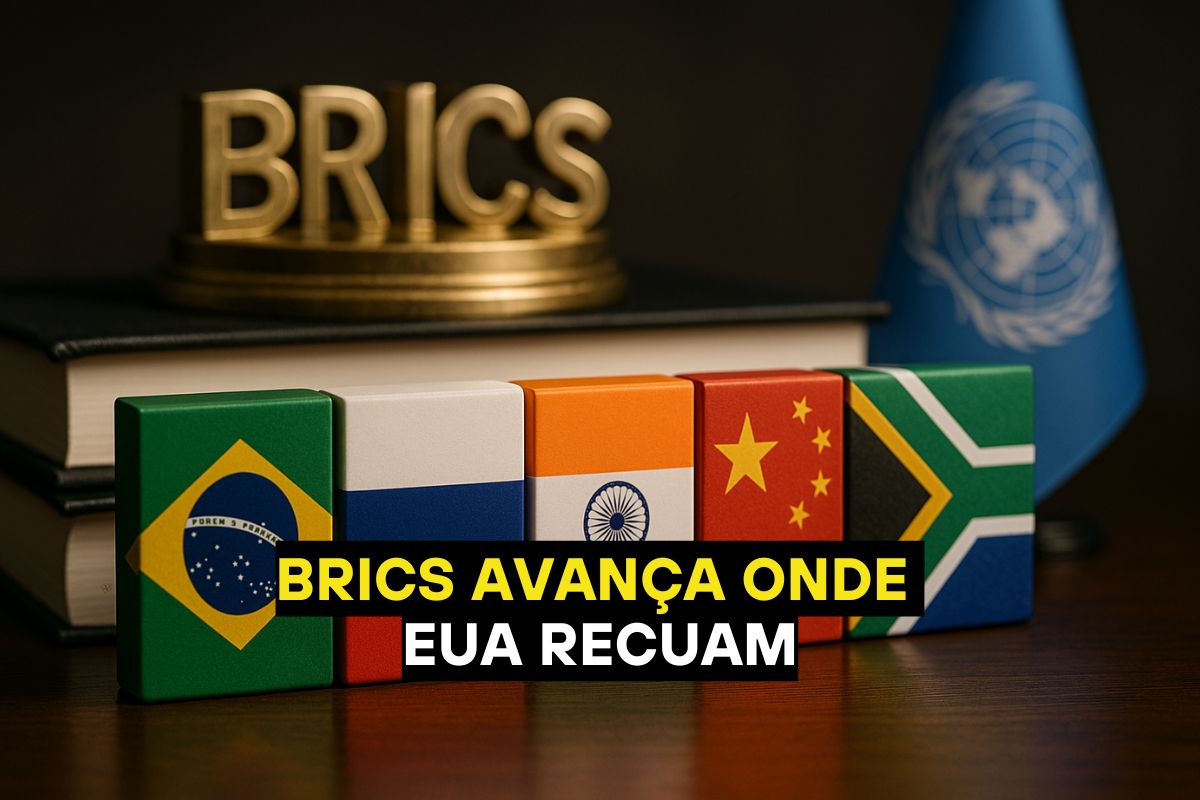
With American Cuts and Political Disputes, BRICS Organizes Itself to Occupy Space in Funding, Voting, and Standard Definitions within the UN
BRICS, now comprising Brazil, Russia, India, China, South Africa, and expanded members such as Egypt, Ethiopia, Indonesia, Iran, and the United Arab Emirates, emerges as a bloc ready to fill the void left by the United States in UN agencies. The shared reading among diplomats and analysts is that, in light of Washington’s retraction, the group’s chance to shape decisions and concepts governing the organization is growing.
This scenario was reinforced by reports presented during a conference in Brussels and behind the scenes at the 80th UN General Assembly in New York. With a more assertive multilateral stance, BRICS countries see the UN as a strategic stage to influence agendas on human rights, funding, and global governance.
What Is at Stake in the UN
The withdrawal of resources and the U.S. distancing from key agencies, including exits from UNESCO and WHO and cuts in peacekeeping, have created unprecedented budget pressure on the system.
-
Larger than entire cities in Brazil: BYD is building a 4.6 km² complex in Bahia with a capacity for 600,000 vehicles per year, but the discovery of 163 workers in conditions analogous to slavery has shaken the entire project.

-
With an investment of R$ 612 million, a capacity to process 1.2 million liters of milk per day, Piracanjuba inaugurates a mega cheese factory that increases national production, reduces dependence on imports, and repositions Brazil on the global dairy map.

-
Brazilian city gains industrial hub for 85 companies that is equivalent to 55 football fields.

-
Peugeot and Citroën factory in Argentina cuts production by half and opens a layoff program for more than 2,000 employees after Brazil drastically reduced purchases of Argentine vehicles.


As the main funder, Washington accounted for a significant portion of the budget; this retreat has forced Secretary-General António Guterres to adopt a cut and layoff plan.
In this vacuum, China and BRICS allies are expanding their financial and political presence.
However, there are operational inconsistencies: Chinese contributions do not always occur on time, raising doubts about predictability; nonetheless, the movement to occupy positions and agendas progresses.
Practical conclusion: those who pay and attend gain power to define priorities.
How BRICS Aims to Occupy Space
More than bringing money, BRICS seeks to redefine parameters.
Human rights advocates warn that Beijing and partners are pushing changes in language and criteria applied at the UN, from the concept of “rights” to the method of monitoring violations.
This spills over into the economy, affecting supply chains, compliance, and investment decisions.
According to conference participants, China integrates human rights into strategic calculations: the topic is treated as an economic and geopolitical variable in the long term.
The 30-year horizon, without frequent electoral cycles, gives BRICS an advantage in organizations where Western countries operate under immediate domestic pressures.
Expansion, Ambition, and Internal Limits
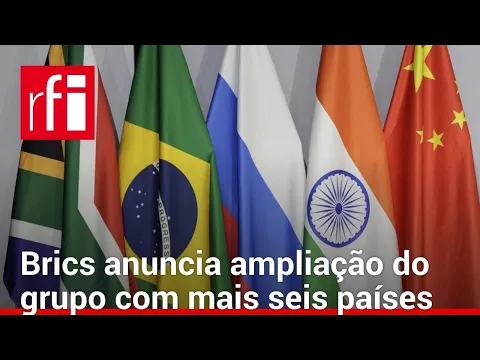

BRICS has gone beyond the original quintet. New members such as Egypt, Ethiopia, Indonesia, Iran, and the United Arab Emirates increase demographic and economic weight and strengthen ties with the Global South.
The bloc also cultivates partner countries, allowing presence at summits without full adhesion.
Still, there are tensions. China and India compete for influence; sanctions on Russia test cohesion; and regional rivalries may contaminate common agendas.
Monetary ambitions, from de-dollarization to common currency, face high political costs, like banking union and macroeconomic convergence.
Honest summary: BRICS has grown and weighs, but does not always speak with one voice.
The Economic Impact of New Standards
Modifying definitions of rights, regulatory standards, and due diligence risks at the UN has a direct effect on corporate balances.
Companies exposed to global supply chains may see audits, certifications, and ESG criteria recalibrated according to new majorities on boards and committees.
Investors and risk areas are already mapping scenarios with multiple competing standards, which raises compliance costs and redistributes advantages sectorally and geographically.
Key point: BRICS is working within the rules to change the rules themselves. It is a game of patience that yields regulatory dividends.
Brazil at the Center of the Board

In front of the rotating presidency in 2025, Brazil tries to arbitrate differences and attract the Global South for governance reforms.
Meanwhile, politics remains noisy. At the General Assembly, Donald Trump hardened his tone against the UN and said that Brazil will fail without cooperating with the U.S., while also making gestures of closure with Lula behind the scenes.
The ambiguity is calculated, with a tough discourse for the domestic base and an open channel for business and security.
For Brasília, the challenge is to balance bridges: maintain dialogue with Washington, lead in BRICS, and avoid automatic alignments that close markets or strangle investments.
In the language of economic diplomacy, it is about maximizing options without losing access.
What Comes Next for BRICS
In the short term, the bloc should push for reforms in global governance, increase economic coordination, and advance in financial instruments like the New Development Bank.
De-dollarization will continue to be gradual, focusing on local currencies and liquidity arrangements. Far from replacing the dollar, closer to reducing vulnerabilities to sanctions.
In the medium term, the test is political: to transform critical mass into practical consensus. If successful, BRICS will influence votes, funding, and normative lexicon at the UN.
If it stumbles, the expansion may turn into a heterogeneous club with strong rhetoric and contained deliveries.
BRICS has found a strategic window at the UN and wants to set part of the agenda at a moment of American retraction.
The question is whether the bloc can convert this opportunity into lasting rules, and at what costs for businesses, investors and public policies.
Do you agree that BRICS should occupy this space? Where should Brazil hit the brakes and where should it accelerate? Share in the comments which decision impacts your sector the most, local currencies in trade, new compliance standards, or governance reforms at the UN.









-

Uma pessoa reagiu a isso.