





 Portuguese
  English
  Spanish
  8 min of reading
  0 comments


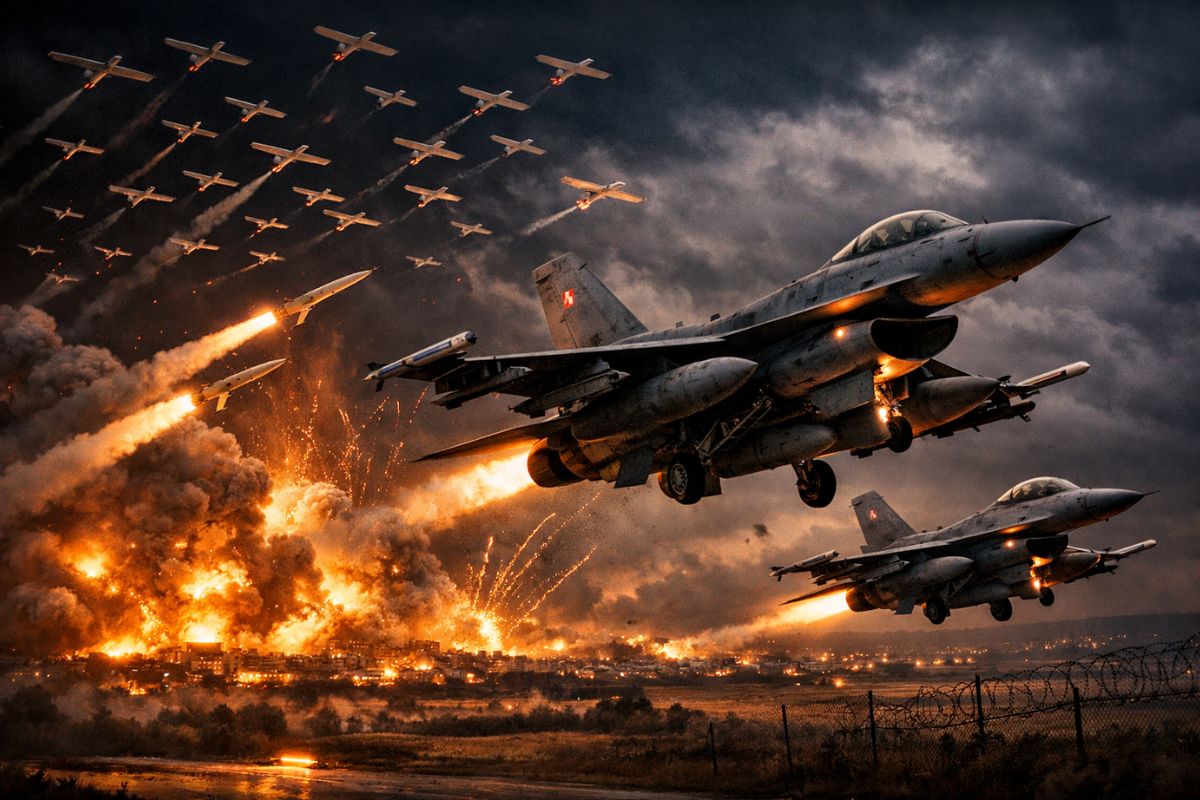
NATO Entered The Center Of Tension After Poland Activated Its Military Aviation And Raised Air Defense And Radars To The Maximum During A Large-Scale Russian Attack Against Ukraine, On A Night Marked By Deaths In Kharkiv, Damage In Kiev And A Warning That Went Beyond The Military Field.
NATO returned to the center of the war in Eastern Europe during a dawn when Poland decided to scramble fighter jets as a preventive response to Russian attacks against Ukraine. The move did not occur due to a confirmed invasion of Polish territory, but because of the risk generated by the activity of Russia’s long-range aviation in a sensitive area, close to the border of a member country of the western military alliance.
The episode condensed, in a few hours, several levels of tension at once. There was a large-scale Russian attack on Ukrainian infrastructure, civilian deaths in Kharkiv, damage in Kiev, interruption of heating in thousands of homes, and, at the same time, an immediate reaction from the Polish military structure. Even Without A Violation Of Polish Airspace, the political and strategic message of the dawn was clear: any expansion of risk beyond Ukraine is treated with maximum vigilance.
What Led Poland To Scramble Fighter Jets
The Polish reaction occurred after the Operational Command of the Armed Forces reported, at 3:16 AM CET, that it had begun military aviation operations in its airspace due to the activity of the Russian Federation’s long-range aviation, which was conducting attacks on Ukrainian territory. At the same time, available assets were activated, and ground air defense and radar reconnaissance systems reached a state of maximum readiness.
-
BRICS is building its own payment system that could be operational by 2030, and experts say it could increase trade between the countries by up to 10% per year and add 3% to the GDP of each member of the bloc.

-
Government suspends over 3 million traffic fines in Brazil and drivers breathe a sigh of relief.

-
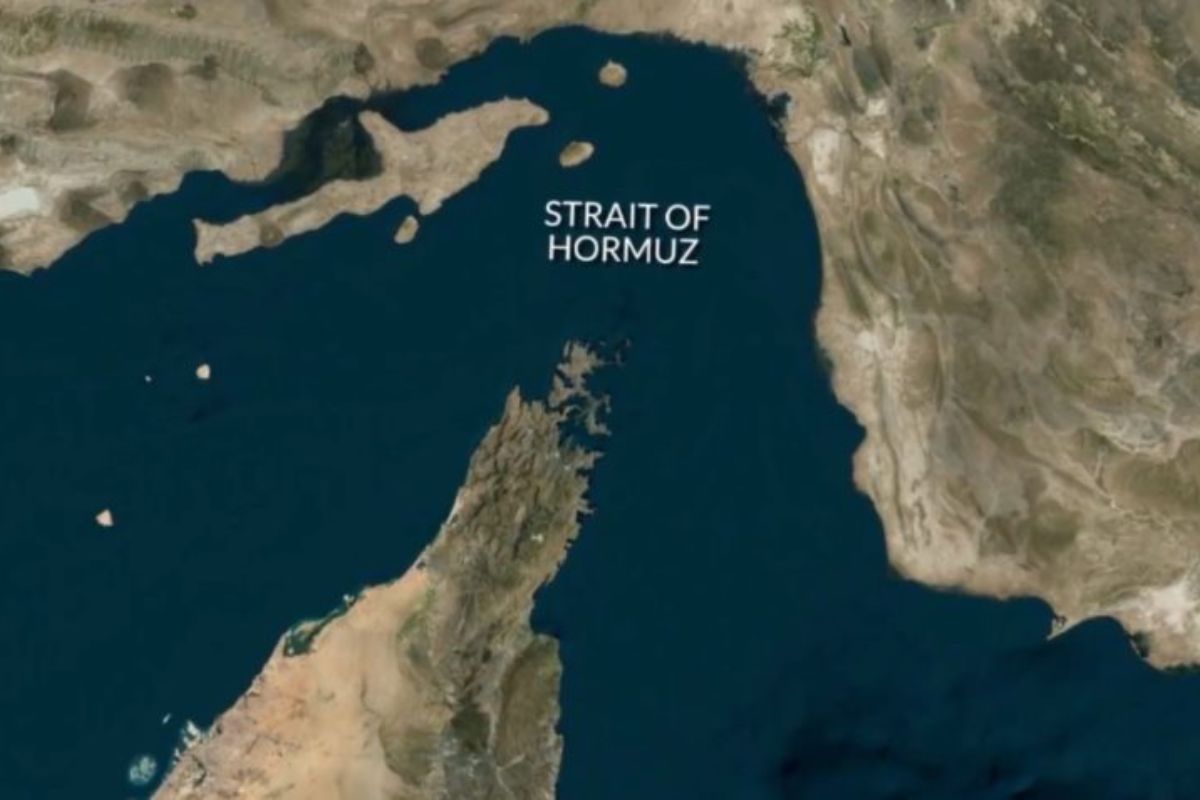
Iran has just approved toll charges for ships in the Strait of Hormuz and has completely prohibited the passage of vessels from the United States and Israel in the world’s most important maritime route for the global energy market.
-
Government cancels R$ 25 million “celebration” for Brasília’s anniversary and allocates funds to health.


This type of response shows how the war in Ukraine continues to produce effects beyond the direct line of combat. Poland did not announce that it had been targeted in an attack, nor did it report the entry of Russian aircraft or missiles into its territory. Nevertheless, being a NATO member and geographically close to threatened areas, it opted for a preventive posture. In practice, the calculation was simple: acting before any incident is worth more than reacting after it.
Hours later, at 4:30 AM CET, the same command reported that the operations had been terminated. The fighter jets ceased to operate at that exceptional readiness level, and the activated systems returned to standard operational activities. The most relevant point of this second statement was the confirmation that no violation of Polish airspace was observed.
This does not reduce the seriousness of what happened. On the contrary, it highlights how the war is already being monitored in real-time by neighboring countries that belong to NATO and that must deal with the possibility of course errors, debris, missile fragments, uncontrolled drones, or any sudden escalation of the crisis. The night did not end with an incursion into Poland, but it did end with a message of total readiness.
The Size Of The Russian Attack And The Direct Impact On Ukraine
While Poland reinforced its surveillance, Ukraine faced one of the heaviest episodes of the night. According to the information released, Russia launched 480 drones and 29 missiles against Ukrainian energy infrastructure. The Air Force reported that the country’s defenses managed to shoot down 453 drones and 19 missiles, a high number that demonstrates the intensity of the offensive and, at the same time, the volume of pressure on the Ukrainian defensive system.
In Kharkiv, a ballistic missile hit a five-story residential building in the early morning of March 7. The reported toll was seven dead, including two children, and at least 15 injured. Among the victims mentioned by local authorities were a teacher, her nine-year-old son, a 13-year-old girl, and her mother. These figures show that the attack was not limited to strategic or energy targets; it had an immediate and devastating human effect.
In Kiev, there were also launches of ballistic missiles during the night. Mayor Vitali Klitschko stated that a critical infrastructure installation was hit, leaving 1,905 homes without heating. Additionally, three people were injured in the capital, and missile fragments were found in three districts. In a context of intense cold, the loss of heating further exacerbates the civil impact of the attack.
When observing the entirety of the night, it becomes clear that the weight of the episode lies not just in the number of drones and missiles fired but in the combination of material destruction, energy vulnerability, and loss of life. The war presents itself, once again, as a military dispute with profound effects on housing, essential services, and urban routine, and this helps explain why any movement close to NATO’s borders gains immediate relevance.
Why NATO’s Border Became The Most Sensitive Point Of The Dawn
Poland occupies a particularly delicate position in this conflict because it borders Ukraine and is a NATO member. This means that any large-scale Russian attack conducted nearby raises concern not only for its damage within Ukraine but also for the potential for overflow. It is not necessary for a missile to actually enter Polish territory for the military to treat the situation as critical; it is enough for the pattern of offensives to elevate the risk of an incident.
This was exactly the logic that guided the dawn’s response. The Polish statement made it clear that the measures taken were preventive in nature and aimed at ensuring the security of airspace, especially in areas adjacent to the threatened regions. This detail is central: the tension did not arise from a confirmed violation but from the need to prevent a Russian operation in Ukrainian territory from producing consequences beyond it.
The symbolic dimension also weighs in. When a NATO country scrambles fighter jets, activates radars, and places air defense at maximum readiness, the reading goes beyond the operational aspect. Moscow begins to see a militarily alert neighborhood, ready to monitor every movement and prepared to respond quickly to any deviation in the scenario. Even without direct confrontation, there is a hardening of signaling.
Therefore, the dawn was important on two fronts. Militarily, Poland showed its ability to respond immediately. Politically, it demonstrated that the environment of the war is under constant monitoring and that the margin for error became even slimmer. Polish airspace was not violated, but the proximity between the Russian offensive, the Polish reaction, and the sensitivity of the border made NATO an inevitable element of that night’s narrative.
What This Episode Reveals About The Current Stage Of The War
The offensive occurred in a week already marked by other significant movements in the conflict. Ukrainian President Volodymyr Zelenskyy visited the eastern front, while Ukraine and Russia completed a prisoner exchange over two days, totaling 500 swapped soldiers, with 200 from each side on Thursday and another 300 on Friday. This type of negotiation suggests that there are still practical channels of contact, but they coexist with high-intensity attacks and a persistent escalation on the battlefield.
At the same time, peace negotiations mediated by the United States remained stalled. A trilateral meeting scheduled for the week was canceled amid the escalating conflict in the Middle East. This reinforces an uncomfortable fact: there are diplomatic attempts underway, but the pace of war continues to be dictated, above all, by military logic, and not by concrete advances toward a sustained reduction of hostilities.
Within this scenario, the dawn when Poland scrambled its jets shows that the conflict is no longer observed solely for what it produces within Ukraine. Each major Russian attack is now also measured by its potential to pressure NATO’s eastern edge, generate preventive responses, and increase fears of a broader crisis. The front remains in Ukraine, but vigilance now encompasses the entire strategic environment.
This is the point that makes the episode so relevant. There was no violation of Polish airspace, there was no direct confrontation between Russia and NATO, yet the night was enough to place the military alliance back in the spotlight. The war remains formally localized, but its political, military, and psychological effects are increasingly regional.
When There Is No Invasion, But The Message Remains Clear
The conclusion of the dawn may seem, at first glance, like a decompressing moment. After all, Polish air operations were terminated, systems returned to normal standards, and no violations were found. However, this conclusion does not erase the meaning of what occurred earlier.
It actually shows that readiness functioned as a mechanism for containment and monitoring in an environment of extreme instability.
The sequence of events leaves an objective reading. Russia executed a heavy offensive against Ukraine, Poland responded by raising the alert level of its air and ground assets, and the episode ended without a formal overflow into Polish territory.
Even so, the simple fact that a NATO country deemed it necessary to scramble fighter jets in the middle of the night already reveals the level of tension established at the eastern border of Europe.
This tension feeds on numbers but also on context. It’s not just 480 drones and 29 missiles. It’s deaths in a residential building, impact on critical infrastructure, homes without heating, prisoner exchanges occurring in parallel, and diplomacy without visible progress. All of this paints a picture where each dawn is read not just for what happened but for what nearly happened.
Therefore, the main outcome of the episode may not be the absence of violations of Polish airspace, but rather the confirmation that the war continues to produce shockwaves beyond Ukrainian territory. NATO did not engage in combat, but it definitely entered the radar of the dawn, as its border resumed functioning as a line of containment, warning, and vigilance.
The night ended without any major rupture, but left a question weighing over the entire region: to what extent can attacks of this scale continue to occur so close to NATO’s border without pushing the conflict to an even more dangerous level?
In the comments, it’s worth mentioning what stands out most to you in this episode: the volume of the Russian attack, Poland’s immediate response, or the growing risk of the war pushing the limits of the military alliance even further.









-

-

2 pessoas reagiram a isso.