





 Portuguese
  English
  Spanish
  6 min of reading
  0 comments



With Cost Above R$ 4 Thousand And Wait Of Almost A Year, Worker Reveals He Needs To Choose Between Supporting His Family Or Getting His Driver’s License — And Advocates Changes In The System.
The federal government’s proposal to remove the mandatory requirement of attending driving schools to obtain the National Driver’s License (CNH) has triggered an intense national discussion that has gone beyond Congress and gained traction among the citizens themselves.
The measure, which aims to allow driver training through distance learning (EAD) and practical lessons with independent instructors, has divided opinions among parliamentarians, industry professionals, and ordinary drivers.
In the Chamber of Deputies, the debate was marked by severe criticisms. Deputy Coronel Meira (PL-PE) classified the proposal as “a crime against traffic safety,” arguing that it would put lives at risk and lead to the dismissal of up to 300 thousand workers from the driving school sector.
-
End of the 6×1 schedule: how the reduction of hours can affect service companies, industry, and agribusiness.

-
Brazil Ignores Trump’s threats to BRICS, Buys 42 tons of gold and reduces the Dollar’s share by 6.45% in international reserves.

-
Havan buys historic football land in Blumenau for a million-dollar amount protected by a confidentiality clause and is already planning to change even the layout of streets to build a megastore in half-timbered style costing 80 million reais.

-
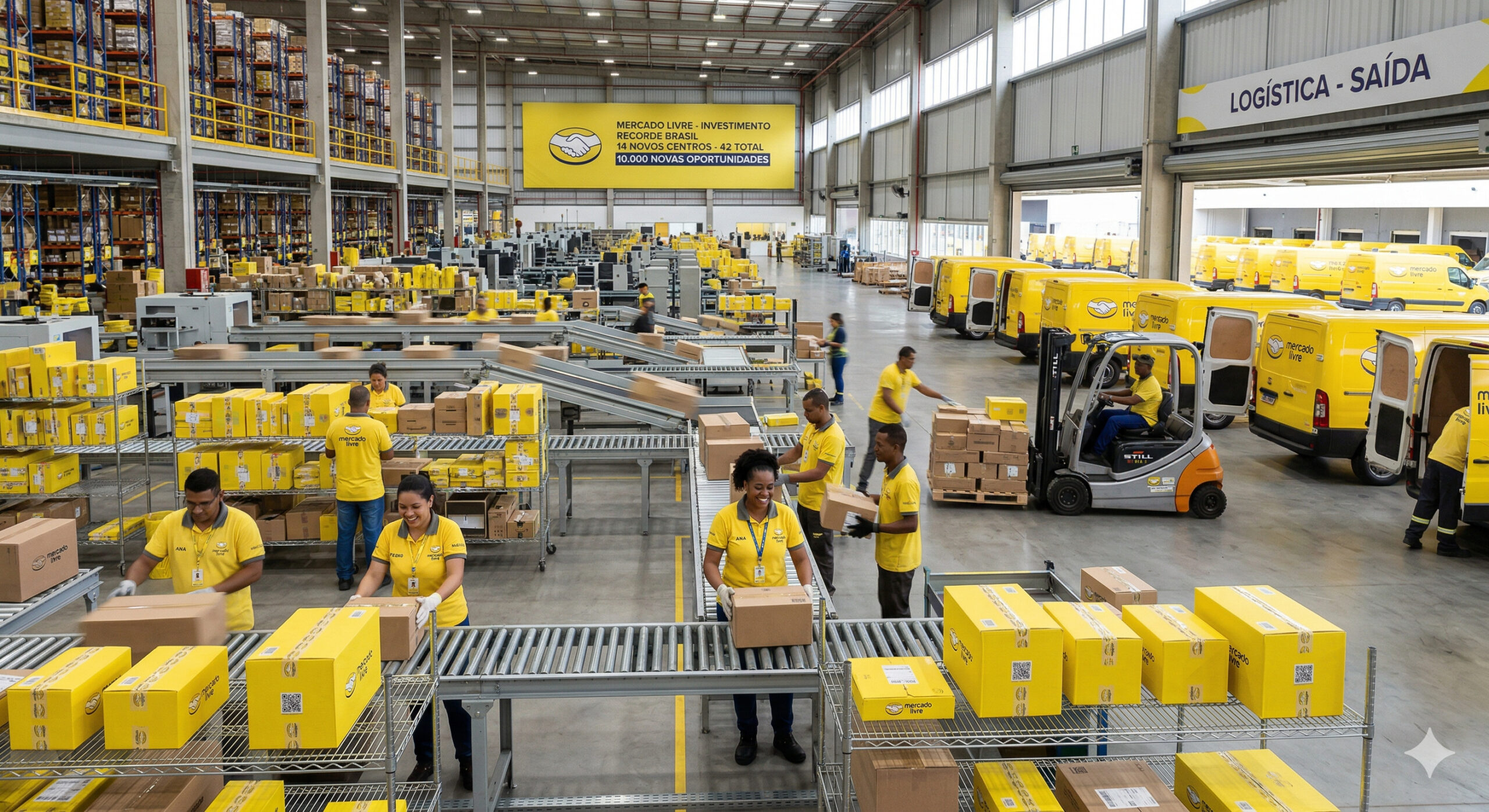
Mercado Livre “opens the vault” and announces a record investment of R$ 57 billion in Brazil in 2026, a value 50% higher than the previous year, with an expansion plan that includes 14 new logistics centers, totaling 42 units in the country and hiring an additional 10,000 employees.

The parliamentarian defends the Legislative Decree Project (PDL) No. 800/2025, created to block the changes, and argues that the government ignores safer alternatives, such as subsidized courses for those registered with CadÚnico and partial reductions in class hours, without abolishing professional supervision.
Readers of CPG shared personal experiences, criticisms of the system, and alternative proposals.
“They Charge Not To Fail”: Readers Report Abusive Costs And Suspicions Of Fraud
Among the most shared comments is from a reader from the interior of São Paulo, who reported a supposed scheme for charging to avoid failures. According to him, “what makes the CNH expensive here in several cities in SP is the amount they charge not to fail in the practical lesson — around R$ 1,800 per category. If you don’t pay, you fail several times.”
The complaint expresses a recurring feeling among license candidates: the perception that successive failures are used as a way to increase profit.
The account resonated with other readers, who claim to have gone through similar experiences.
These testimonials reinforce an old critique of the current model — the lack of transparency and the power concentrated in the hands of CFCs (Driving Schools), which hold the monopoly on training.
Many believe that opening the process to independent instructors and expanding the use of online platforms could reduce costs and increase access, especially for low-income workers.
“The Bureaucracies Are Absurd”: Requests For Free Competition And Fewer Requirements
Another reader was direct: the problem, according to him, lies in the bureaucracy imposed by the state itself.
In his comment, he suggested that the government “stop requiring two directors in CFCs, two cars, and two motorcycles, and allow free competition — the market solves the price.”
He argued that instead of eliminating the role of driving schools, the government could simplify rules and modernize the vehicle fleet, with more automatic cars and fewer administrative requirements. “The bureaucracies to have a CFC are absurd and everything has a cost. There’s a point where no one can take it anymore, especially with this government that imposes tax on tax,” he added.
This type of argument gained traction among entrepreneurs and instructors who view the sector as a business suffocated by regulation. According to them, the proposed flexibility could even stimulate healthy competition and make education more accessible without compromising safety.
“It Will Generate Jobs, Not Unemployment”: Support For Flexibility And New Training Models
Not all readers view the proposal pessimistically. For part of the public, the project represents an opportunity for innovation and economic inclusion.
One of them wrote: “It won’t generate unemployment, it will generate jobs, because there are many good drivers who can register on the Detran website, after completing the instructor course, and give lessons as a second source of income.”
The comment reflects a more optimistic view of the sector’s restructuring. For this group, the current model is exclusive, and flexibility is a way to democratize the right to drive, bringing the process closer to other regulated professions where citizens can act autonomously after certification.
“Driving is a right that every good citizen should have. Driving schools cannot be an obstacle, but rather an option. The instructors that already exist can continue, but in an autonomous way,” wrote another participant in the discussion.
Between Cost And Survival: The Dilemma Of Workers
In contrast, the remarks of Deputy Coronel Meira and representatives of driving schools highlight the impact on 300 thousand professionals in the sector, including instructors, attendants, and examiners.
The parliamentarian argues that “flexibilizing these steps means putting unprepared drivers on the streets,” and contends that the measure may worsen the number of accidents — Brazil already ranks among the countries with the highest traffic fatalities.
Readers, however, argue that the problem with safety is not in the classroom, but in the poor supervision and poorly maintained roads. One of them reported: “I have a vehicle, but I don’t have a CNH because I either work to support my family or get my license. It’s expensive and takes almost a year. The system doesn’t consider those who need to work.”
These comments highlight a social tension: for millions of Brazilians, a license is a prerequisite to getting a job, especially in sectors like transport, delivery, and logistics.
At the same time, the high cost — which can exceed R$ 4 thousand in some regions — becomes an almost insurmountable barrier.
“Driving School Teaches How To Pass The Exam, Not How To Drive”
One of the most liked comments summarizes a common sentiment: “Driving school doesn’t teach anyone to drive, it teaches how to pass the Detran exam.”
The reader, who claimed to have spent over R$ 5 thousand to obtain categories A and B, says he still needed to pay for extra lessons after failing. “It’s unfair to those of us who are poorer,” he wrote.
For him, education should adapt to modern times: “Just as telemarketing and video rental businesses changed with technology, the licensing system needs to evolve.”
This analogy with technological transformations was also used by defenders of the proposal within the government, who argue that digitalizing education and using independent instructors can make the process more agile without compromising safety — provided there is rigorous certification and Detran oversight.
The Public Perception: Between Indignation And Hope
The general reading of the comments reveals a pattern of indignation with the current system and a quest for alternatives that unite accessibility, transparency, and quality.
Even among those who support PDL No. 800/2025, there is recognition that the current model needs structural revision.
In summary, society seems divided into three main blocks:
- The Skeptics, who fear an increase in accidents and defend maintaining driving schools as a safety guarantee;
- The Reformists, who support flexibility with criteria — demanding certification of instructors and secure teaching platforms;
- The Indignant, who denounce abusive practices and see driving schools as a “money-making machine.”
Commonly, all recognize that the current training model is distant from the social and economic reality of the country.
A Debate That Goes Beyond Traffic
While the government advocates modernization and inclusion, Congress is mobilizing to halt the project and maintain the requirement. But outside the offices, the discussion has taken on broader contours: there is talk about inequality, job opportunities, and the cost of being a citizen in Brazil.
Whether due to indignation over prices, hope for a fairer system, or fear of more dangerous traffic, the topic has rekindled a deep debate about the role of the state and the balance between individual freedom and collective responsibility on the country’s streets.








Seja o primeiro a reagir!